
For most of our married life, we have not needed to set an alarm. Whenever we suddenly do need one—particularly for something like a 07:40 boat-trip pickup—Hugo has a restless night, waking repeatedly to check the time.
This morning was no different. He checked at 02:30, then again at 04:30, before the alarm finally went off at 06:00.
We had coffee and bread with Nutella and banana, finished packing our day bag and walked down to the pickup point.
At exactly 07:40, a man stopped beside us in a van and asked, ‘Boat trip?’
We said yes, but asked whether he knew our names so that we could be sure he was collecting the right people. He did not. He then asked whether we knew the name of our boat. We did not.
After some collective reasoning, we agreed that we were going on a boat trip and he was collecting people for a boat trip, so we might as well get in.
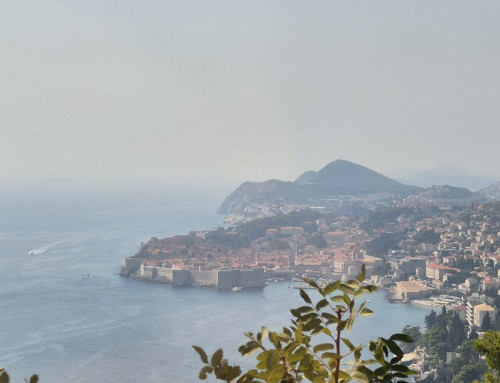
He still had four more passengers to collect, but they were scattered far apart, including well beyond Dubrovnik’s harbour on the other side of the city. We therefore received an unexpected scenic tour of greater Dubrovnik, at one point passing within metres of the border with Bosnia and Herzegovina.
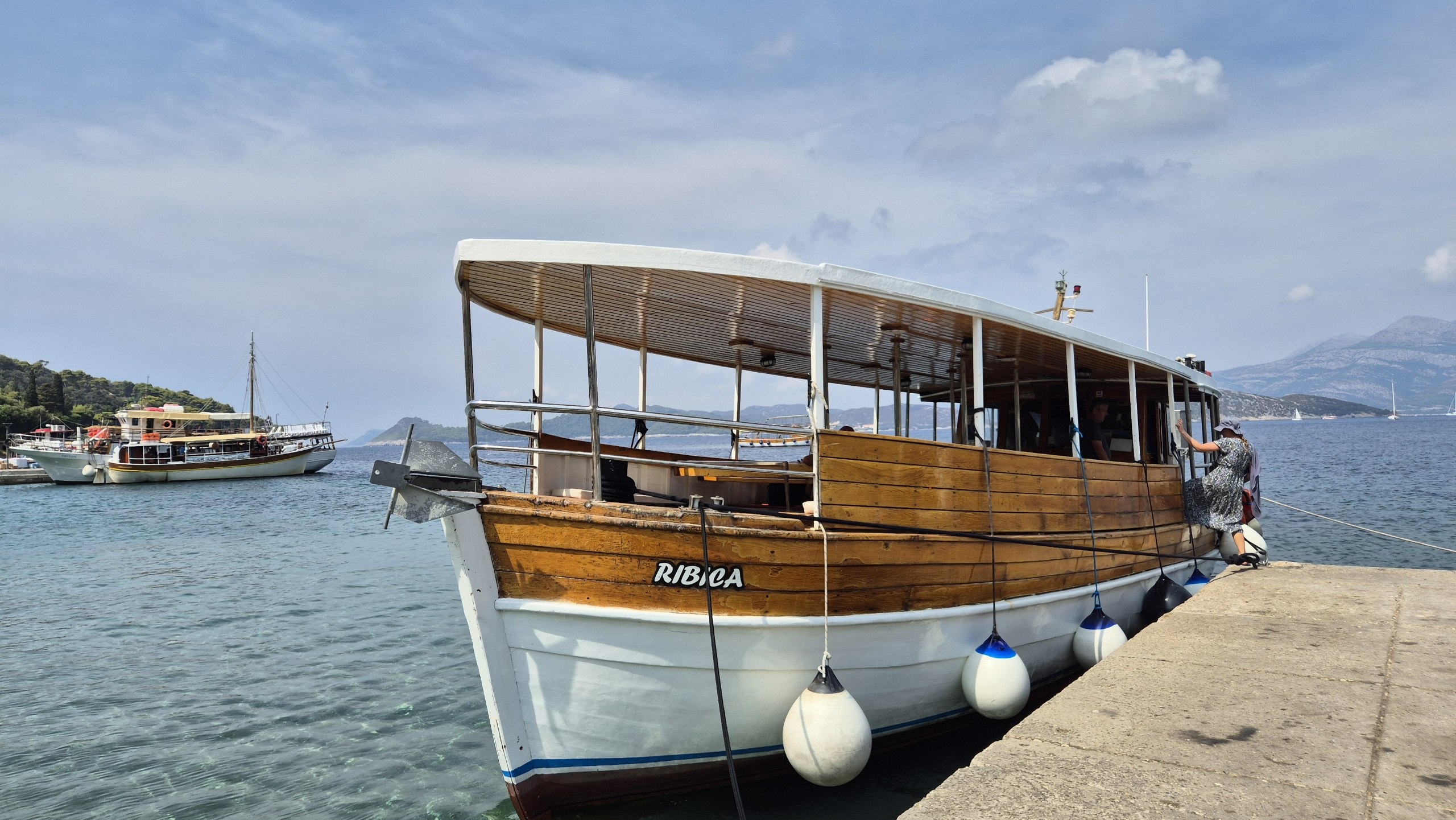
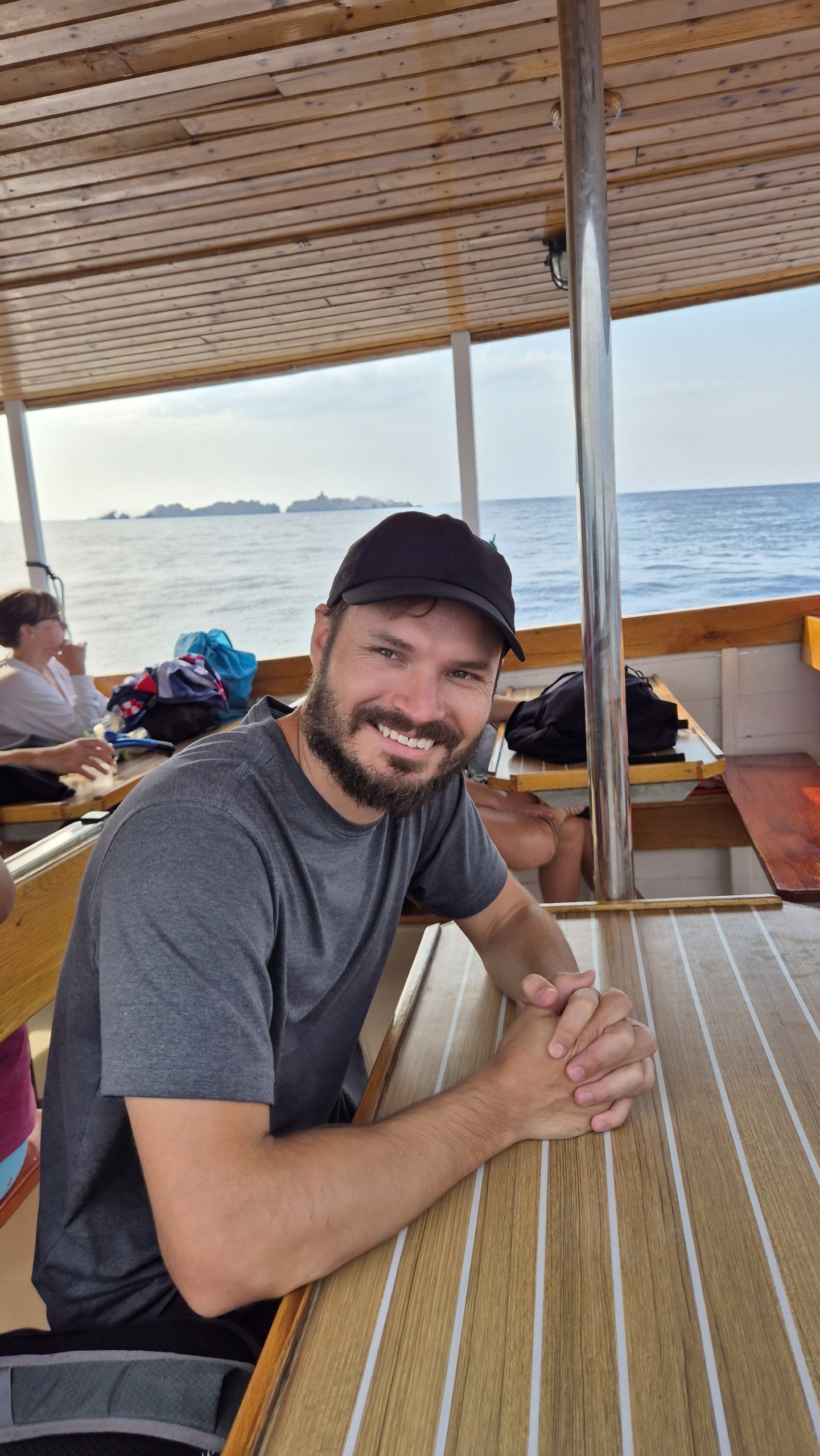
Eventually we arrived at a mid-sized wooden boat called Ribica, where several other vans were also dropping off passengers. There were about 20 of us altogether—a pleasantly small group for a trip that can sometimes carry more than 100 people.
We were visiting the three inhabited Elaphiti Islands: Koločep, Lopud and Šipan. The archipelago has thirteen islands and islets in total, but only those three have permanent settlements. They were tied to the Republic of Dubrovnik for centuries and flourished during its maritime golden age in the 15th and 16th centuries.
Our first stop was the Blue Cave on Koločep.
We had seen photographs of it online, but wondered whether they were heavily exaggerated—something like photographs of the Northern Lights, which can show colours far more dramatically than the naked eye sees them.
We swam through the cave’s small opening into a much larger chamber. Because our boat had arrived early, only one or two others were there and we were among the first people in the water.
The photographs had not lied. The whole cave really did glow blue. When we turned back towards the entrance and looked through our snorkelling masks, the water was the most intense blue imaginable. At one point, a fish passed through the opening as a dark silhouette against the light.
We had no camera with us in the water, but the many photographs online show almost exactly what we saw with our own eyes.
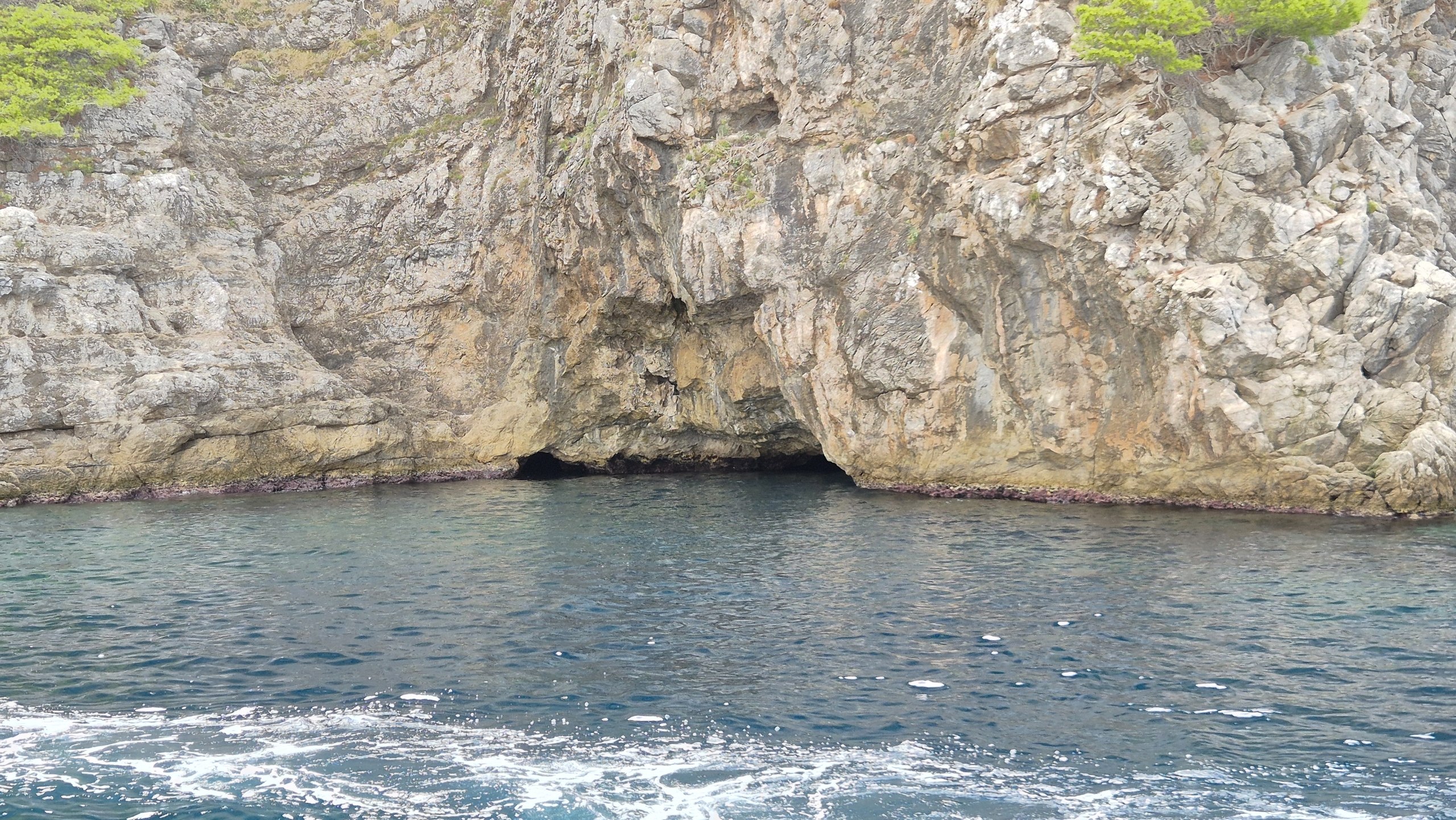
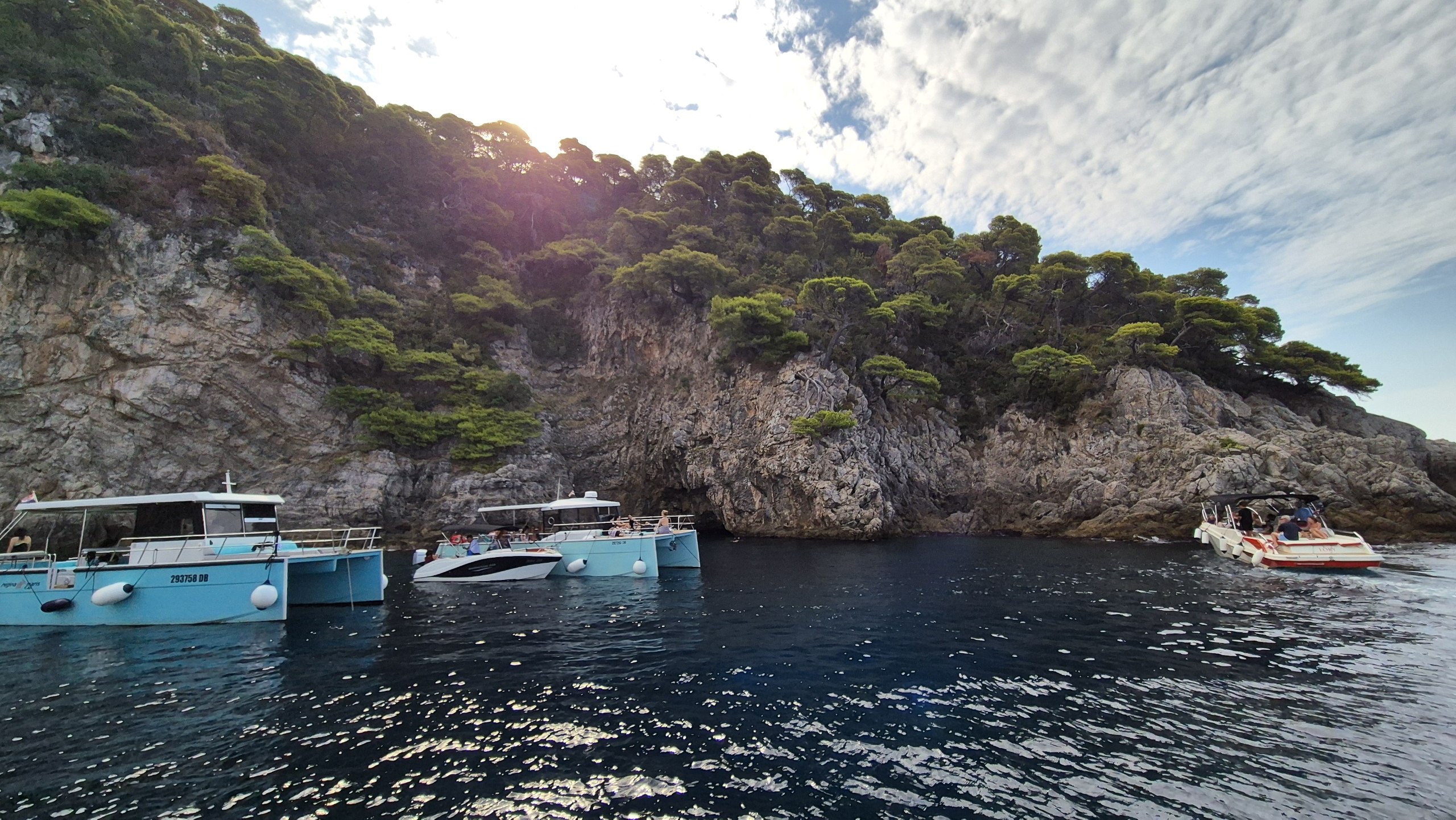
By the time we swam out, around ten boats had gathered outside and still more were arriving. Our early start had been worth the restless night.
Koločep is the closest of the three main Elaphiti Islands to Dubrovnik. It is car-free, covered in pine forest and has only a few hundred permanent residents living mainly around its two small settlements. The Blue Cave is one of several sea caves around its rocky coastline and is known specifically for the light effects we had just seen.
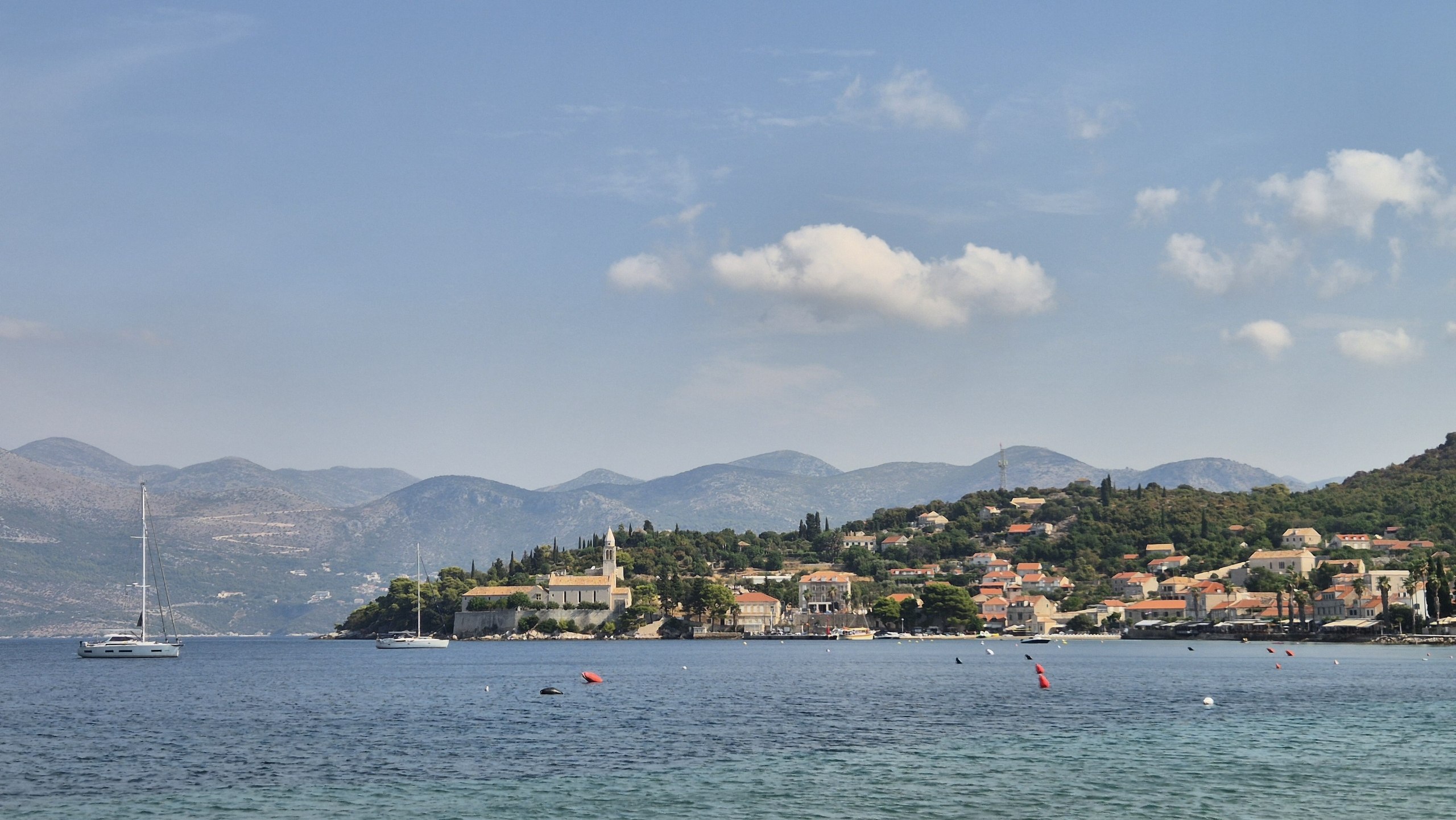
Our next stop was Lopud, the second-largest Elaphiti island. It covers only 4.63 square kilometres and had 278 permanent residents in the 2021 census, yet its history has left it with an extraordinary number of churches, monastery remains and old summer residences.
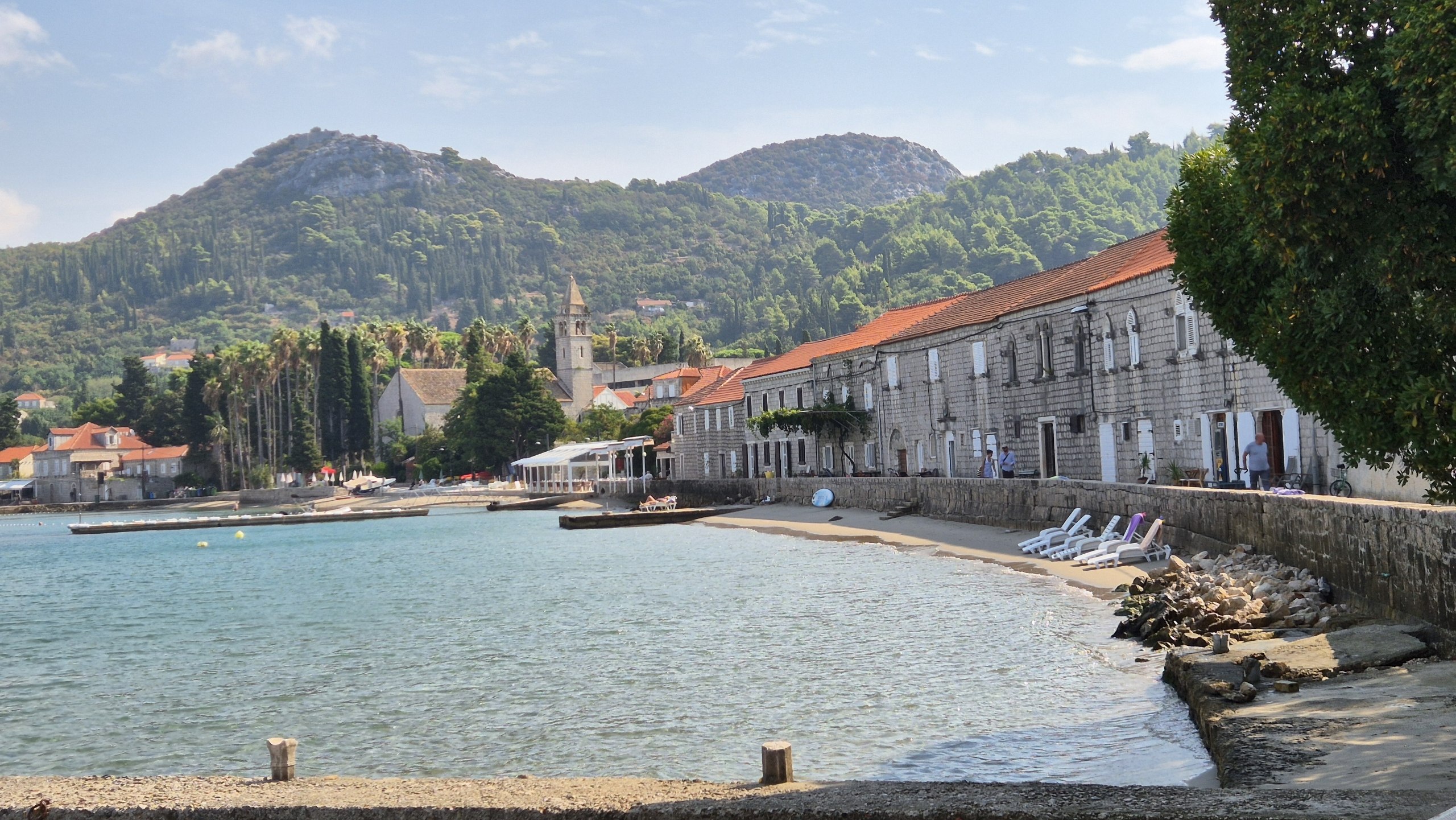
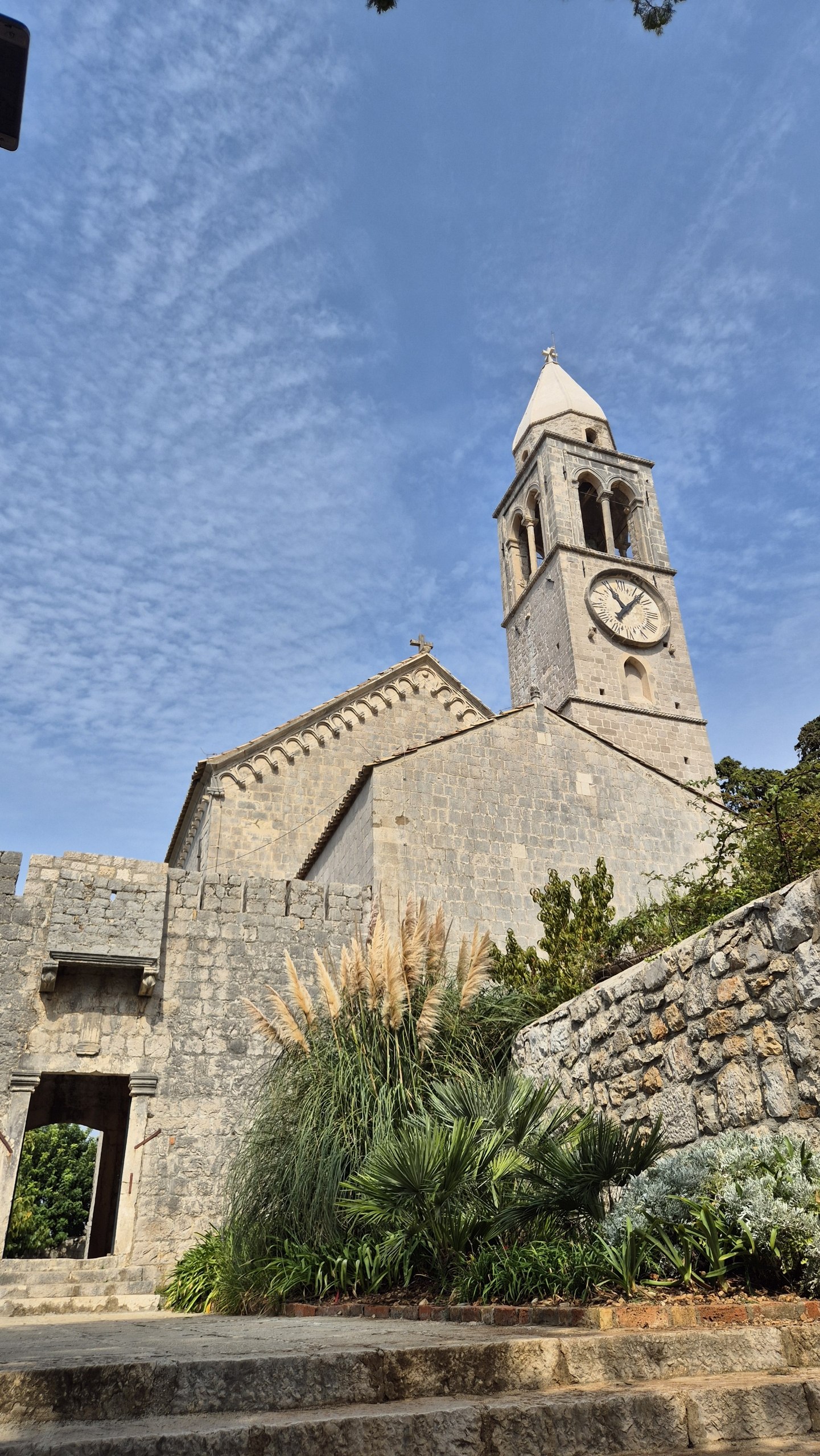
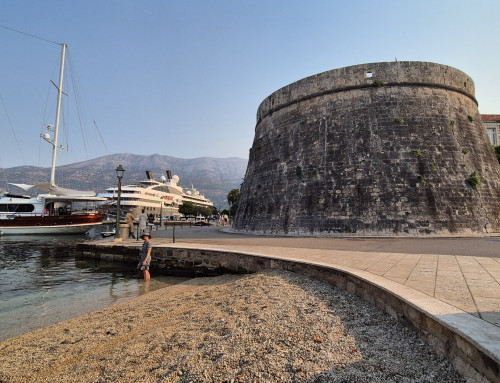
We walked along the waterfront to its far end, where we reached the fortified Franciscan monastery and the Church of Our Lady of Špilica. The monastery was founded in 1483 and later protected by a defensive wall and tower—a reminder that even religious buildings on these islands needed to be ready for attacks from the sea.
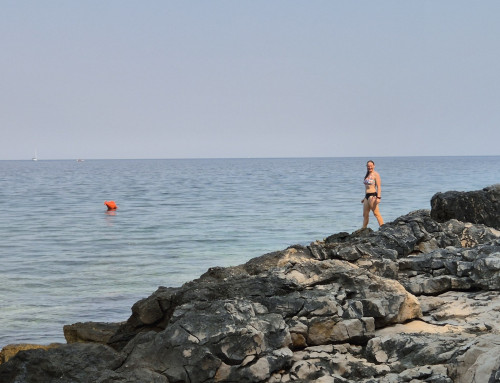
We swam and snorkelled nearby. There was not much coral, but there was still a surprising variety of fish, including several colourful ones moving between the rocks.
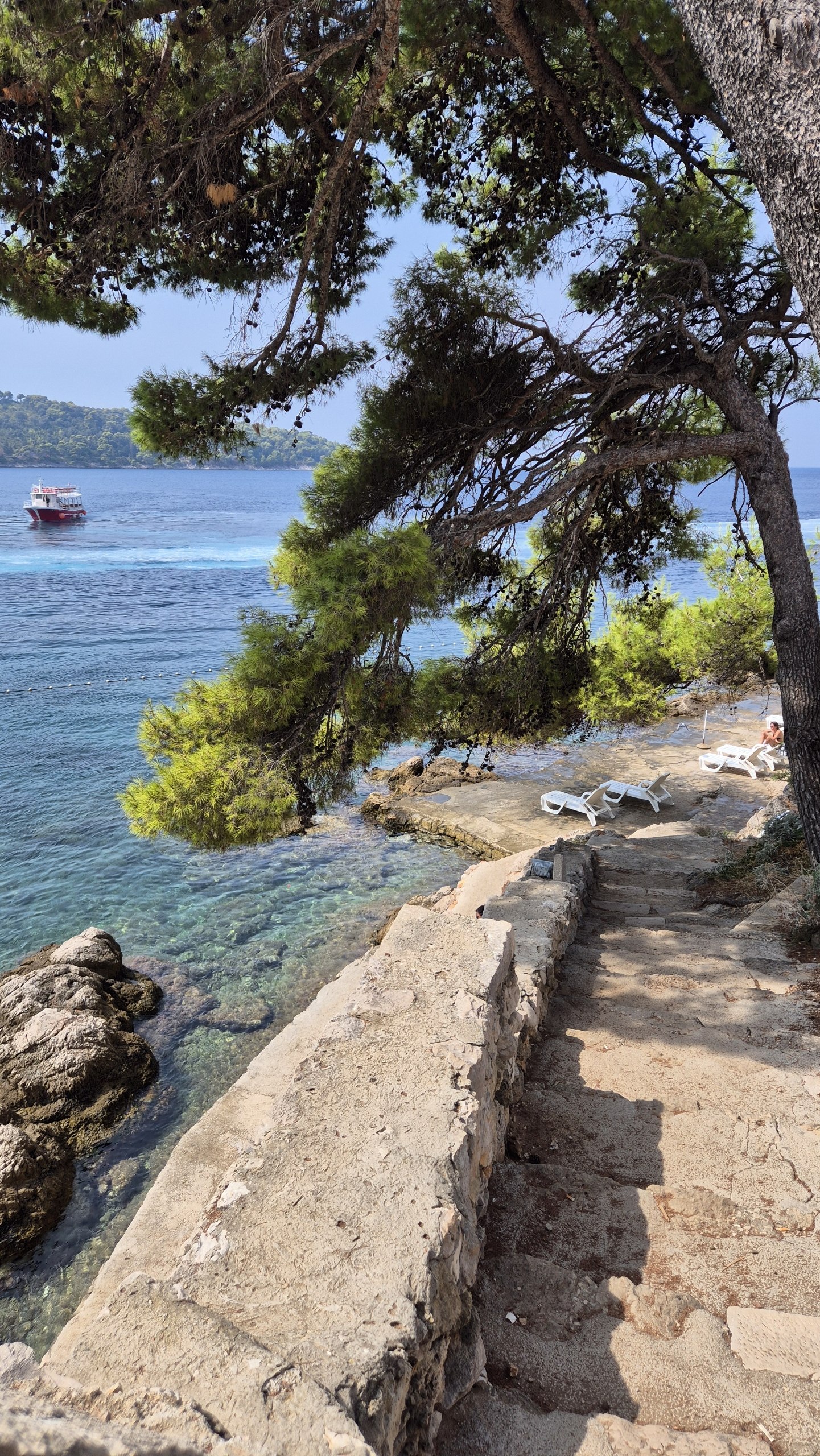
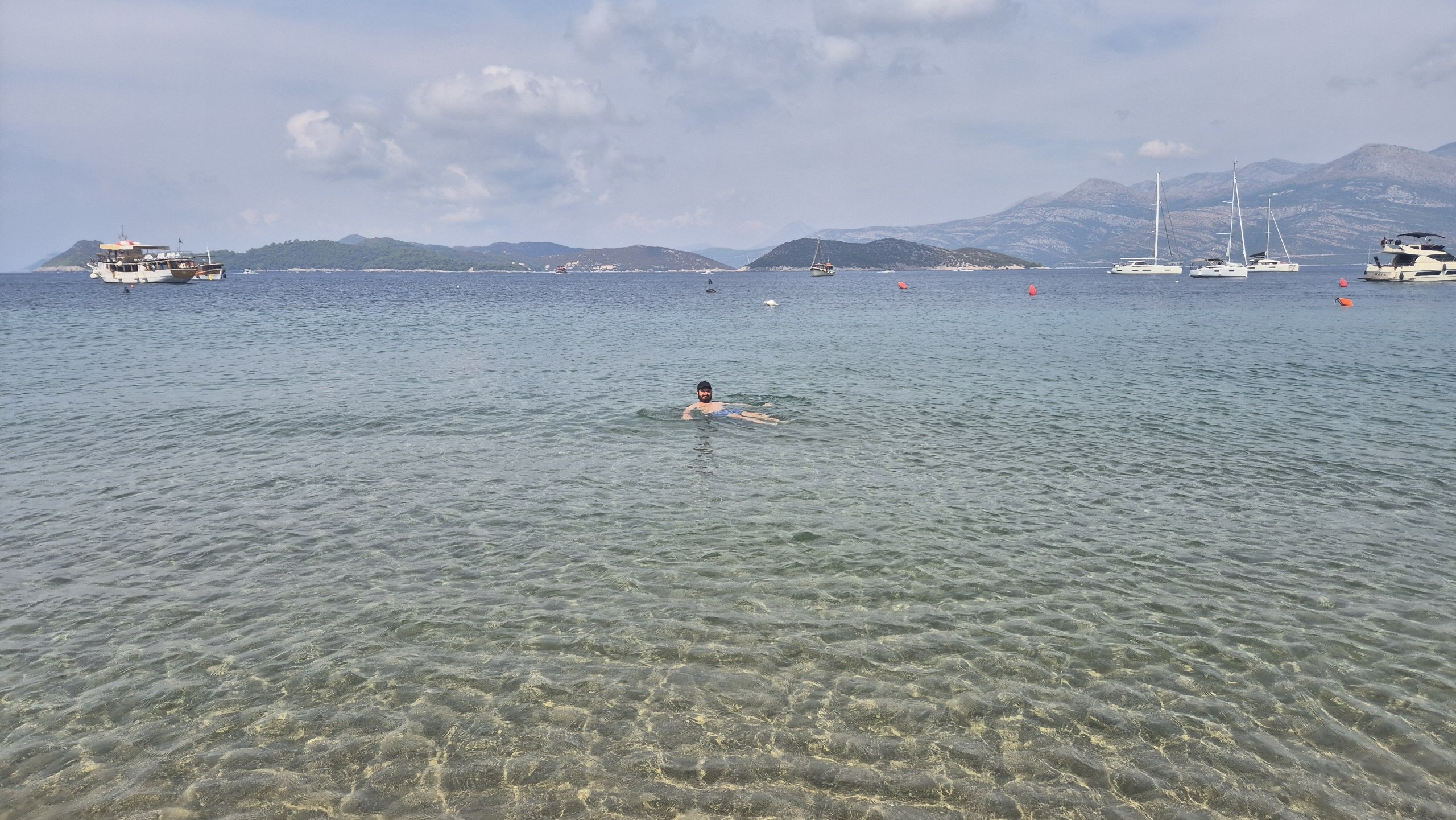
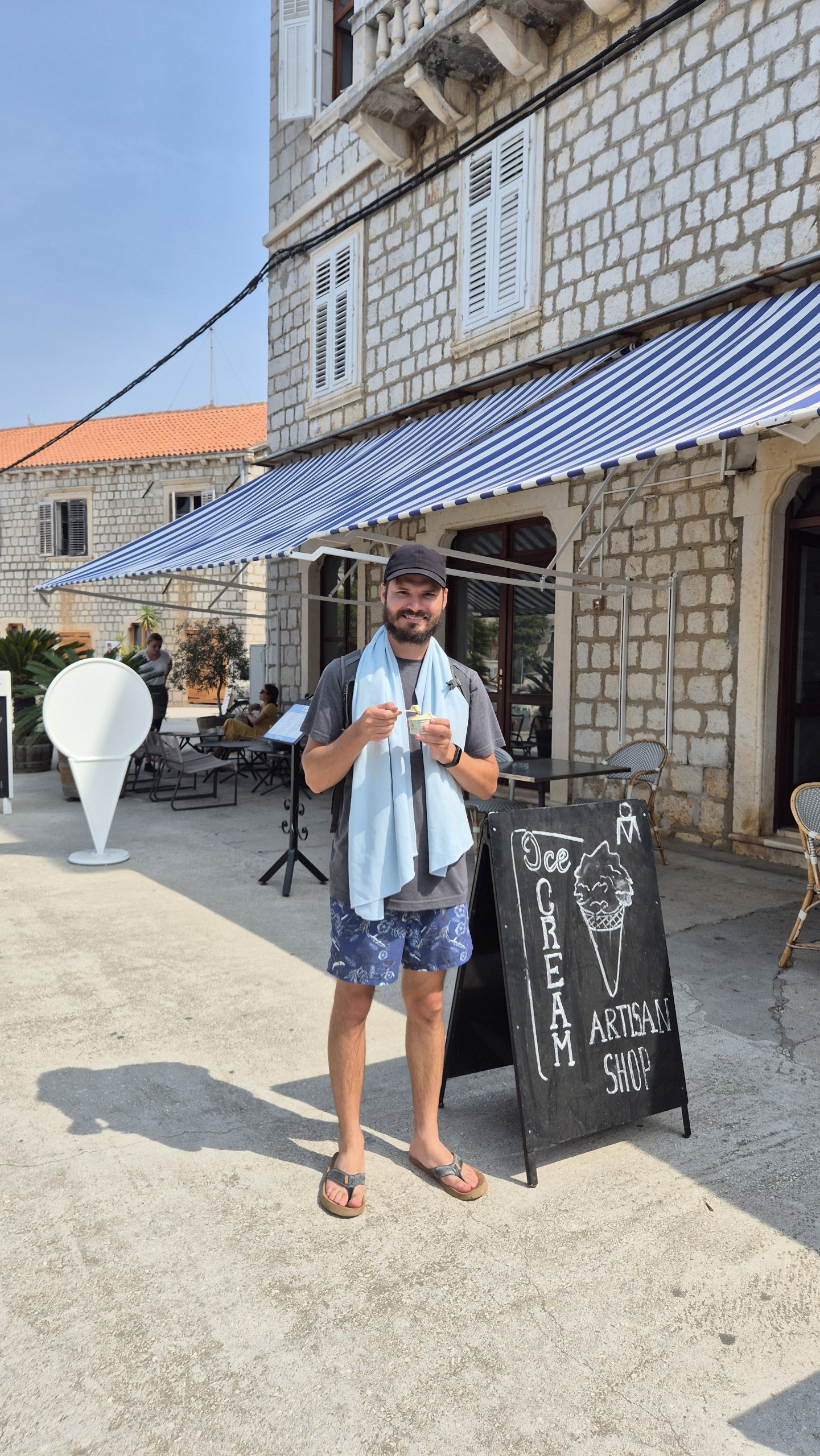
We had two hours on Lopud, so after exploring and swimming there, we started making our way back. Before returning to the boat, we stopped for another swim at one of the island’s sandy beaches—and found time for an ice cream along the way.
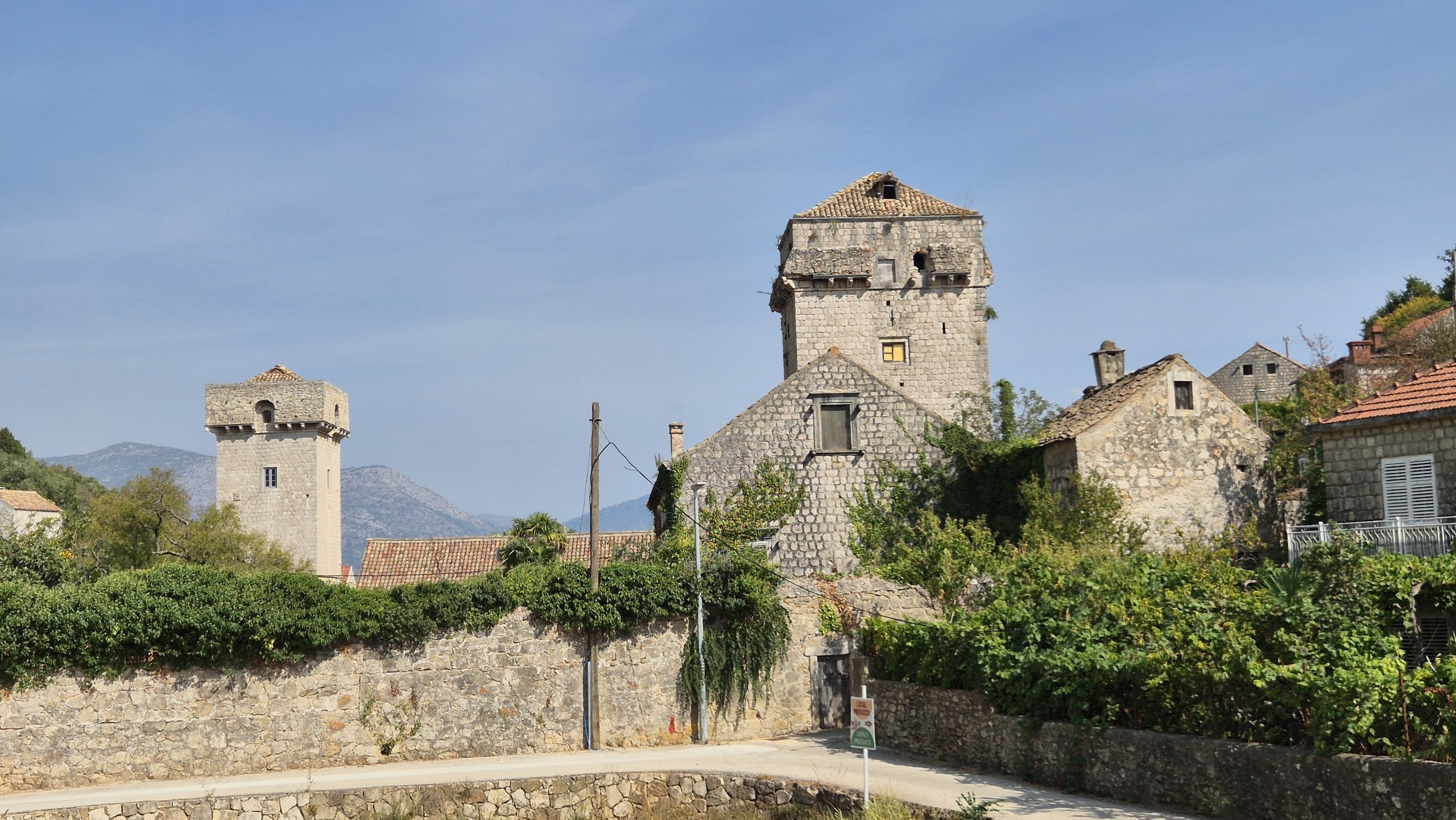
From Lopud we crossed to Šipan, the largest of the Elaphiti Islands. Its two main settlements are Suđurađ and Šipanska Luka, separated by a fertile inland valley filled with olive trees and vineyards. Despite being the largest island in the group, it has fewer than 500 permanent residents.
Our guide was from Šipan, his uncle was the captain, and his family owned the restaurant where our included lunch was served. Other island tours apparently prepare lunch aboard the boat; ours simply delivered us to the family business.
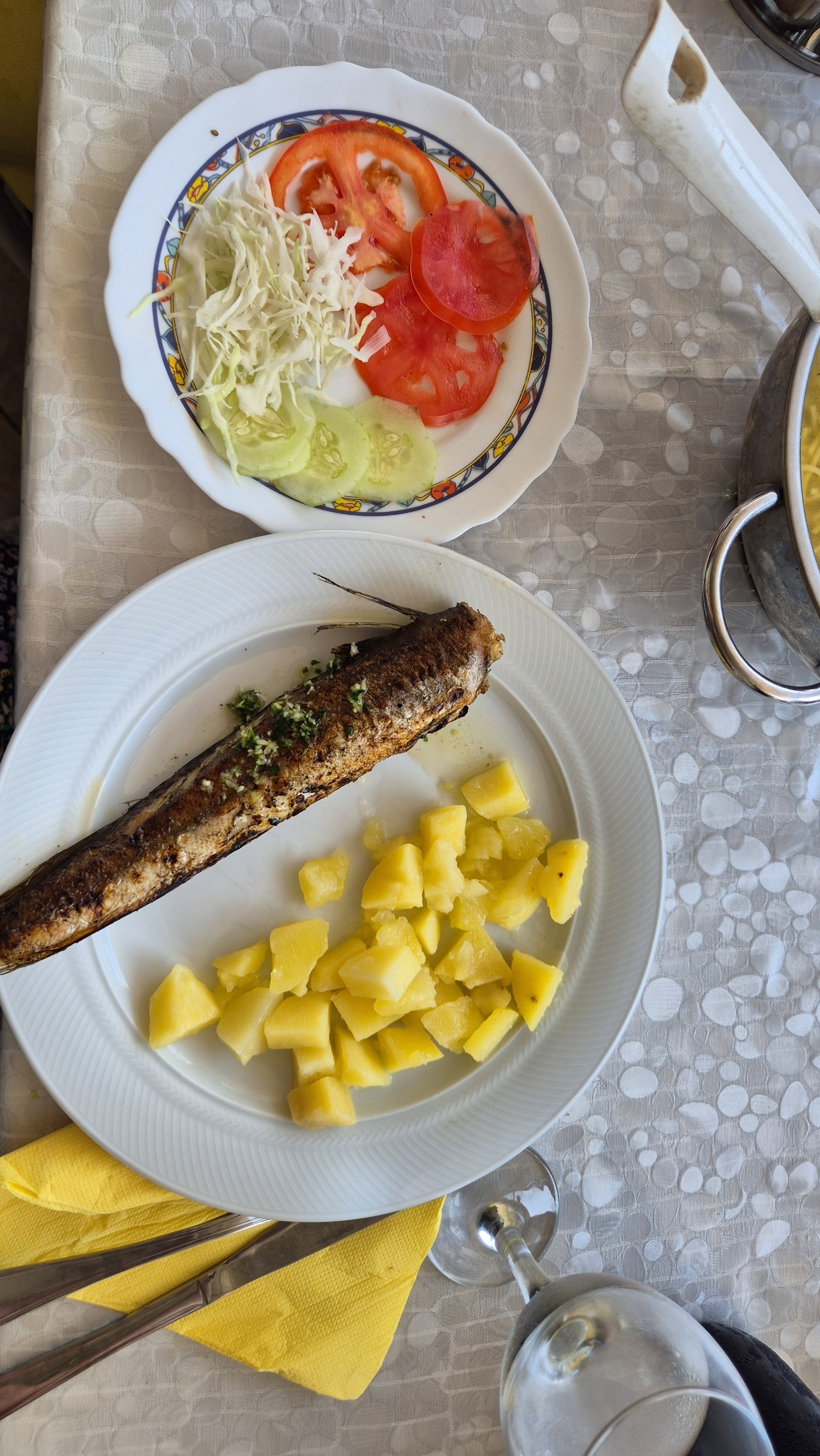
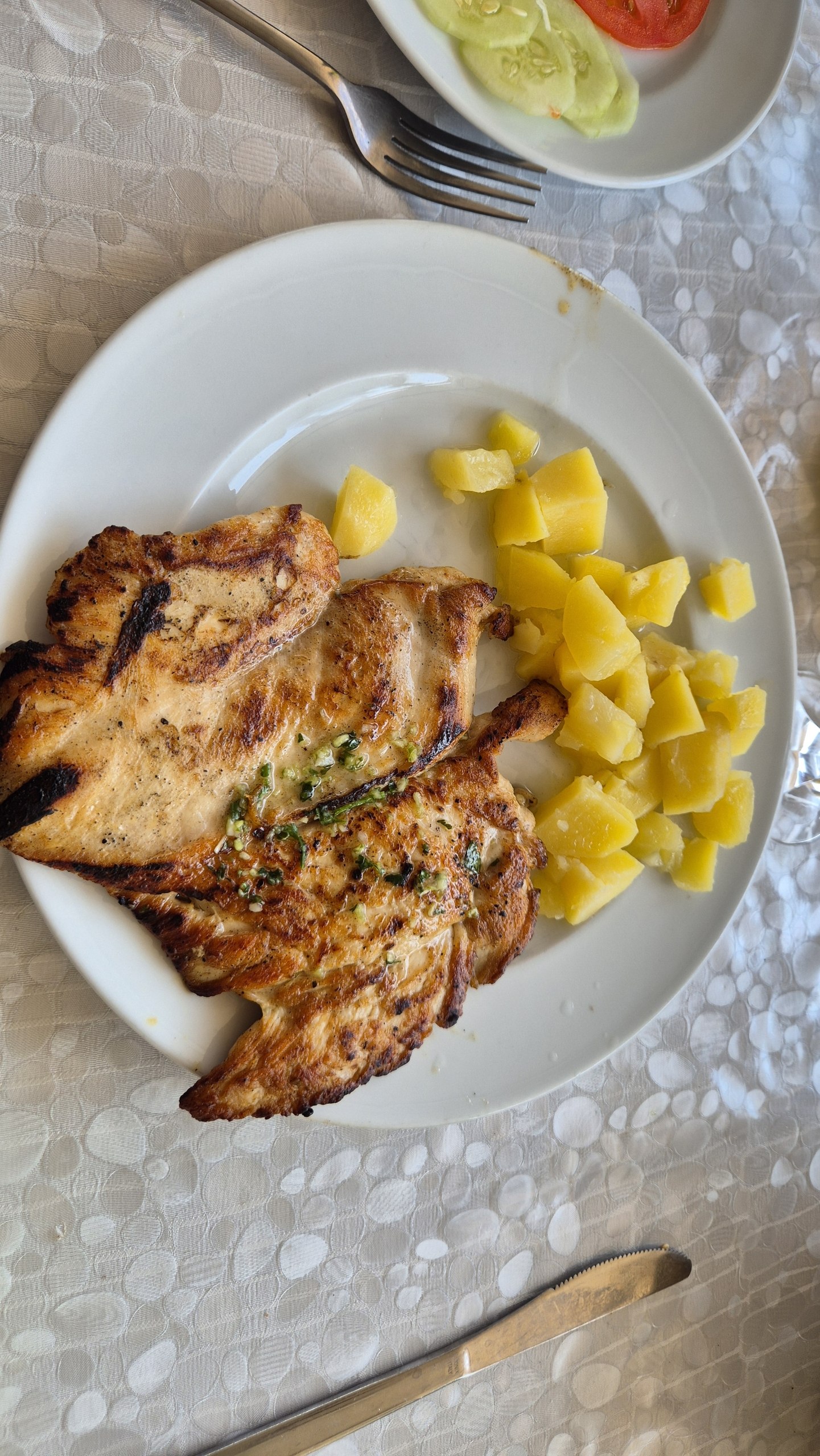
The meal began with soup. Caro chose fish for her main course, while Hugo had chicken—his first chicken in weeks. Both were good, and dessert was a plate of small, round doughnut-like balls.
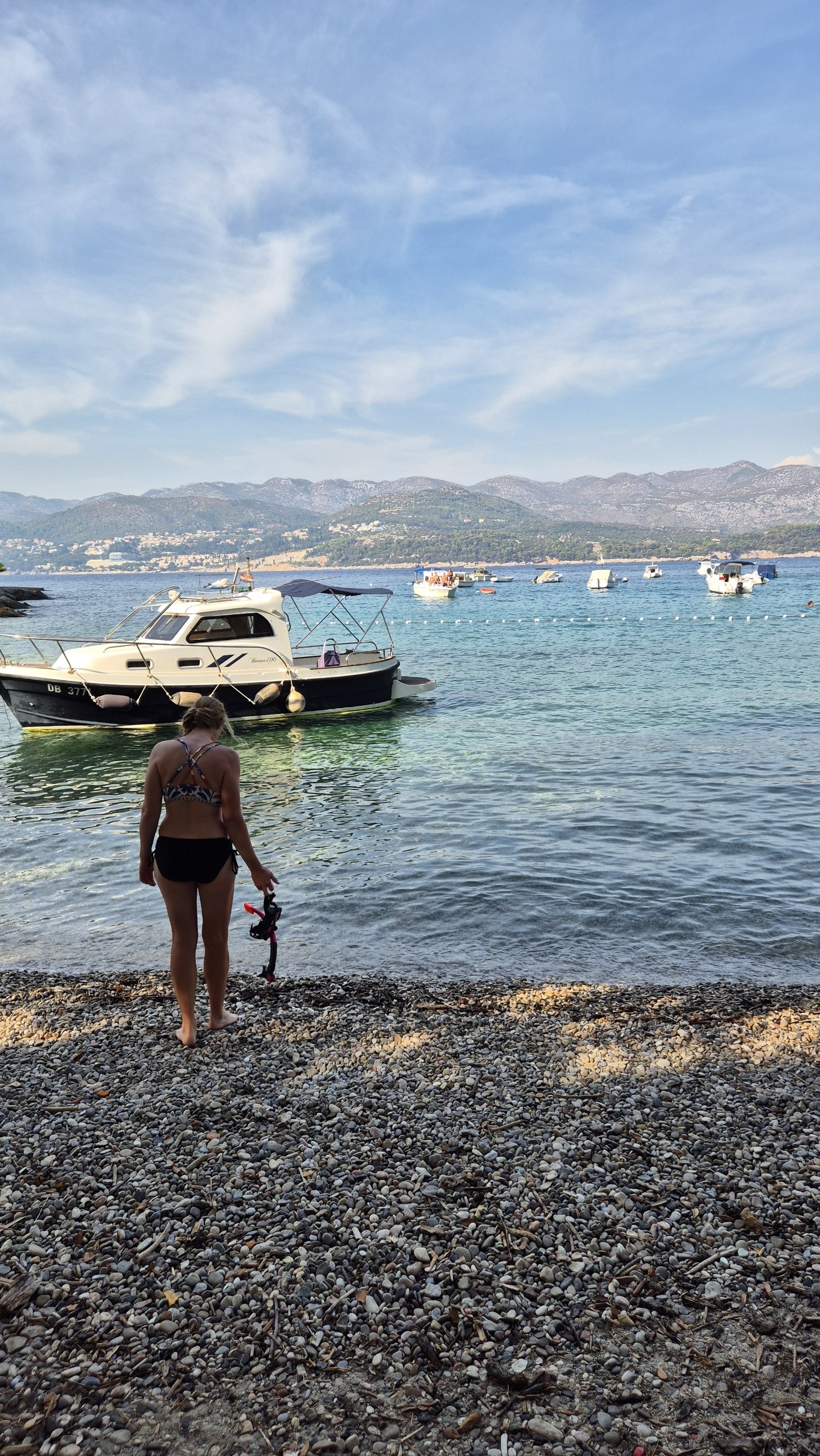
Our final stop took us back to Koločep. The harbour where the crew originally intended to stop was already packed, so the captain changed plans and took us into another cove instead.
This turned out to be an unexpected bonus. The alternative was small, quiet and far more peaceful than the crowded harbour would have been.
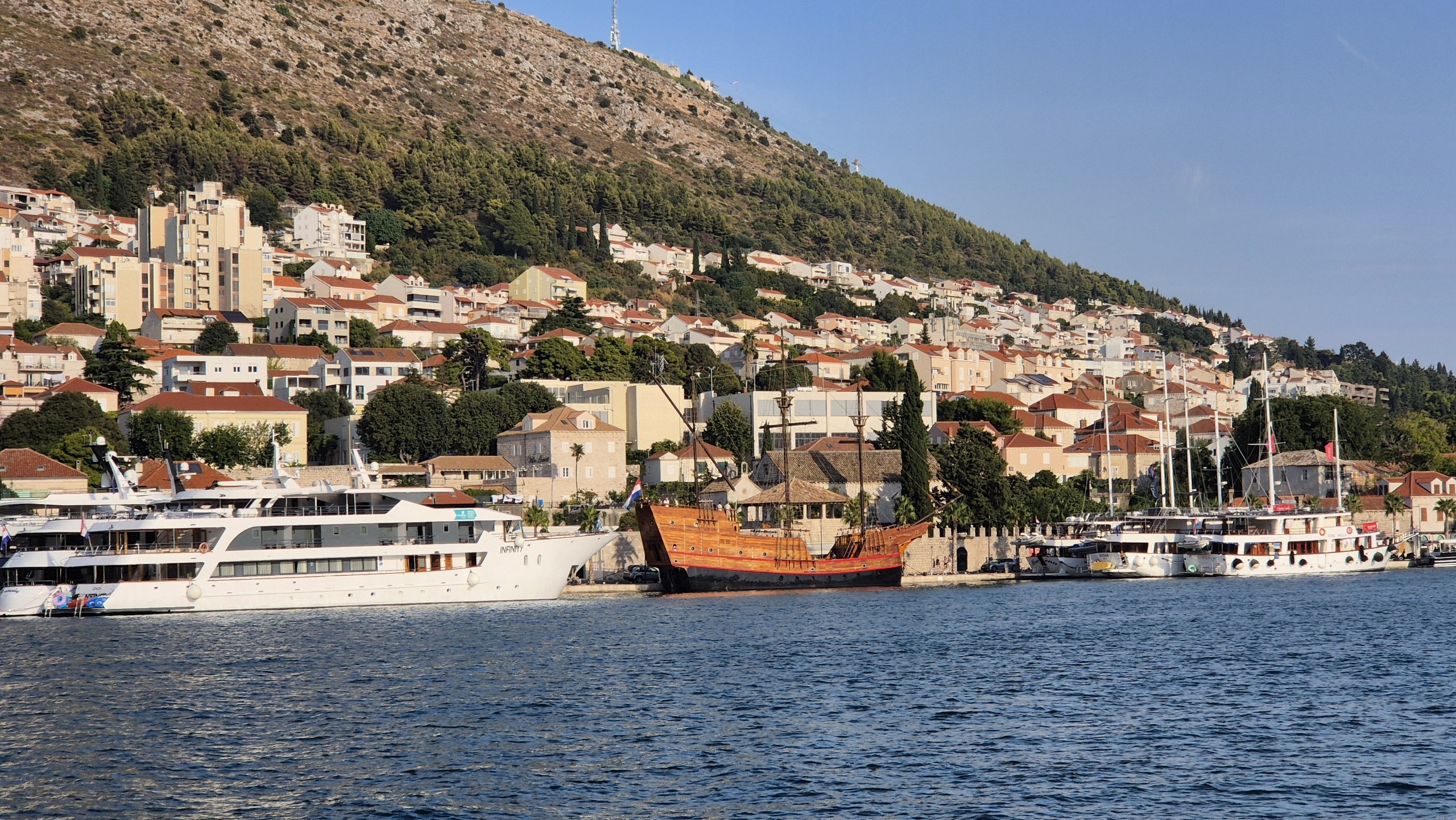
We returned to Gruž at about 17:30, followed by the same van-and-passenger rigmarole in reverse as everyone was dropped off again.
Back at the apartment, we were very grateful for the pasta left over from the previous night. We ate, then went straight to bed—tired after a surprise day that had turned out far better than expected.


Leave A Comment