
We checked out by 09:00 and decided to take our luggage into Dubrovnik and store it there. That seemed easier than trying to arrange something at the guesthouse and then having to travel all the way back to Mlini for it later.
With almost 14 hours to fill before our flight, we bought Dubrovnik Passes. They cost the same as admission to the city walls alone, but also included several museums, historic buildings, Fort Lovrijenac and public transport.
The luggage storage was a little farther away than expected. Dubrovnik’s buses were not mapped in Google Maps with the stops, times and public-transport directions we had become used to in other cities, so we ended up walking with our bags for longer than planned.
The storage office charged €8 per bag for the day. Our backpacks were deemed large luggage rather than cabin bags.
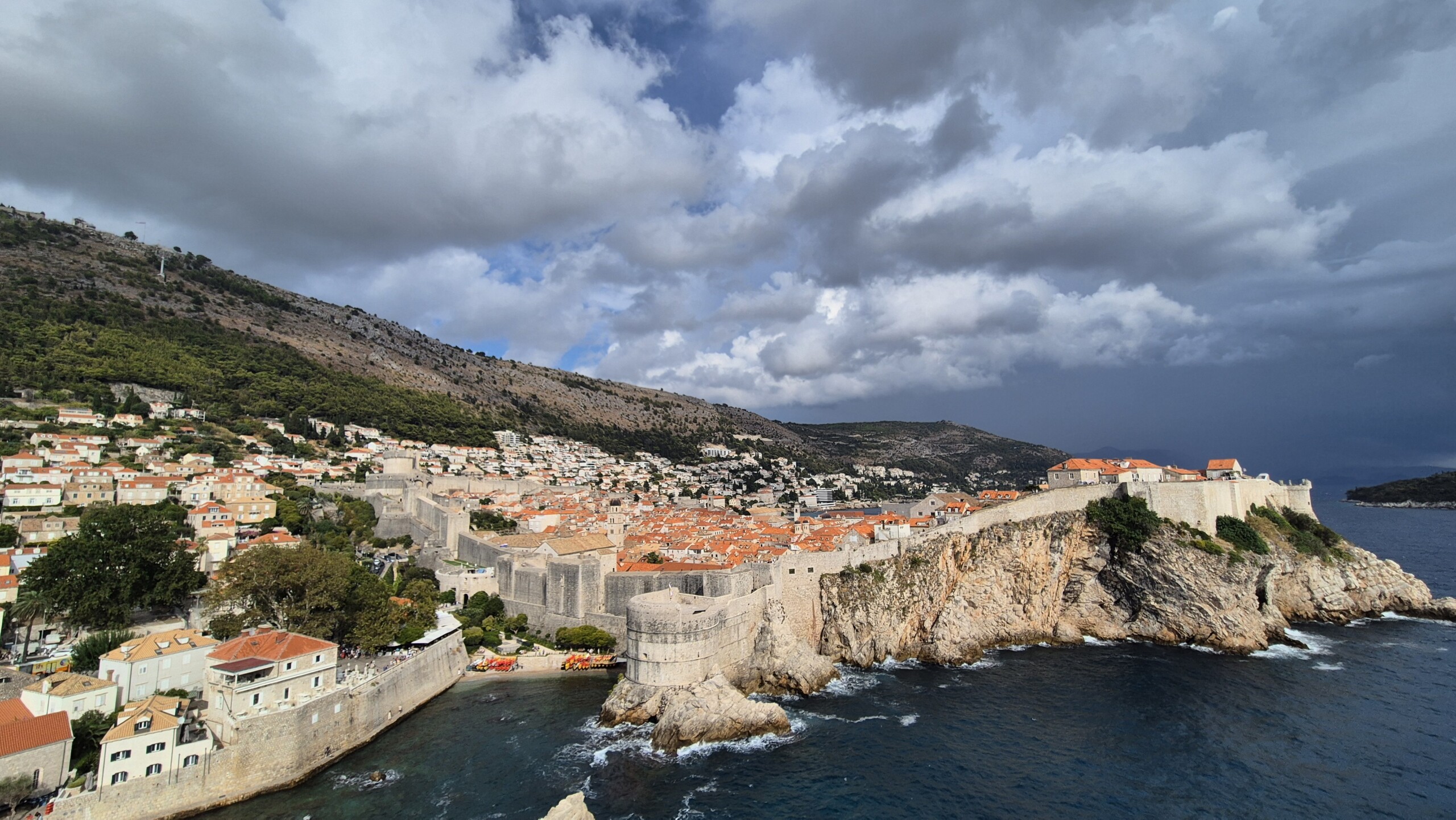
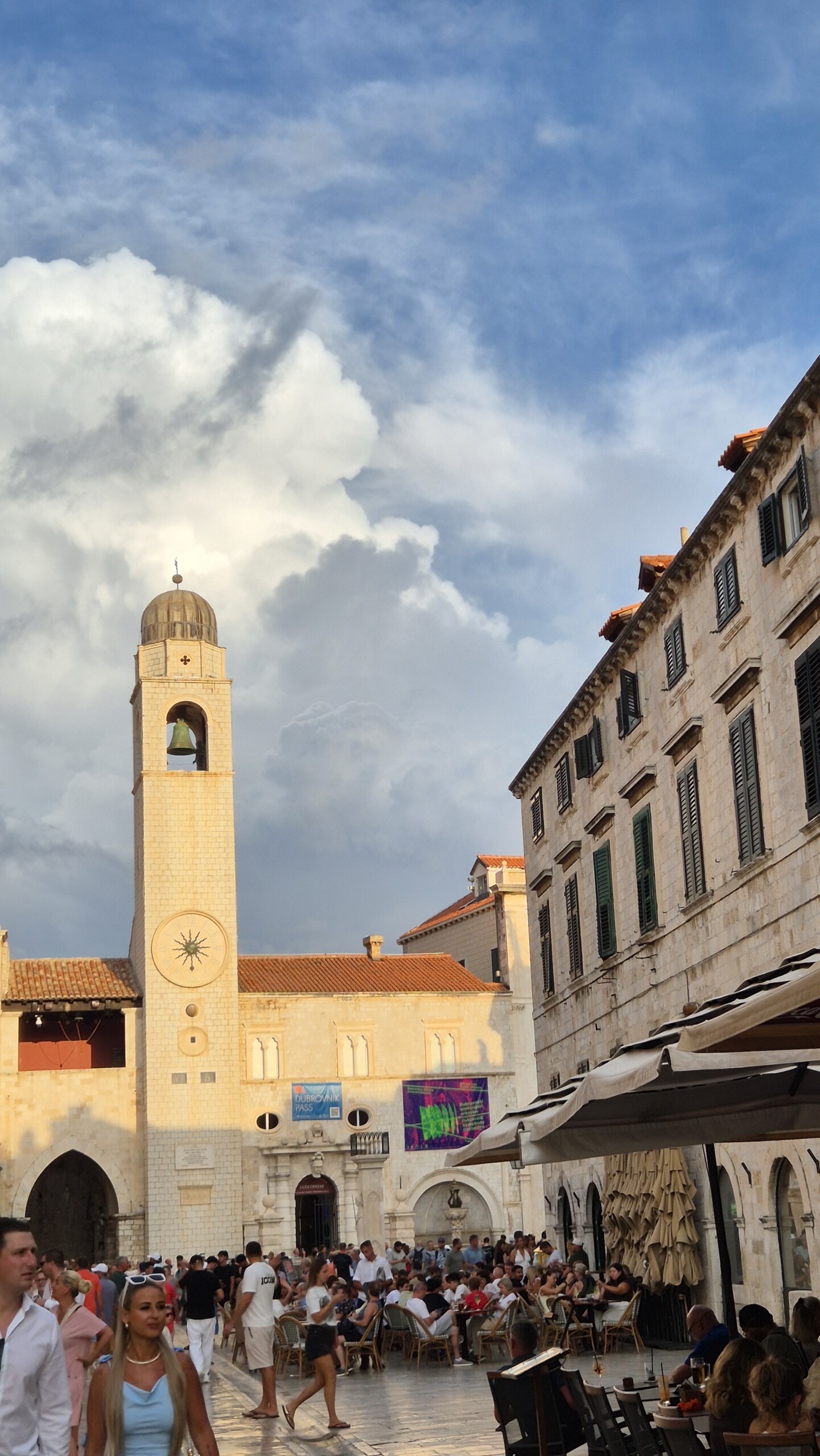
Freed from the backpacks, we continued to Buža Gate. Even from outside, Dubrovnik’s massive walls were imposing, with one of the forts rising beside them. Immediately inside the gate, steep narrow stairs dropped towards the old city’s main street.
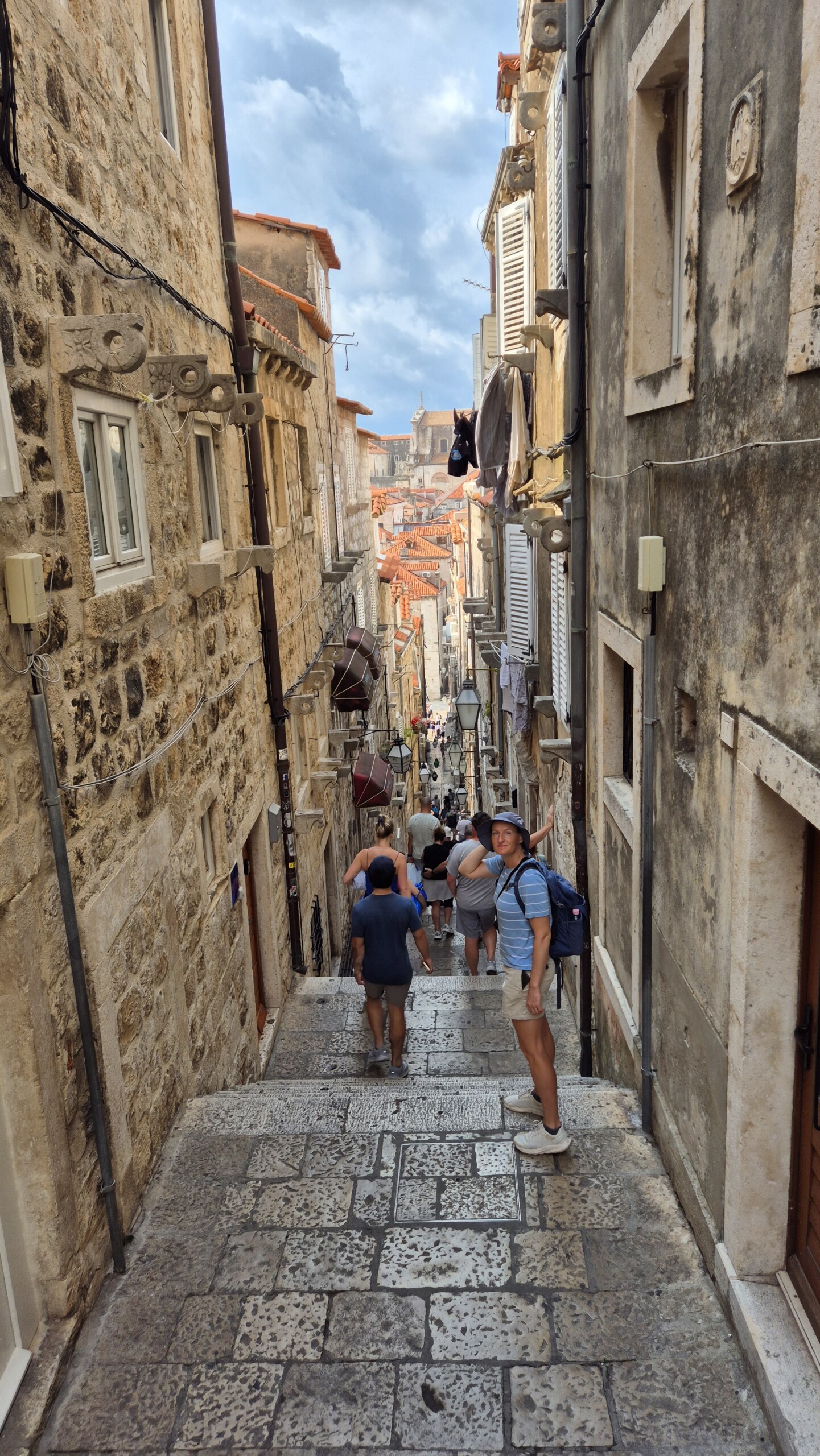
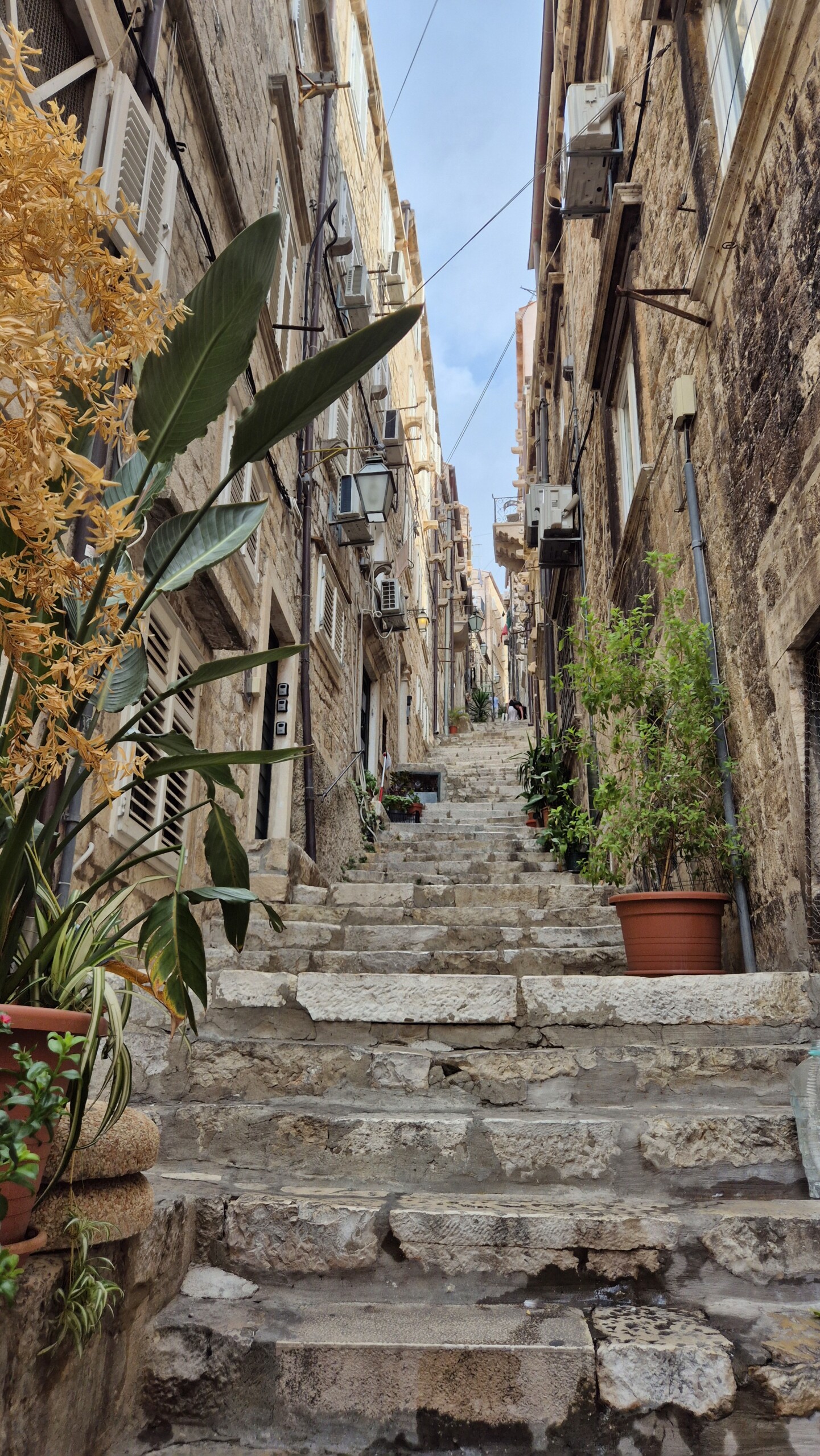
We followed them down, turned right and walked through the city to the main wall entrance near Pile Gate.
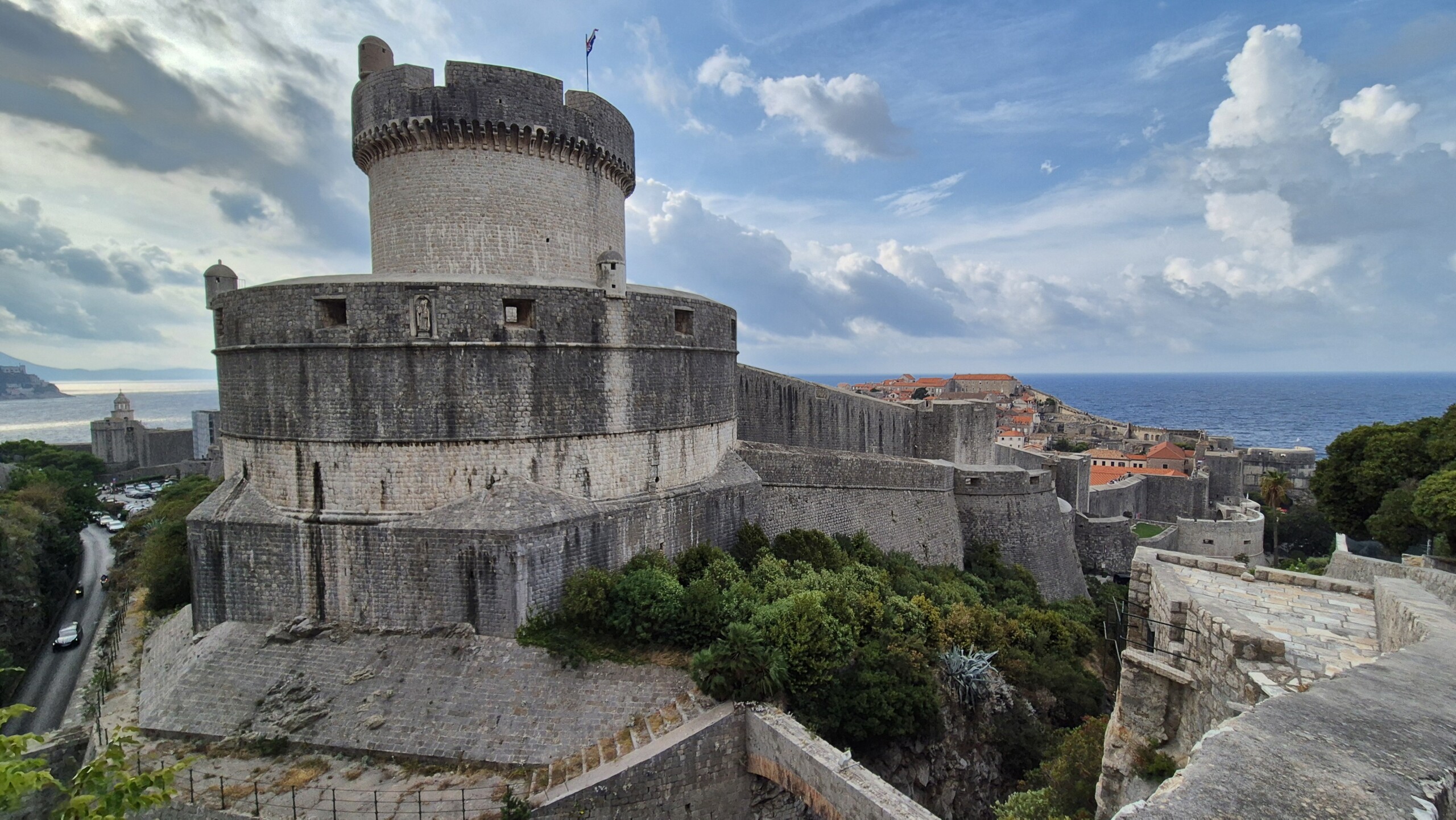
Dubrovnik’s walls run for 1,940 metres around the old city. Although parts date back to the eighth century, the circuit took its present shape mainly from the 13th century onwards and was continually strengthened as weapons and threats changed. In places the walls rise to 25 metres, while the landward side is between four and six metres thick.
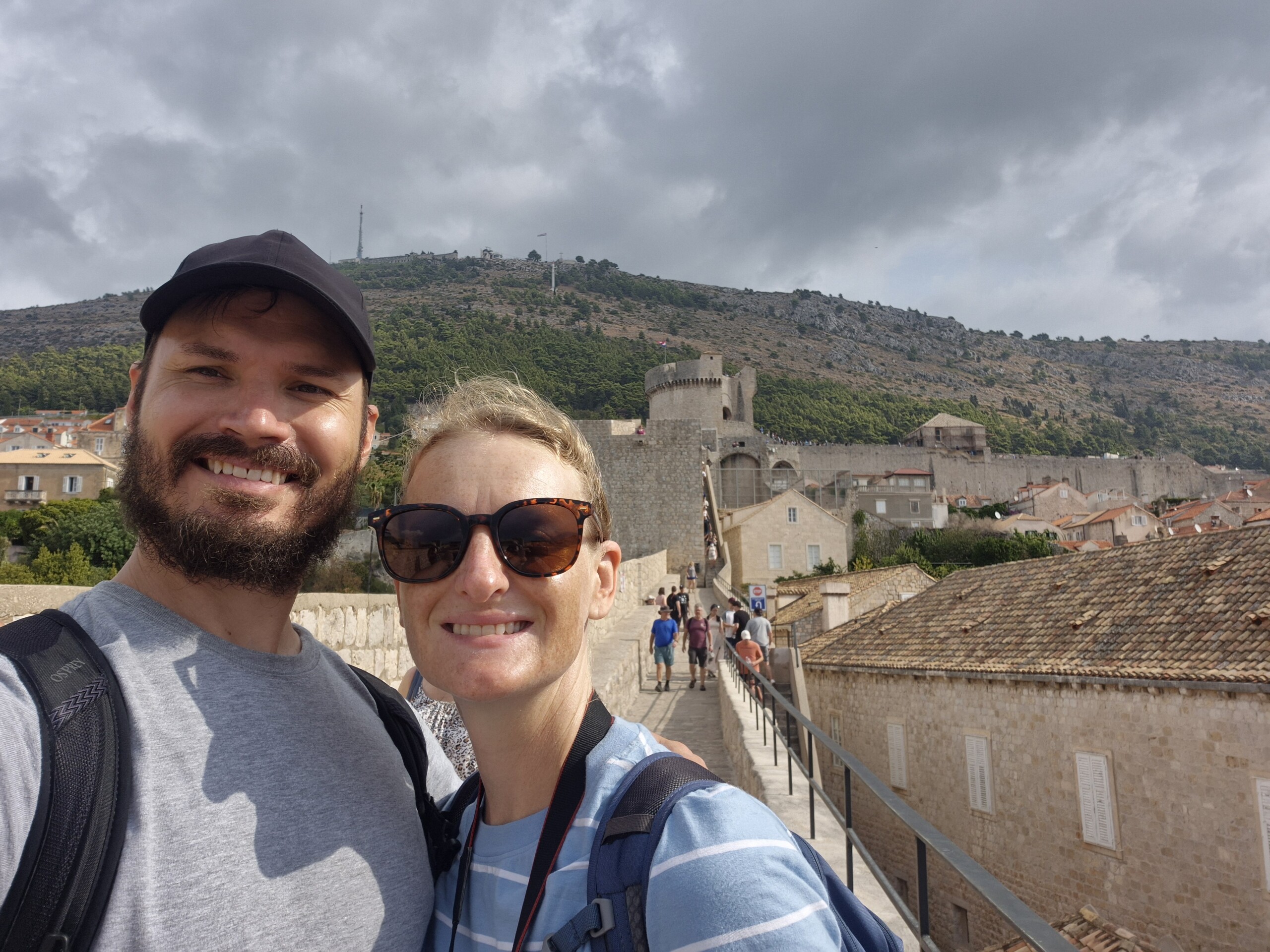
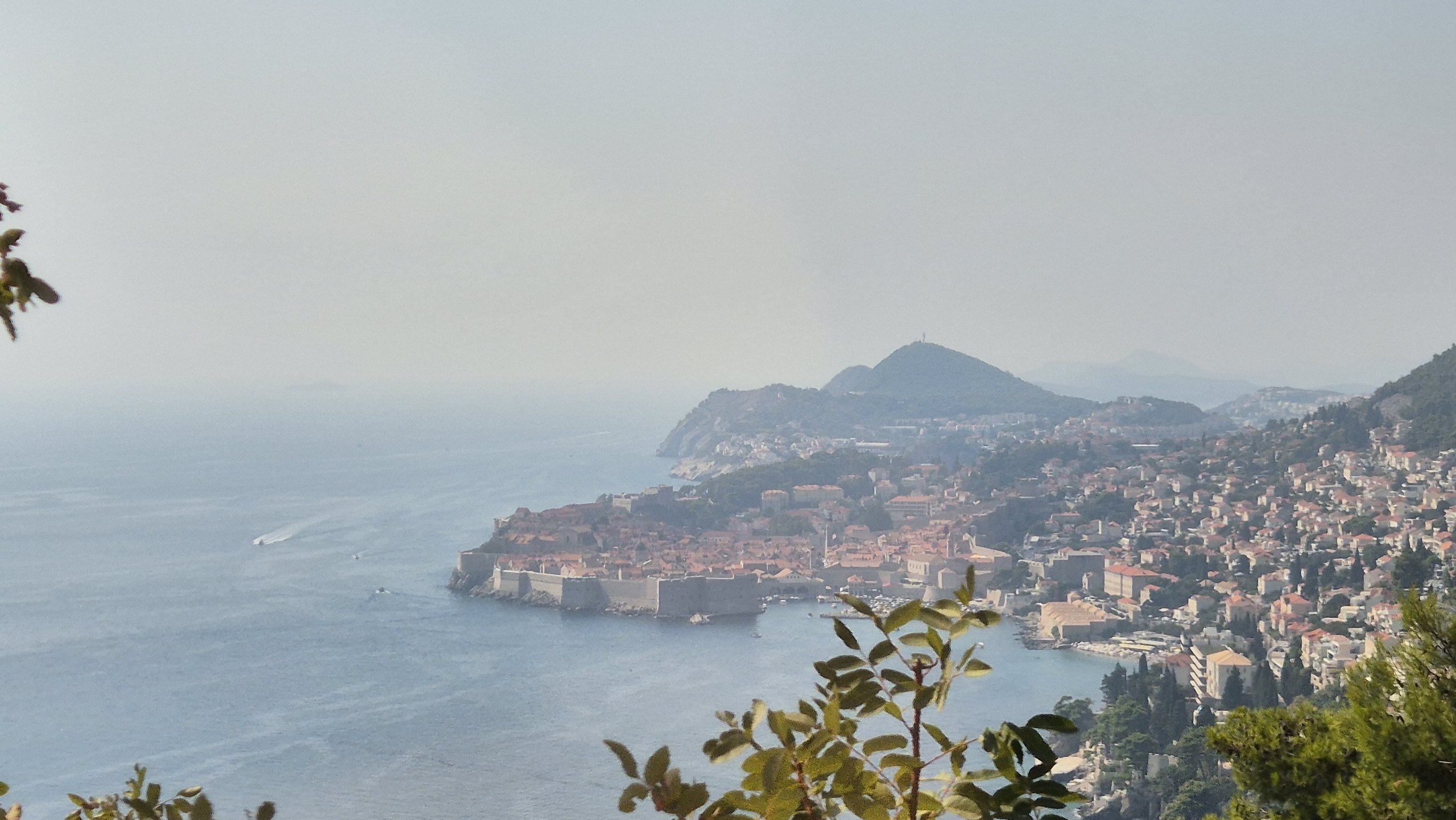
The modern walking route is one-way and anti-clockwise. From Pile we climbed onto the ramparts and began the loop, looking down into the old city’s dense red roofs and narrow lanes while the round Minčeta Tower rose above the highest landward corner.
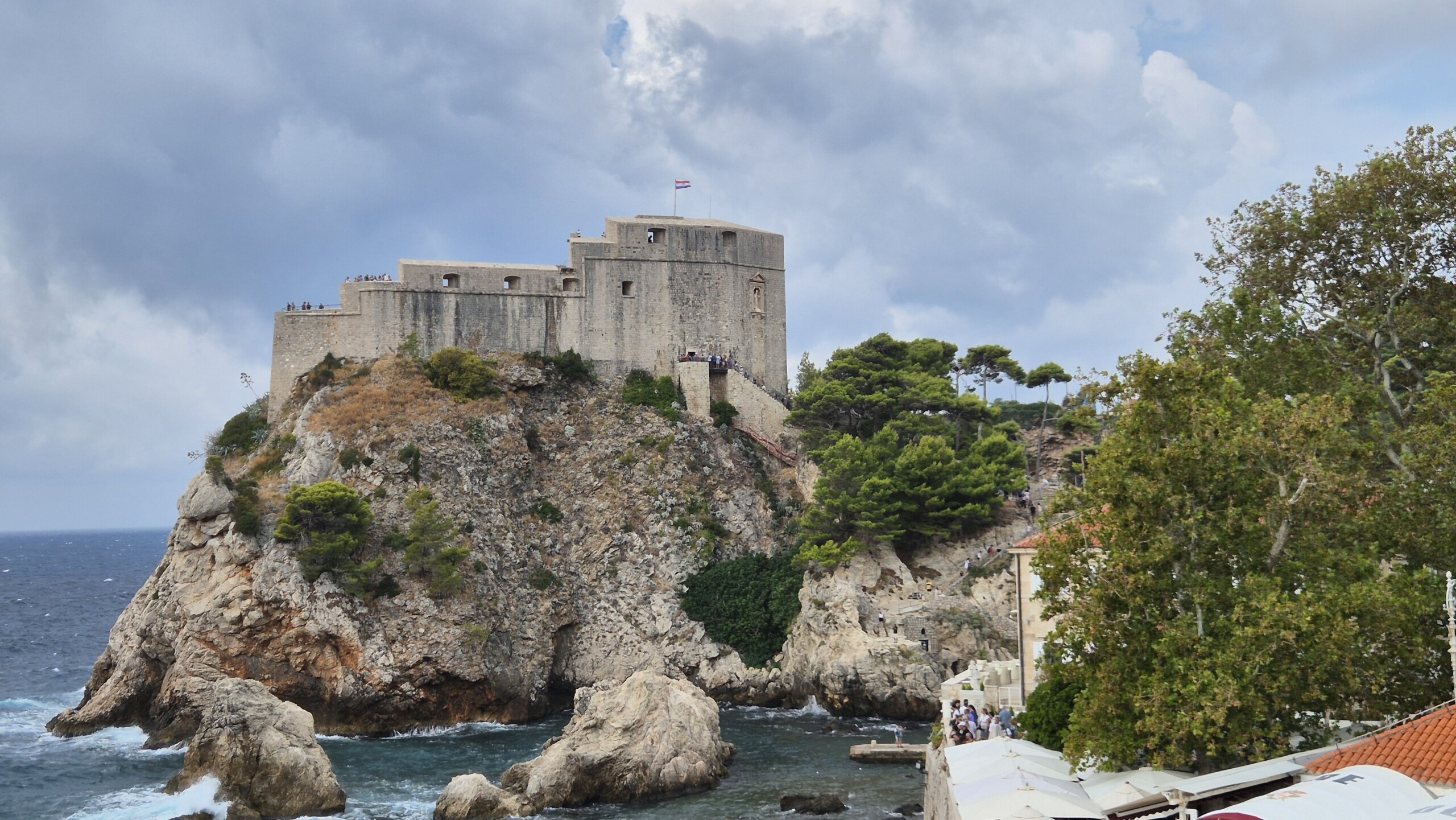
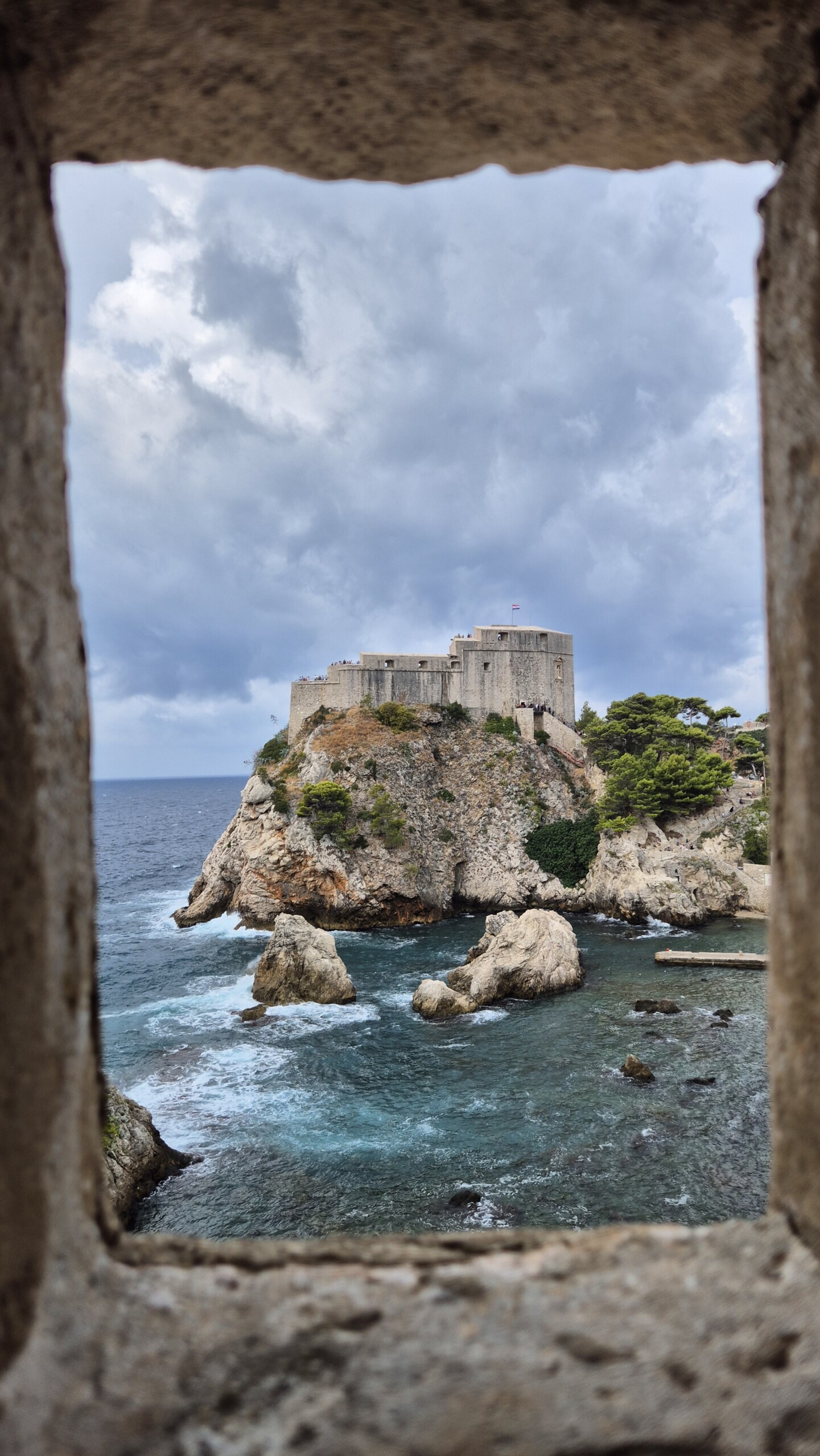
Farther around, the views opened towards Fort Bokar, the freestanding Fort Lovrijenac across the little bay, and the Adriatic beyond.
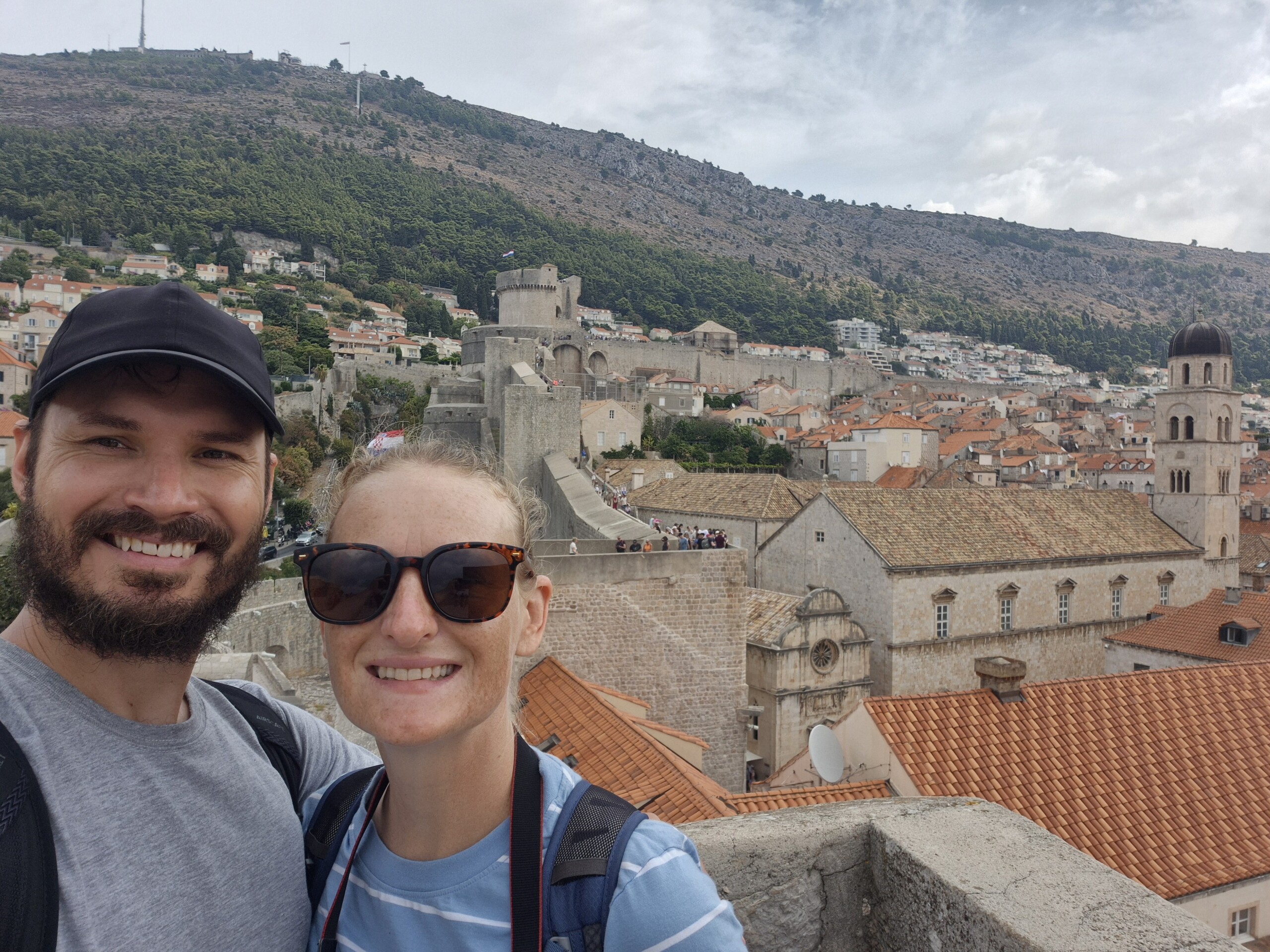
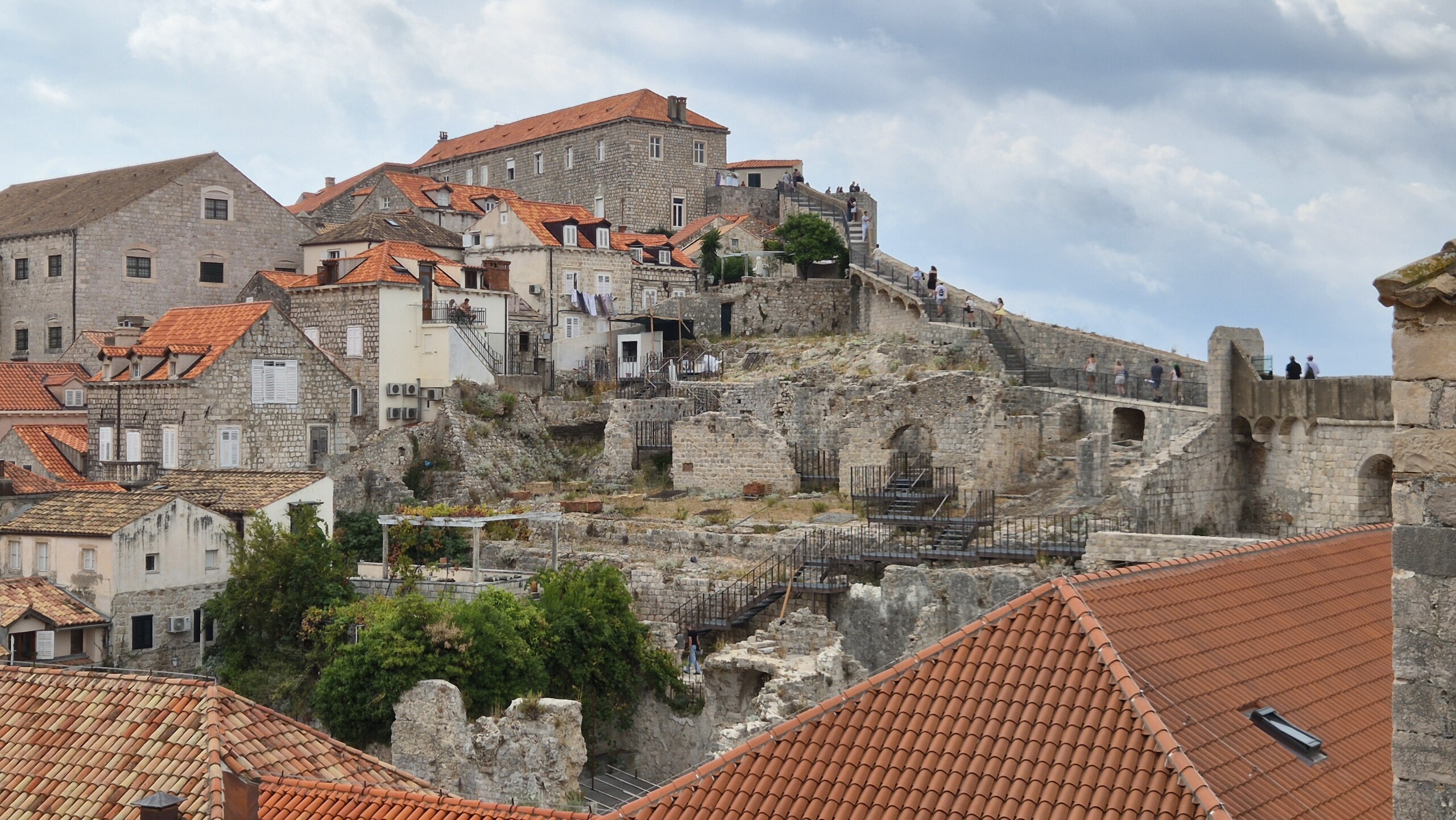
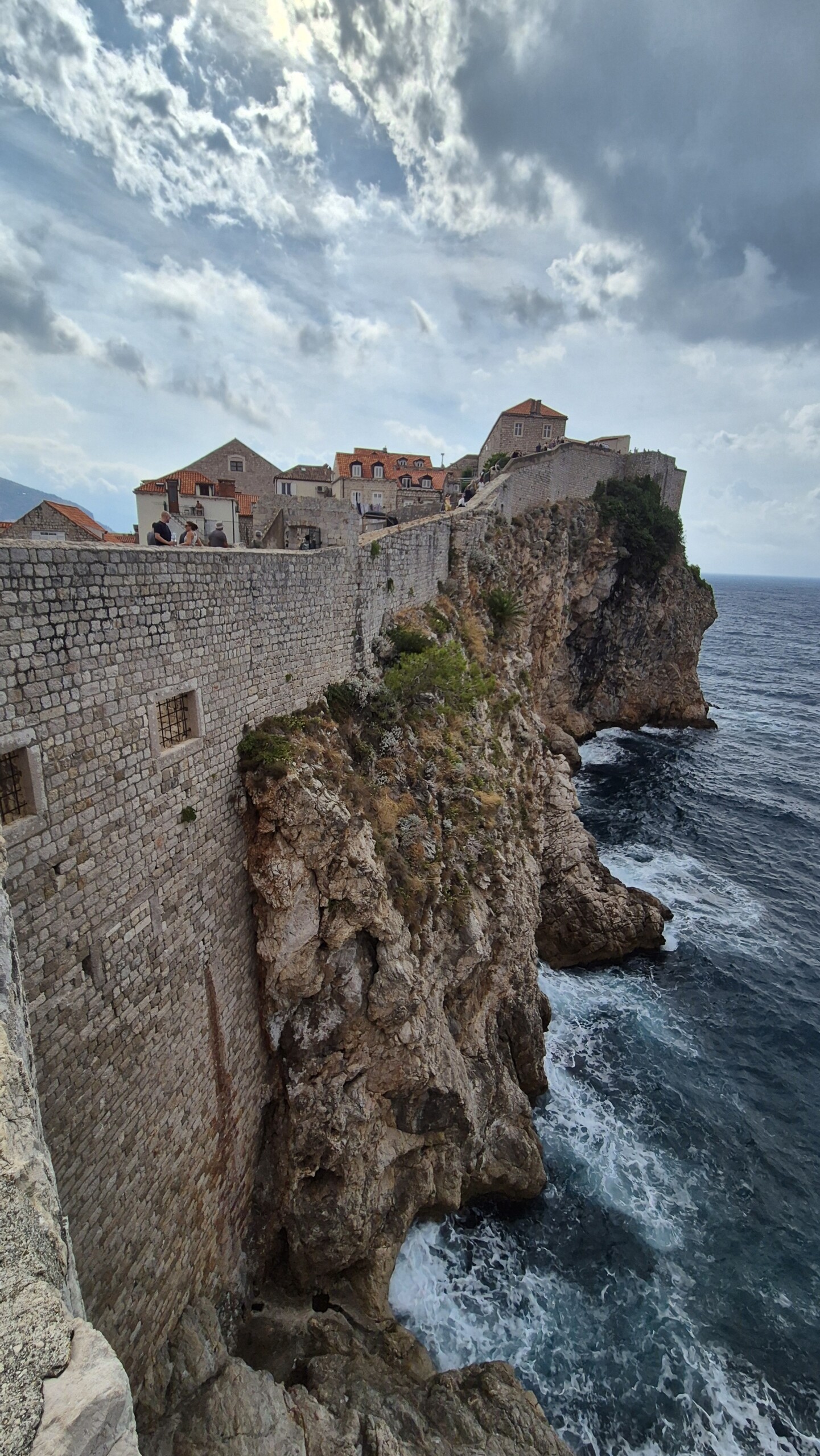
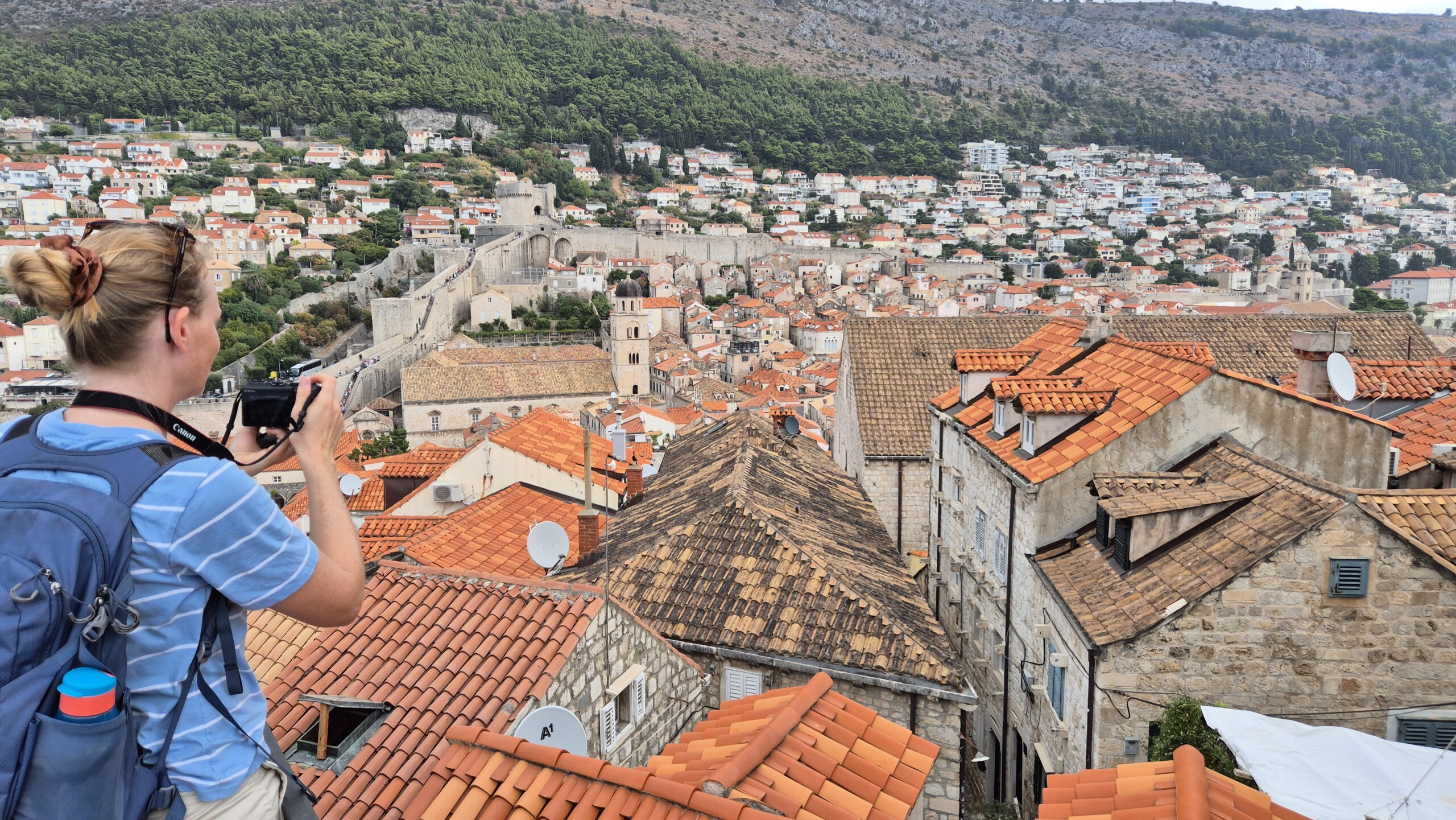
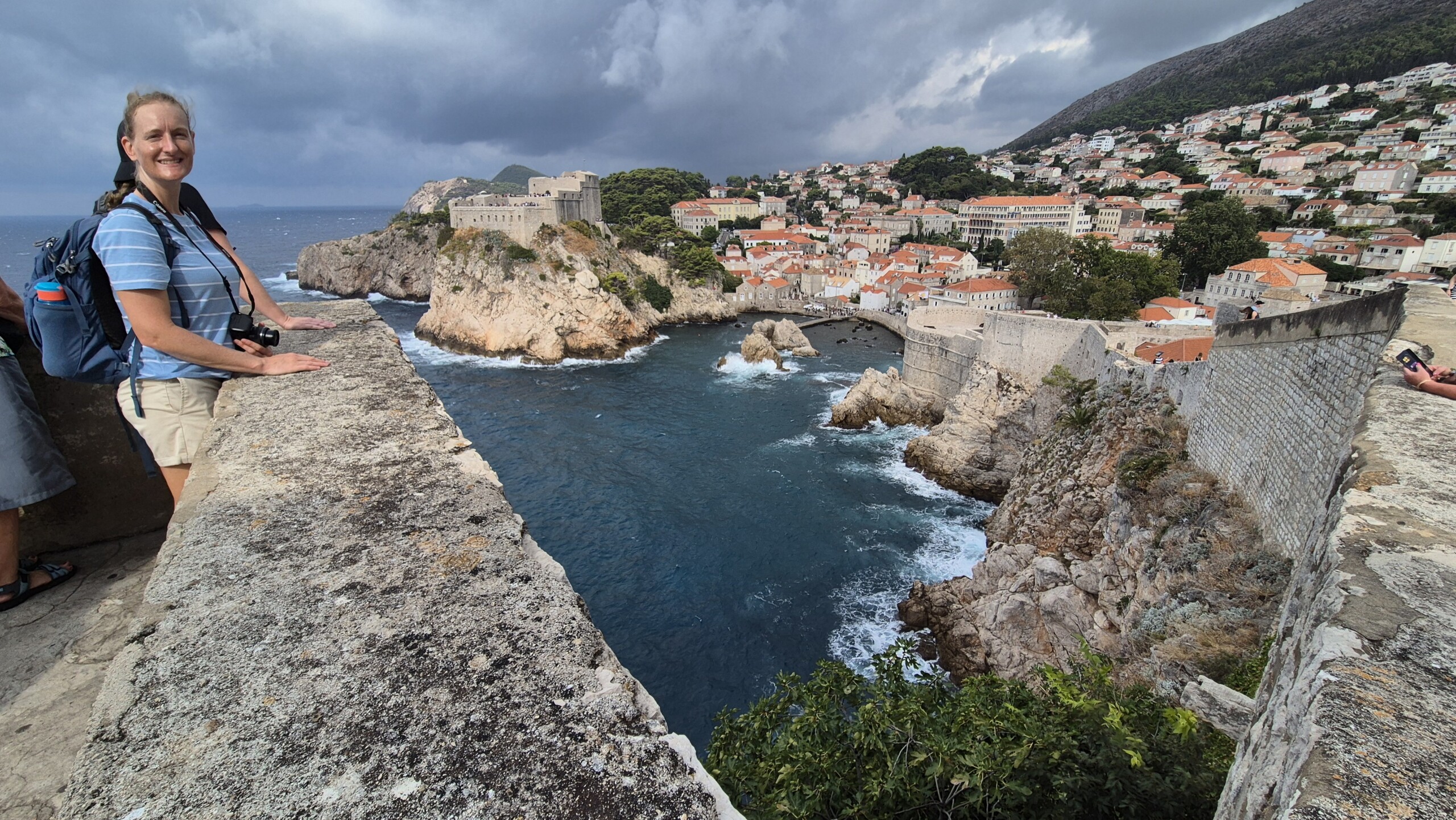
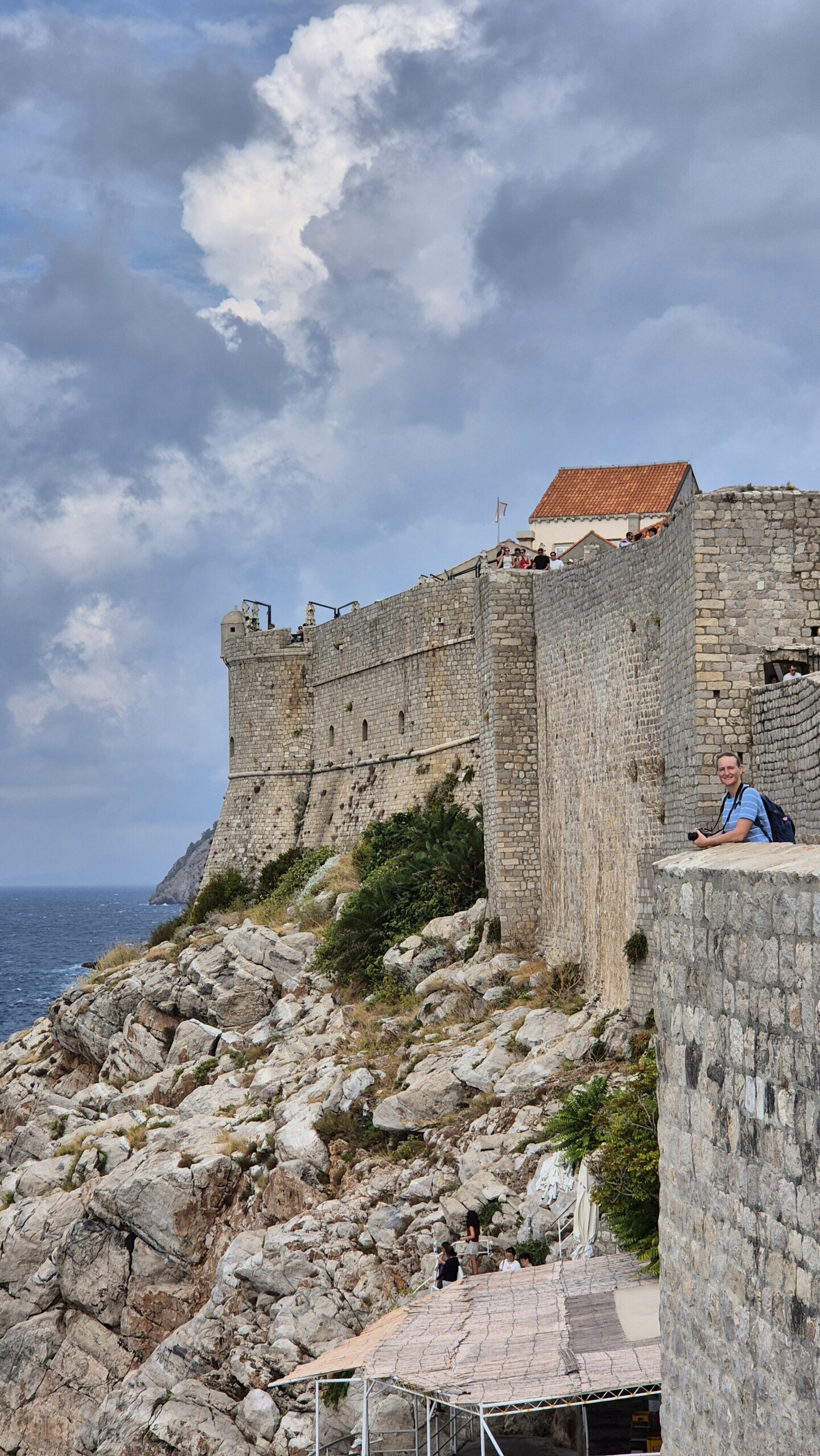
On the eastern side we could look over the Old Port, St John’s Fortress at the harbour mouth and the separate Revelin Fortress guarding the approach to the city.
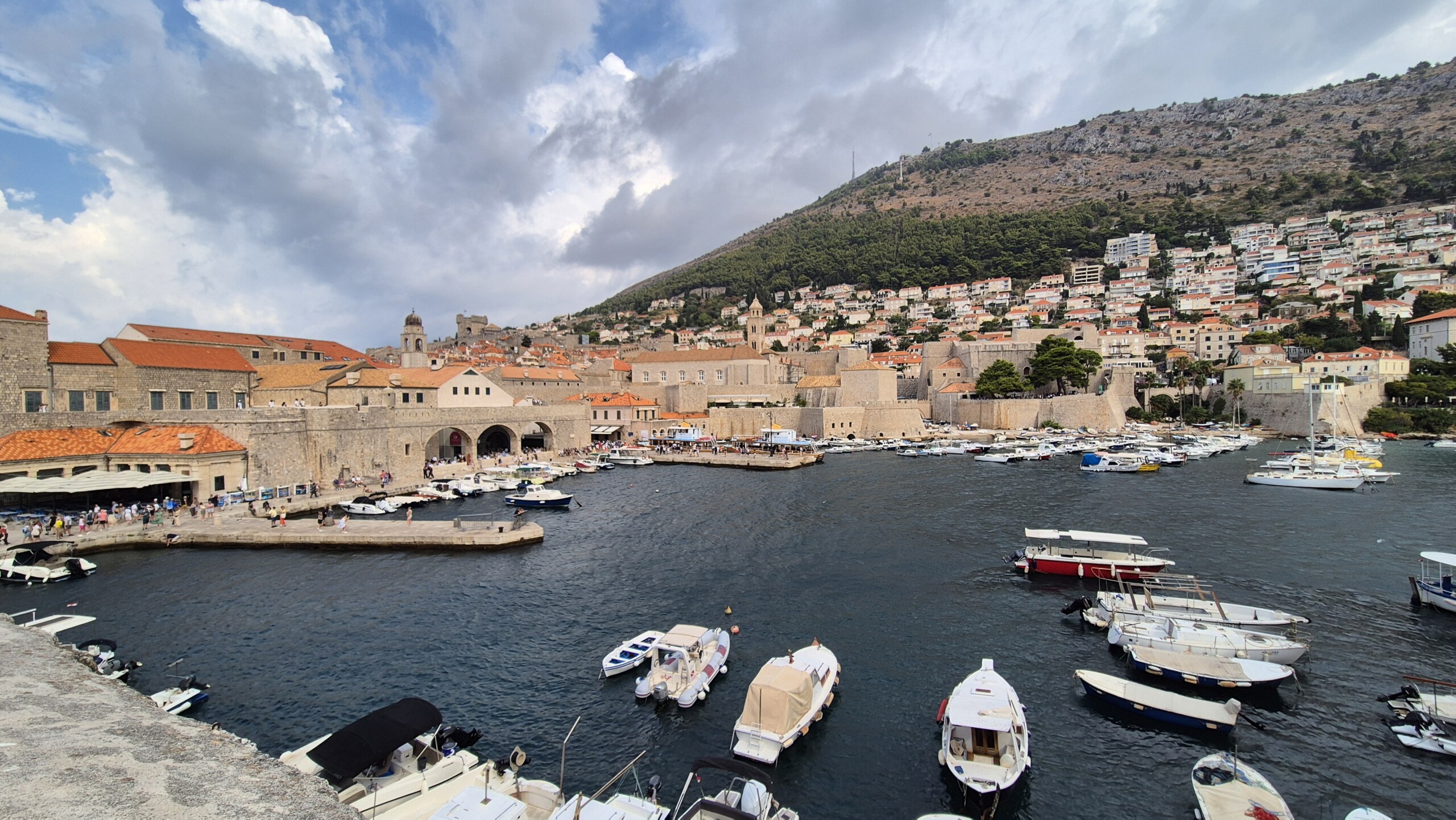
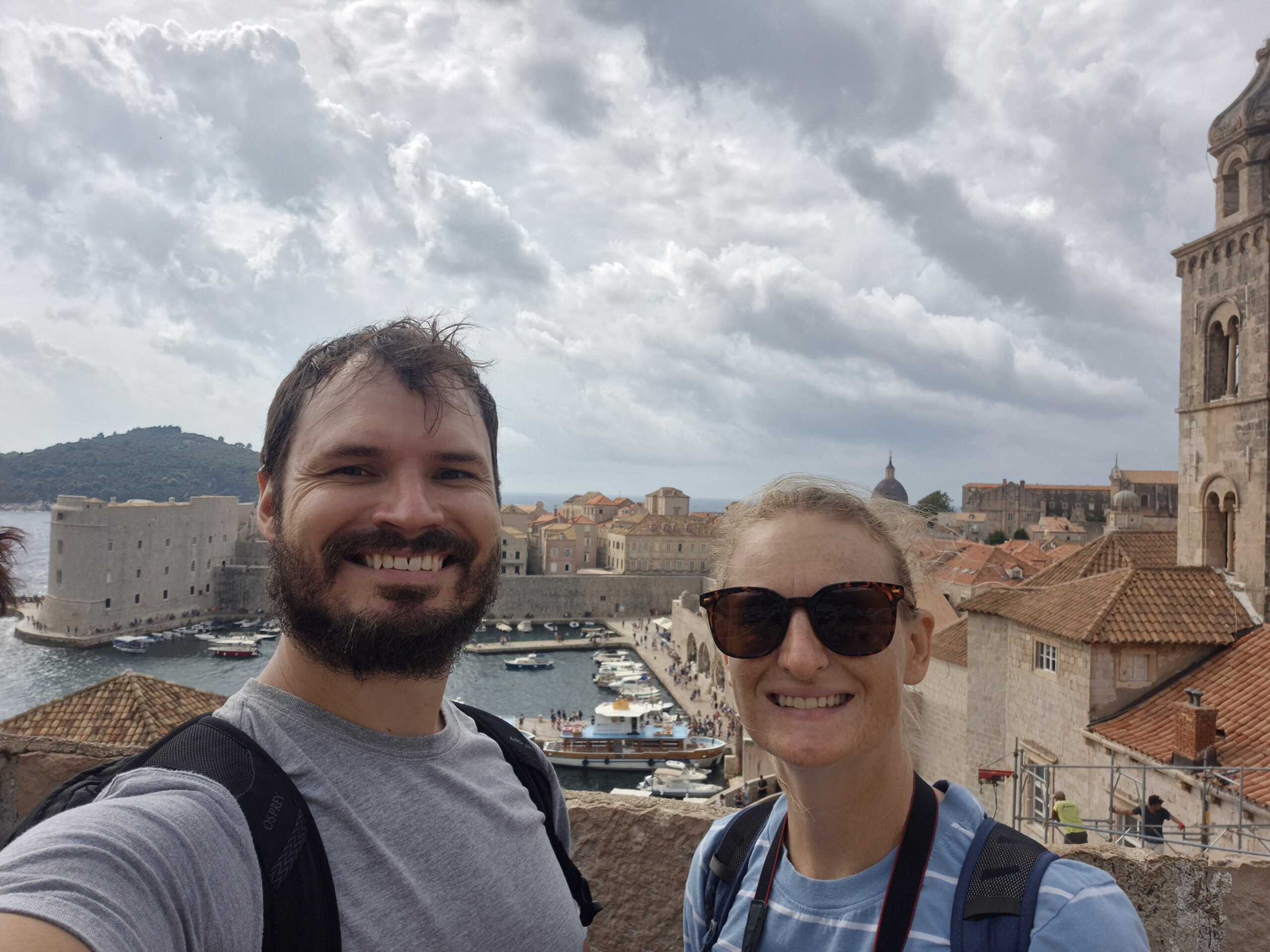
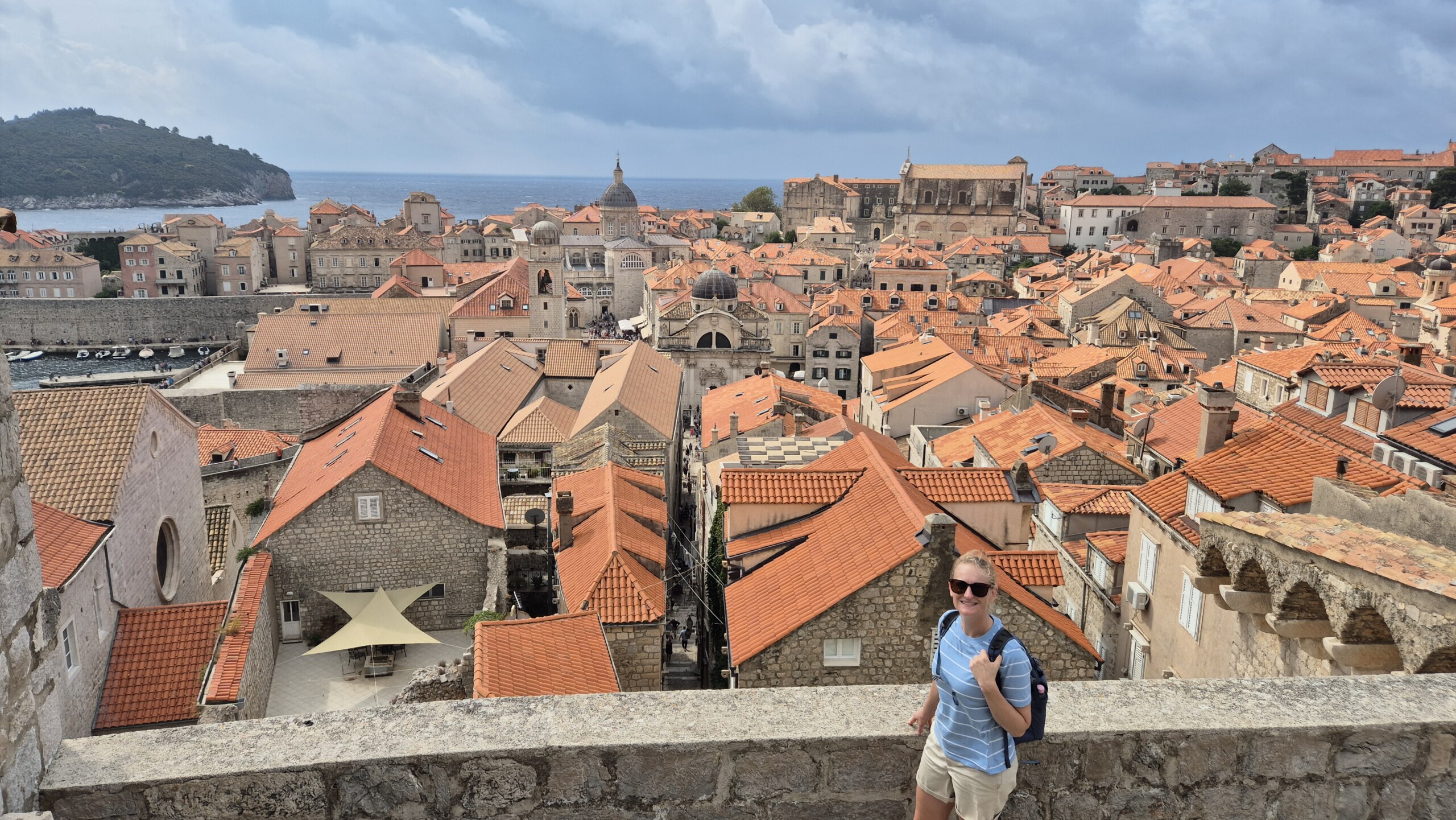
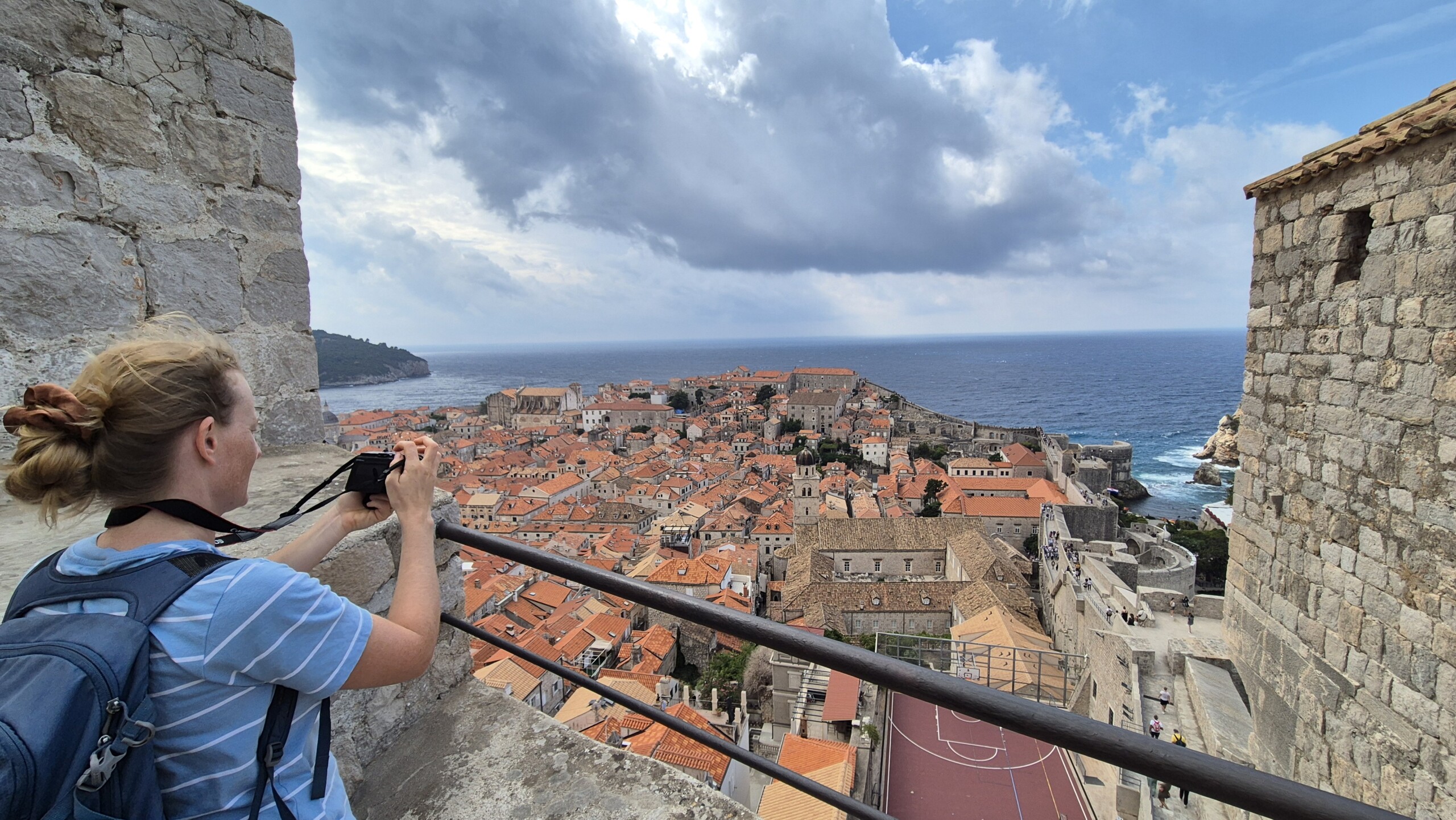
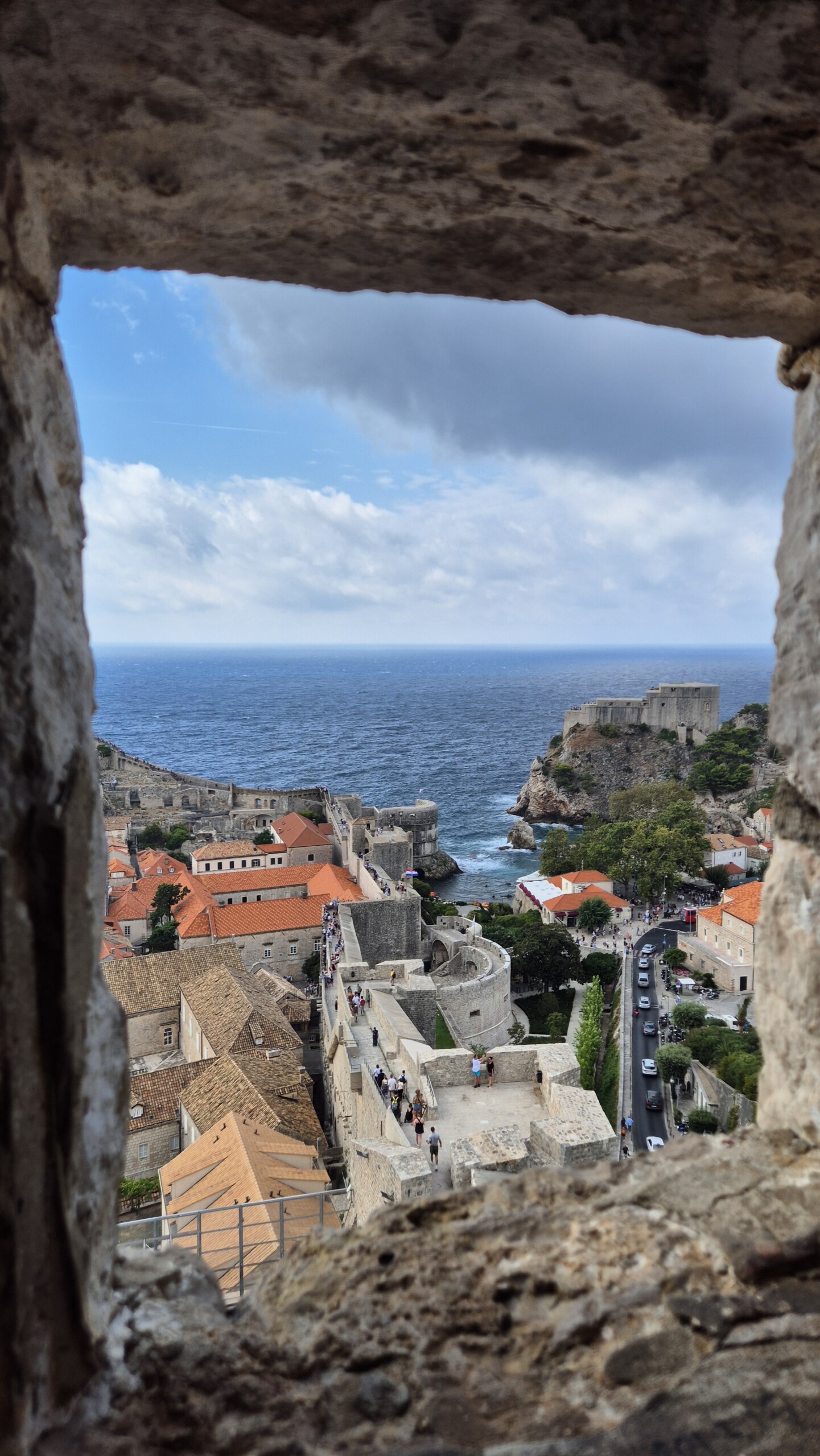
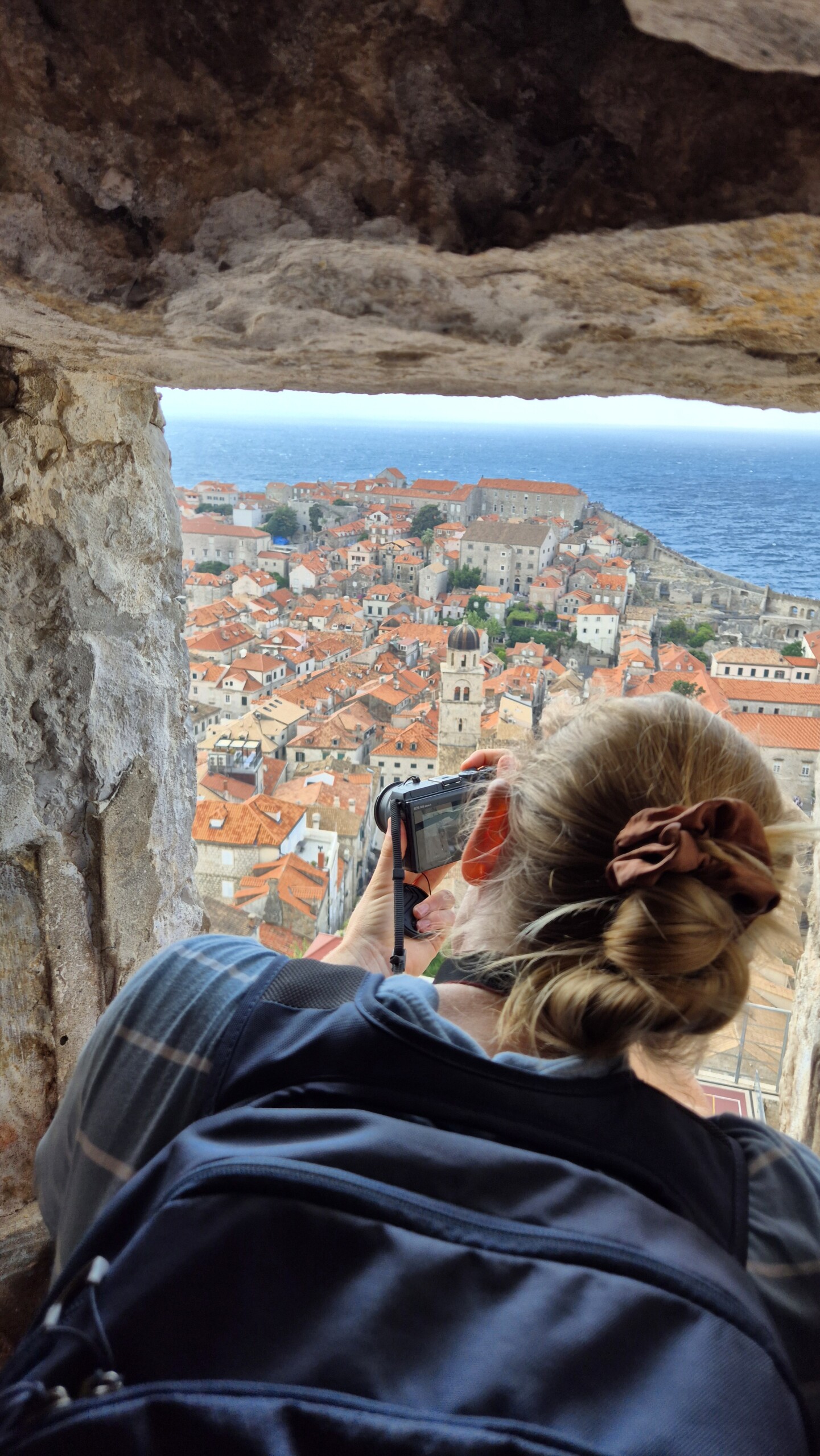
It was windy on top of the walls. Looking out over the rougher water, we were suddenly very glad that the boat trip had happened the previous day rather than today. The wind was probably also preferable to walking the entire exposed circuit in baking heat.
The full loop took us an hour and 40 minutes, including plenty of photo stops and a break for a snack.
We were getting hungry by the time we came down, but first visited the Franciscan monastery and its old pharmacy. The pharmacy has operated since 1317, and its museum preserves old jars, tools and remedies from centuries of dispensing medicine in the city.
The monastery also carried reminders of much more recent history. We could still see preserved impact scars from the shelling of Dubrovnik in 1991. During the major attack on 6 December, the Franciscan monastery received 37 hits.
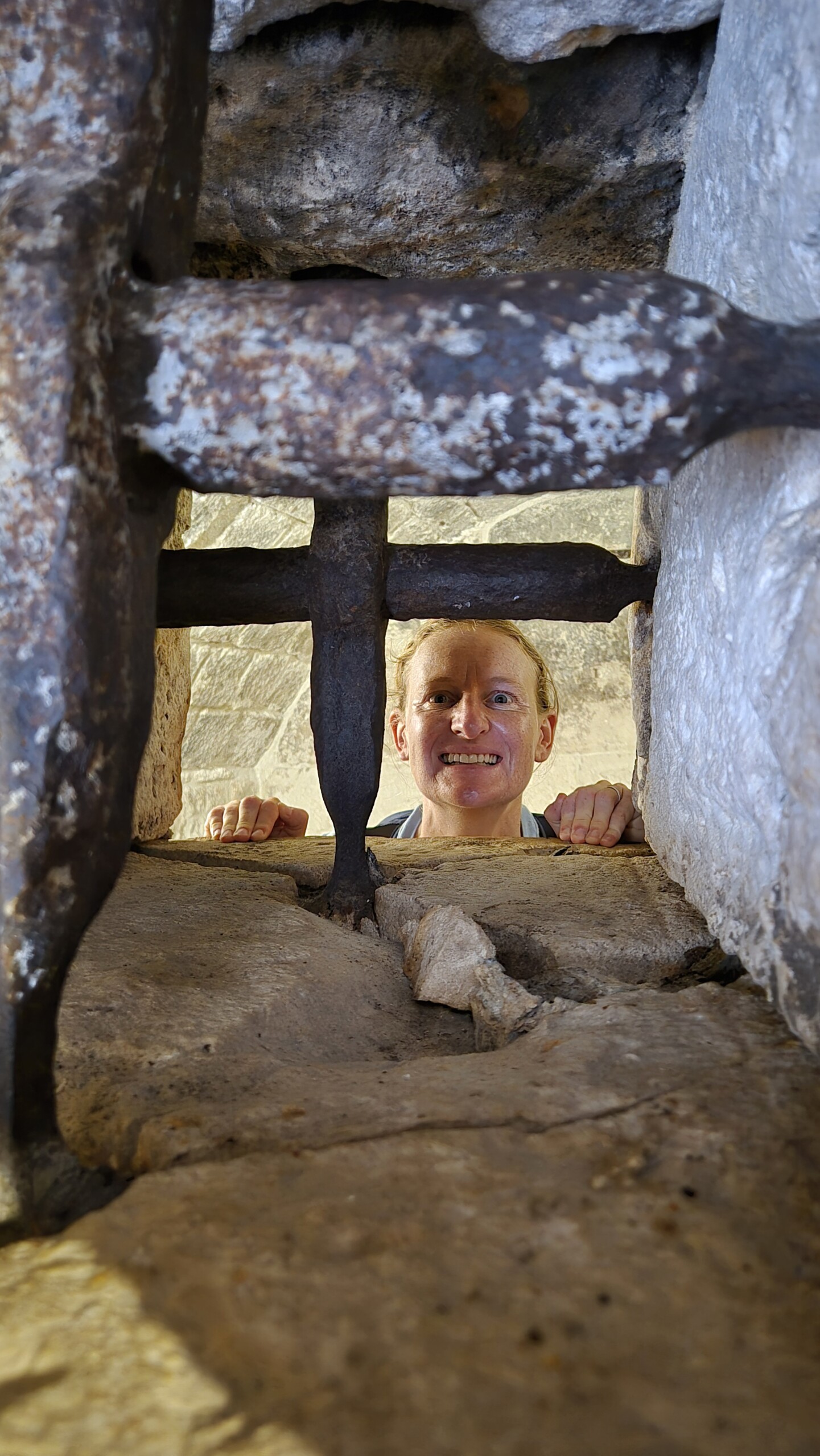
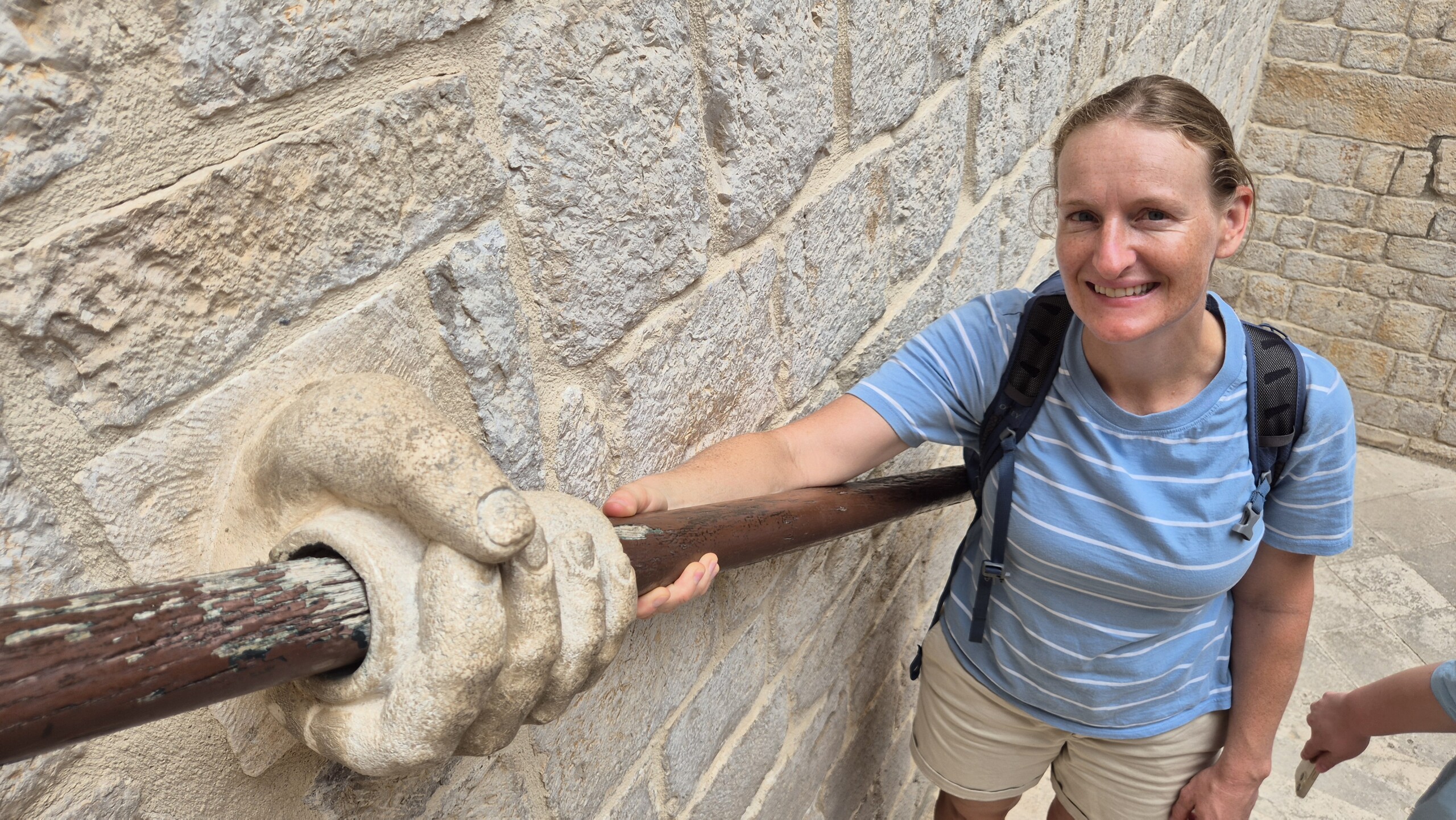
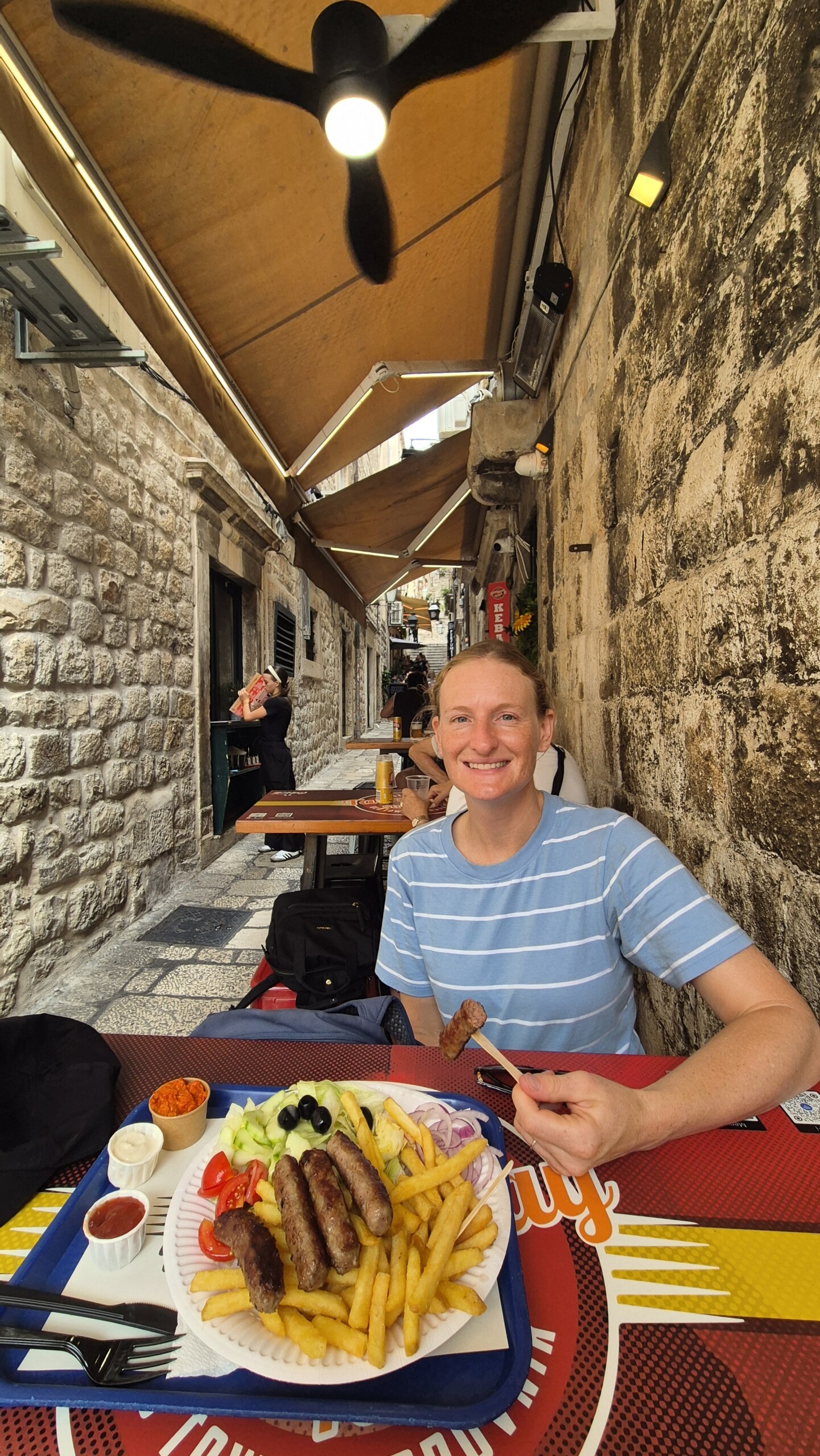
After that, we found somewhere selling ćevapi and had them for old times’ sake.
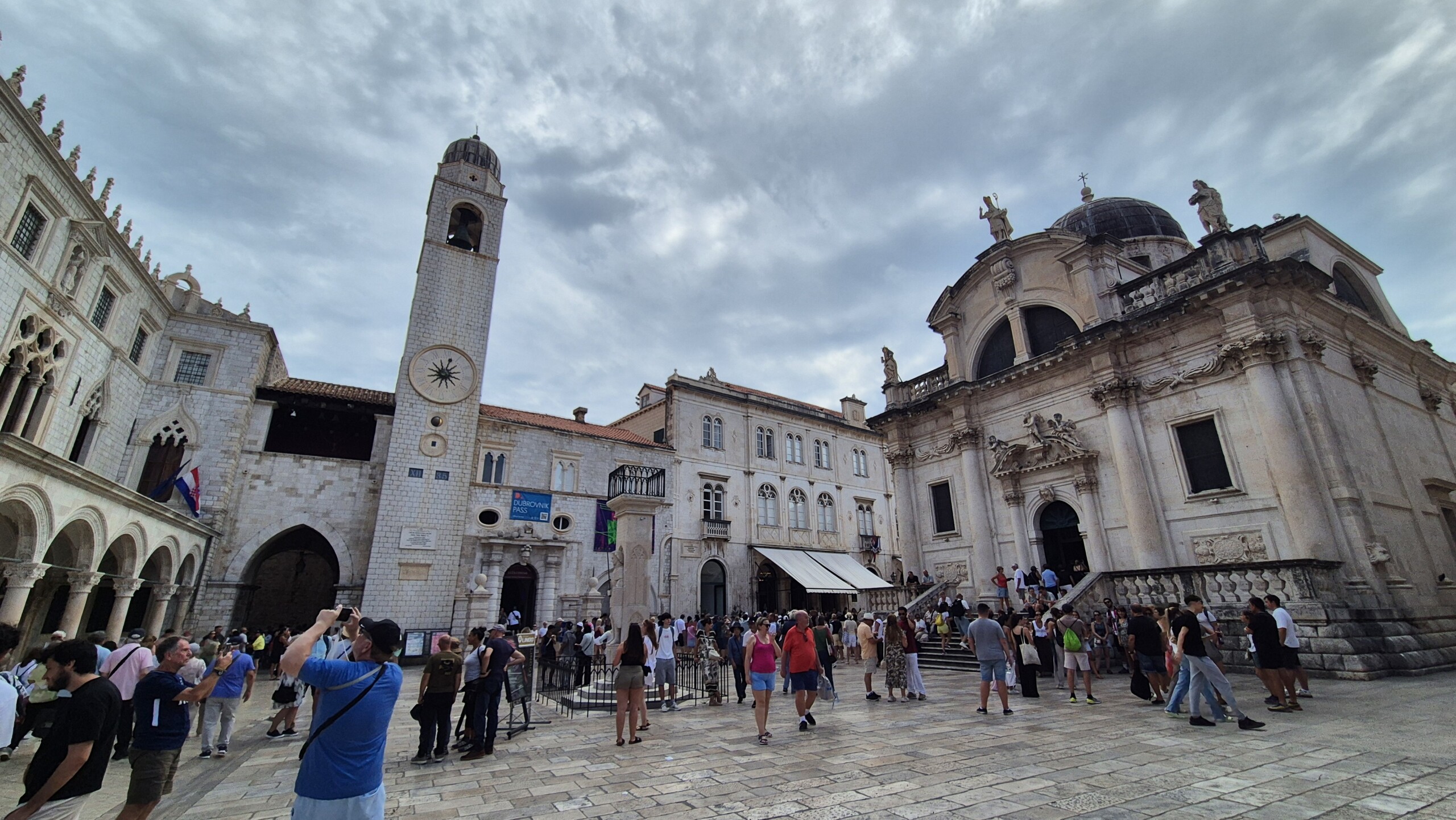
Our next stop was the Rector’s Palace, the former centre of government of the independent Republic of Dubrovnik. The elected rector lived there for his one-month term, alongside the council chambers, courtroom, offices, armoury and prison. Today the Gothic-Renaissance palace houses the Cultural History Museum.
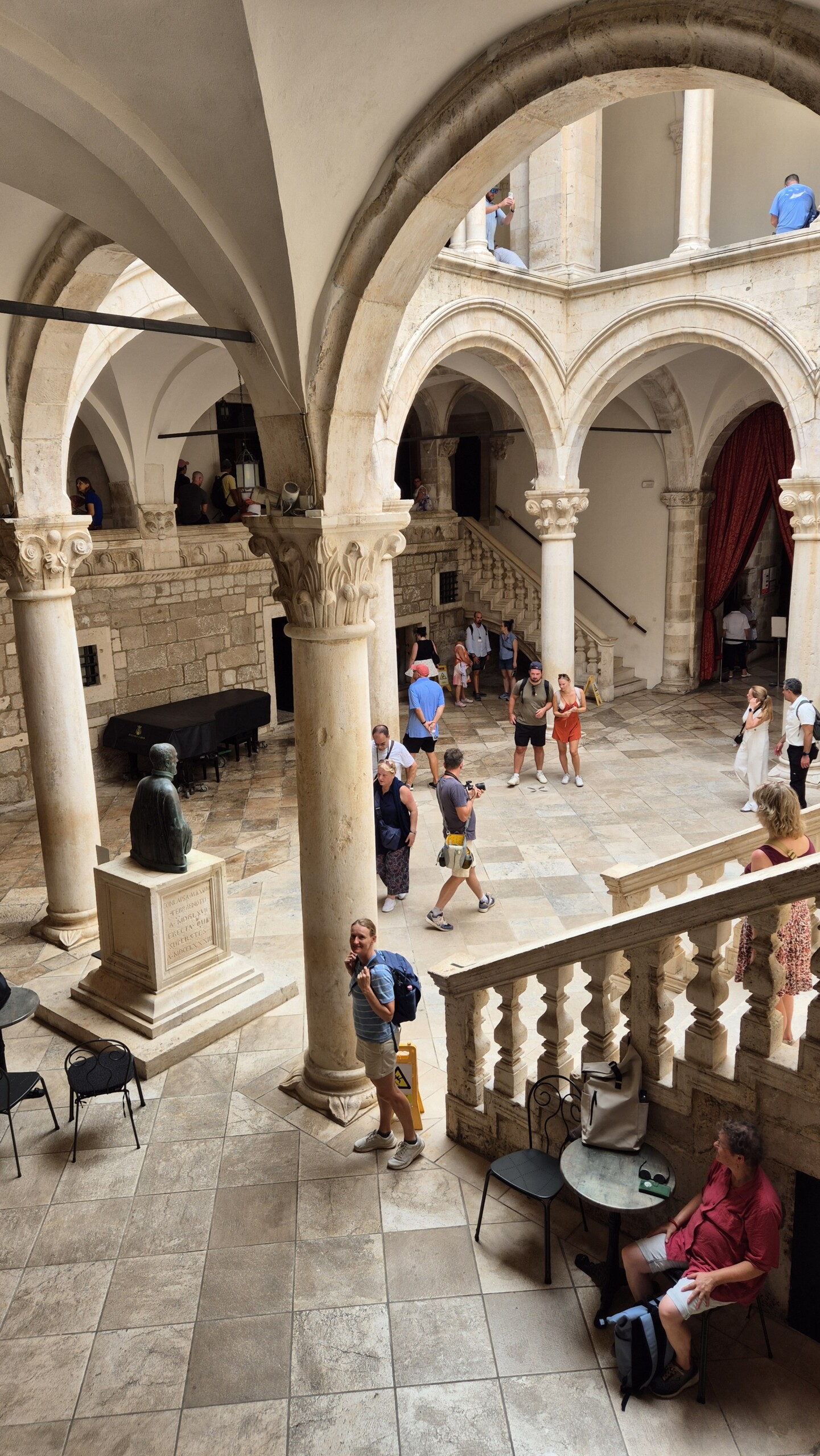
Part of the display included photographs of Dubrovnik during the 1991 war. The human loss is always the worst part of war, but it was also sad to see how little regard there had been for centuries of cultural heritage. It is impossible not to wonder how many buildings, artworks and records would still exist if they had not been deliberately or carelessly destroyed in wars.
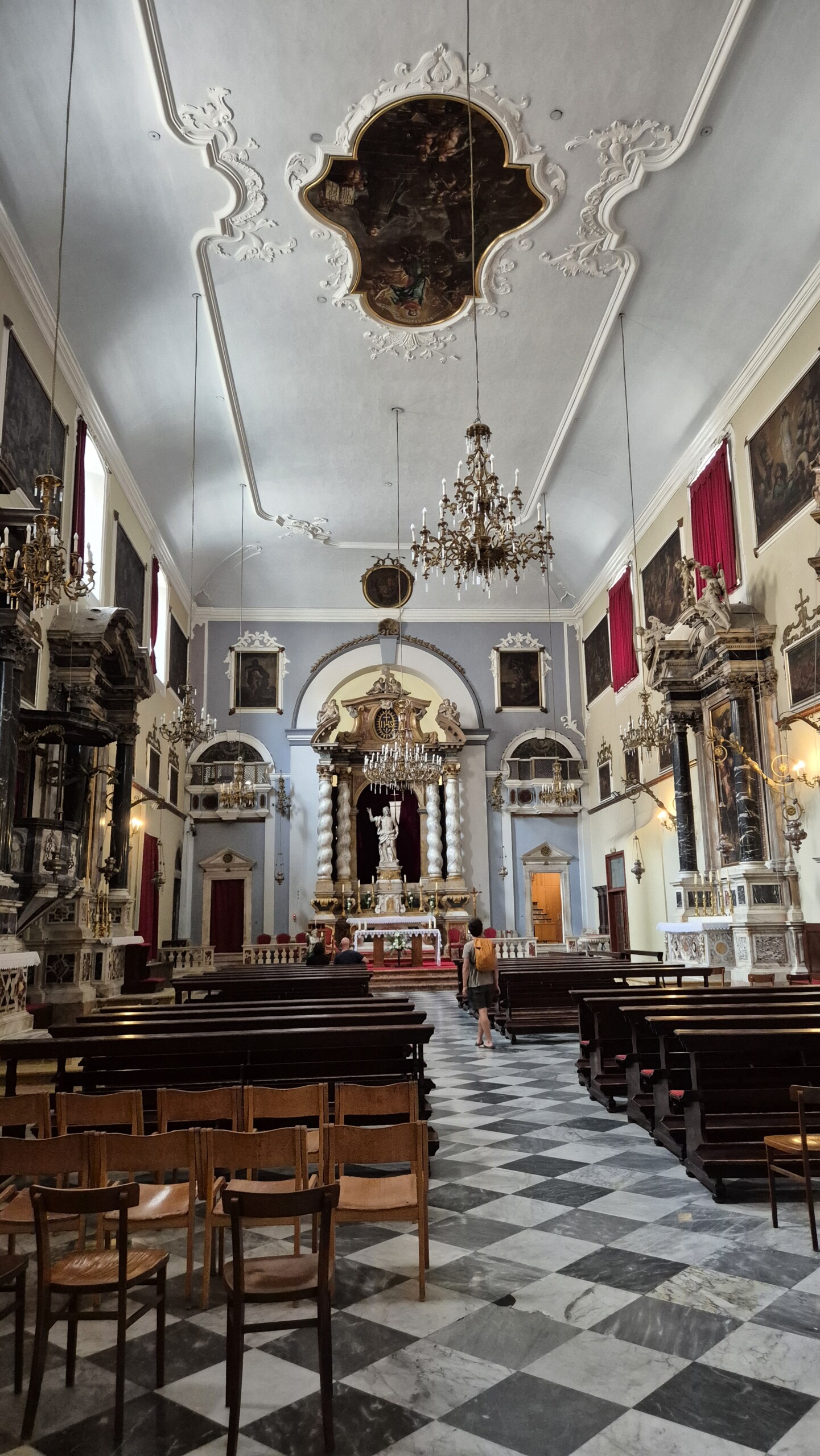
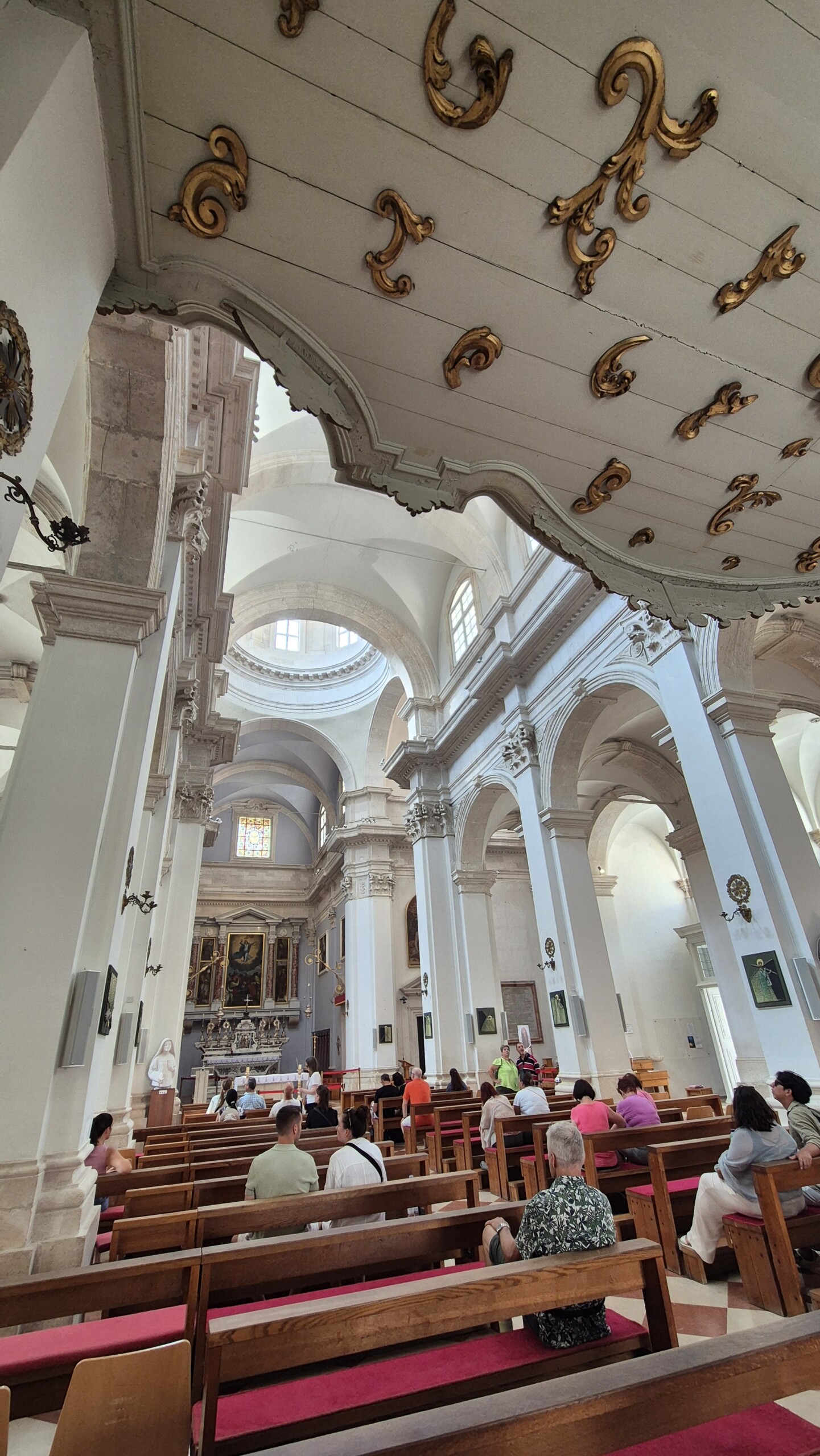
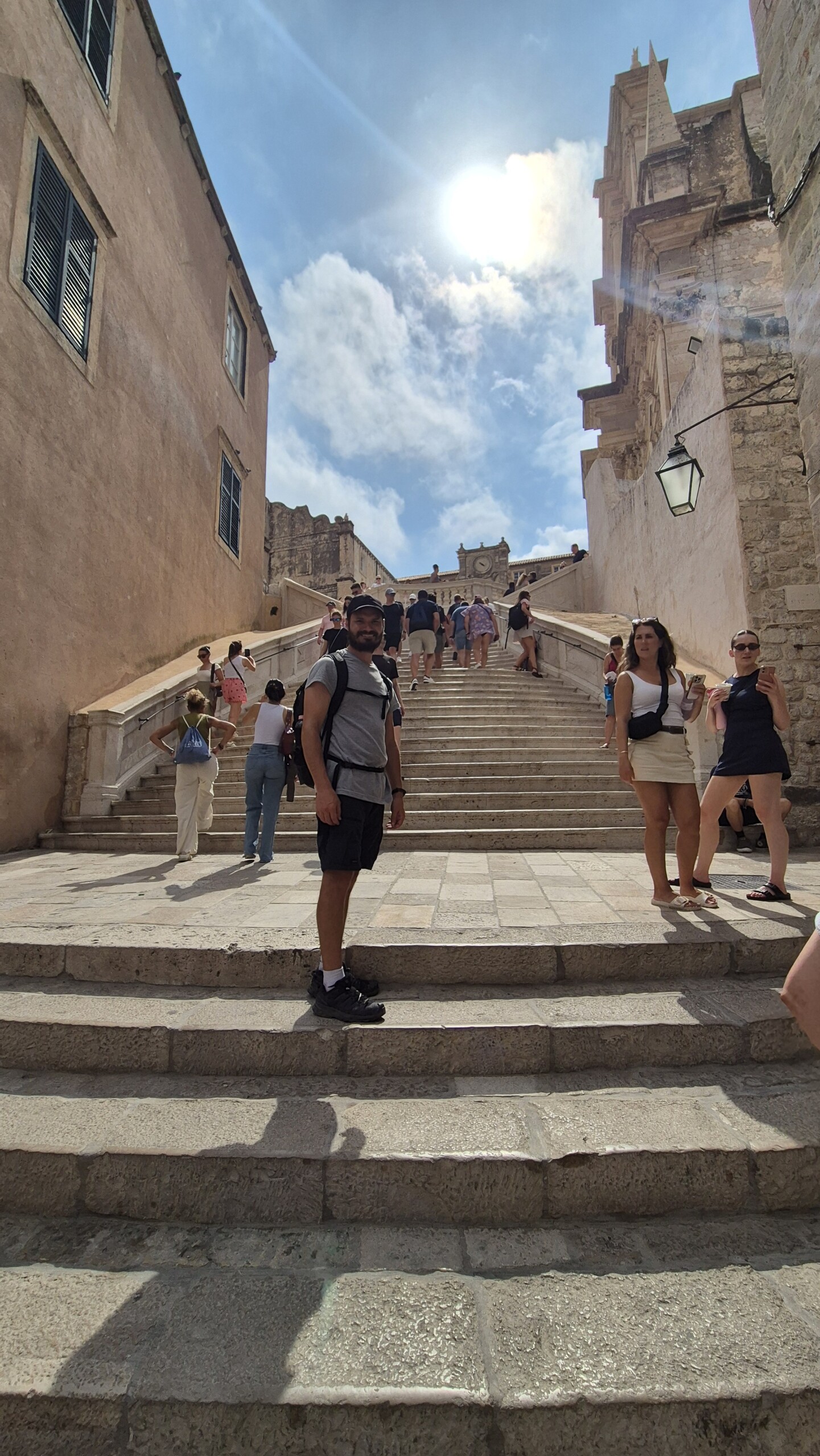
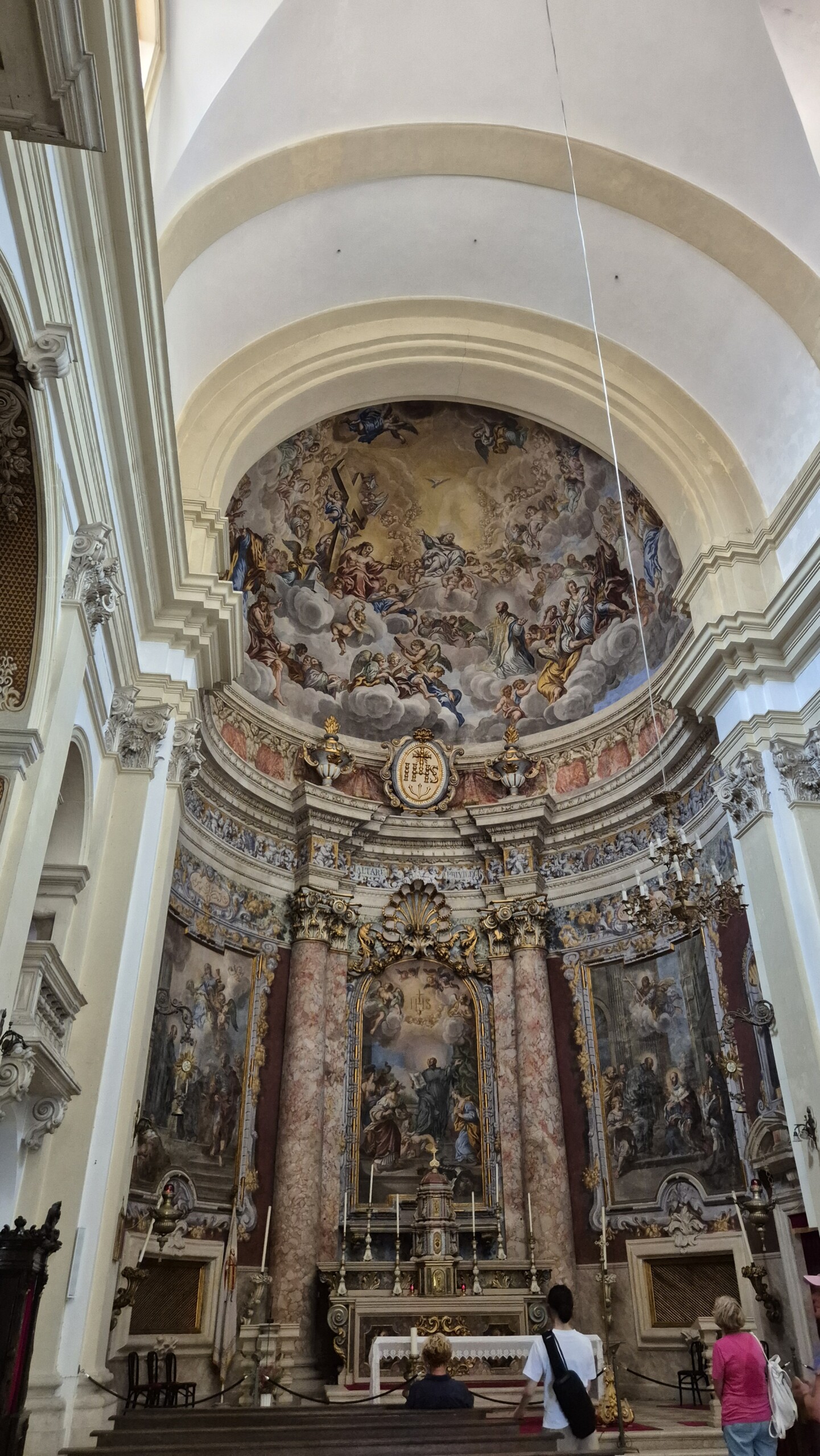
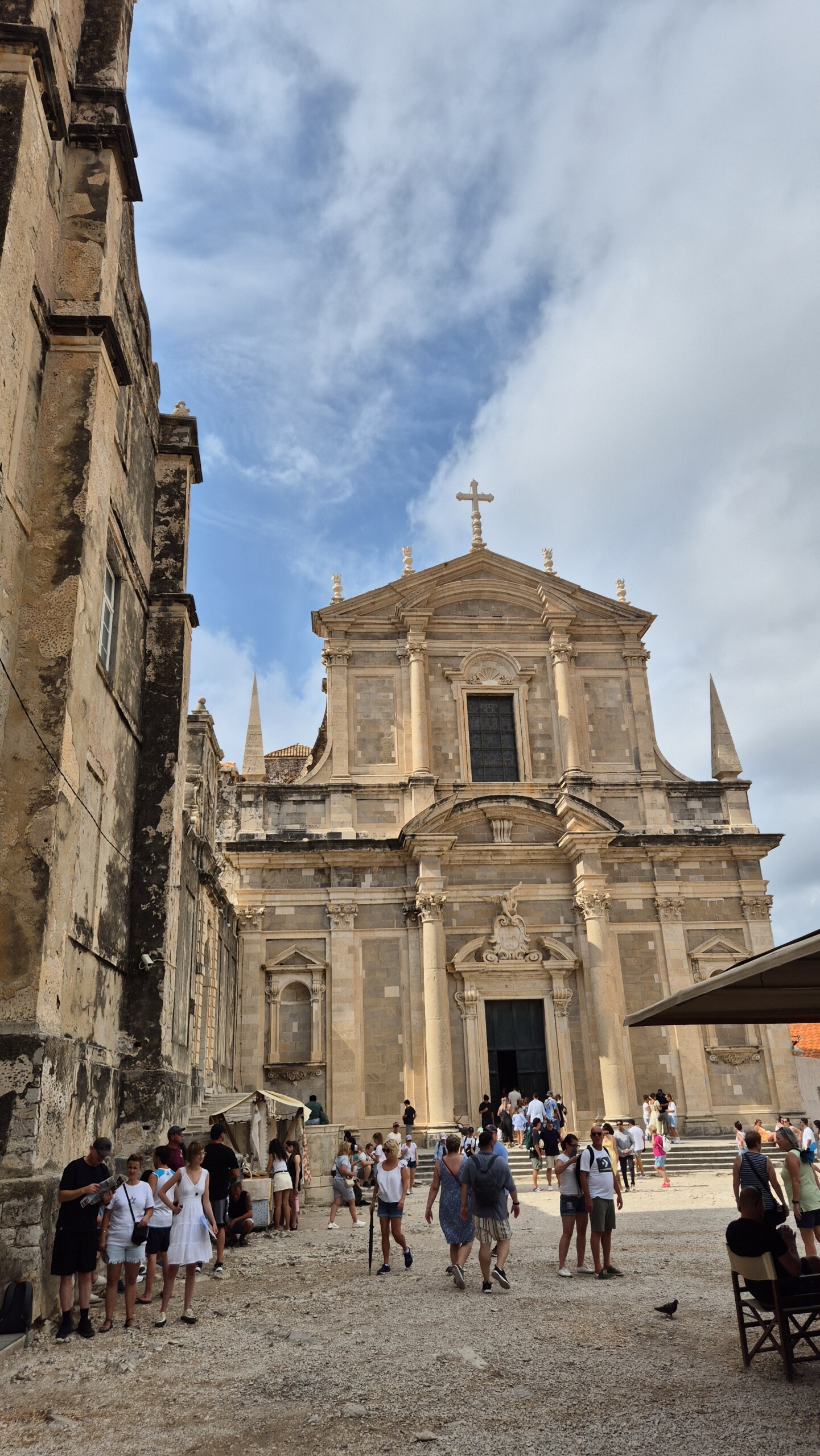
From the palace we walked to the Jesuit Stairs, better known to many visitors now as the Game of Thrones “Walk of Shame” stairs. They were designed in 1738 and lead up to the Church of St Ignatius, built around the turn of the 18th century beside the former Jesuit college.
We continued through more narrow streets until we spotted an ice-cream shop with a queue long enough to count as advertising. While Hugo waited in line, Caro grabbed a table as soon as someone stood up.
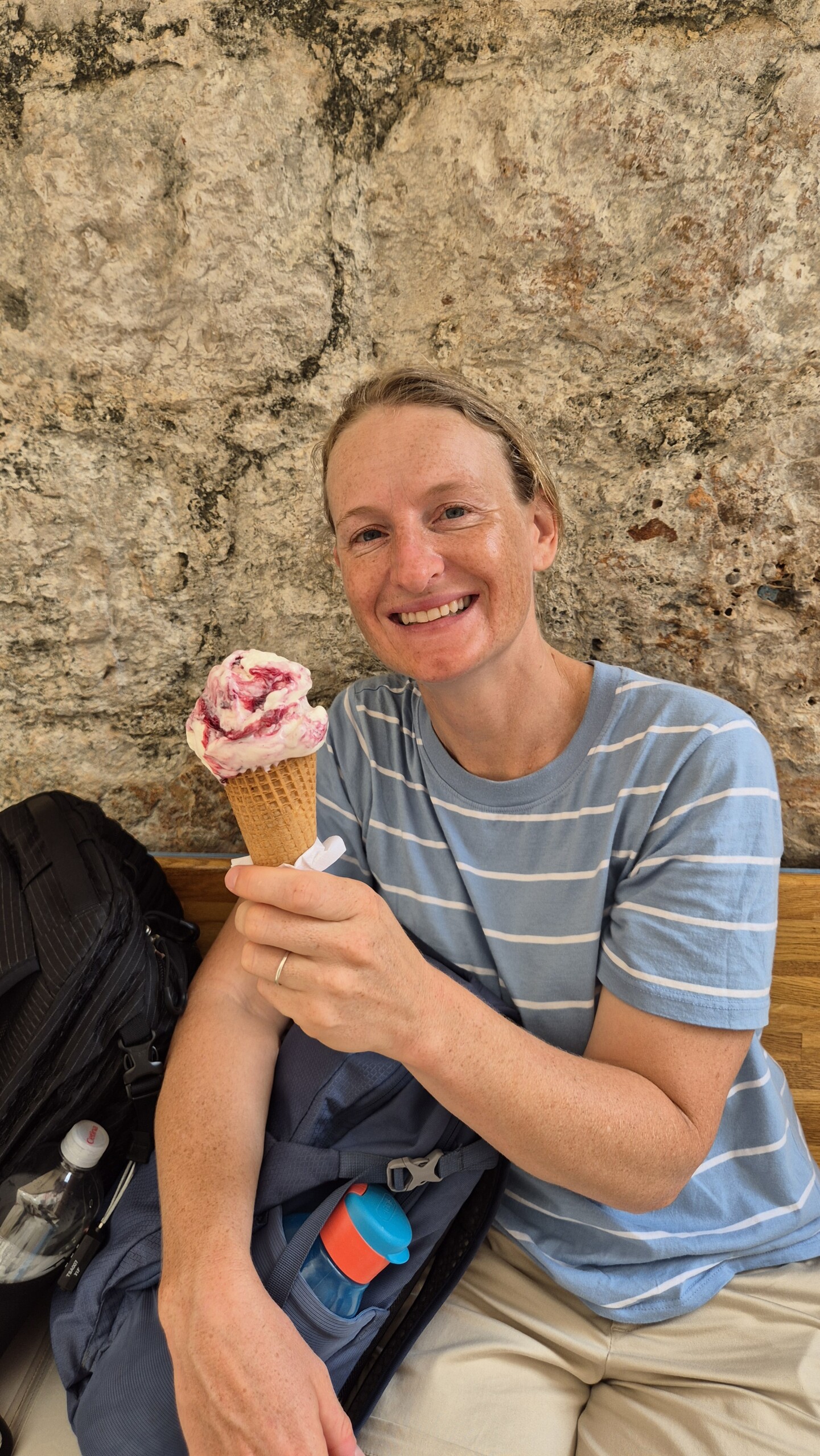
We ordered goat’s-milk-and-blueberry ice cream and a cappuccino. It was the best ice cream of the entire trip so far, and the seated rest was equally welcome.
By then it was 14:00. We still had seven hours before we needed to leave for the airport.
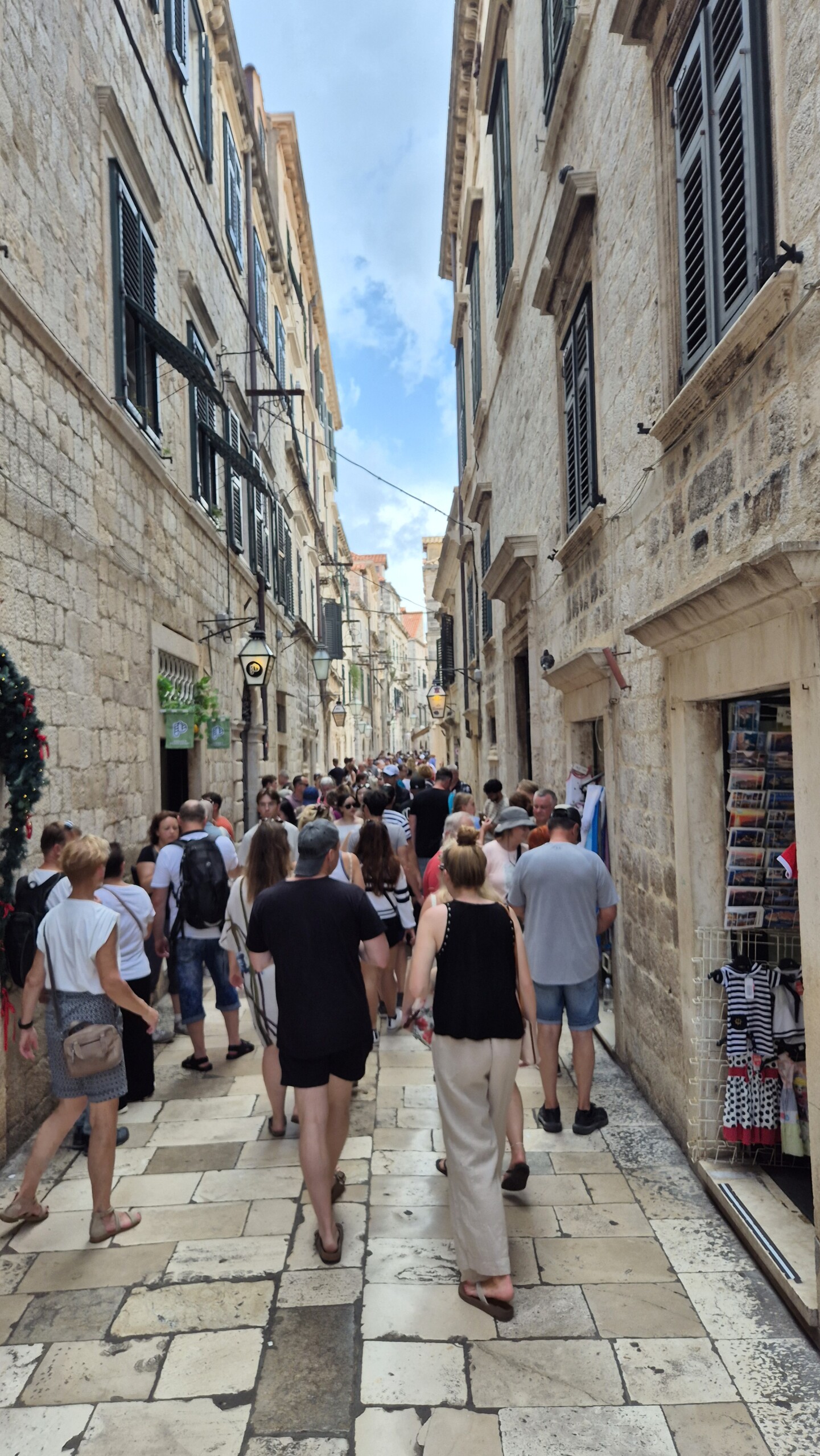
We walked right across the old city again, from near the harbour back towards Pile Gate. It was much busier now than it had been earlier, and the street looked like a moving sea of heads.
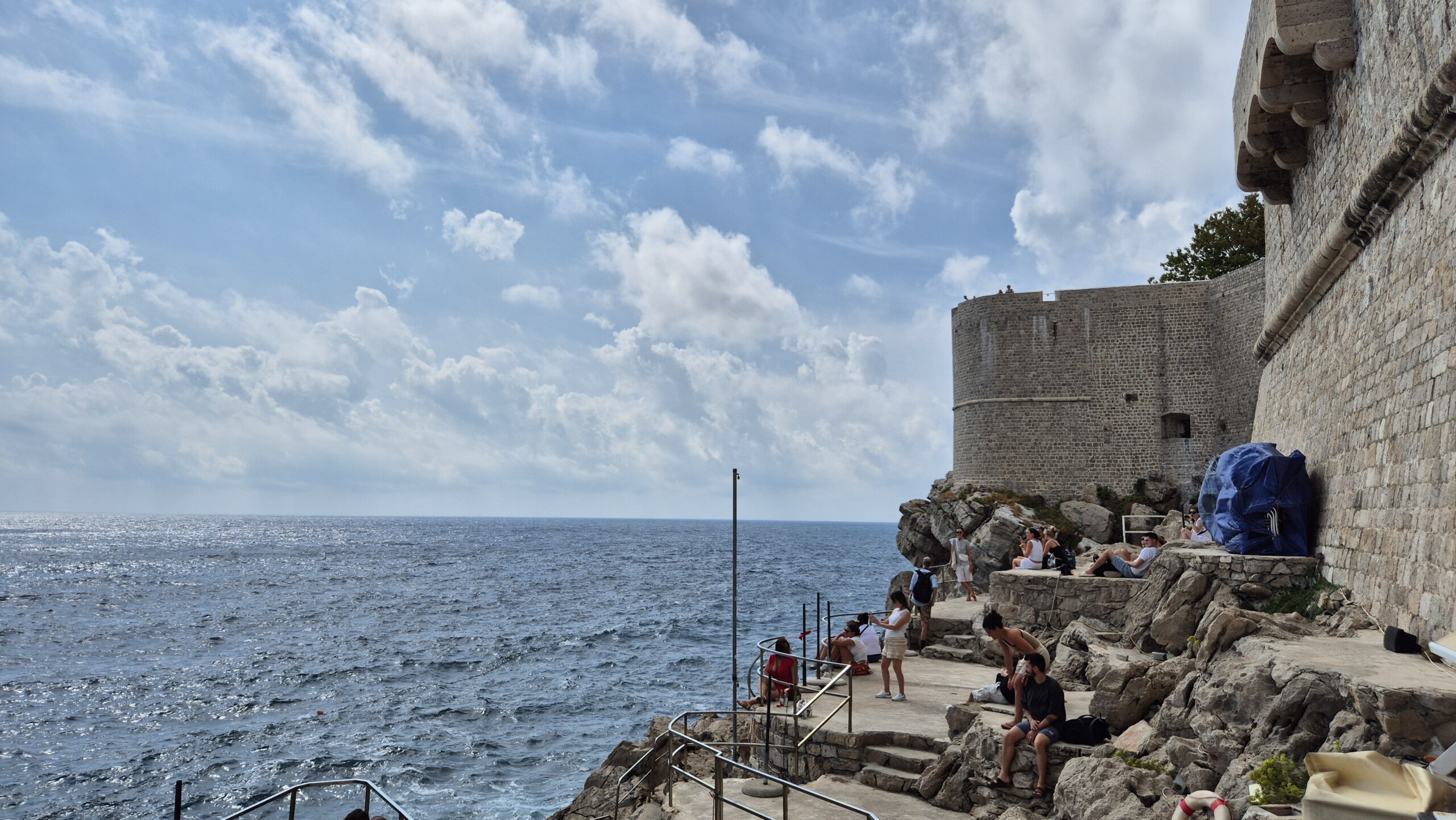
From Pile we climbed to Fort Lovrijenac, also included in the Dubrovnik Pass. The fortress stands on a 37-metre rock outside the western wall and guarded both the approach from the sea and the entrance at Pile.
The promised thunderstorm appeared to be gathering offshore, with dark clouds, rain and lightning on the horizon. Dubrovnik itself, however, was still lit by the sun and seemed to glow beneath the storm. It was an extraordinary view.
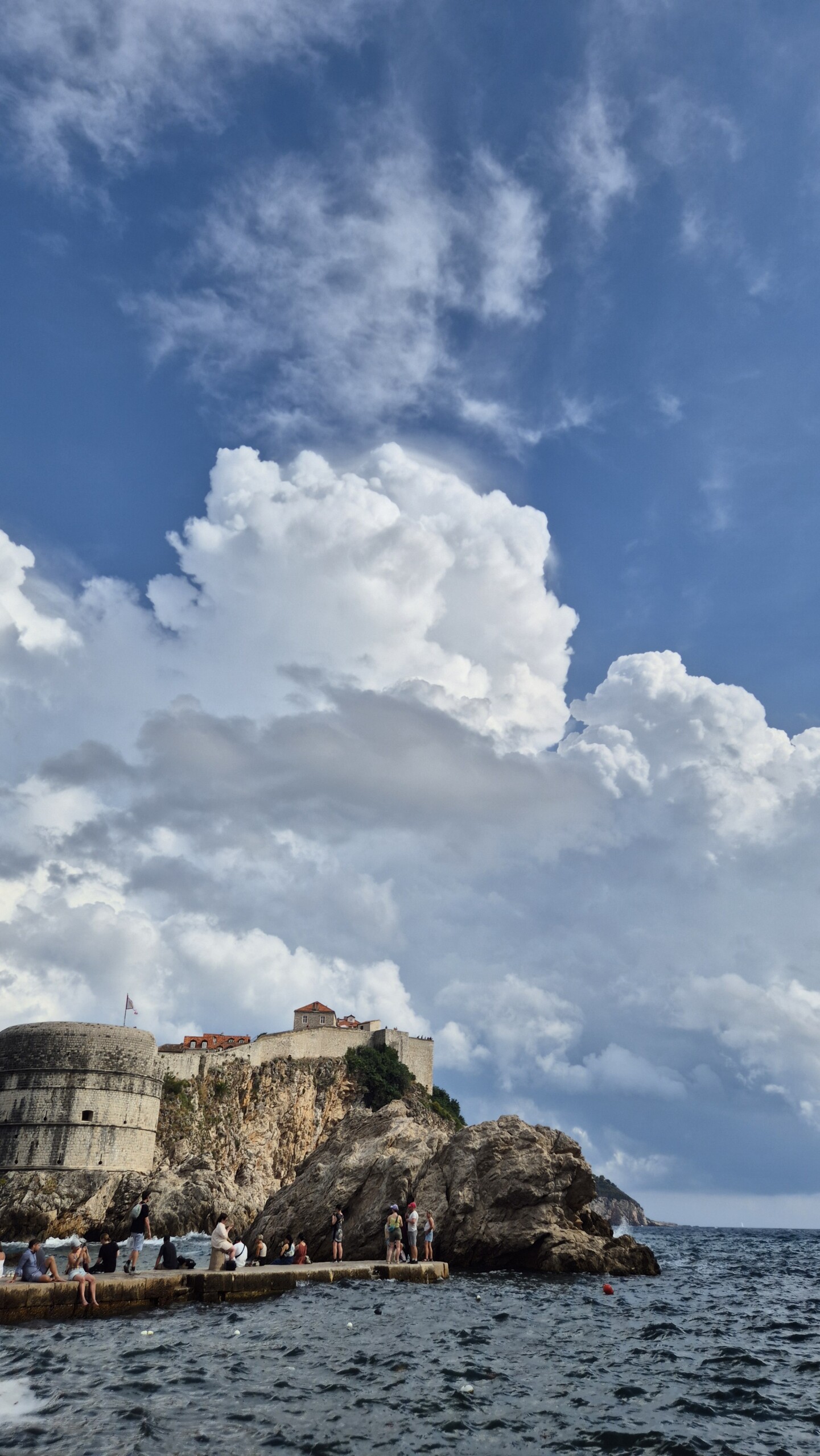
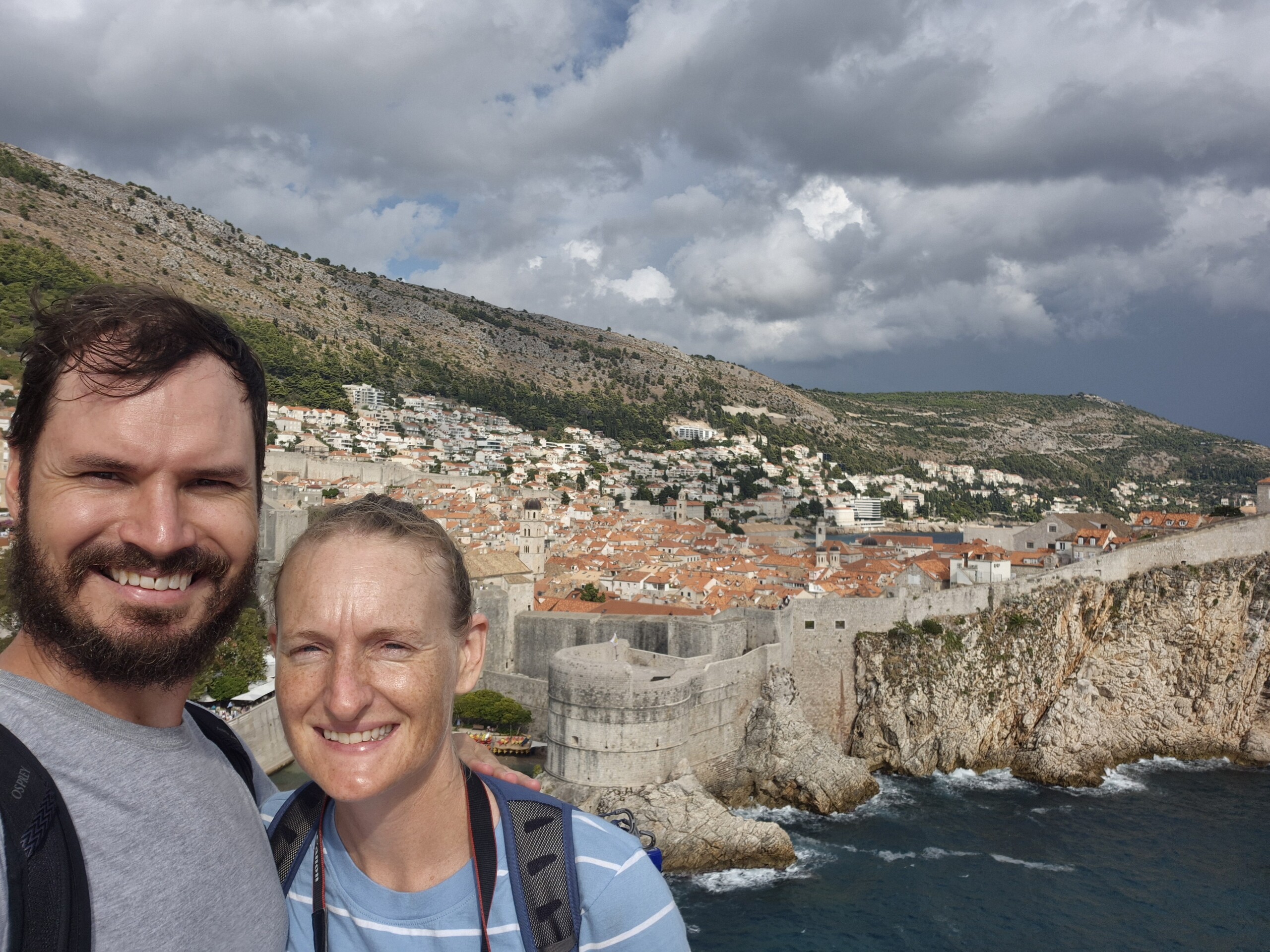
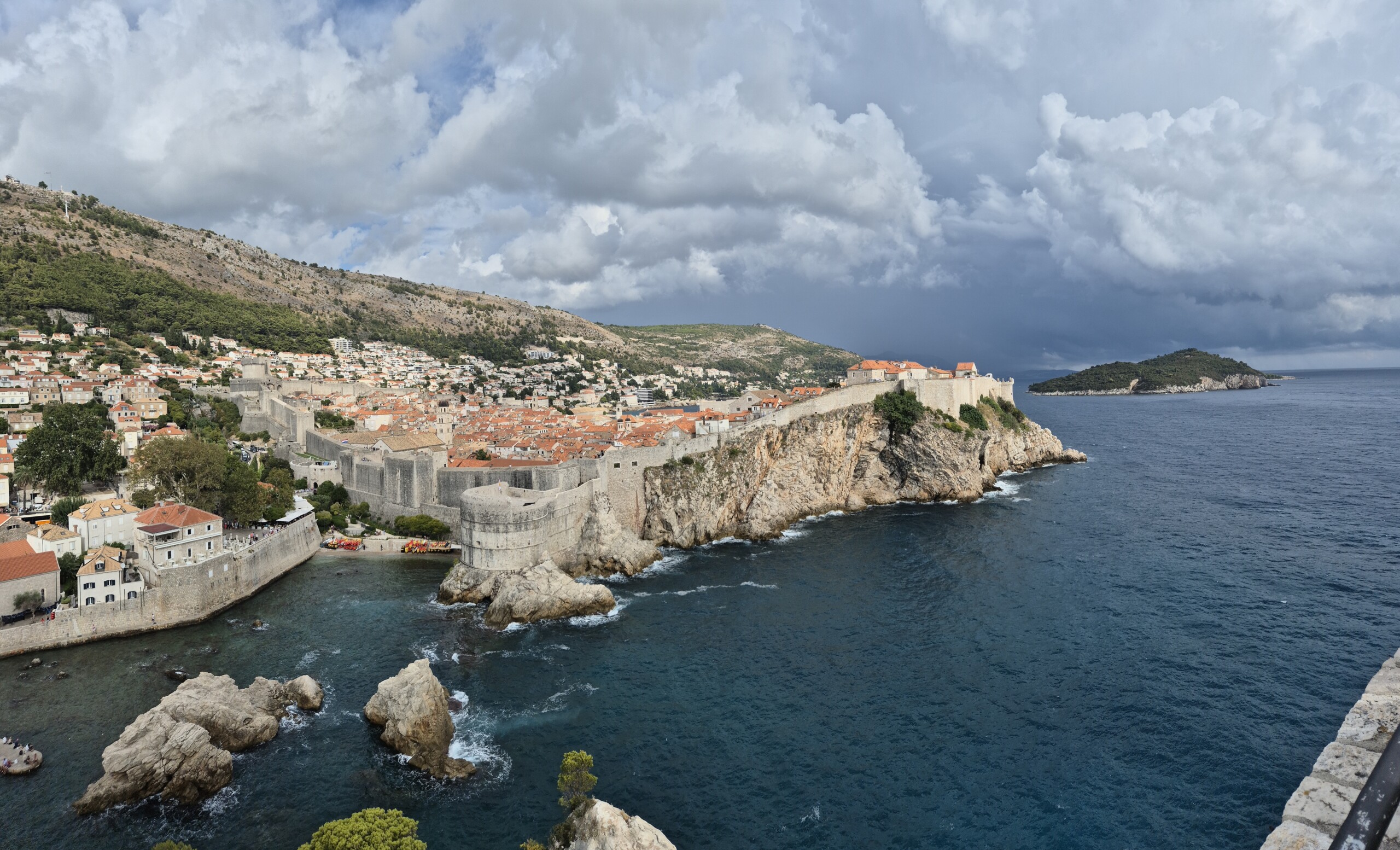
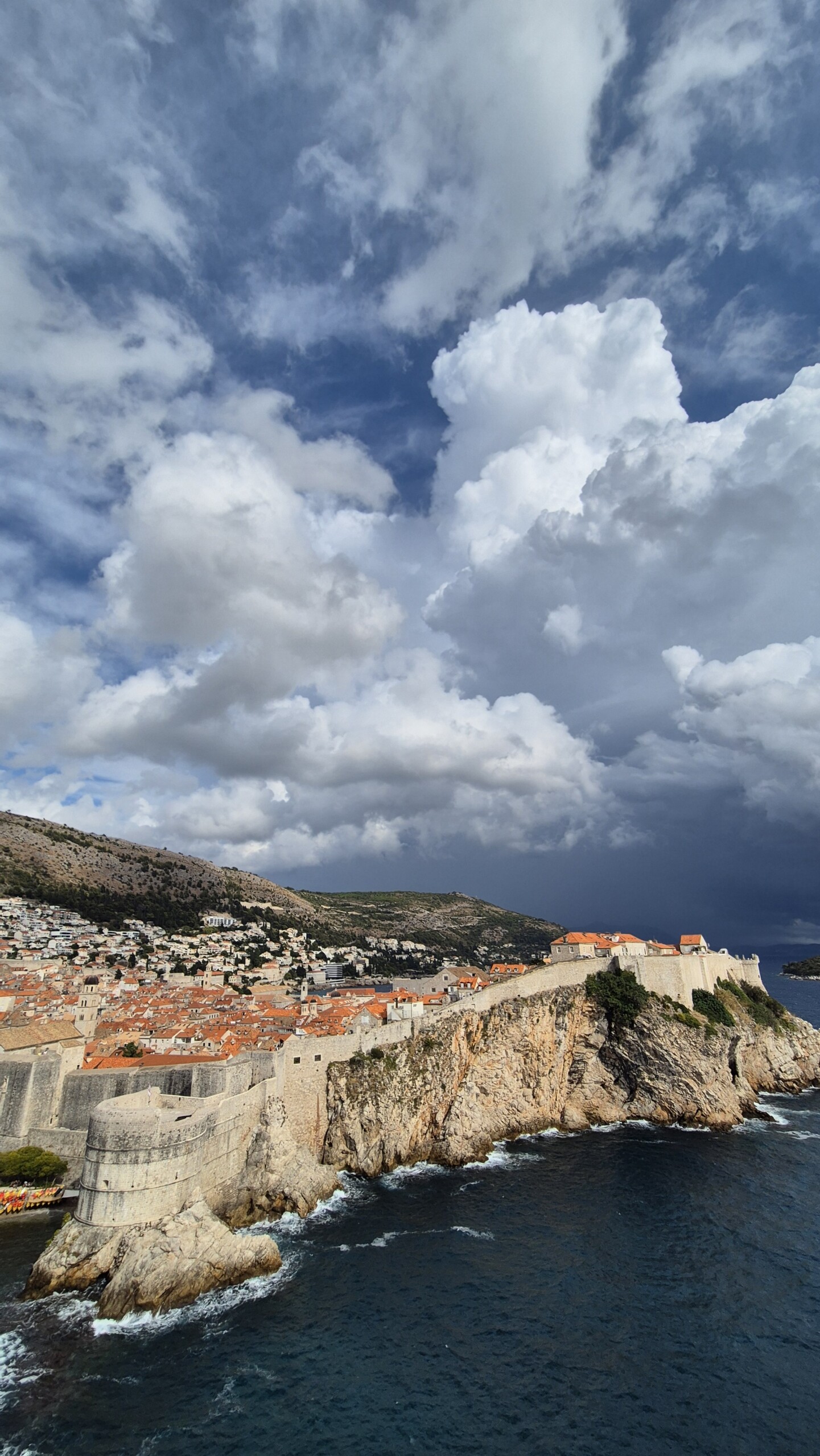
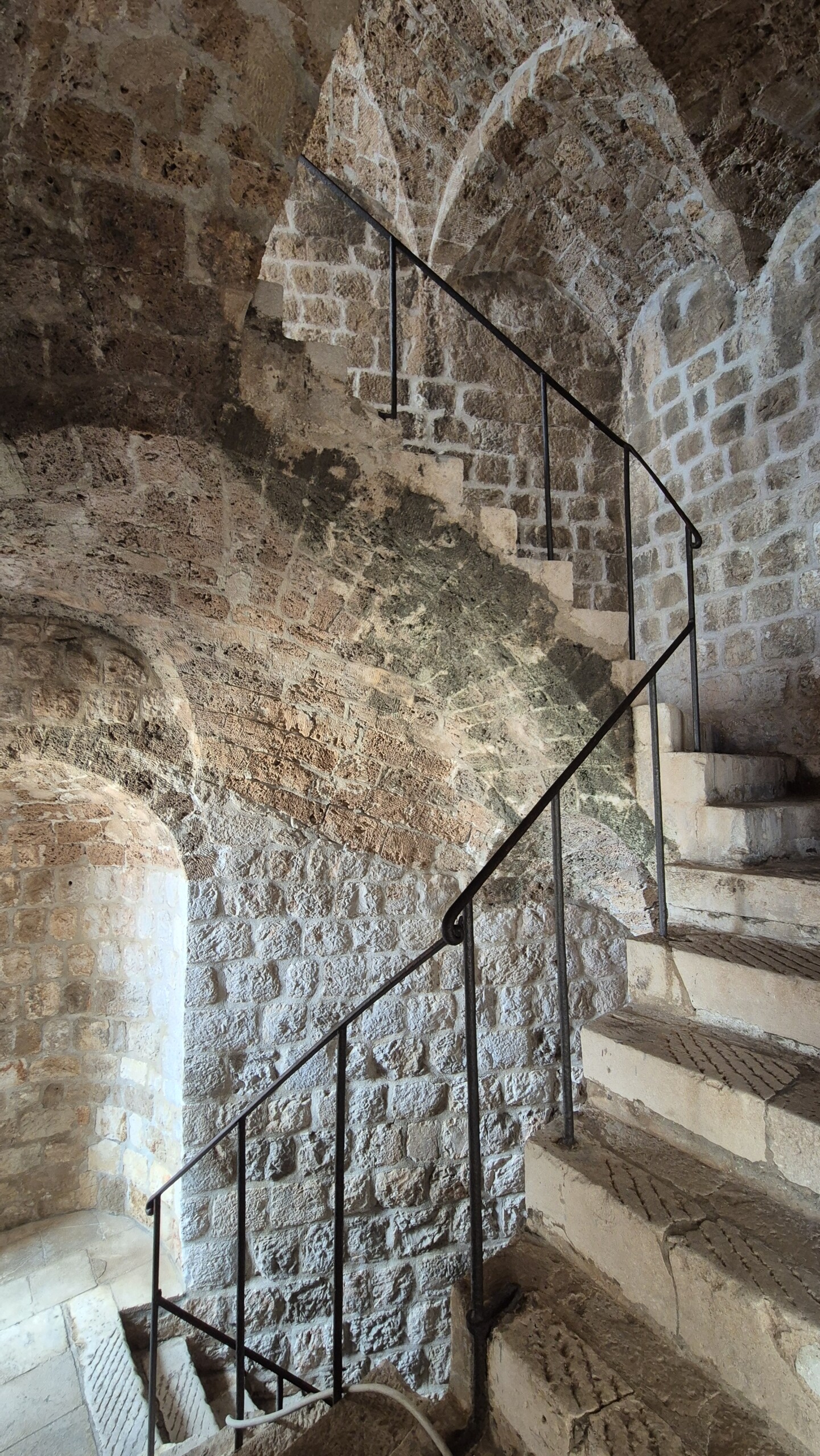
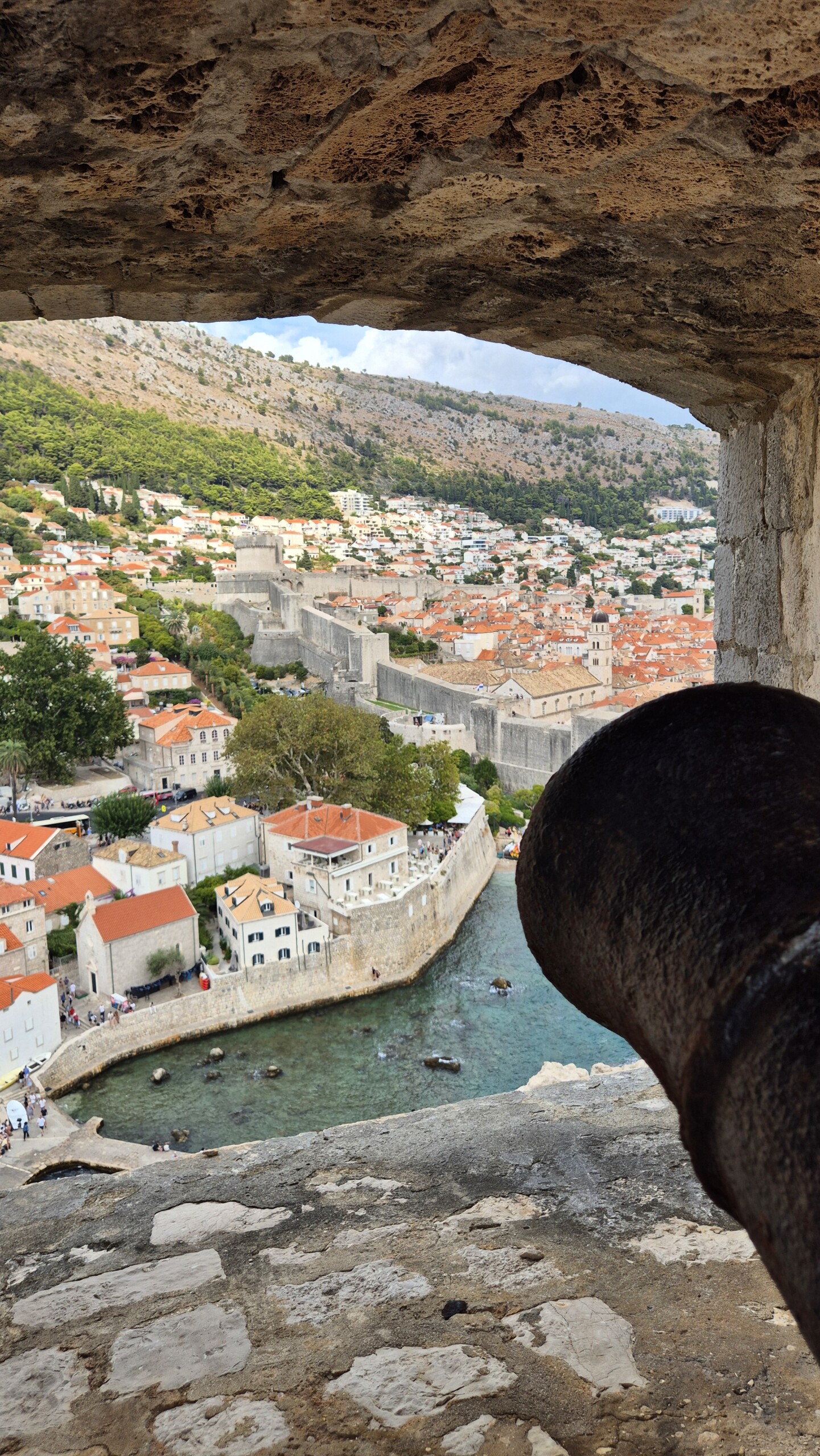
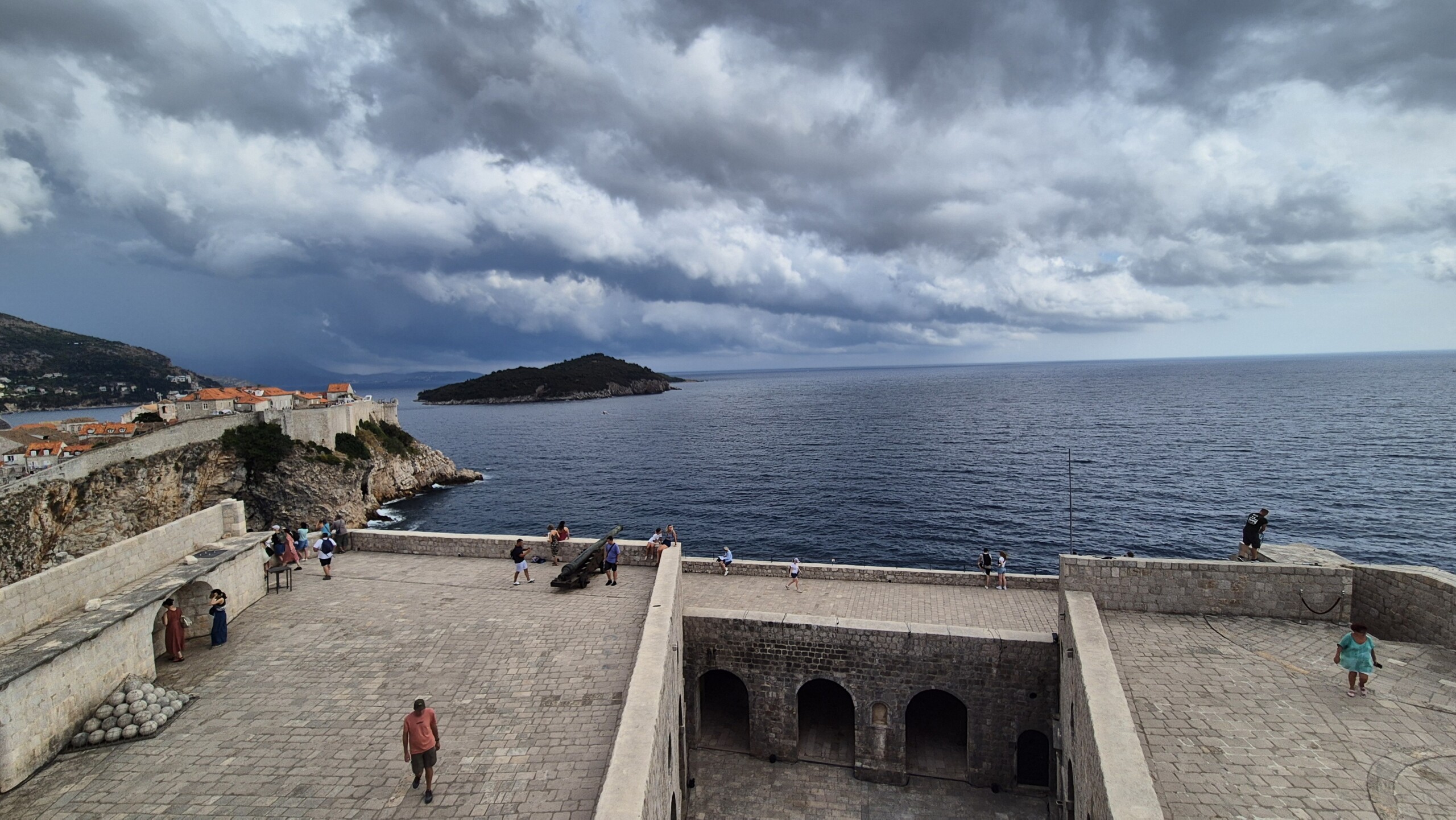
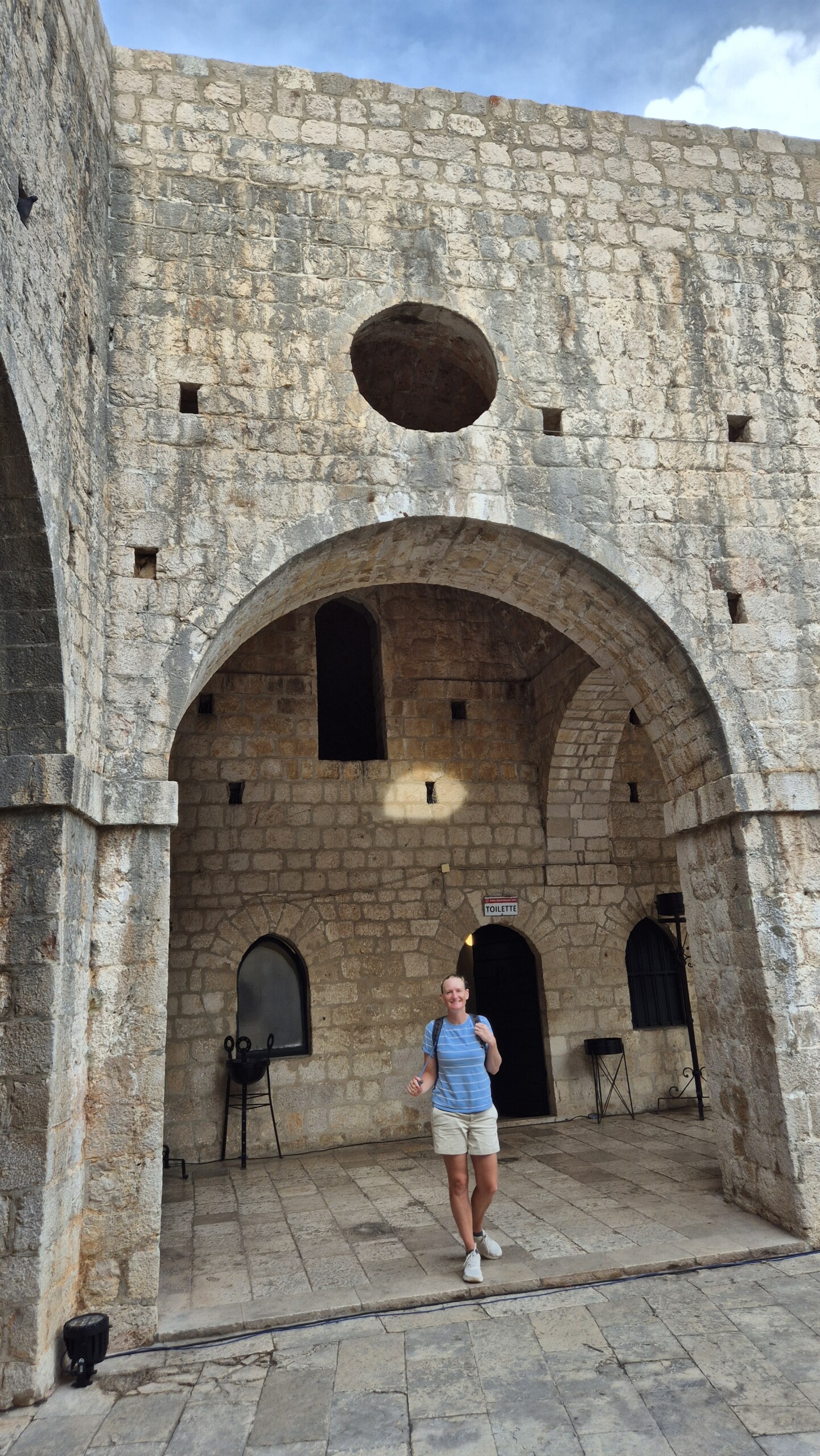
We stayed at the fort for more than an hour, leaving shortly before 17:00.
We were hungry again, but none of the supposedly cheaper places outside the walls looked particularly appealing. Then we remembered seeing someone near the harbour with an excellent-looking focaccia-style sandwich filled with prosciutto and wrapped in red paper.
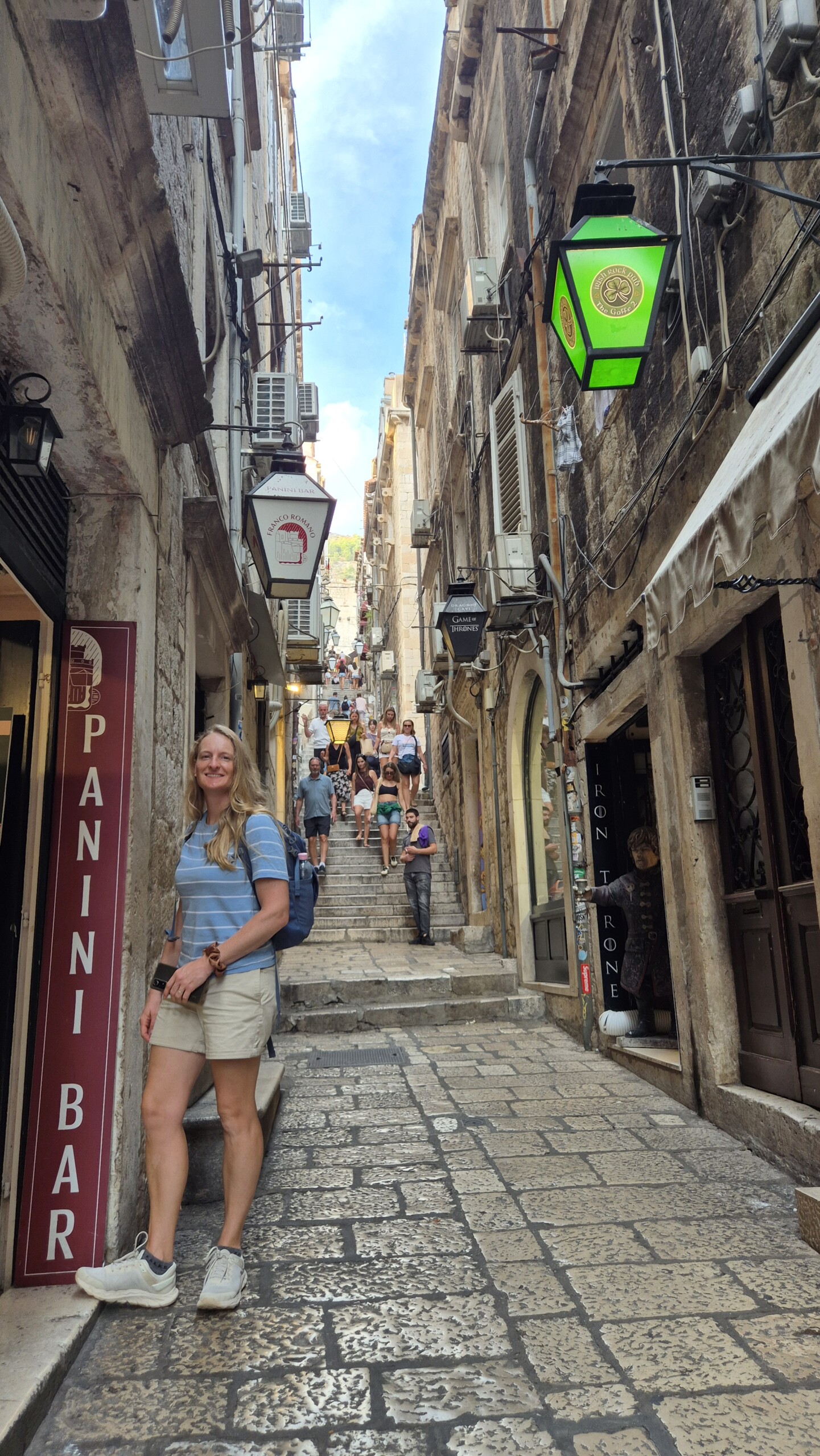
We asked George where it might have come from. Somehow, from only that description, he found Panini Bar Franco Romano inside the old city near the harbour. So we walked all the way back again.
On the way, a Croatian wedding procession came through the pedestrian street to the sound of music. Two people led the group, each carrying and waving a large flag.
At Franco Romano, the young men working there immediately asked where we were from, then wanted to know about South Africa—its people, languages and ocean. One of them was from Montenegro and insisted that we should visit there too. We had a genuinely good conversation while they prepared our Superiore: focaccia filled with prosciutto, mozzarella, pesto Genovese, fresh tomato and basil.
Friendly staff who are genuinely interested make an enormous difference.
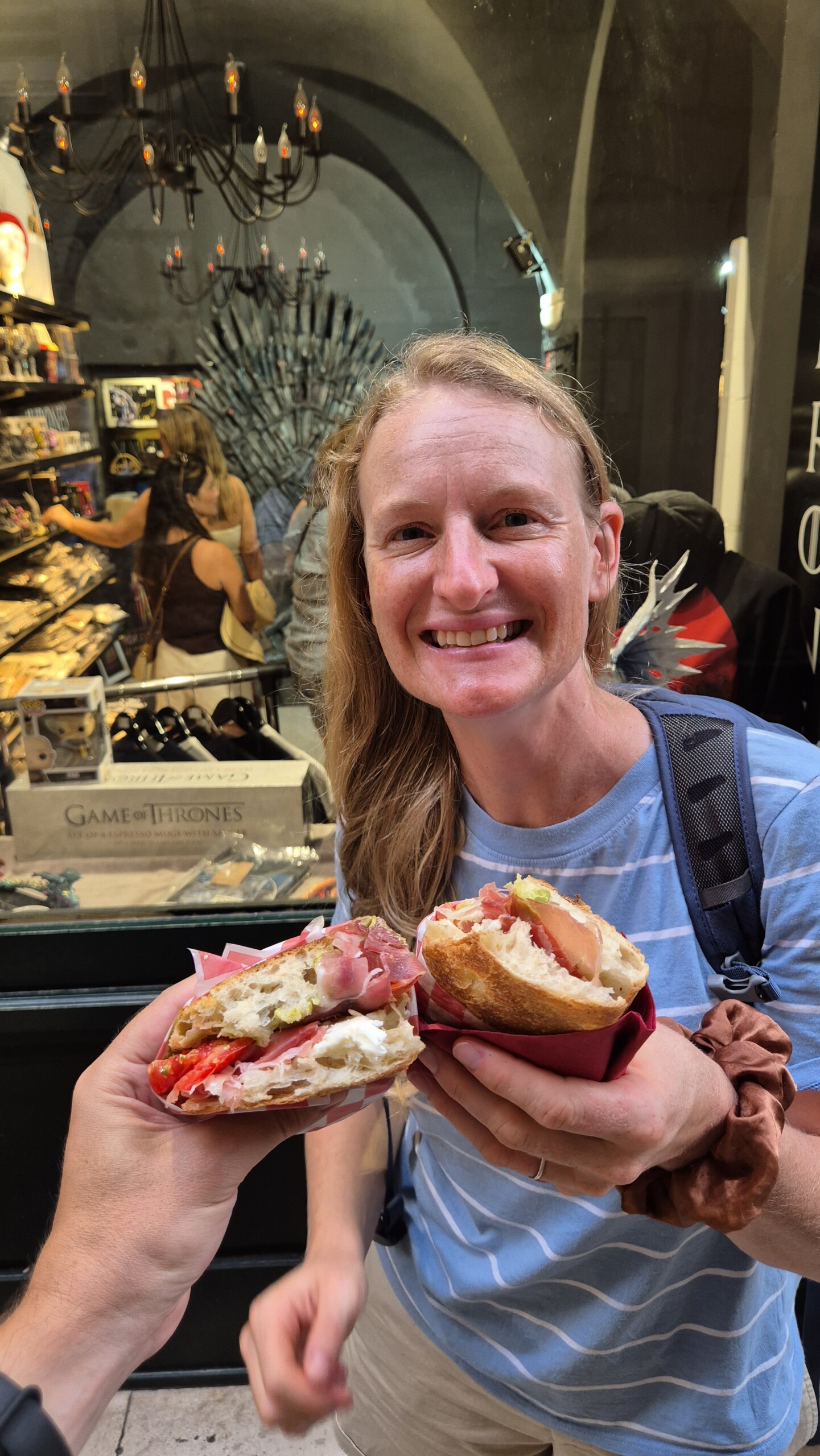
The sandwich cost €14, but it was delicious and worth every euro—as long as we resisted converting the price to rand.
Afterwards we wandered a little more as the streets slowly became cooler and quieter. We tried another supposedly famous artisanal ice-cream shop and ordered a single scoop of Mascarpone Summer Crush—a mixture of mascarpone, granadilla and mango.
You win some and you lose some. This one was not particularly good.
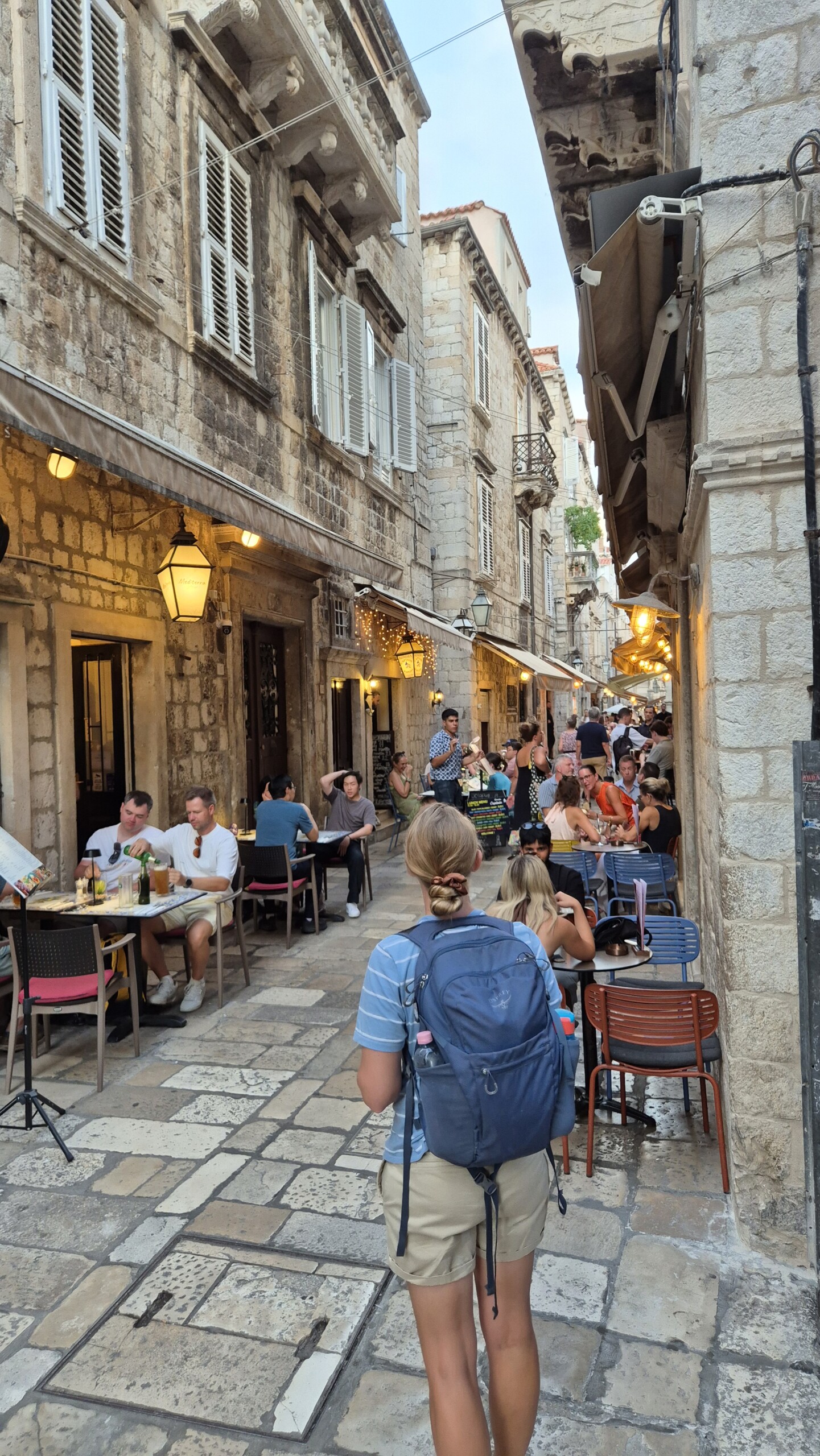
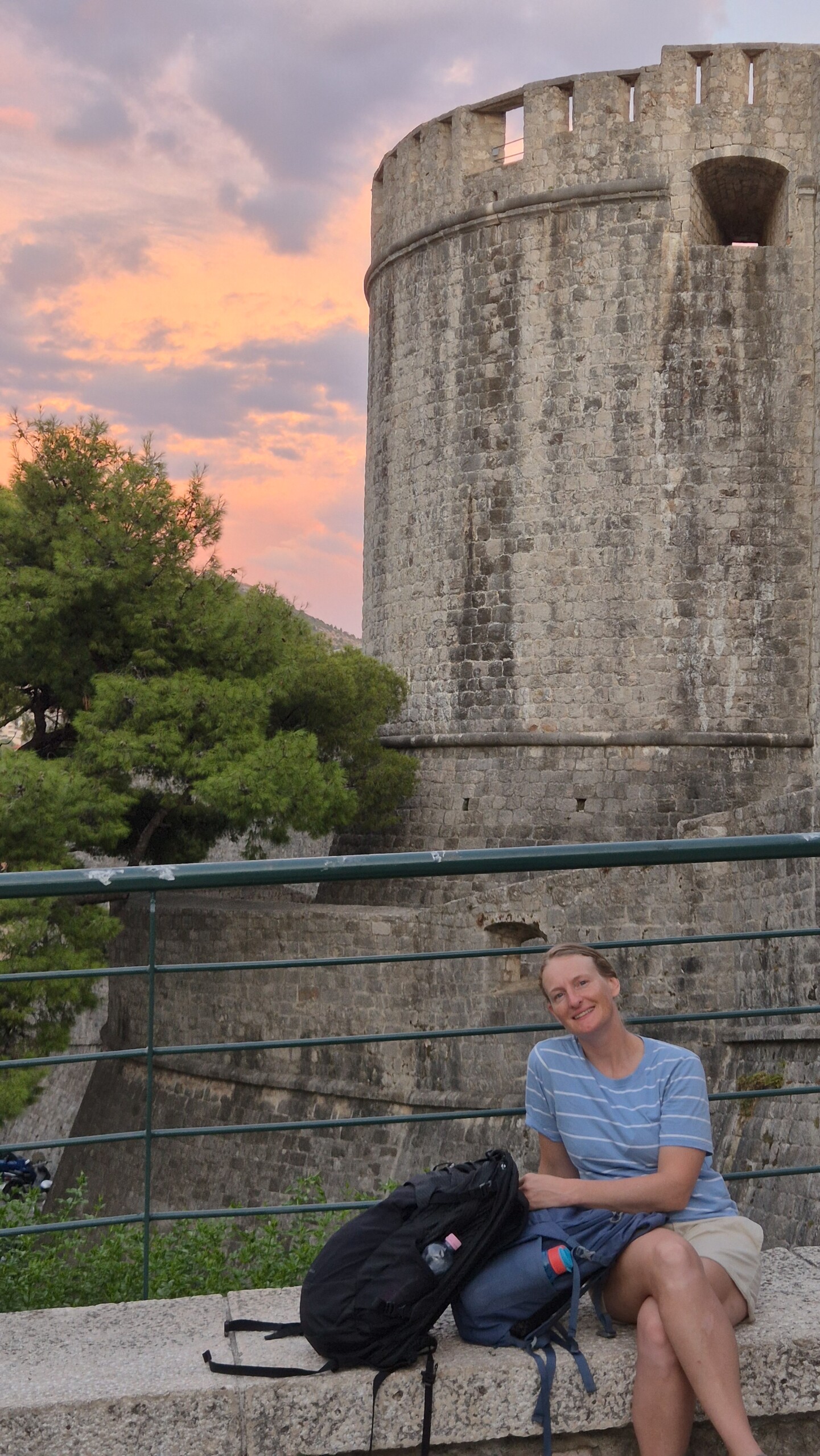
Eventually we ran out of things we still wanted to do, and our feet were finished. Our step count was not outrageous for a full day of exploring, but we had spent most of the day standing. We had also carried more than usual: Hugo had his laptop and Caro had her full camera bag.
By the end of the day we had reached 18,000 steps.
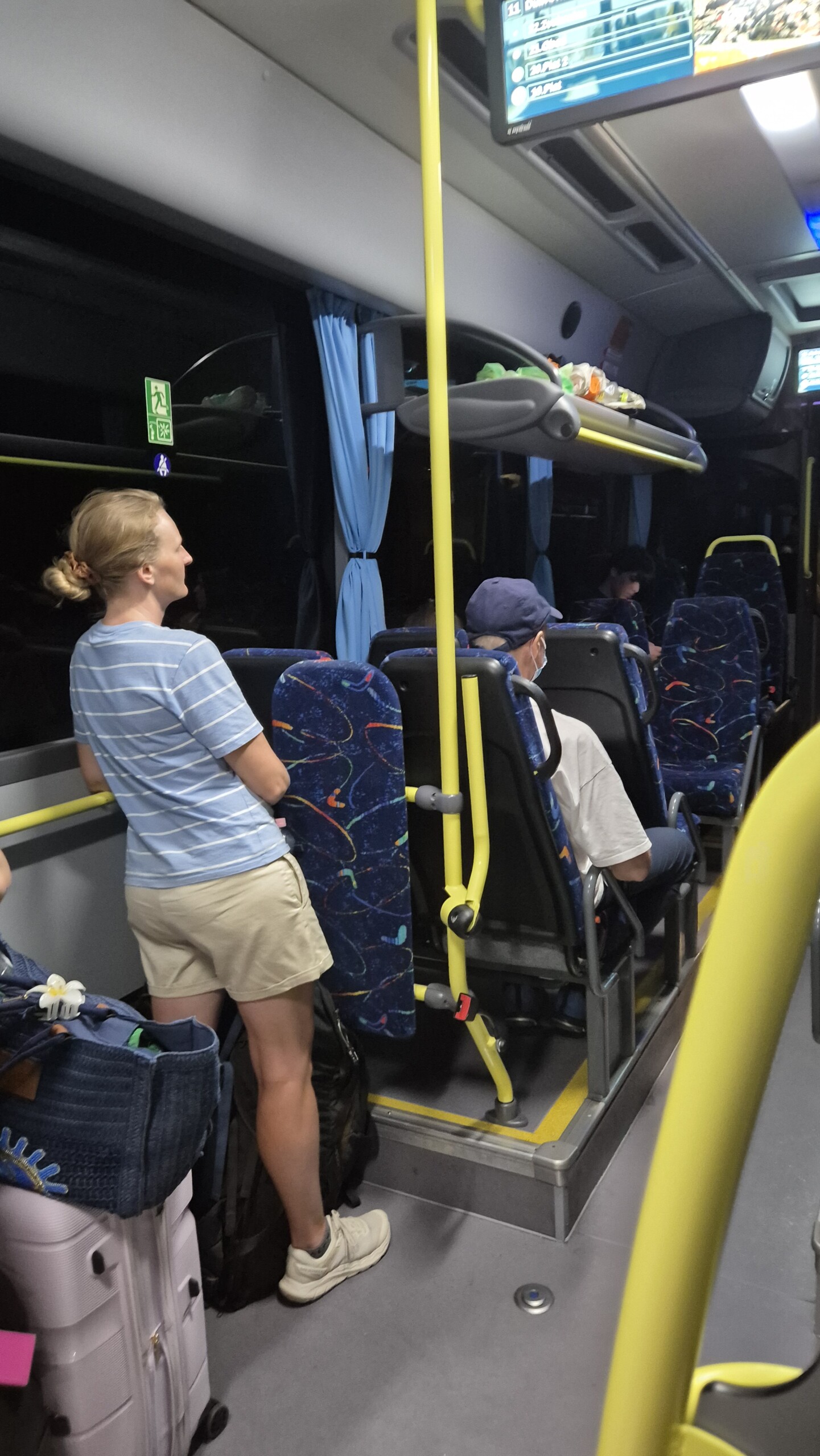
First, however, we had to collect our stored luggage. Then we waited an hour for the cheaper city bus to the airport while express buses came and went. Every €4 saved is another scoop of ice cream, so we did not mind.
At the airport we waited briefly for baggage drop to open, then spent another hour or so airside. Our flight was scheduled to leave at 22:55 and arrive in Zagreb at 23:50, so we booked a Bolt for 00:10. Bolt allowed us to add the flight number, meaning the pickup would automatically move if the flight was delayed.
Once airborne, we had barely settled in before the plane began descending after only about 30 minutes. We worried that the early arrival would leave us waiting a long time for the driver.
Instead, Bolt had noticed that too and moved the pickup earlier.
After the short walk through the terminal, we collected our bags just as the app announced that the driver was arriving. We reached the pickup area at almost exactly the same time, and five minutes later we were at our apartment.
Self-check-in involved a key box beside the door and took about 30 seconds.
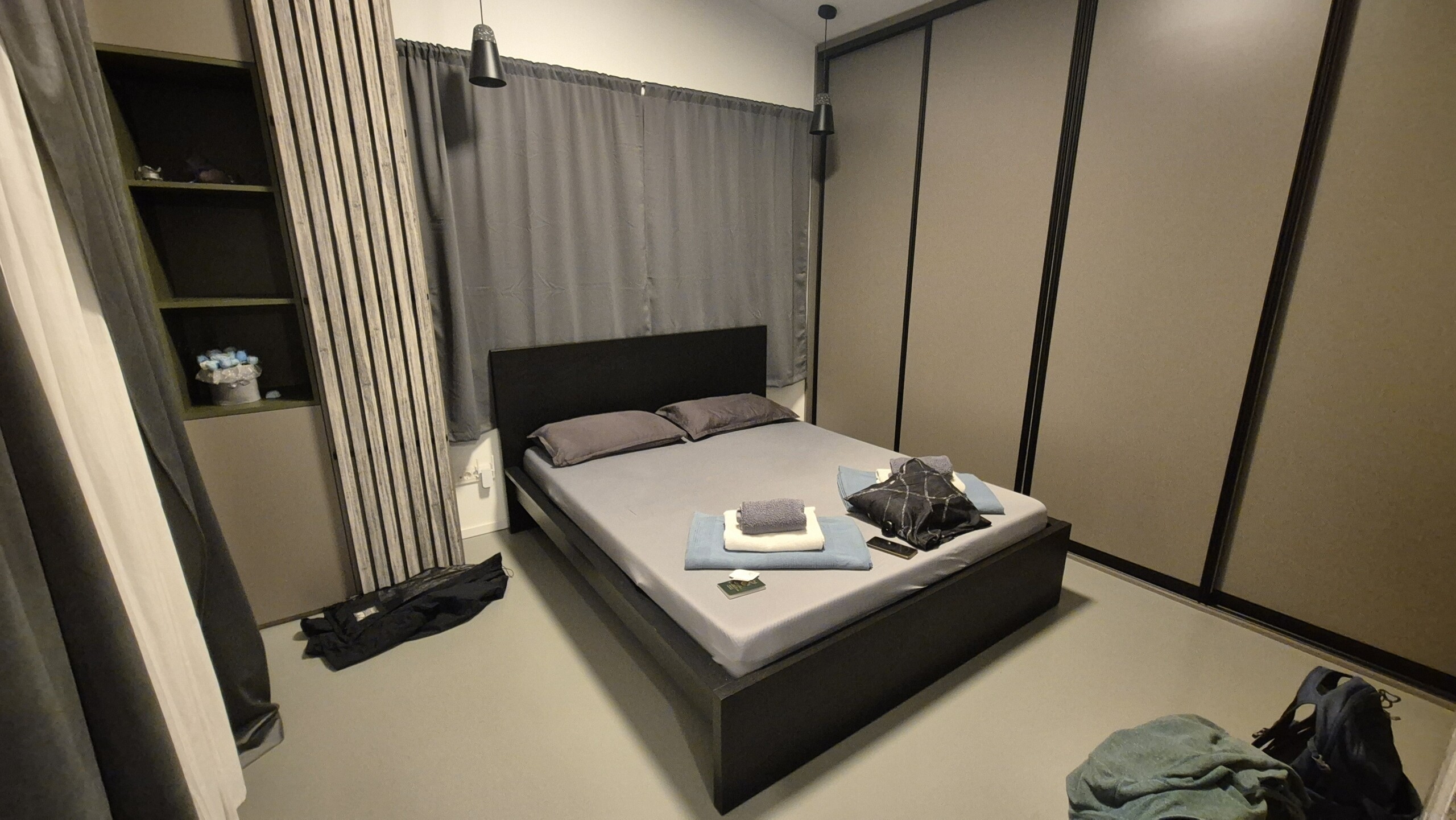
After 45 days of travel, it still surprised us that we had not experienced a single serious delay, missed connection or accommodation that did not exist—or turned out to be somewhere other than the map pin. Travel really has become remarkably easy.
After a day like this, that was a good thing. We had no energy left for any surprise adventures.
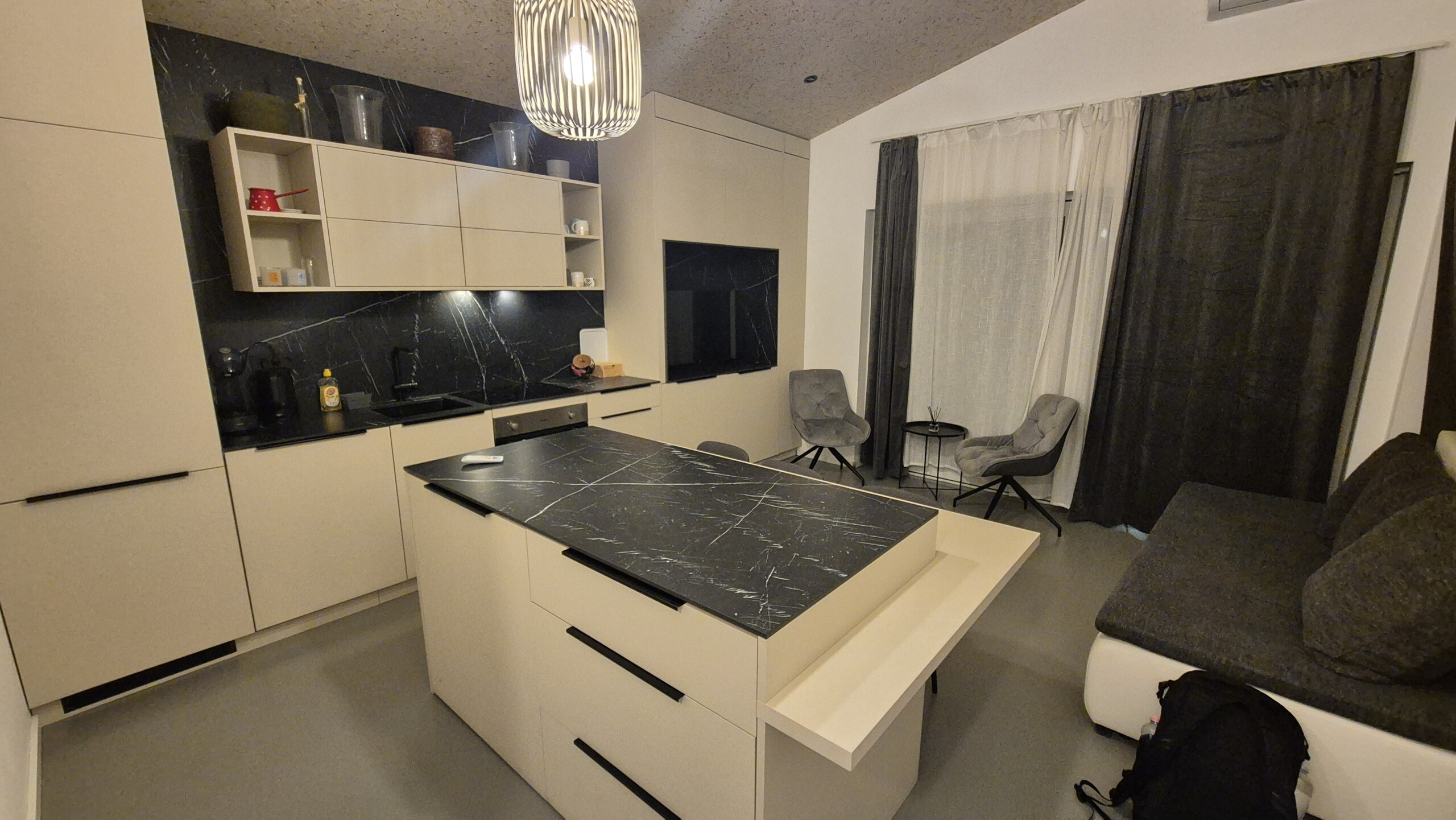
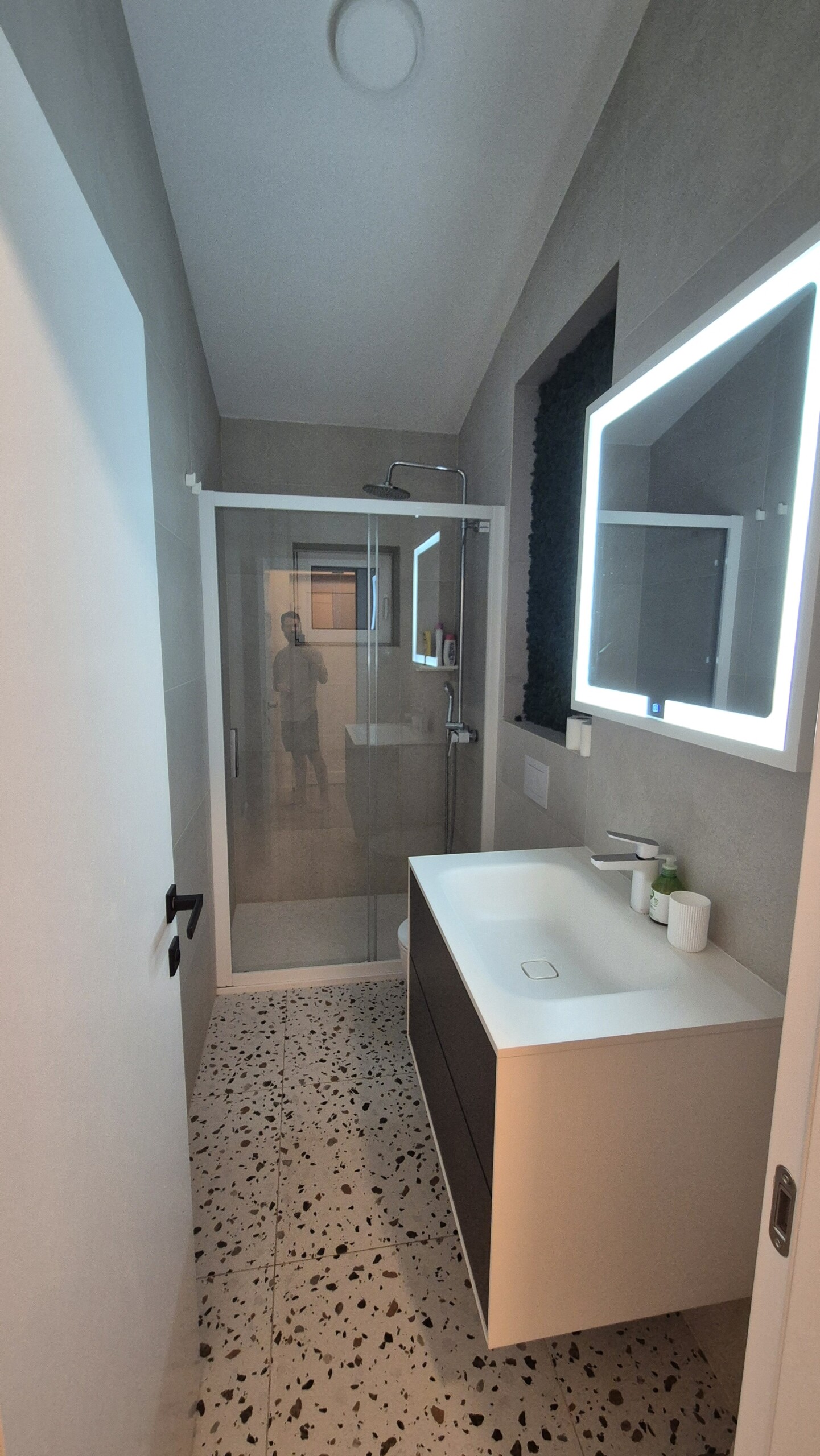
The apartment was also one of the most modern and well-equipped of the trip. It was just a pity that we would barely have time to use it.


Leave A Comment