
Caro woke to the smell of smoke. When she looked out of the window, the sunrise and the whole sky had turned an eerie orange-brown.
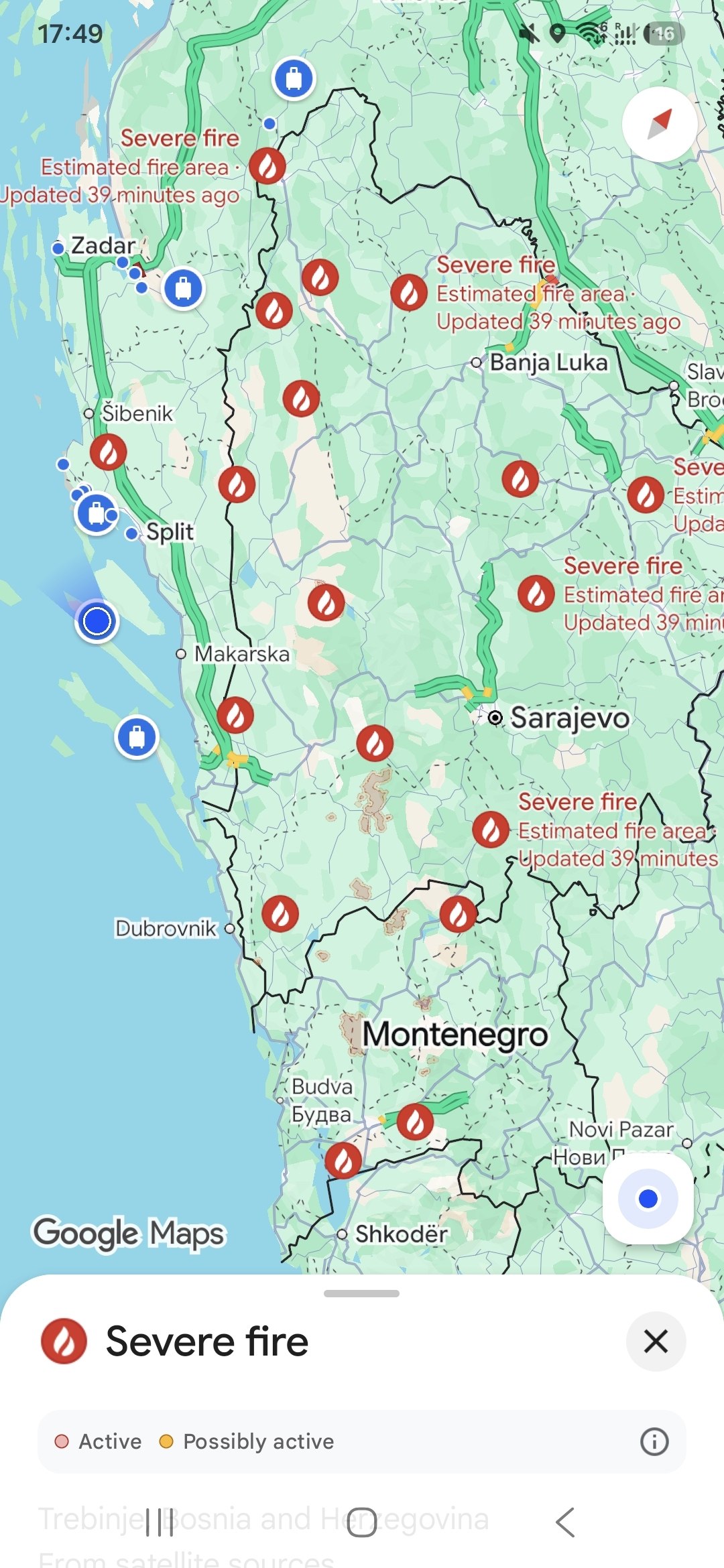
Google Maps showed around ten wildfires burning in the wider region. Luckily, none of them appeared to be on Hvar, but there was enough smoke in the air to make the morning feel unsettling.
After coffee, we walked to the bus station and paid €4 each for the ride to Jelsa. The bus carried us across the Stari Grad Plain, where we could see the farms and their dry-stone walls. Grapevines and olive groves still fill land divided according to a Greek agricultural layout established about 2,400 years ago.
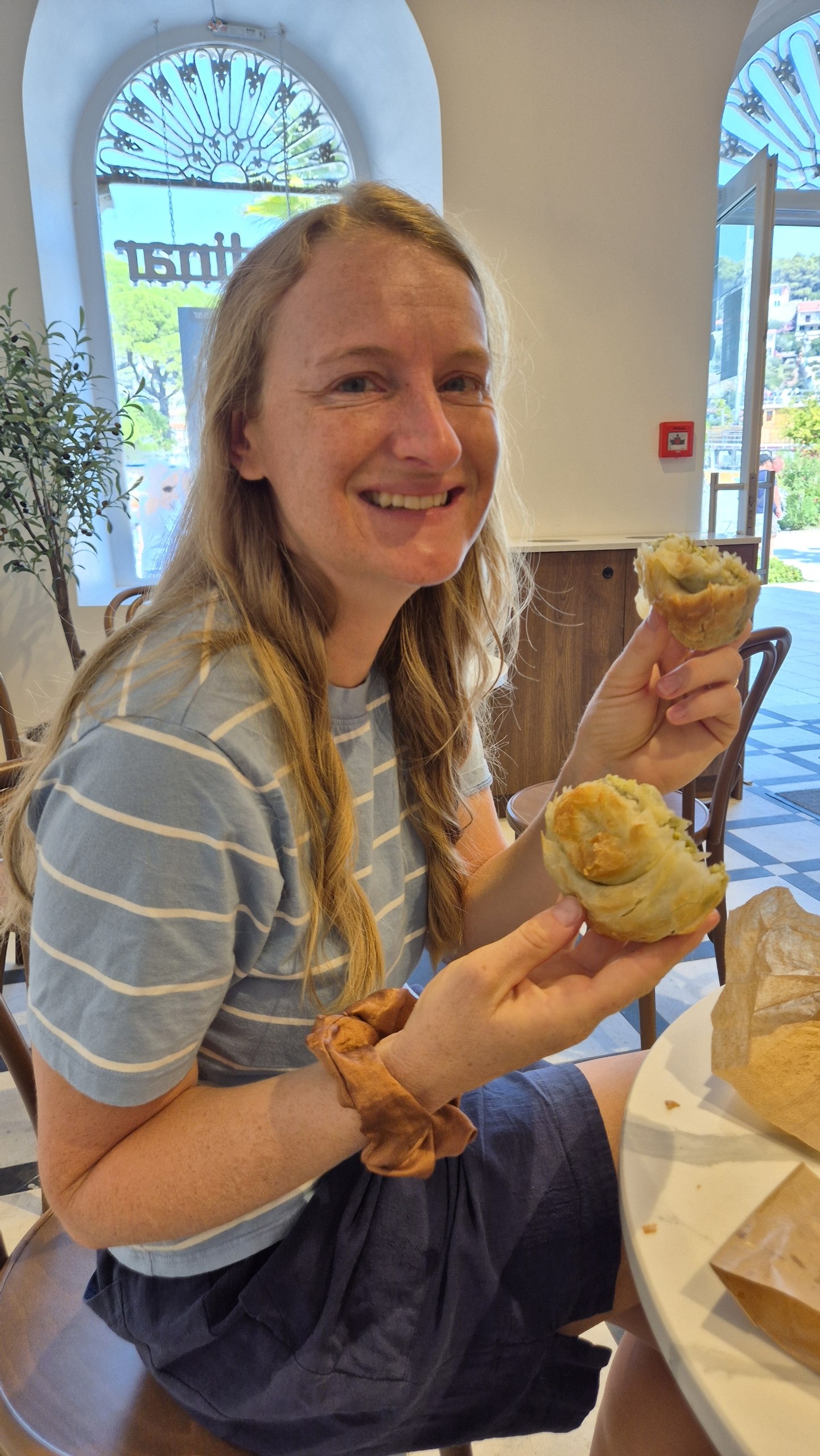
In Jelsa we started with breakfast: one spinach-and-cheese burek, one potato burek and, because ordinary breakfast rules were becoming increasingly optional, lavender ice cream.
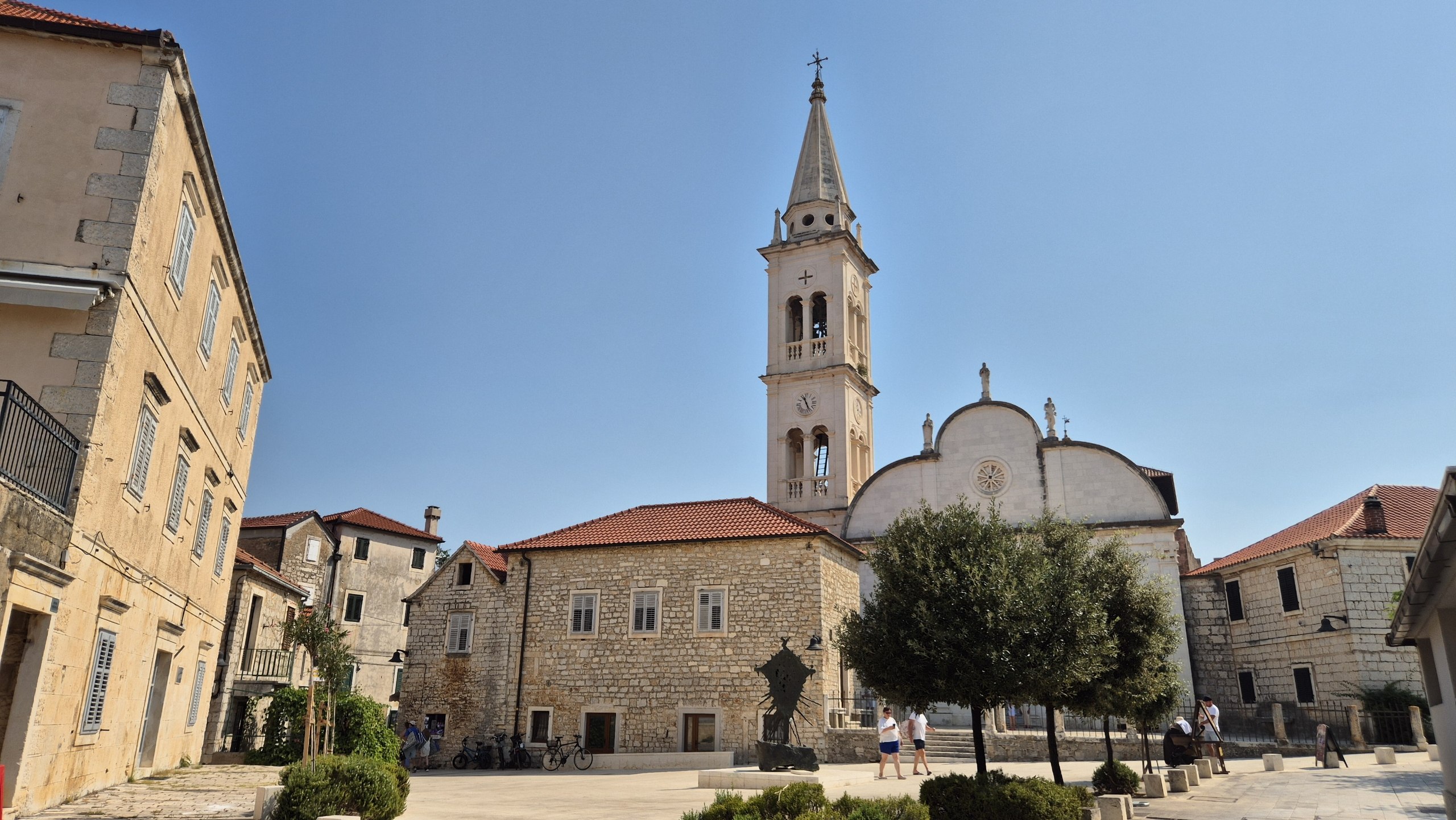
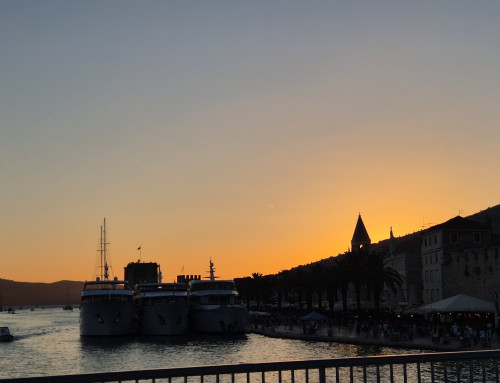
Jelsa sits around a broad harbour on Hvar’s northern coast. It was first recorded in the 14th century as the port of the inland village of Pitve, then developed into a fishing and trading centre. During the 19th century, its sailing fleet travelled as far as Lampedusa and other parts of the Mediterranean. Today it is compact and shady, with its stone waterfront opening directly onto a string of beaches that can be reached on foot.
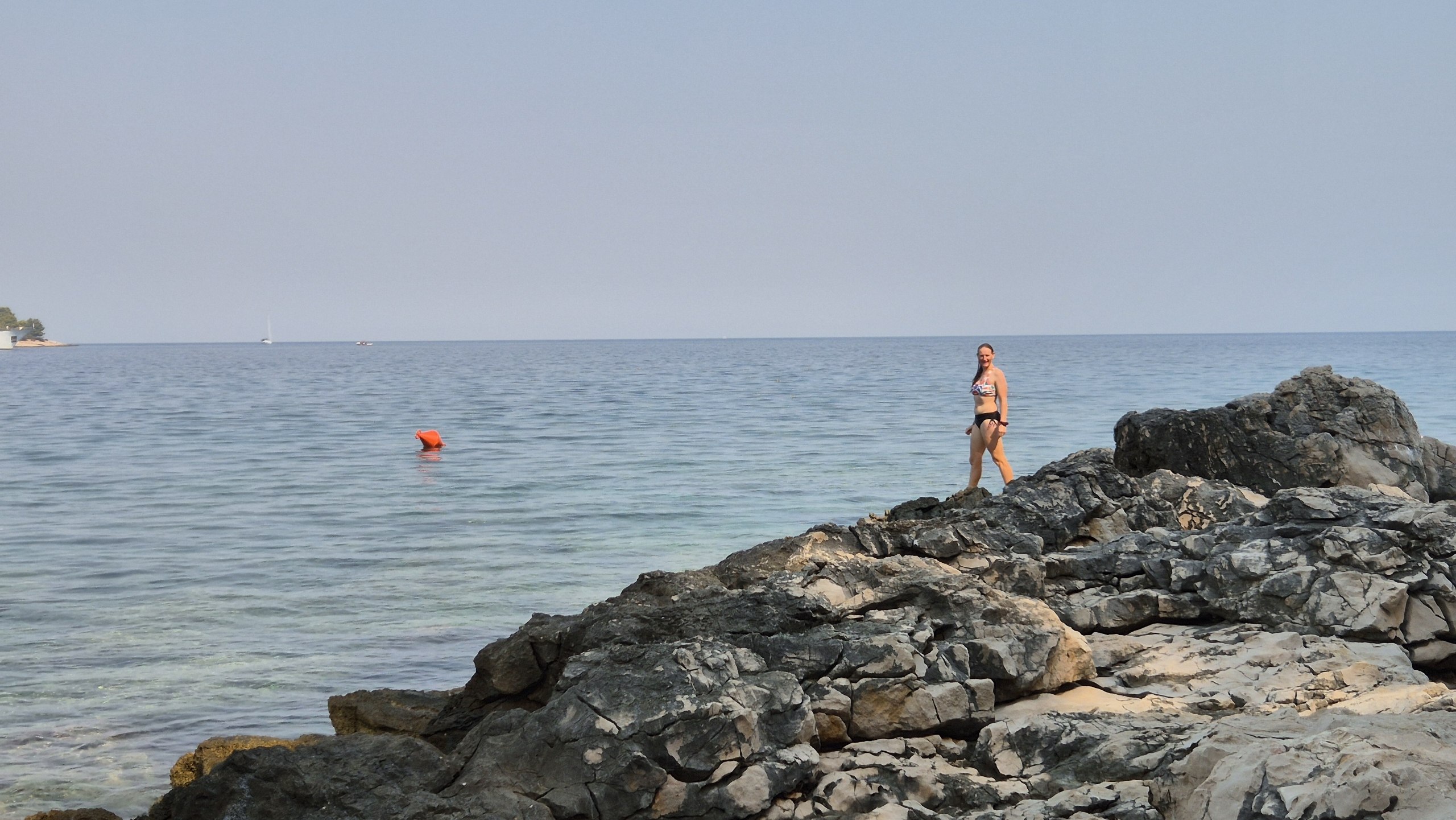
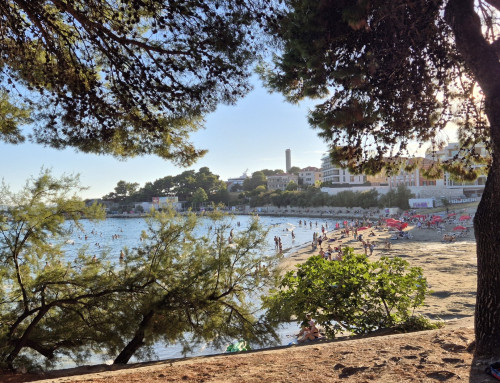
We followed the harbour to our first swimming spot. The colour of the water was beautiful, but it was the clarity that still amazed us most. We could see all the way to the bottom as though there were almost nothing between us and the rocks below.
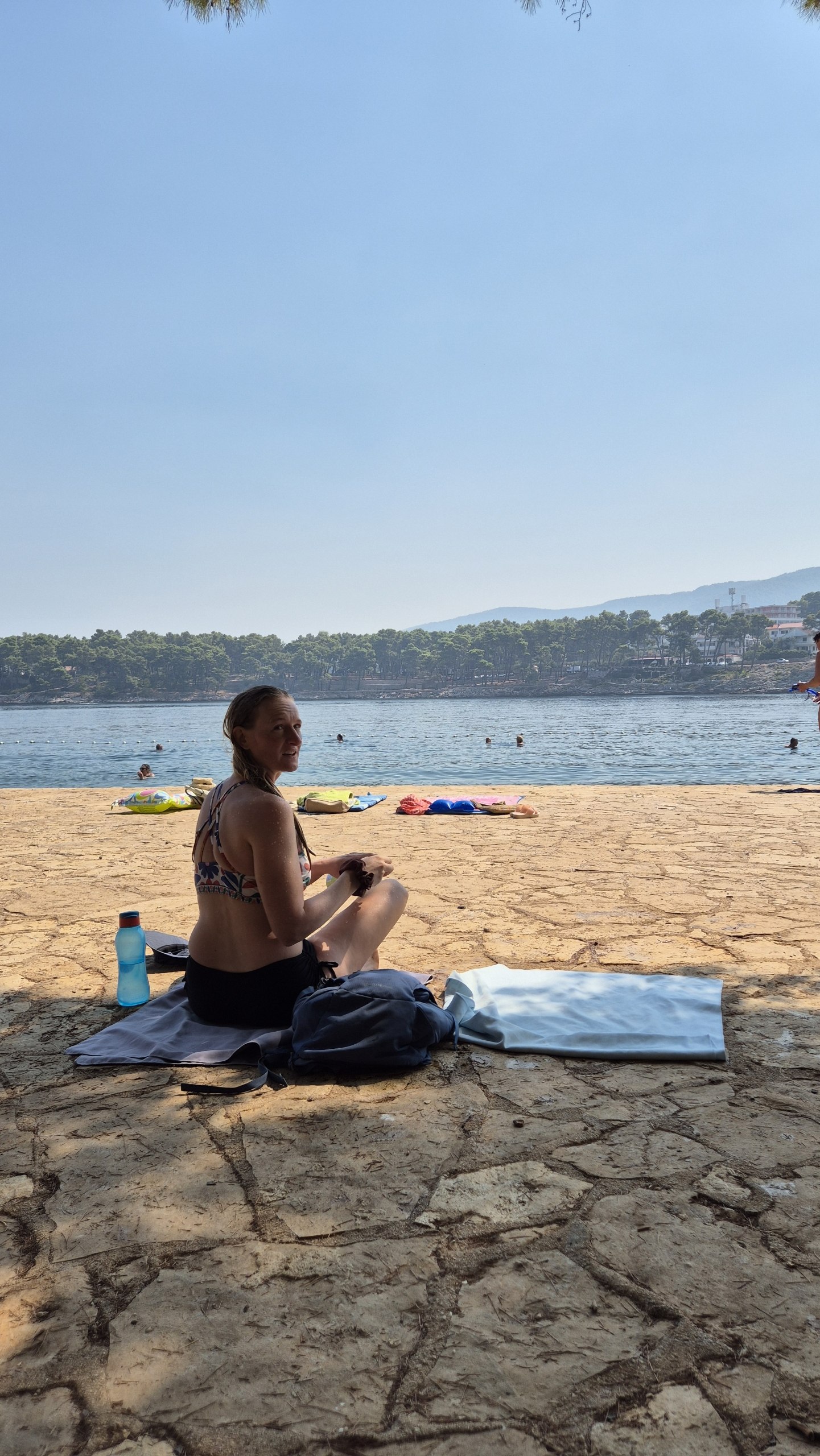
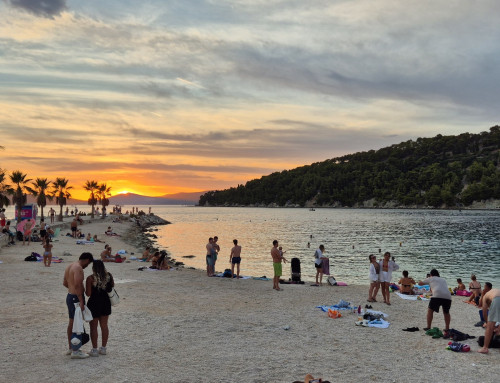
From there we began walking along the coast towards Vrboska. We stopped at a lovely pebble beach for another swim. It was Sunday, and the small beach was packed to the edges with people making the most of it.
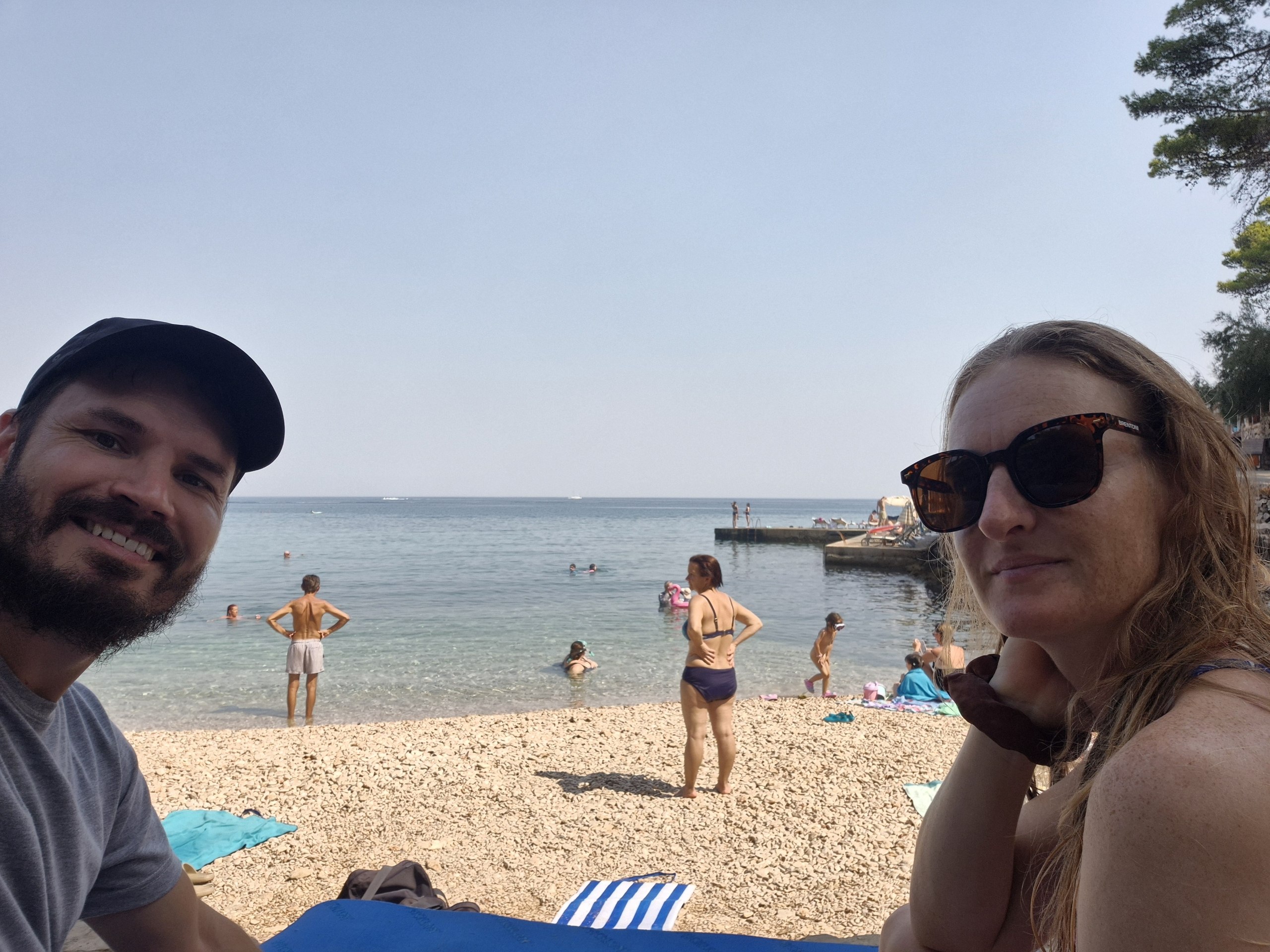
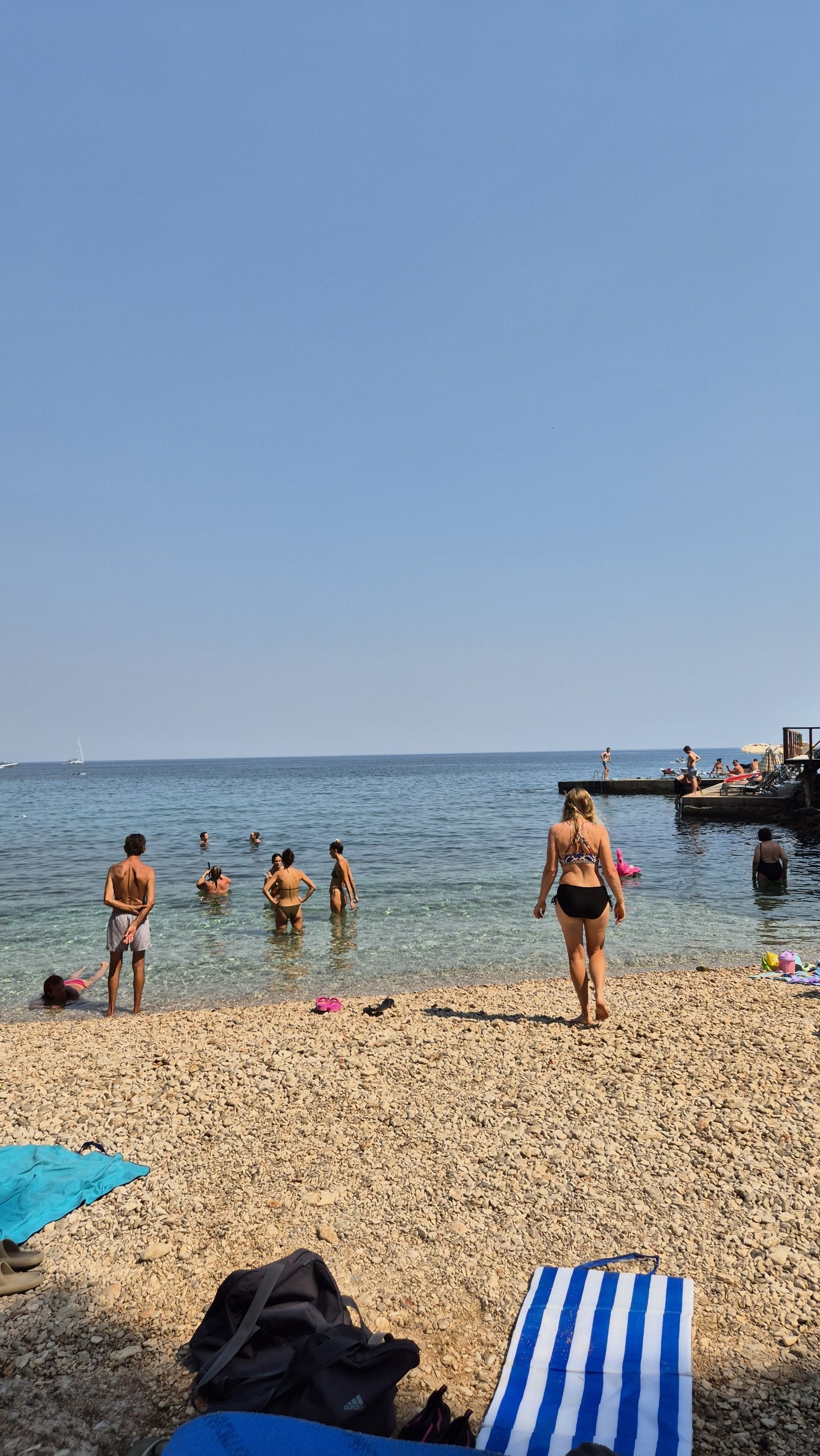
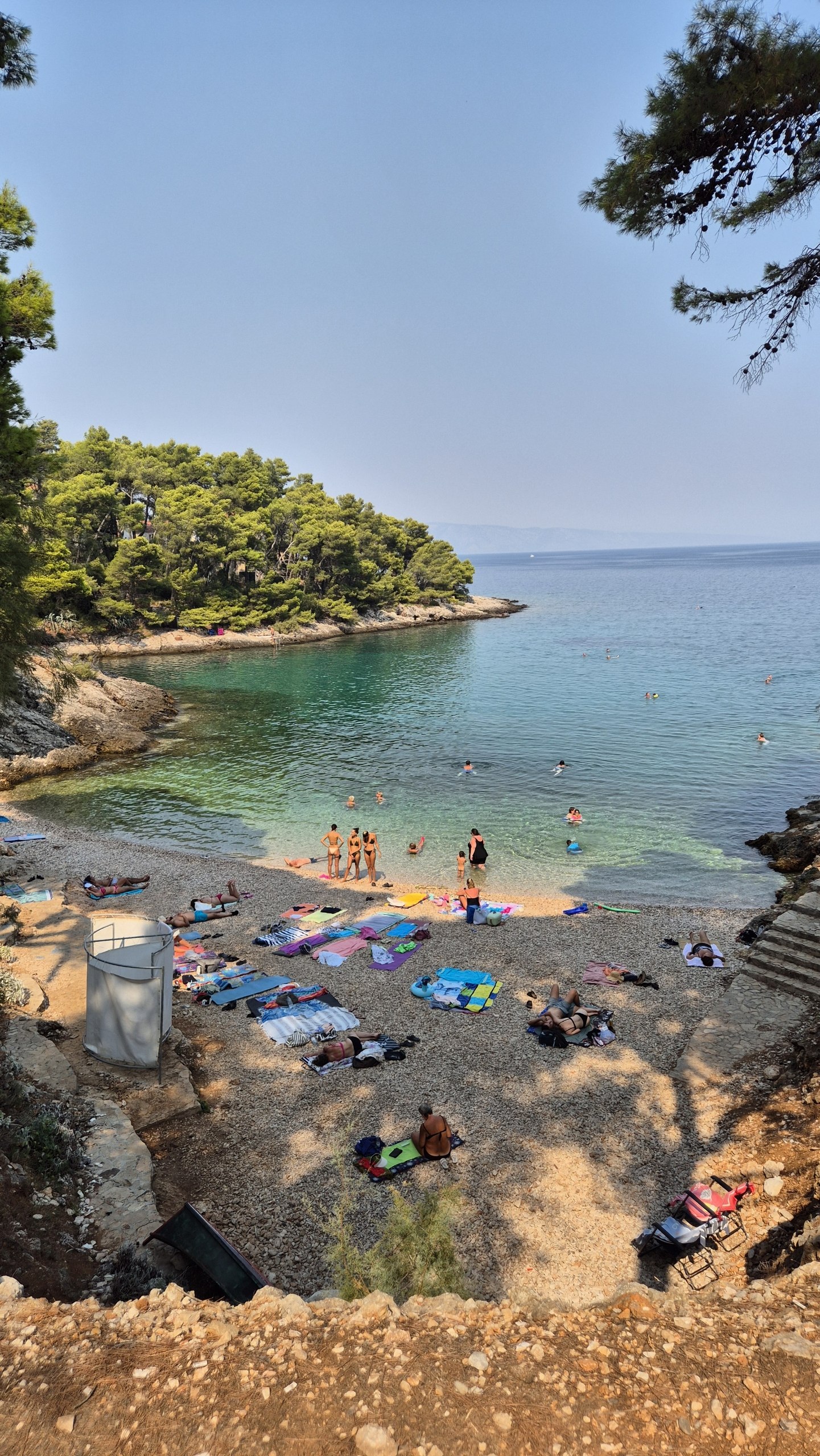
A little farther along we found another beautiful spot, and Caro had to swim again.
The road wound beside the water, never straying far from the edge. Between the heat and the colour of the sea, it felt as though we could walk ten steps before wanting to get back in.
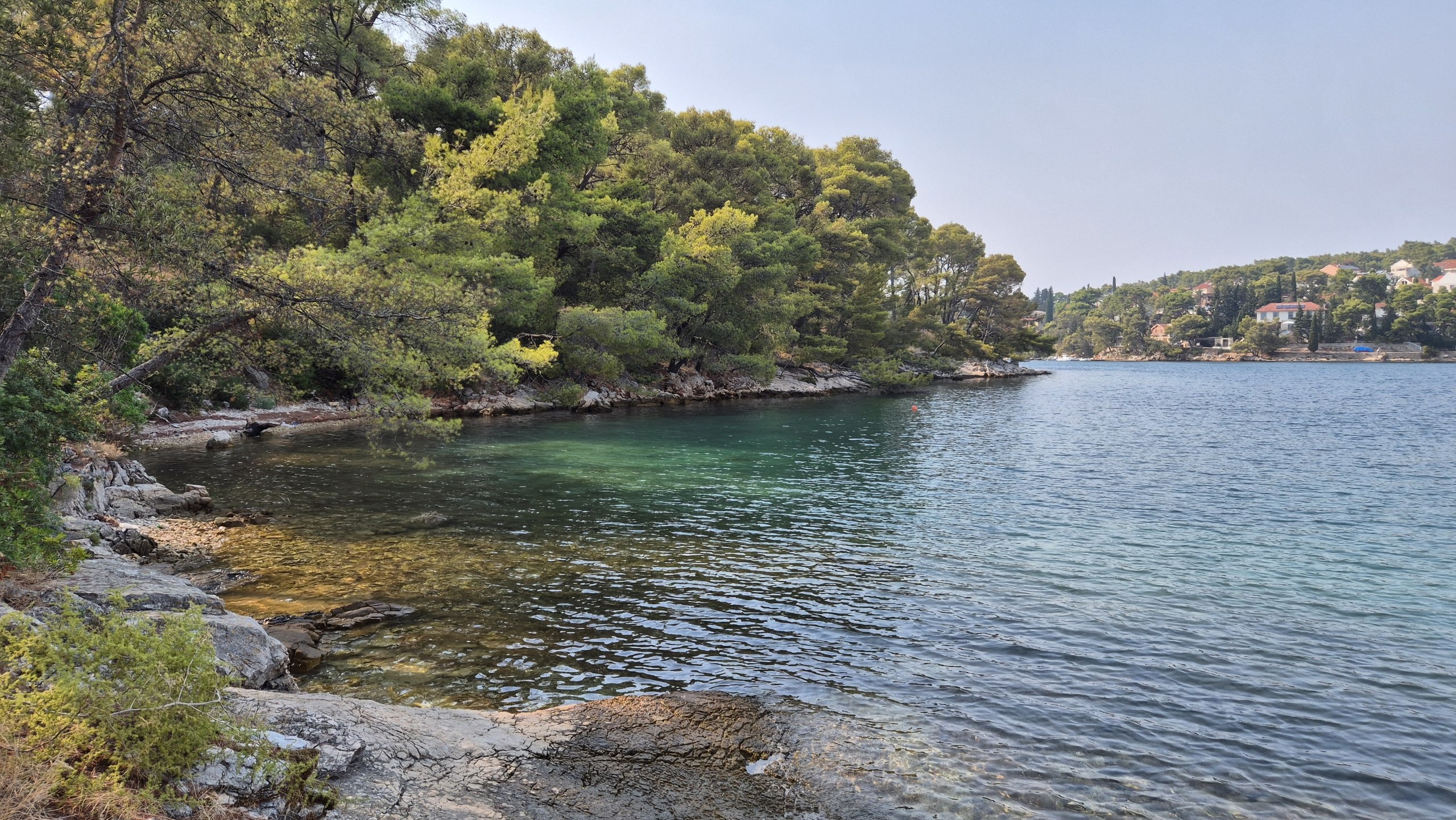
By then it was after 15:00, so we resisted the water’s siren song and continued towards Vrboska.
We did, admittedly, swim once more before going into town.
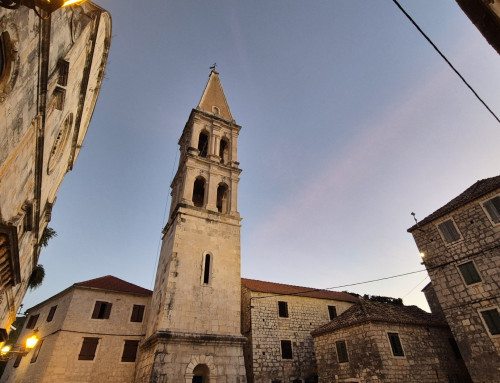
Vrboska sits deep inside a long, narrow inlet and is the smallest town on Hvar. Founded in the 15th century, it grew from a fishing village and port. The channel running through it is crossed by a collection of small stone bridges, which earned it the nickname “Little Venice”. Its best-known building is the fortified Church of St Mary of Mercy, rebuilt as a church-fortress after an Ottoman attack in 1571.
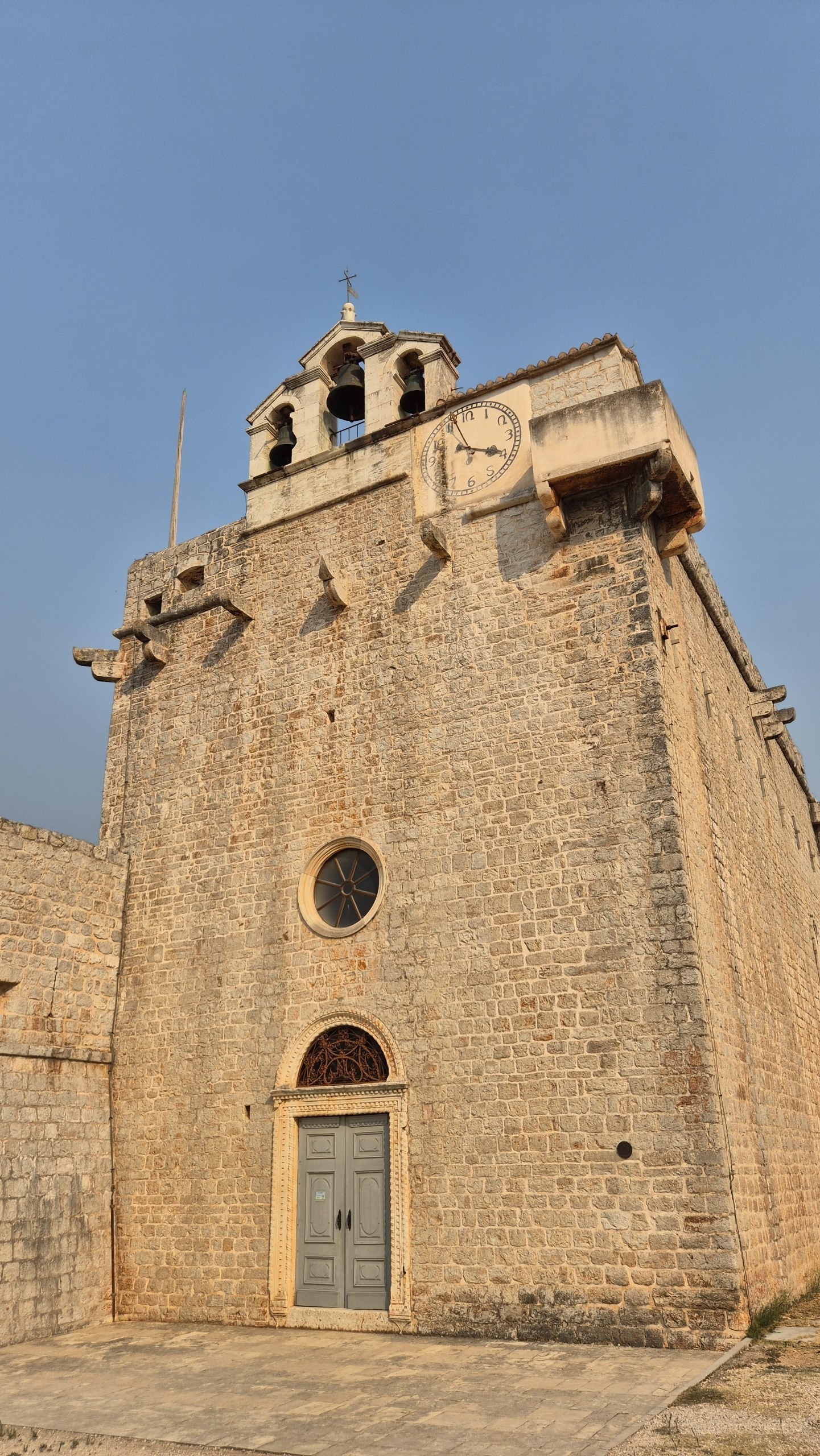
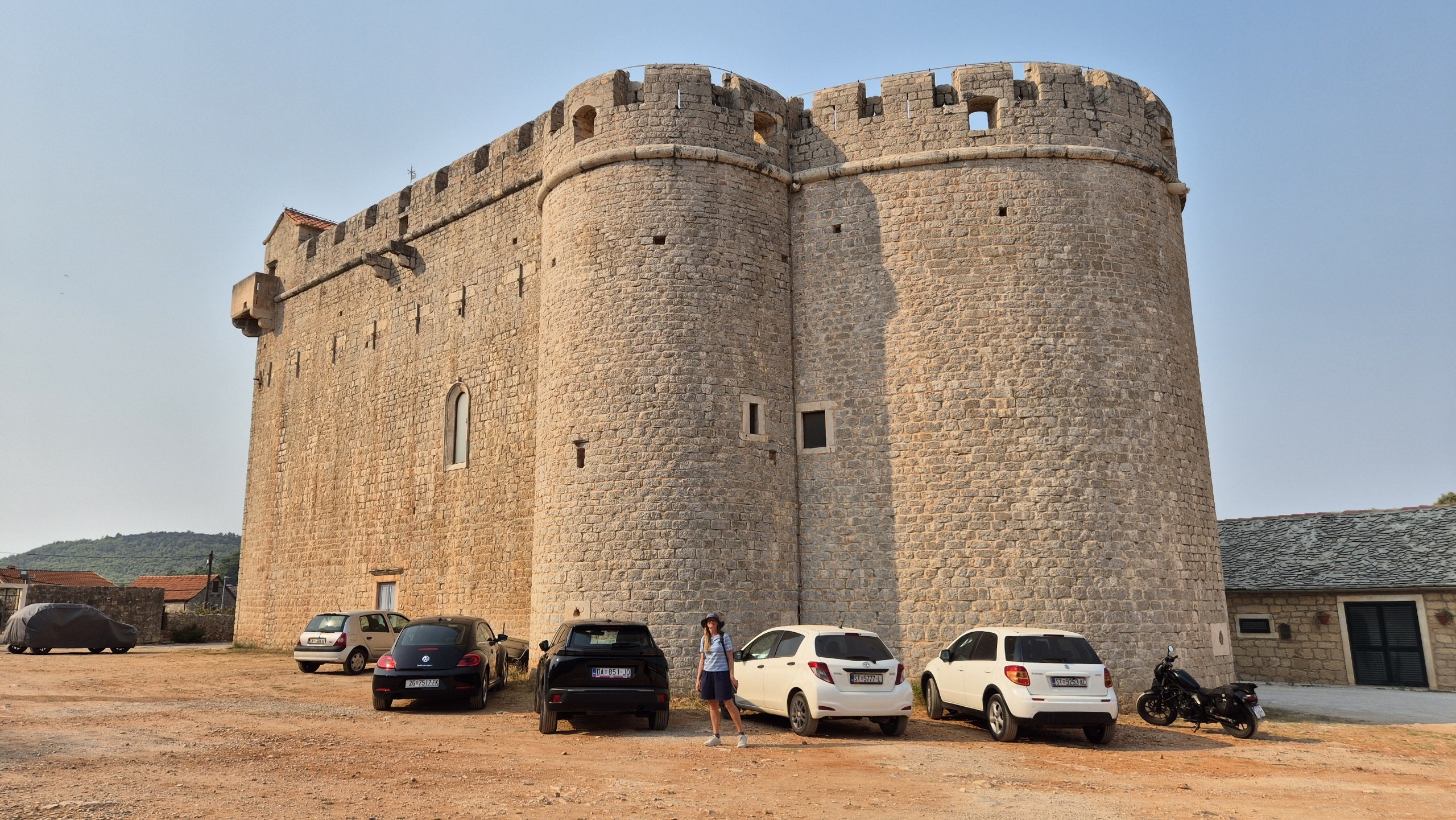
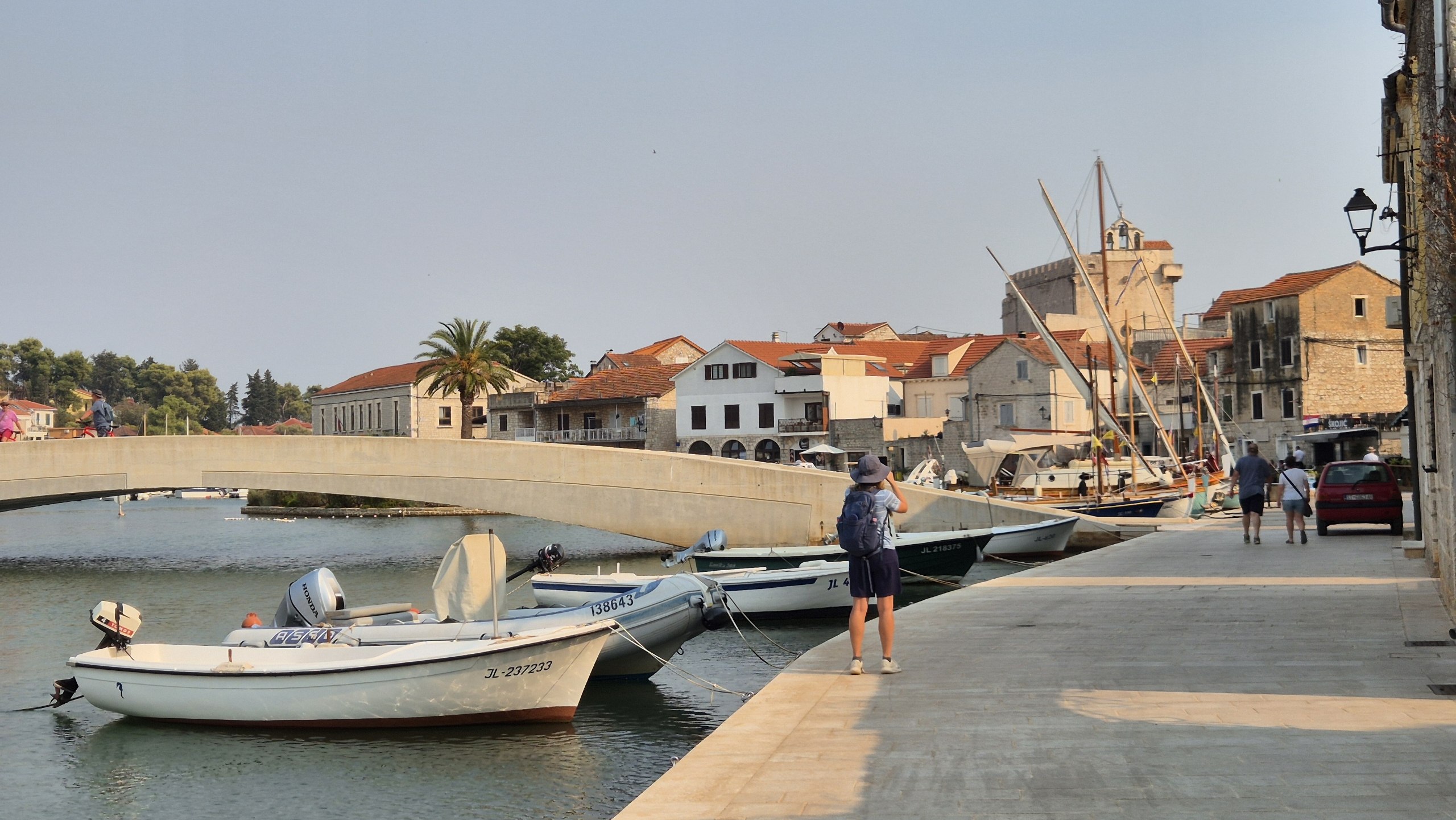
On that Sunday afternoon, however, Vrboska felt almost asleep. The streets were peaceful and unhurried, and it immediately seemed like somewhere we could imagine returning to.
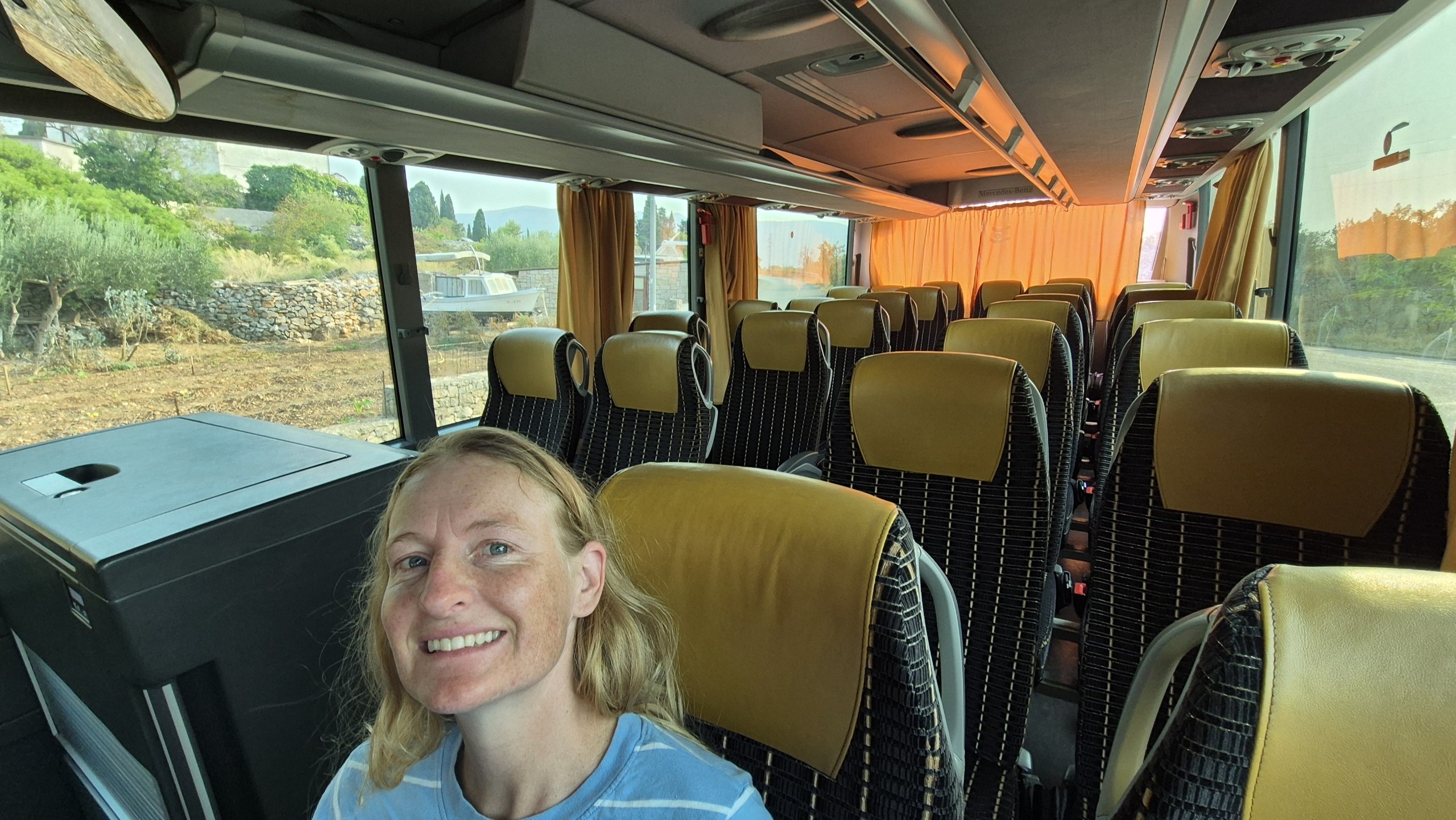
We wandered through a few of the streets before making our way to the bus stop. The fare back to Stari Grad was again €4 each. For at least the first leg back to Jelsa, we had the entire bus to ourselves.
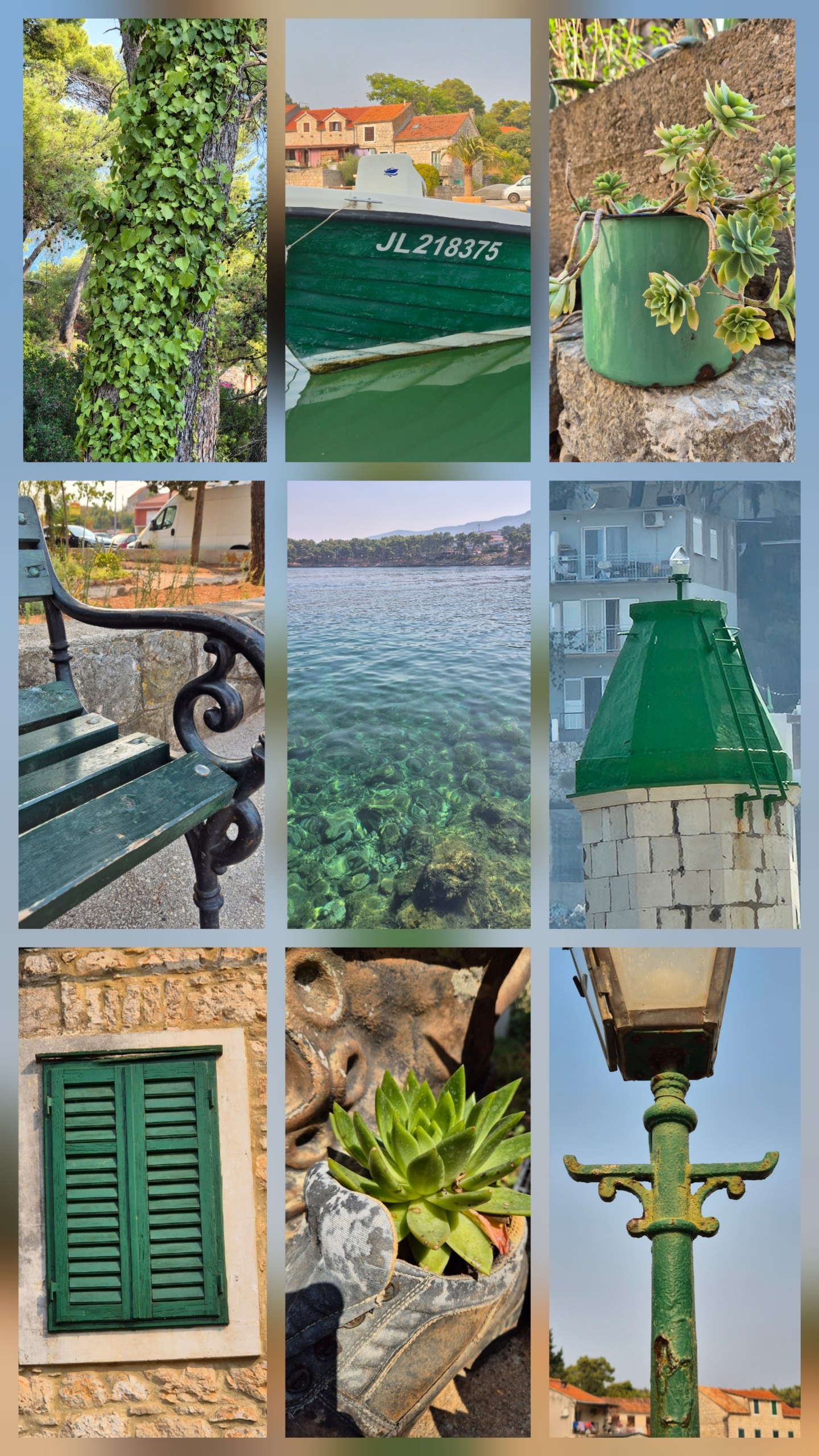
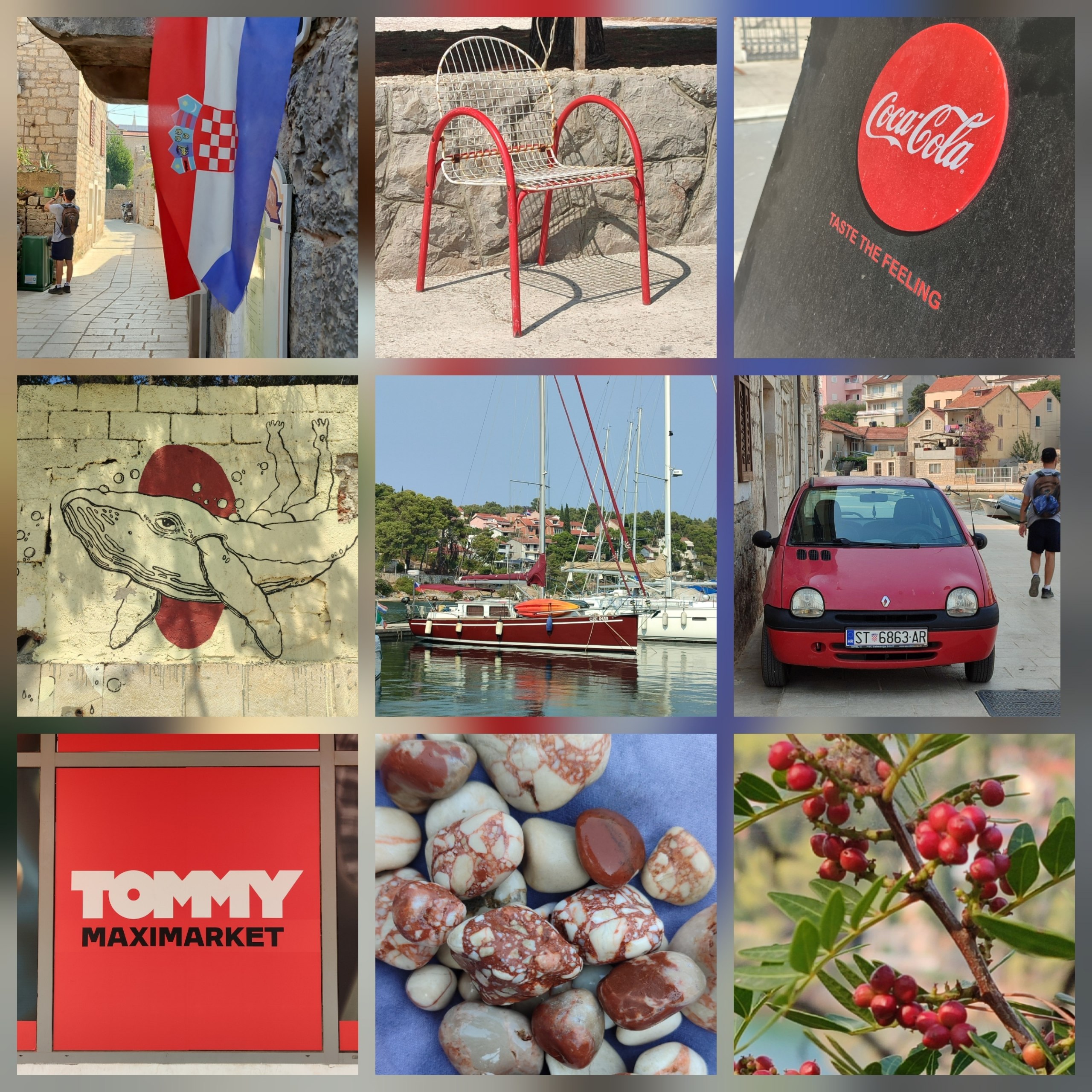
We had also continued our colour photo challenge during the day. This time Hugo chose green and Caro chose red.
We arrived at our accommodation after 16:00 and made an early dinner of the same pasta with olives, salami, cheese and pesto that we had eaten the day before.
Then, tired from the day’s outing and all the walking and swimming, we lay flat on our backs and did very little else.
Leave A Comment