
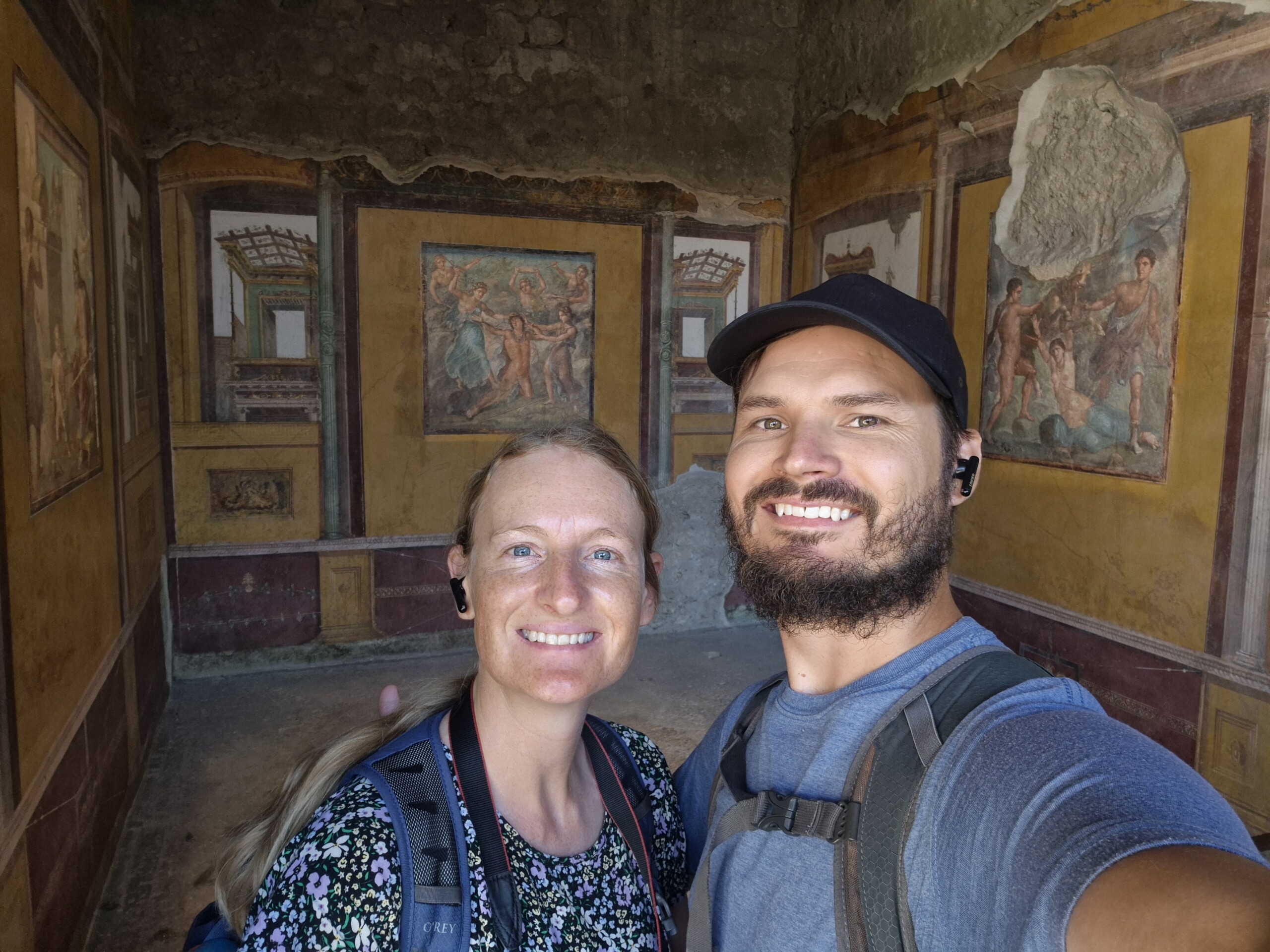
We got up, had coffee, ate the leftover pizza and packed a lunch, then headed for the train station. The walk took us past the cheap markets run by immigrants, where clothing goes for as little as €0.50.
We took the Circumvesuviana to Pompeii. We got on at Porta Nolana, where we were a few minutes early, so we got a seat. At the next station, Garibaldi — not even a few hundred metres away, but part of the central complex — hundreds of people got on and had to stand the whole way.
The train stops right at the Pompeii ticket office. We had bought tickets online but were still sent into an office where they try to get you to join the guided tours. We declined, and we were so adamant about getting onto the site without any extra bells and whistles that we completely missed the free paper maps you can take to help you navigate the enormous place. We only entered the park around 11:00.
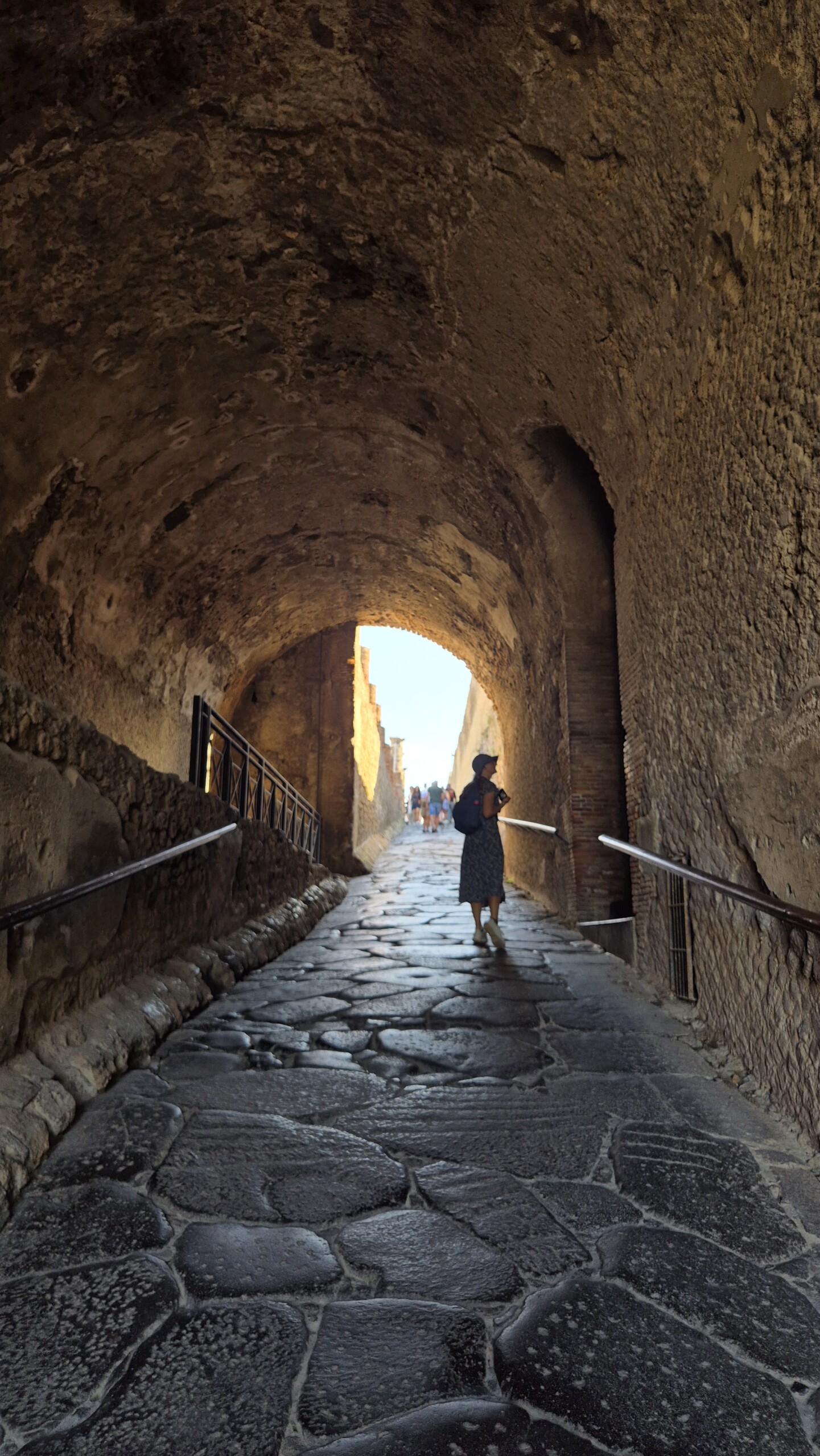
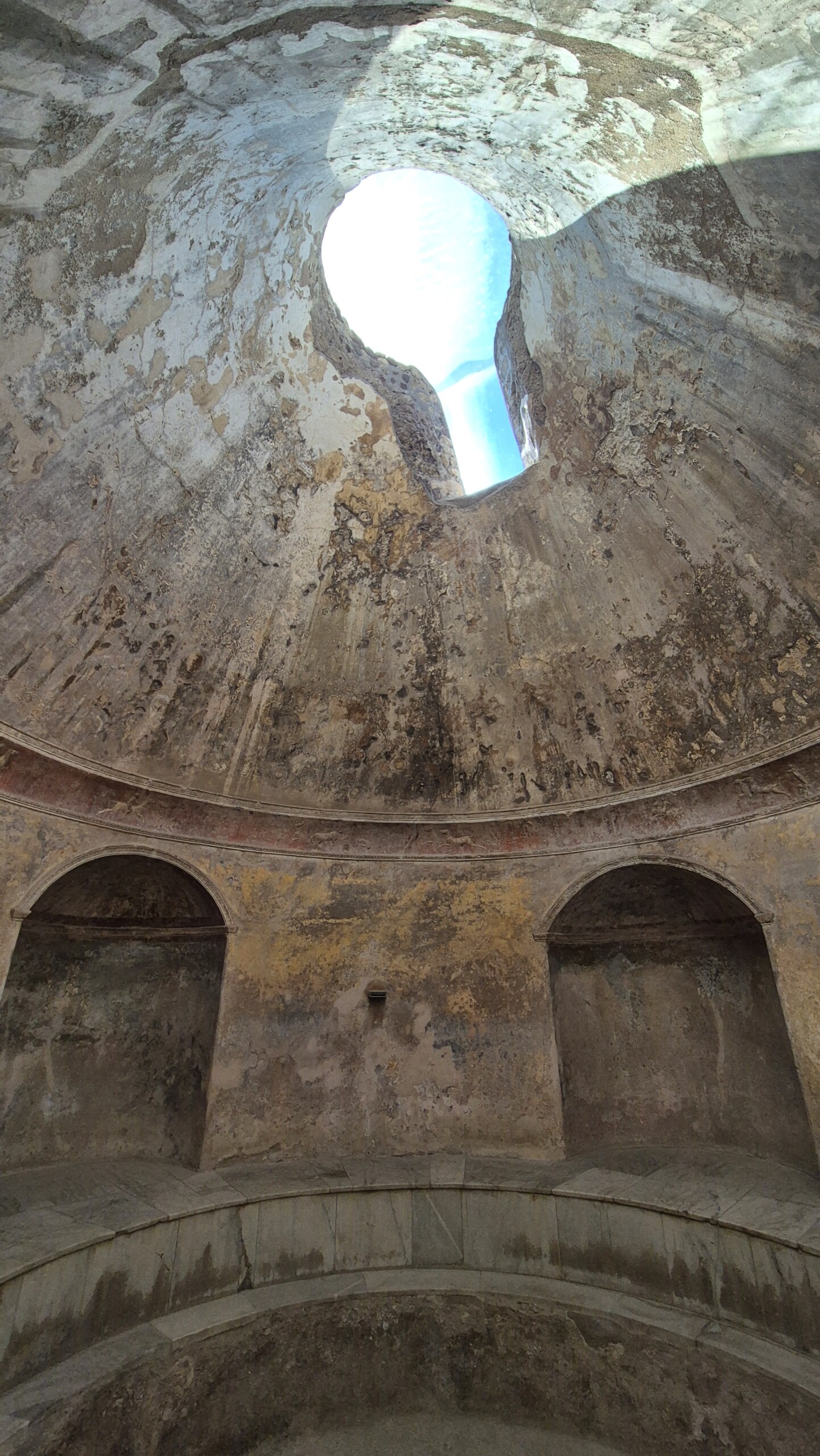
We had the downloaded Rick Steves audio guide, which we can recommend. Only later did we see that the free audio guide from the office has a lot more information.
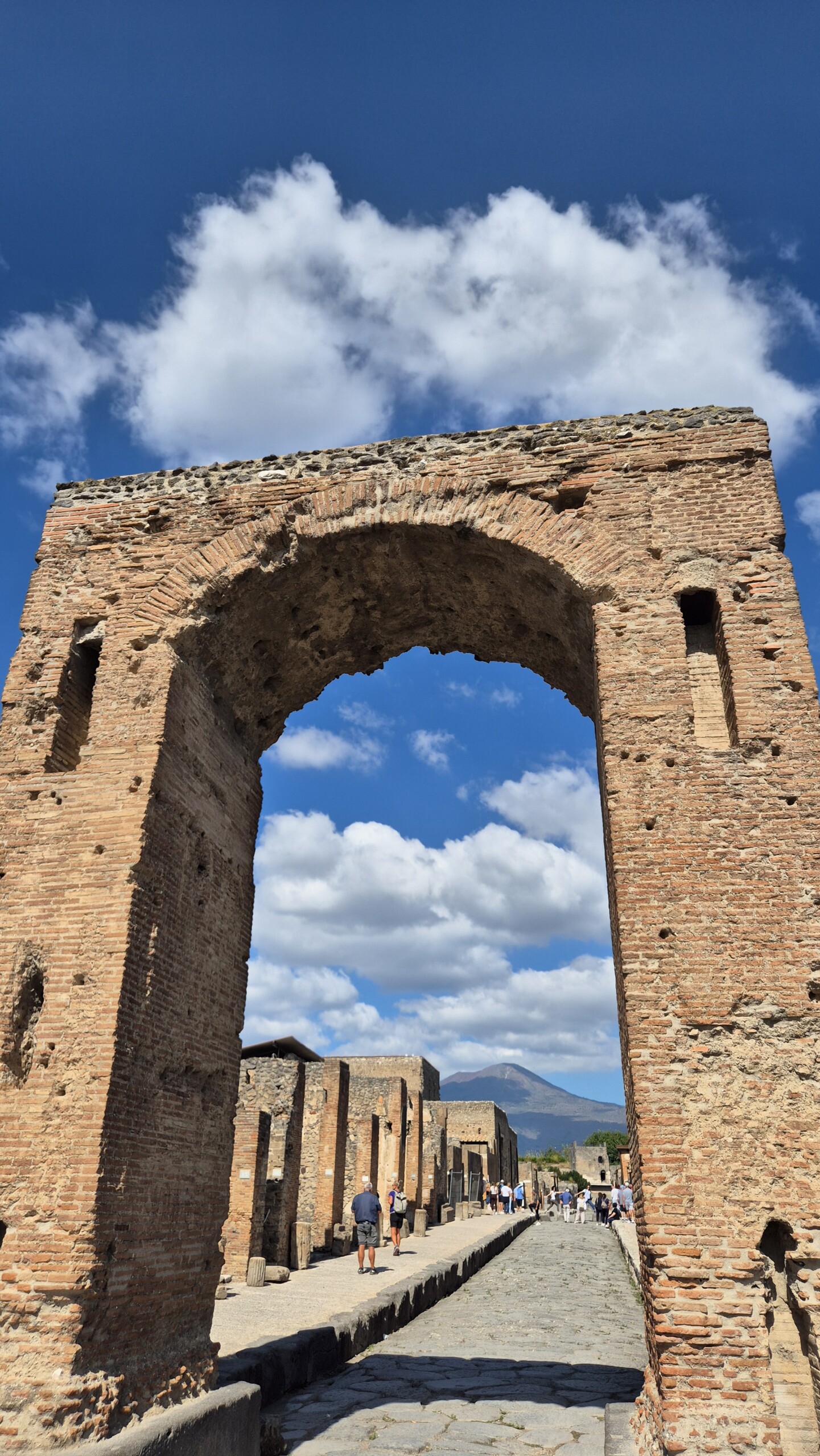
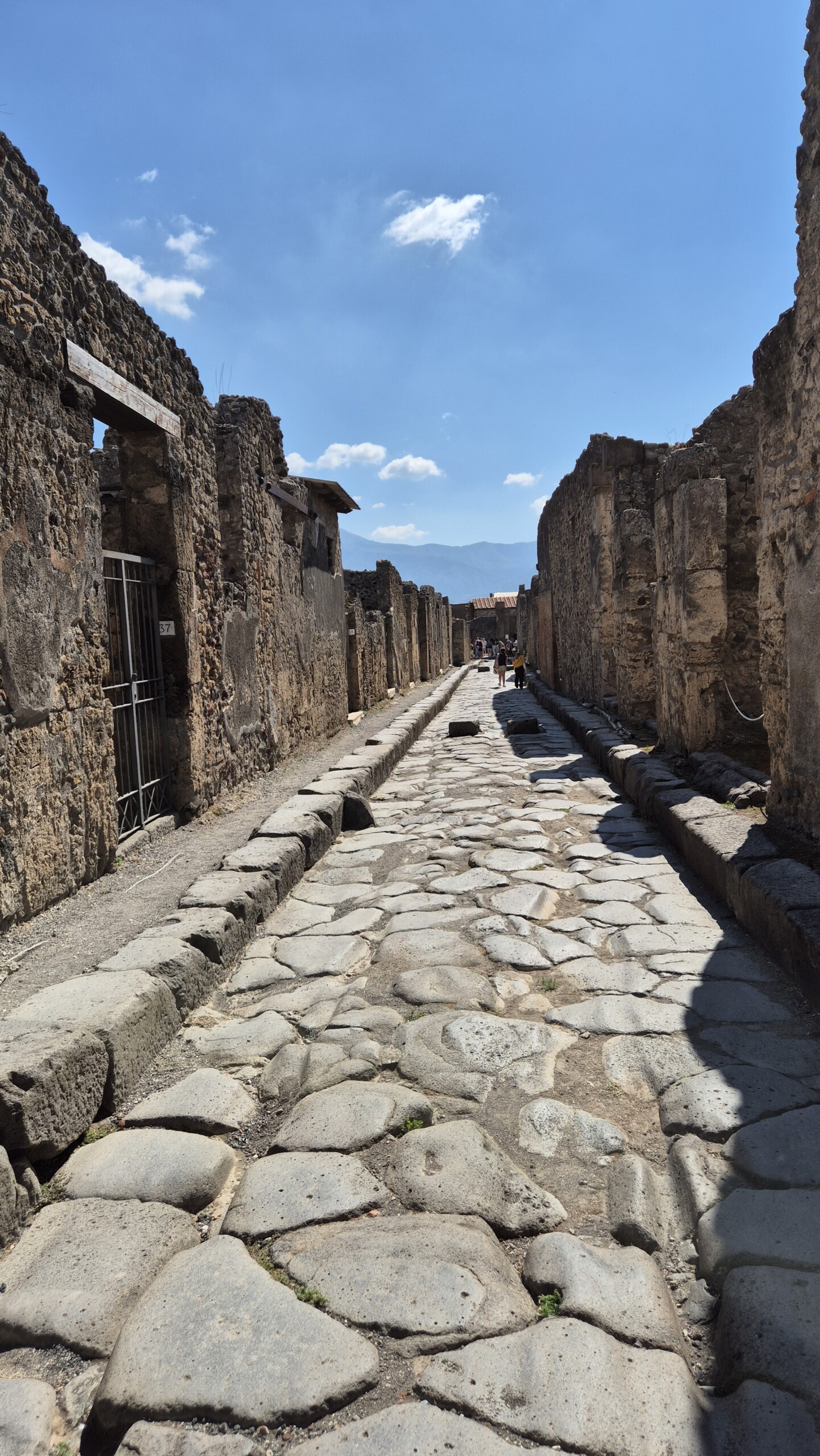
Vesuvius erupted in AD 79 and buried the town under metres of ash and pumice, which is exactly why it is still here — a whole Roman town with its streets, shops, houses and graffiti sealed in place. Digging started in 1748 and still hasn’t finished; the walled city covers about 66 hectares and roughly two thirds of it has been uncovered.
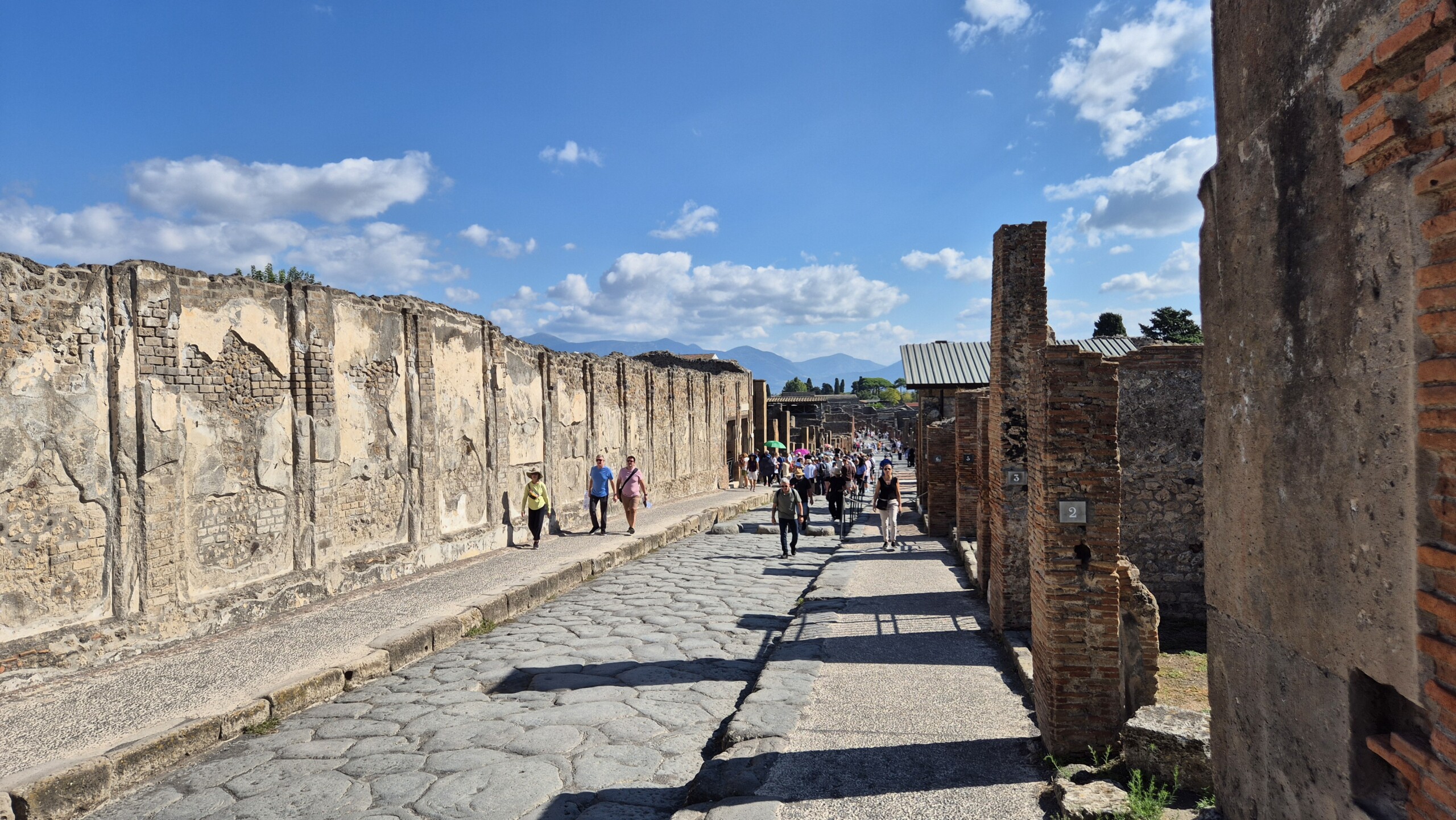
What an unbelievable place and experience.
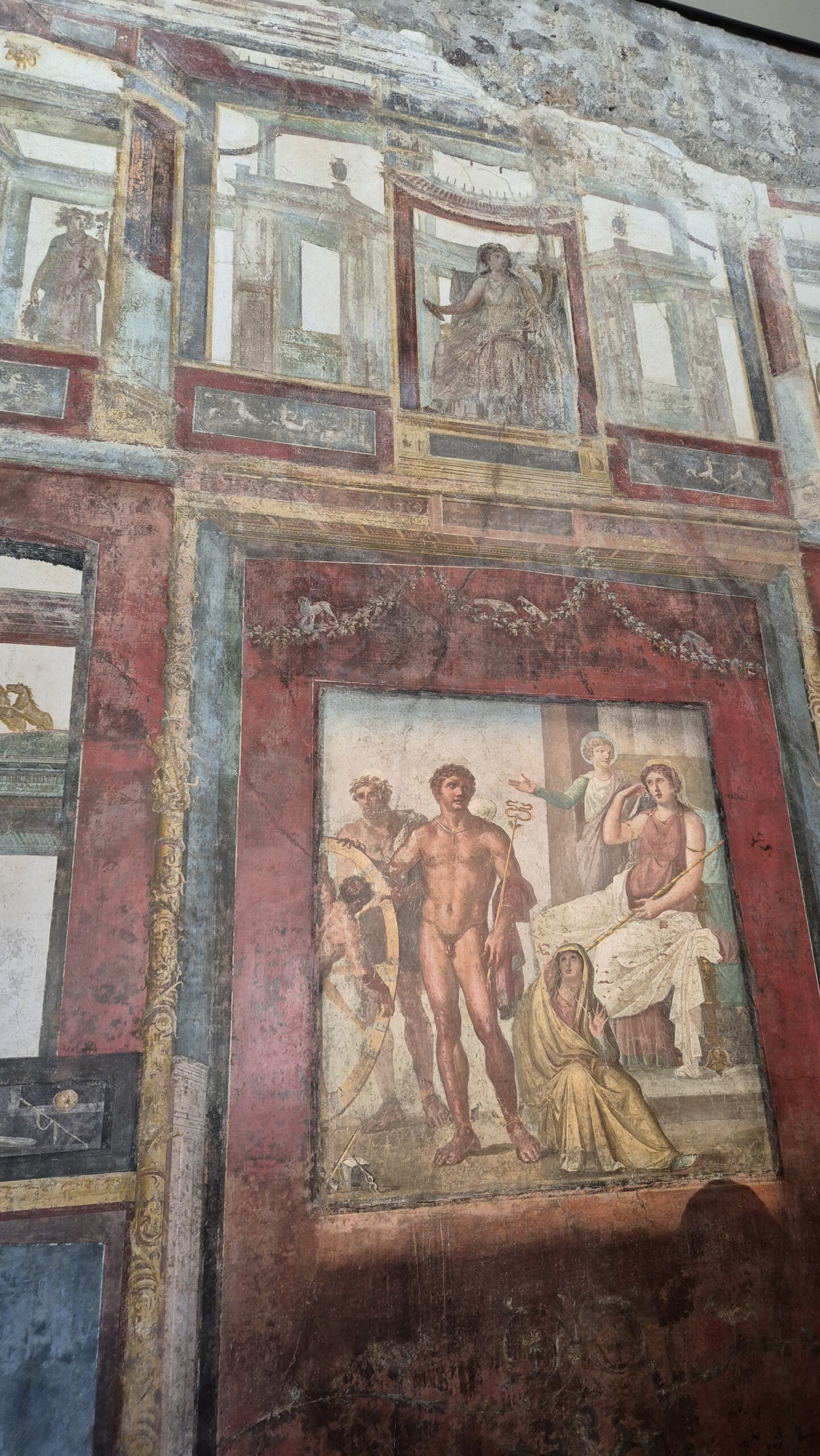
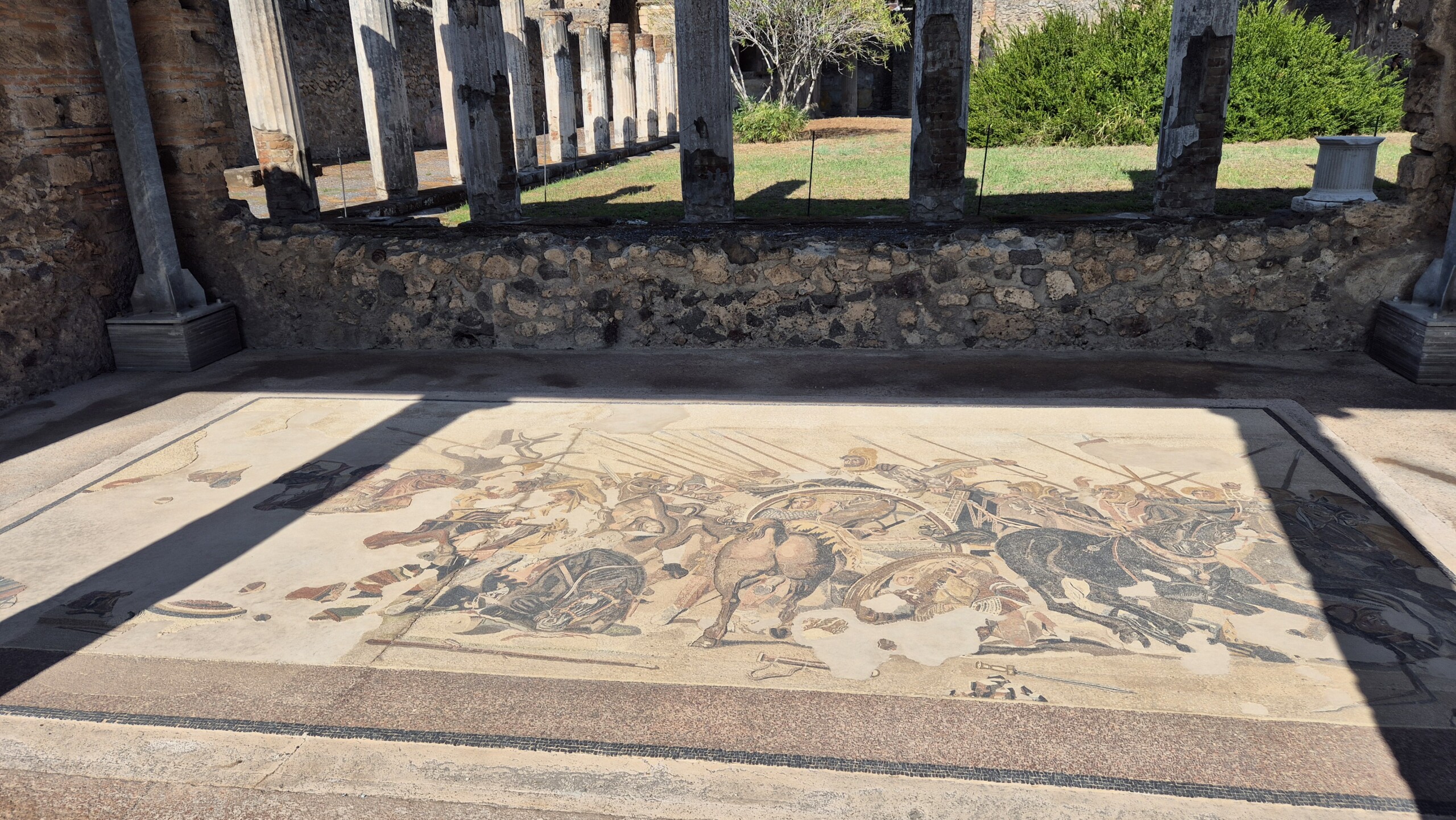
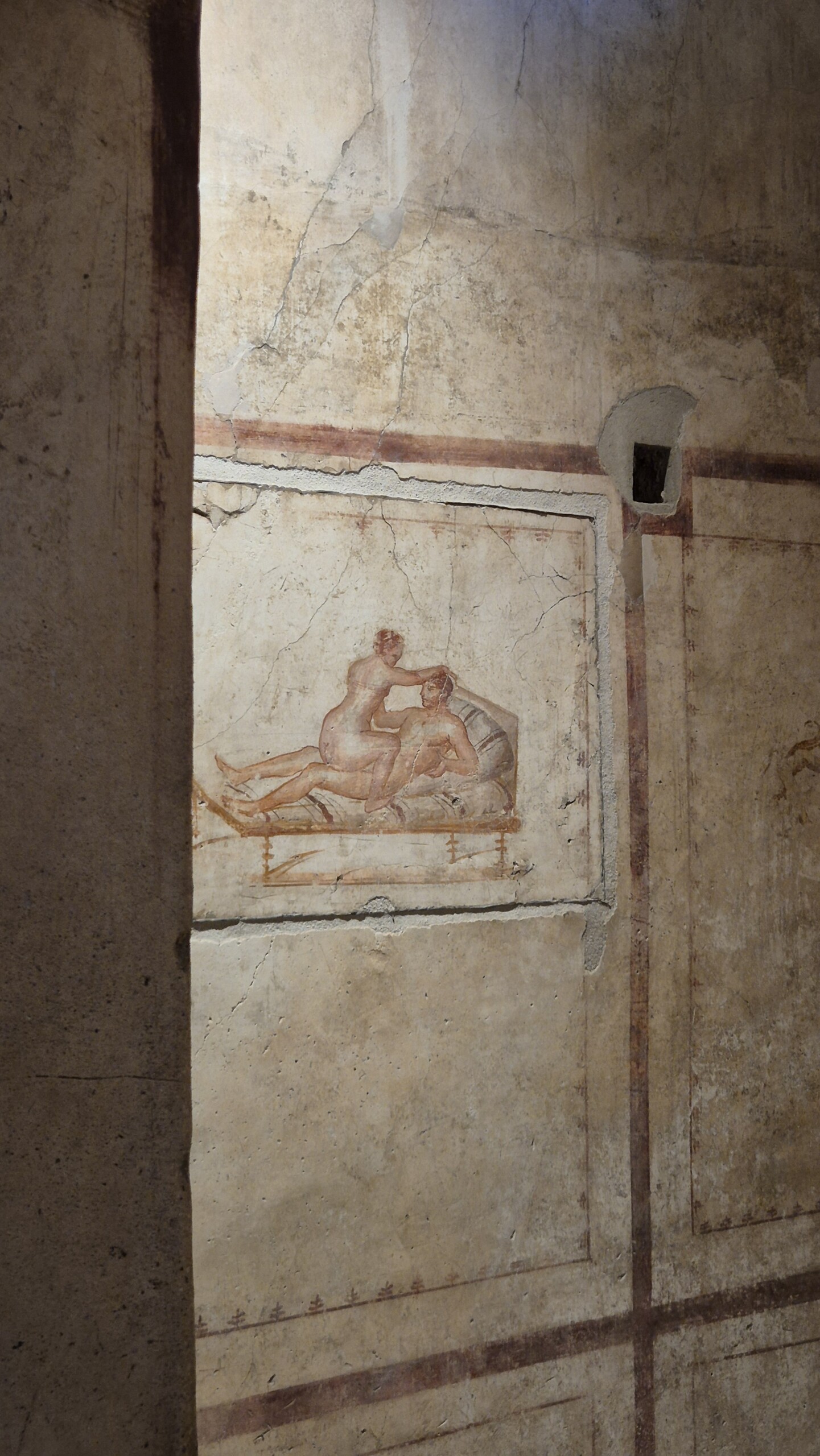
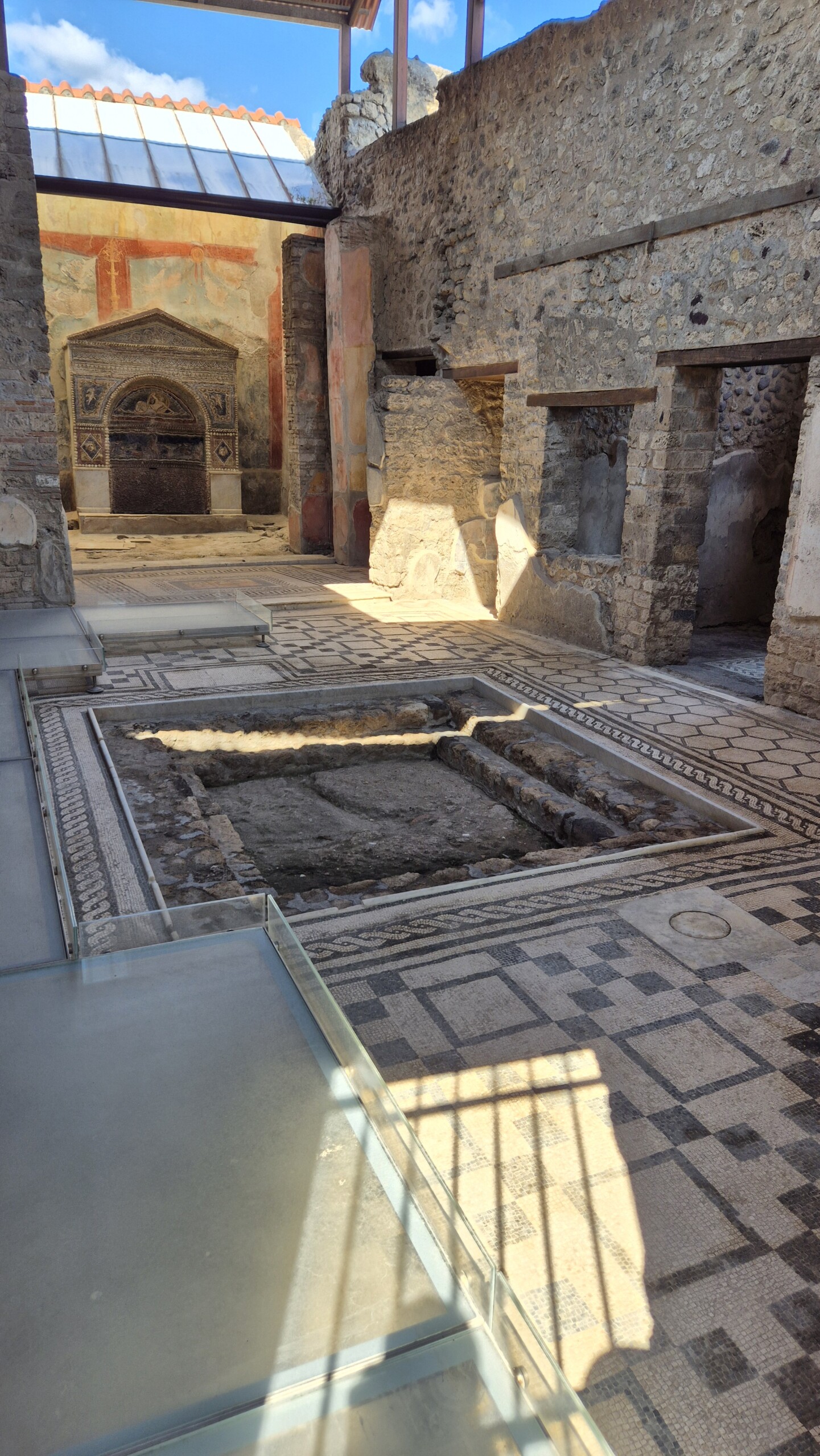
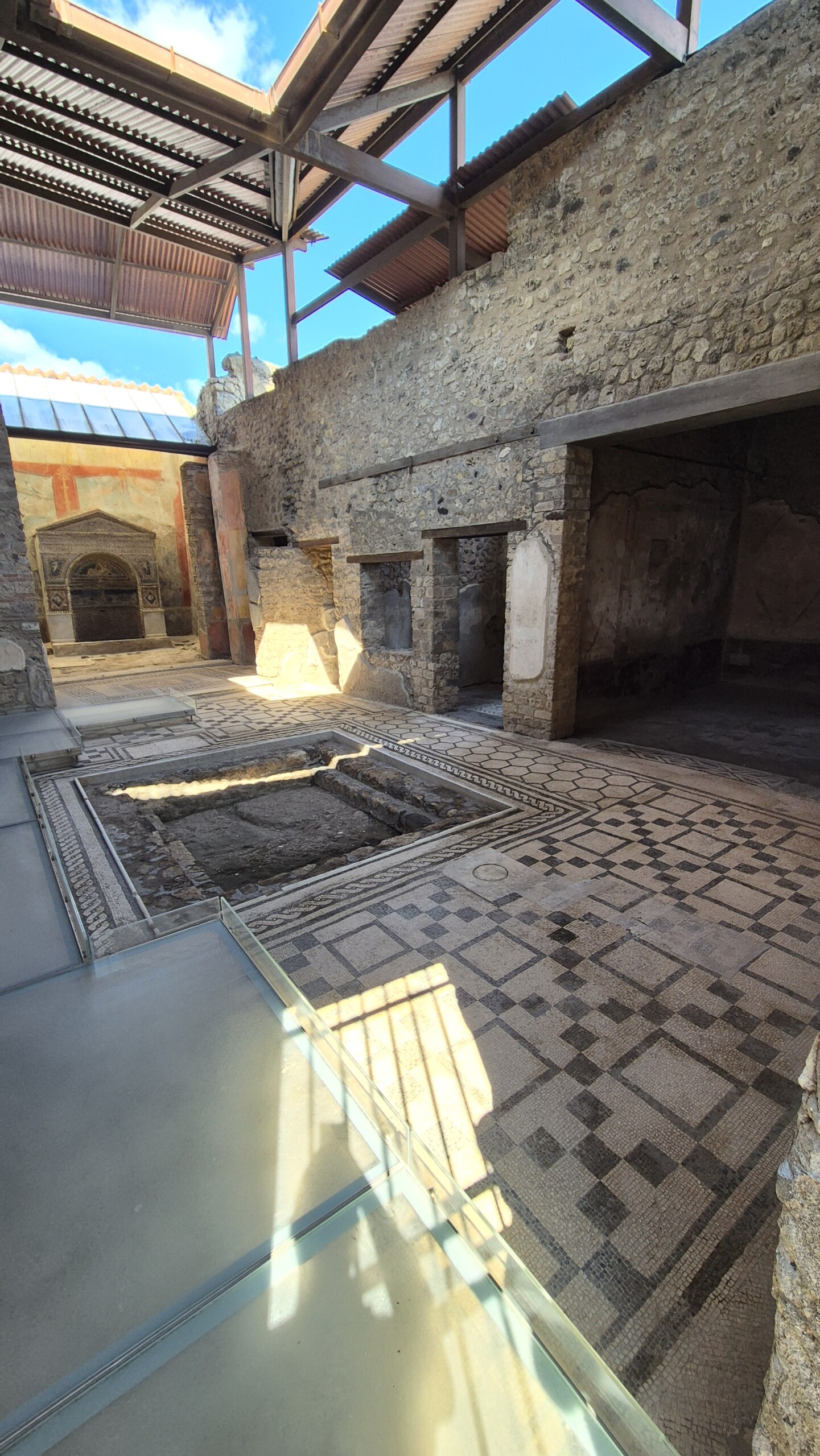
We saw all of Rick Steves’ highlights and then some: the forum, the granary, houses, the baths, the shops, the brothel.
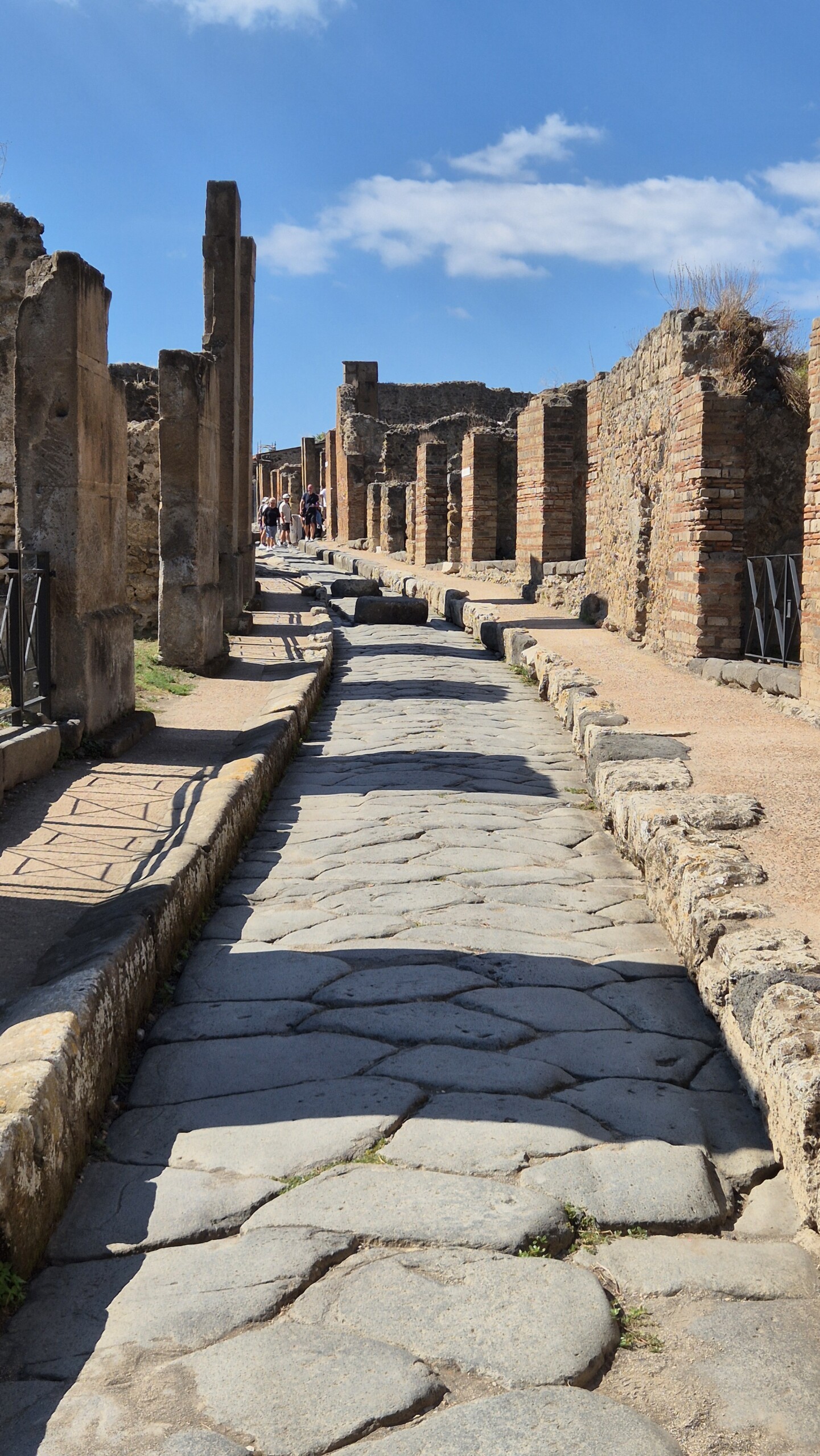
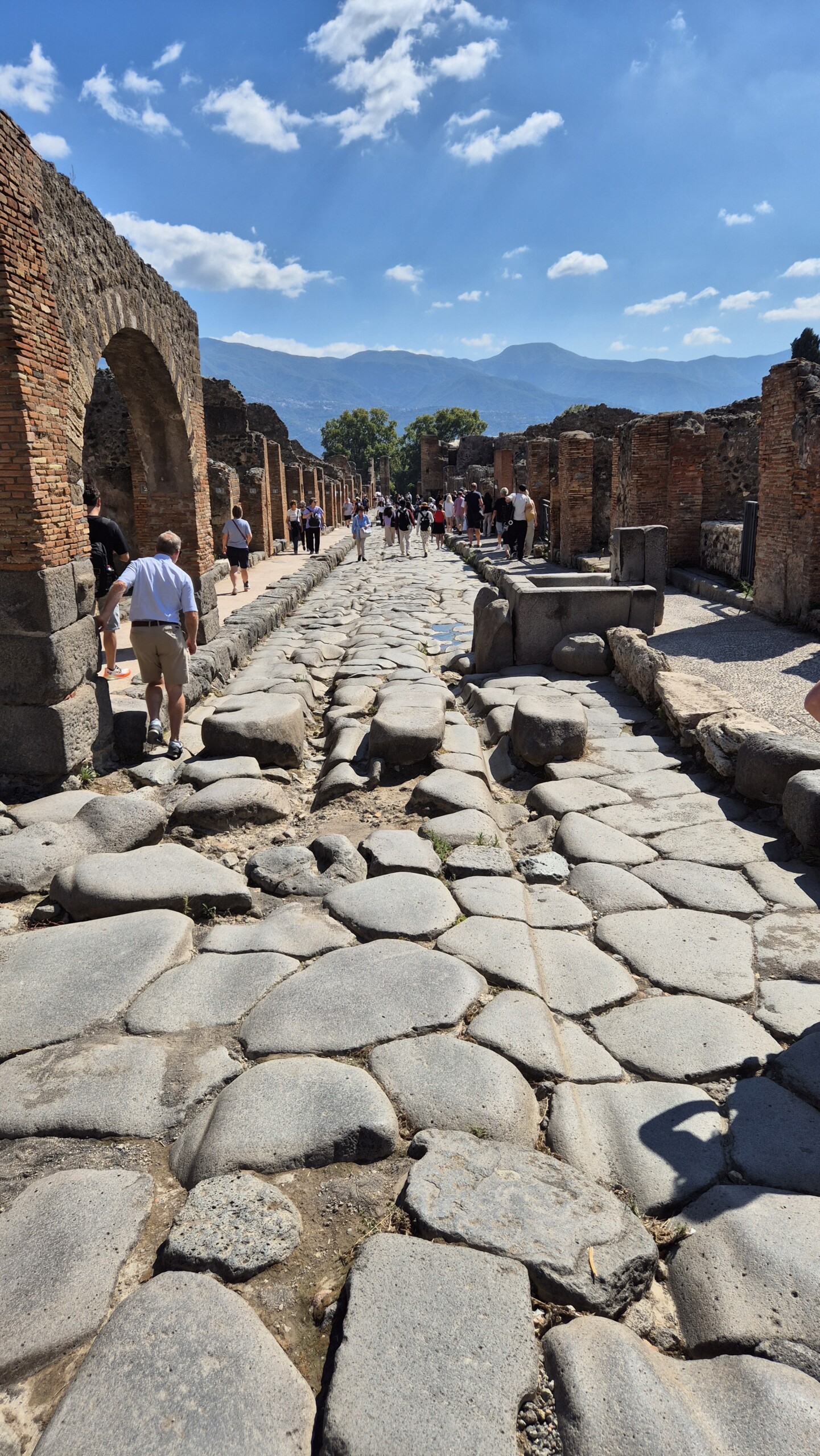
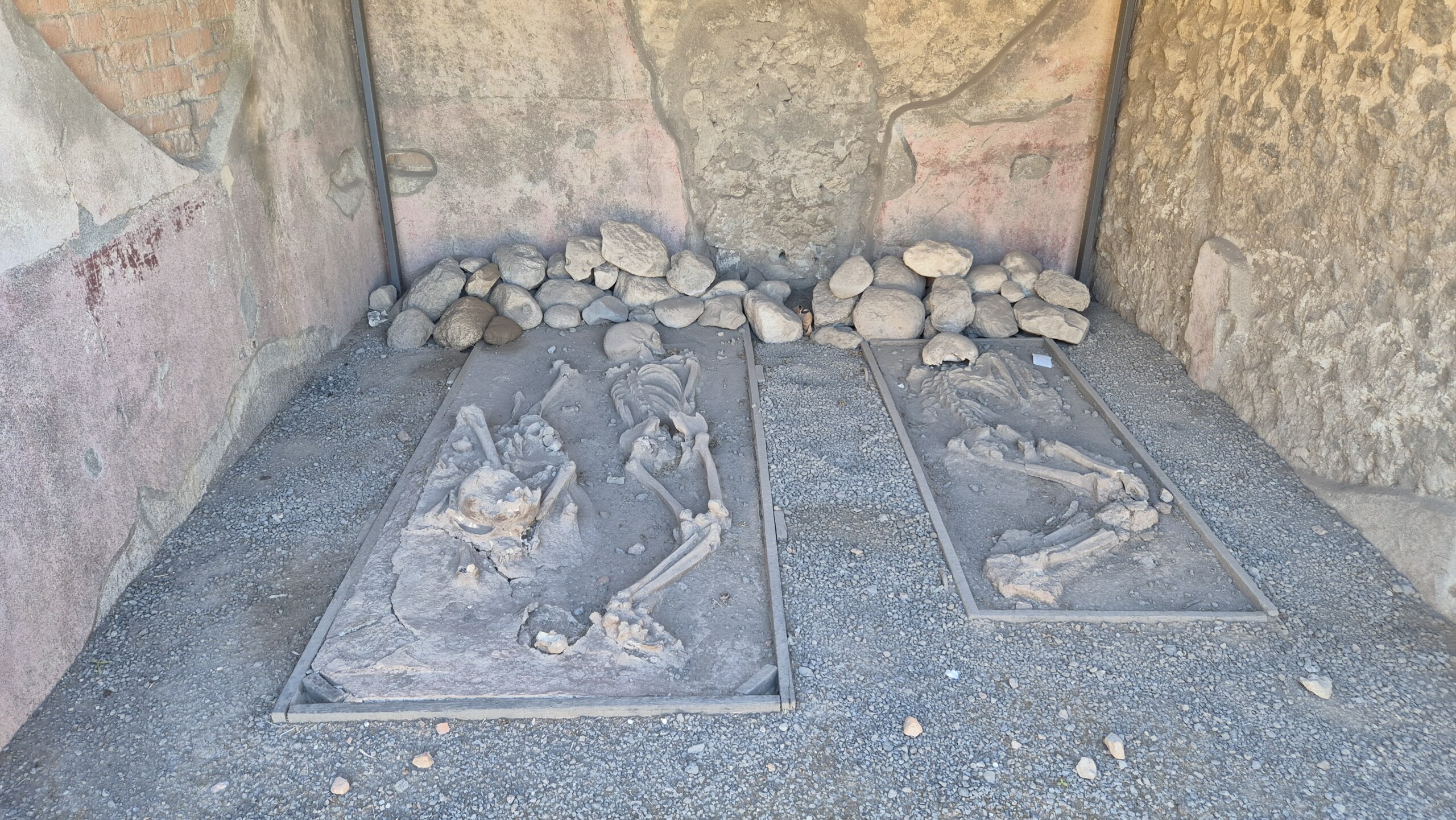
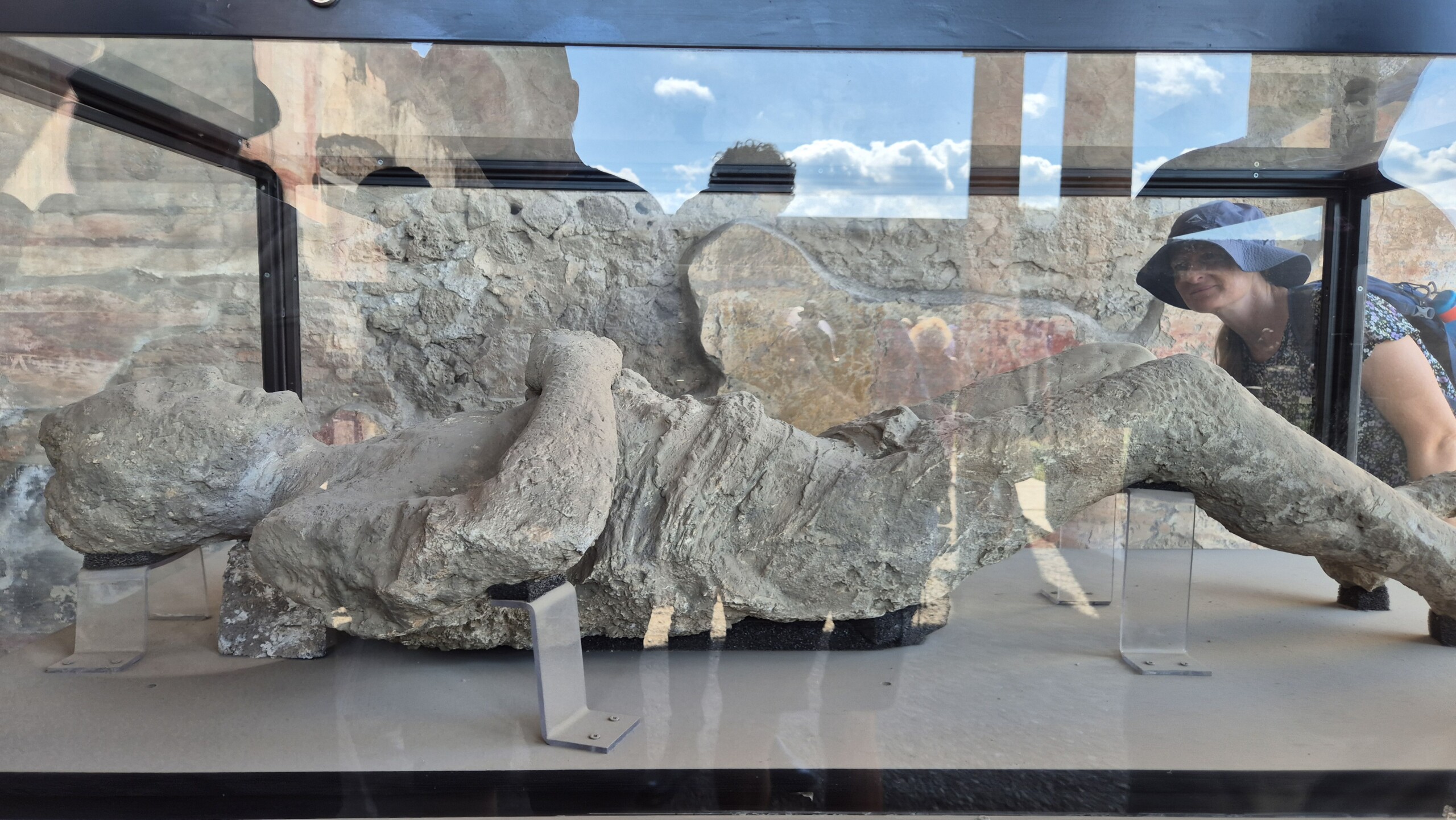
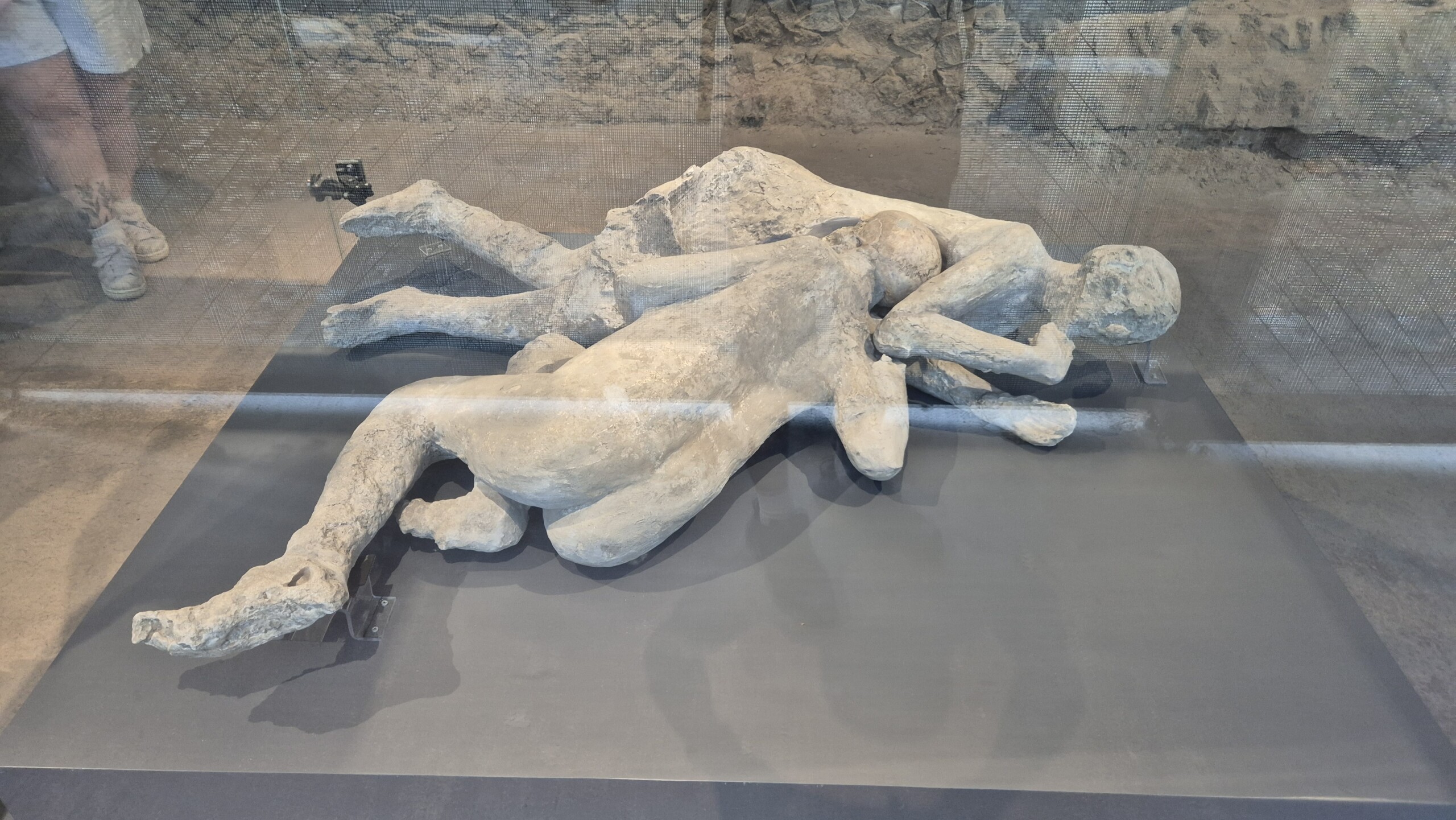
The body casts are mind-boggling to see, and more graphic than we expected. These are not people lying flat in neat “dead” positions. Some have their knees up, or their bodies curled from the pain of the heat, and then they were simply frozen like that.
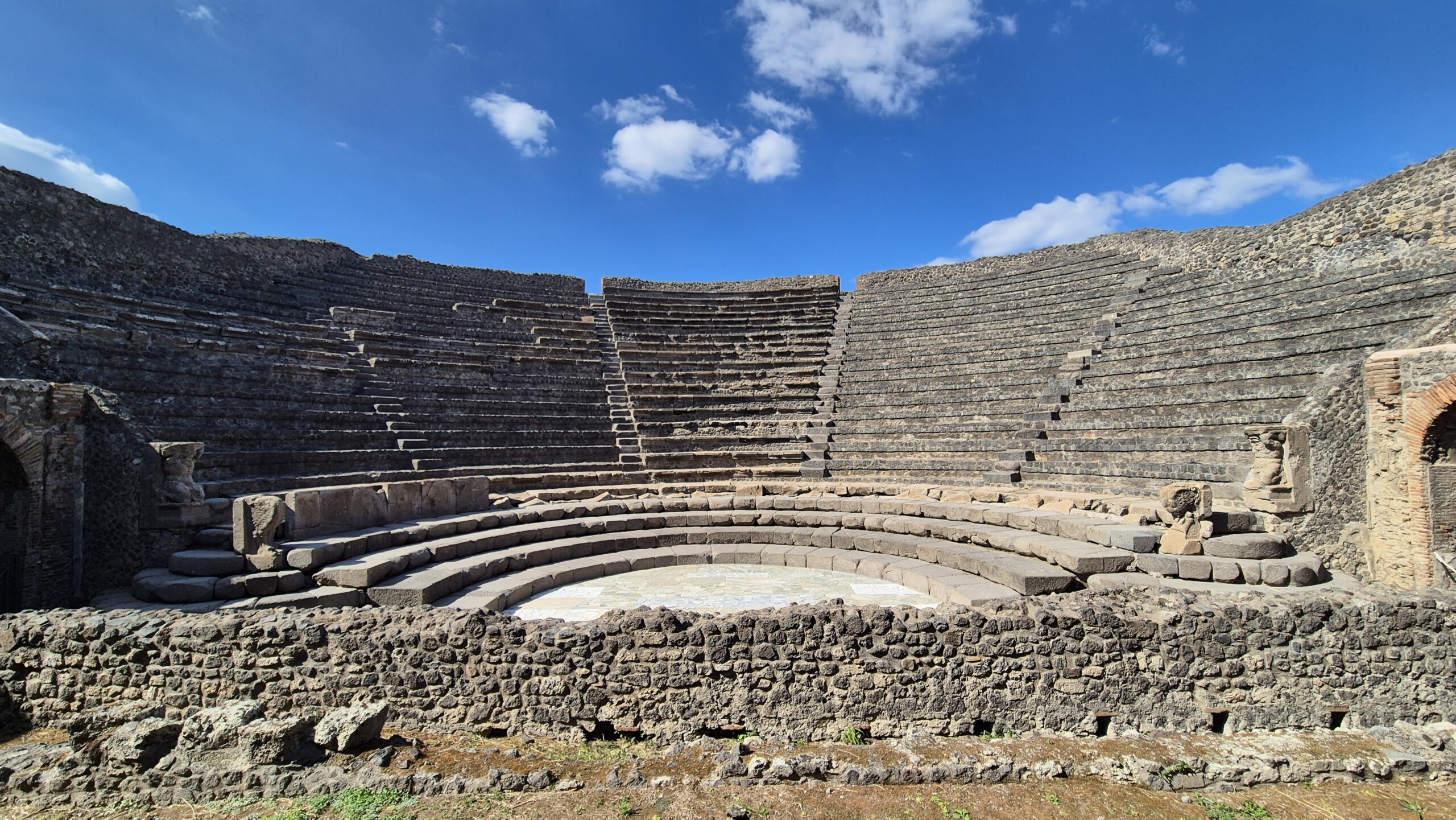
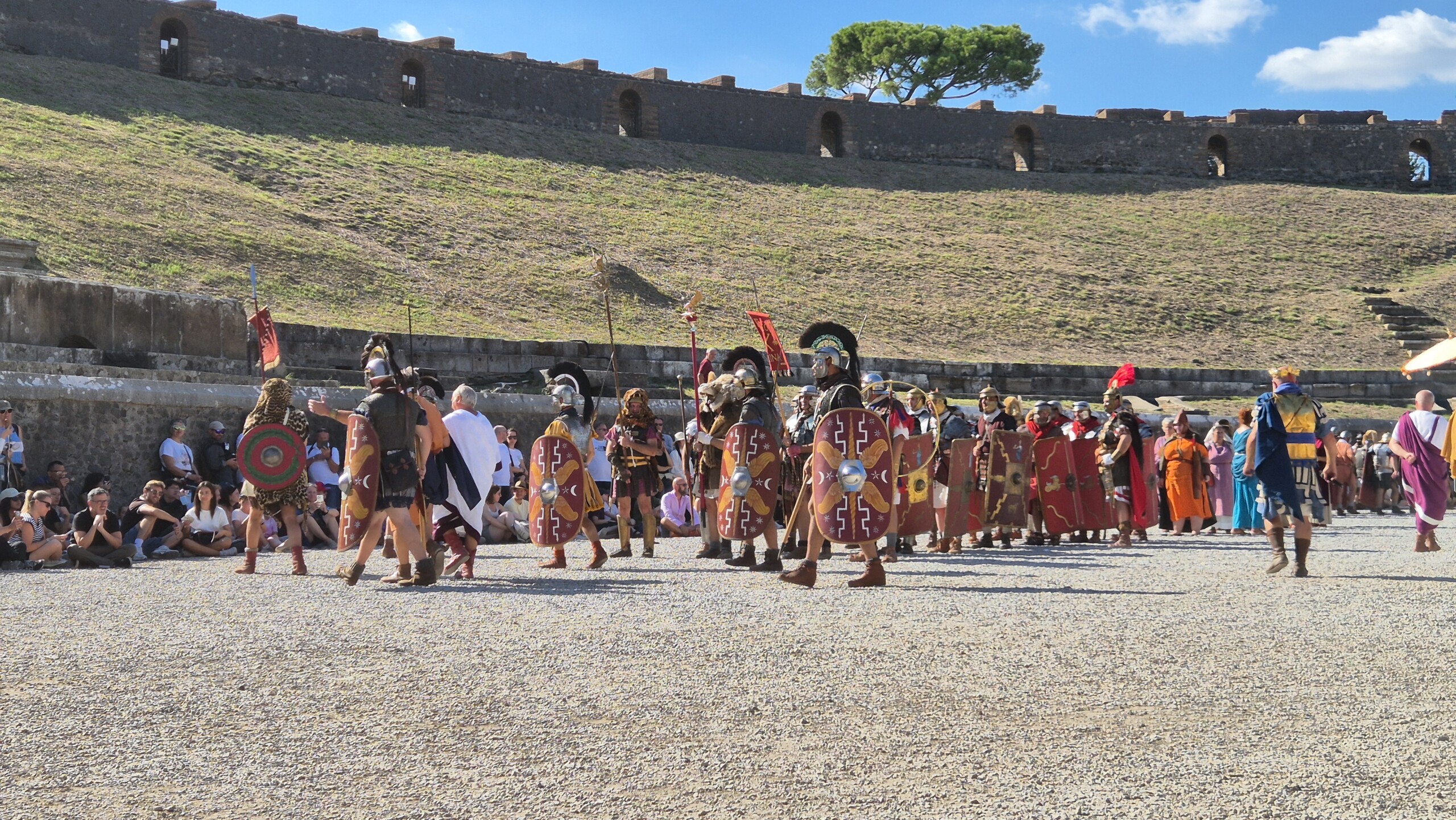
At the amphitheatre there were a lot of people dressed up as Roman soldiers and as women from the time. We only caught the last minute of it, so we have no idea what the full programme was. The amphitheatre itself is one of the oldest surviving Roman ones, built around 70 BC, and it held about 20,000 people — more than lived in the town.
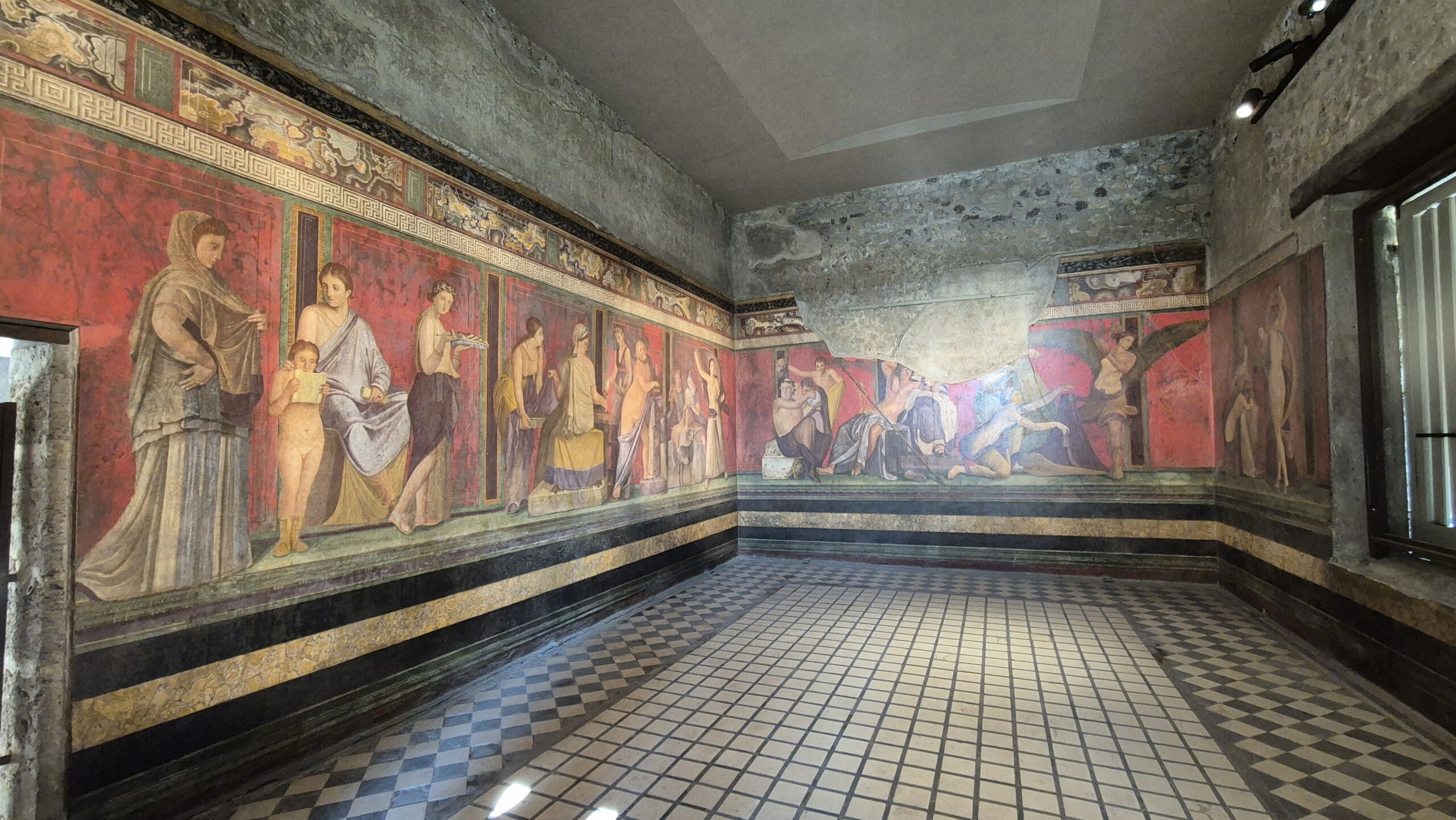
We were already tired and had walked more than 5 km, but we had the Pompeii Plus tickets, which include the villas like the Villa dei Misteri, so we had to walk the entire width of the city again to the other side. There is no shuttle inside the site, so it is on foot or not at all. It was worth it.
The Villa dei Misteri is a large suburban villa just outside the Herculaneum Gate, dug out from 1909. It is named for the frescoes in one room: life-size figures on deep red walls, usually read as a woman’s initiation into the cult of Dionysus, painted more than a century before the eruption.
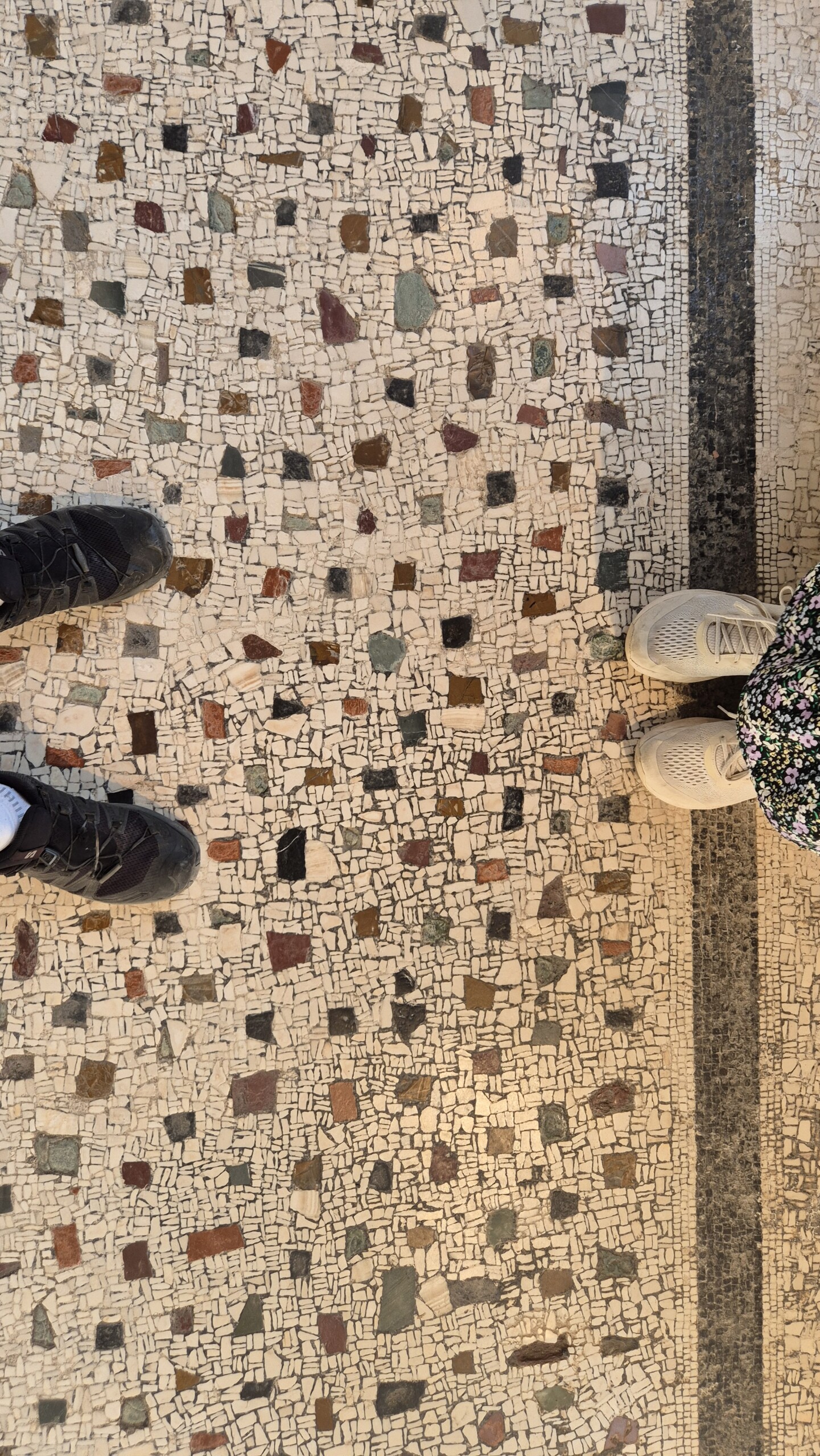
From there we could have carried on to more villas, but by then we had done 19,400 steps and that was enough.
We left at 16:30. The train was squeezed to the brim with sweaty, tired people — an experience in its own right. This time we had to stand all the way.
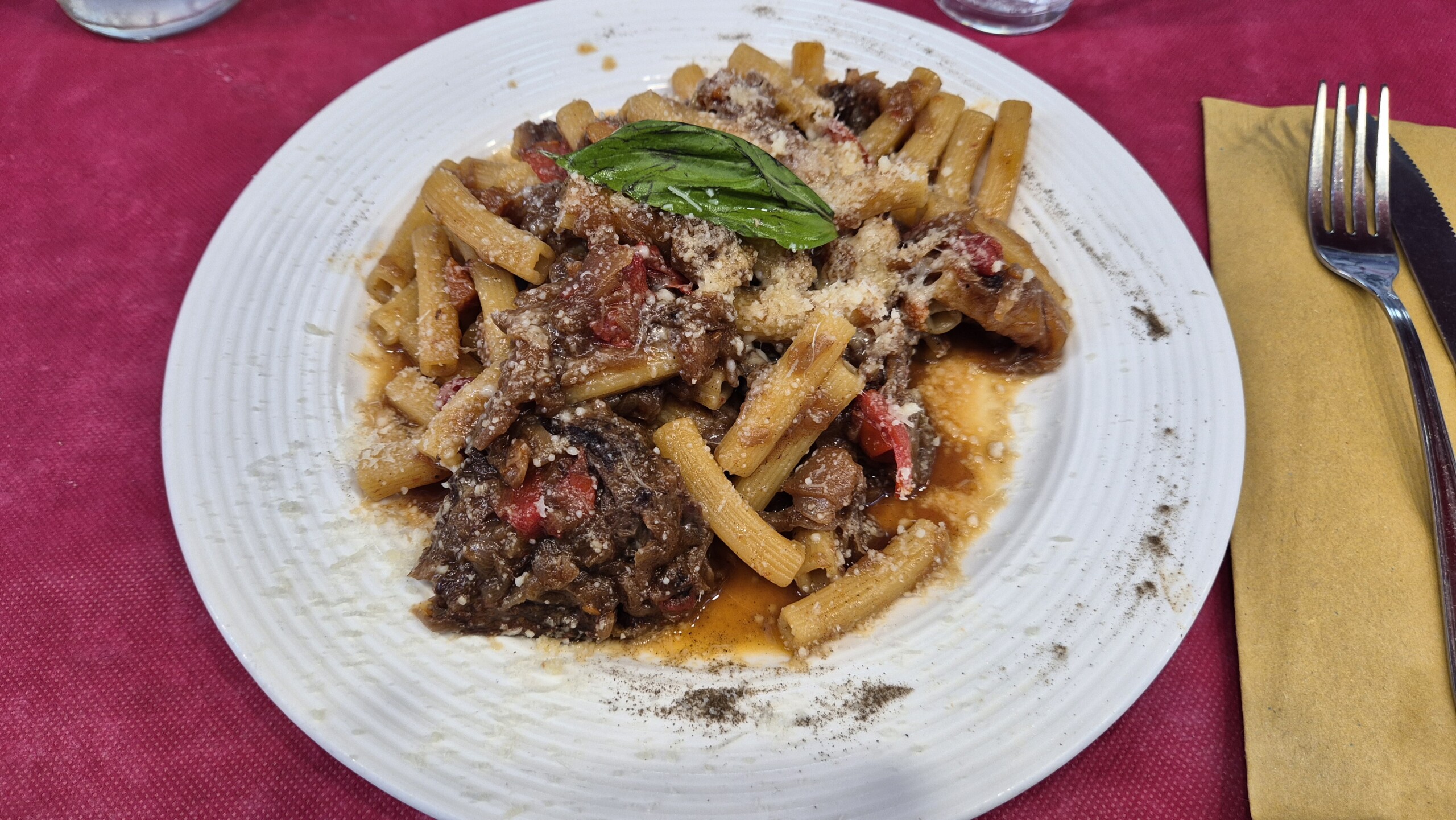
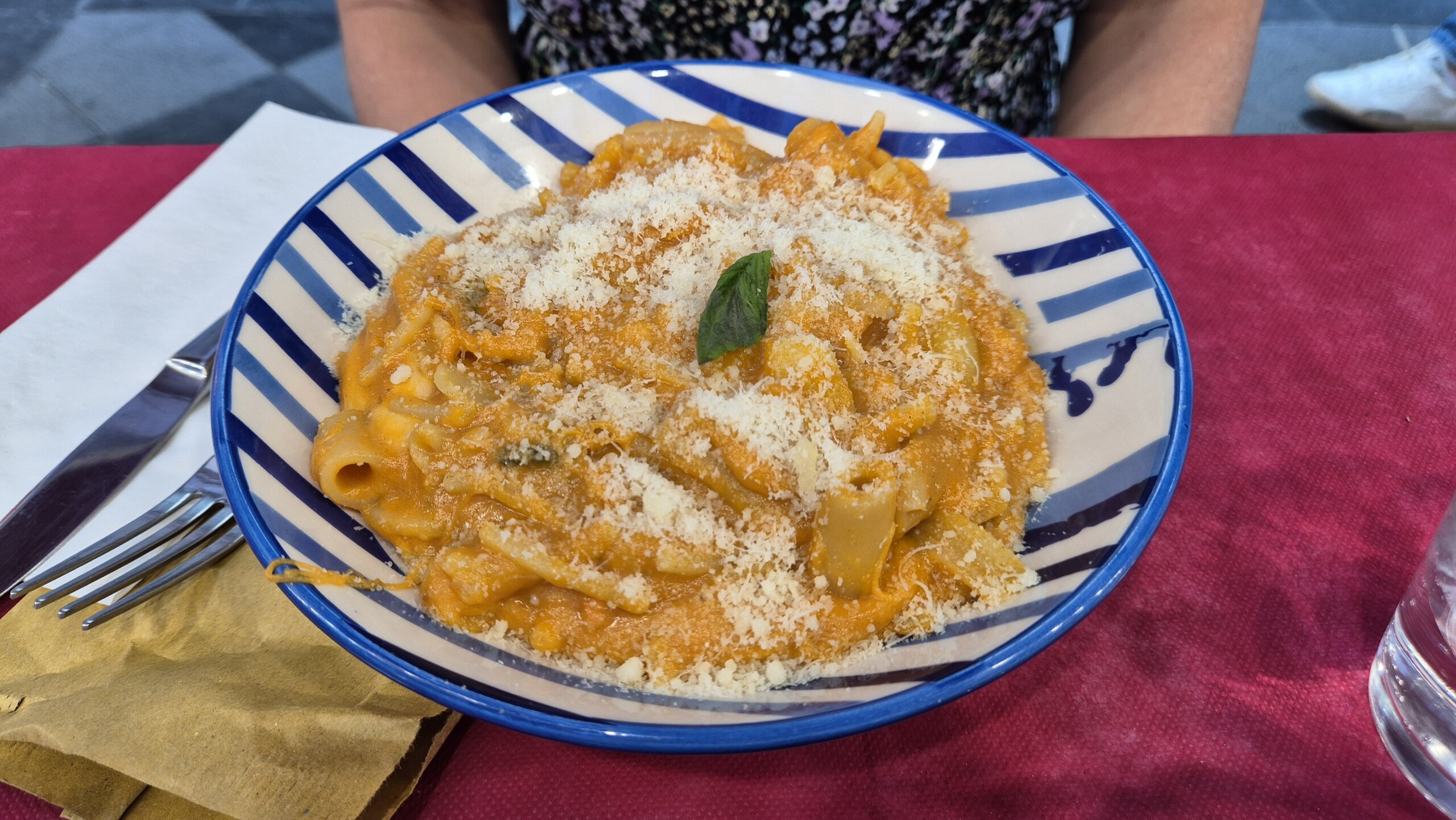
The plan was to go home, change, and then go out to eat. Walking past the restaurants we realised how tired and hungry we were, and decided to rather eat first and then go home and go to bed. We had pasta with a ragù stew, and a mix of pasta with potato and cheese.
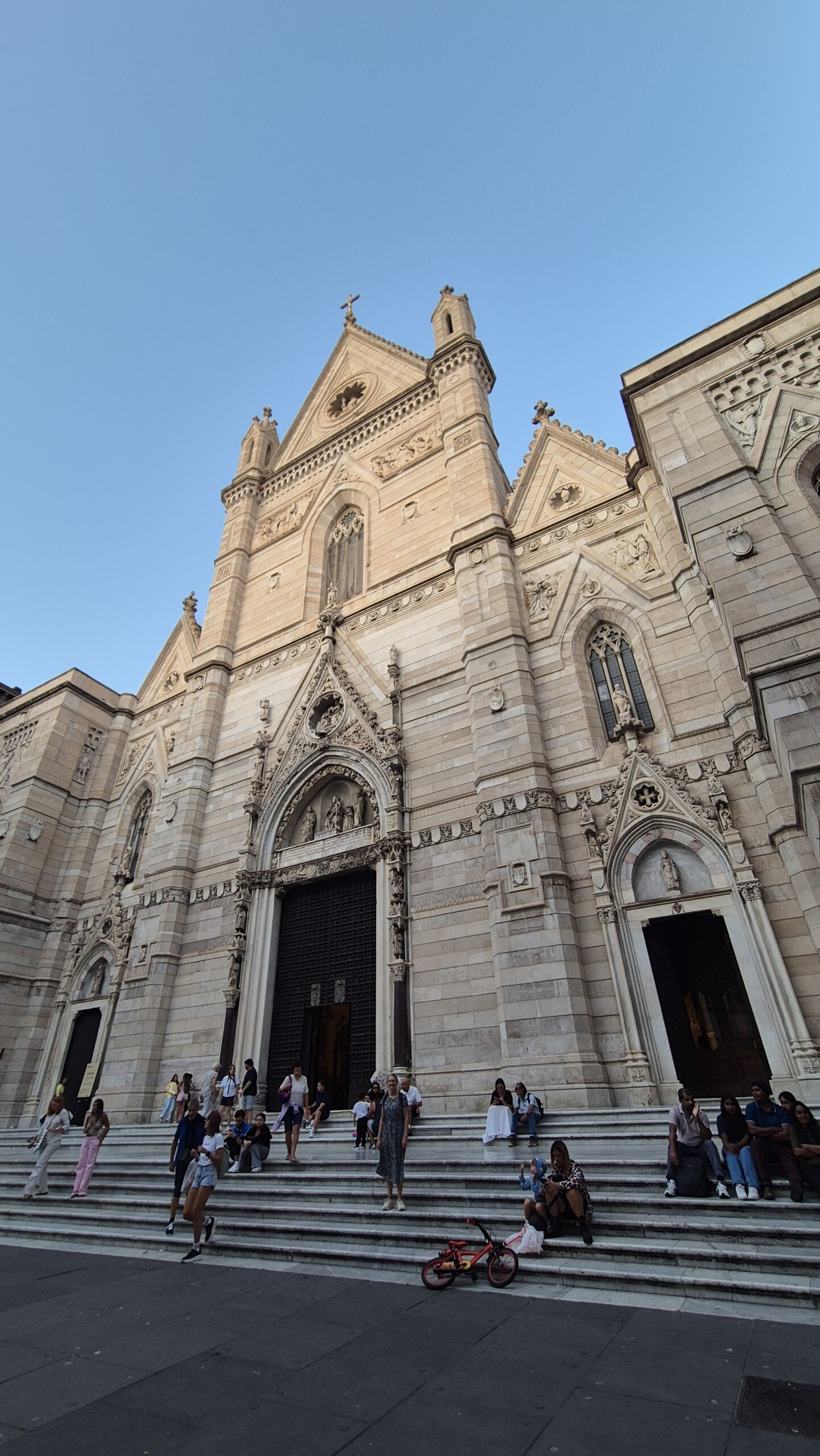
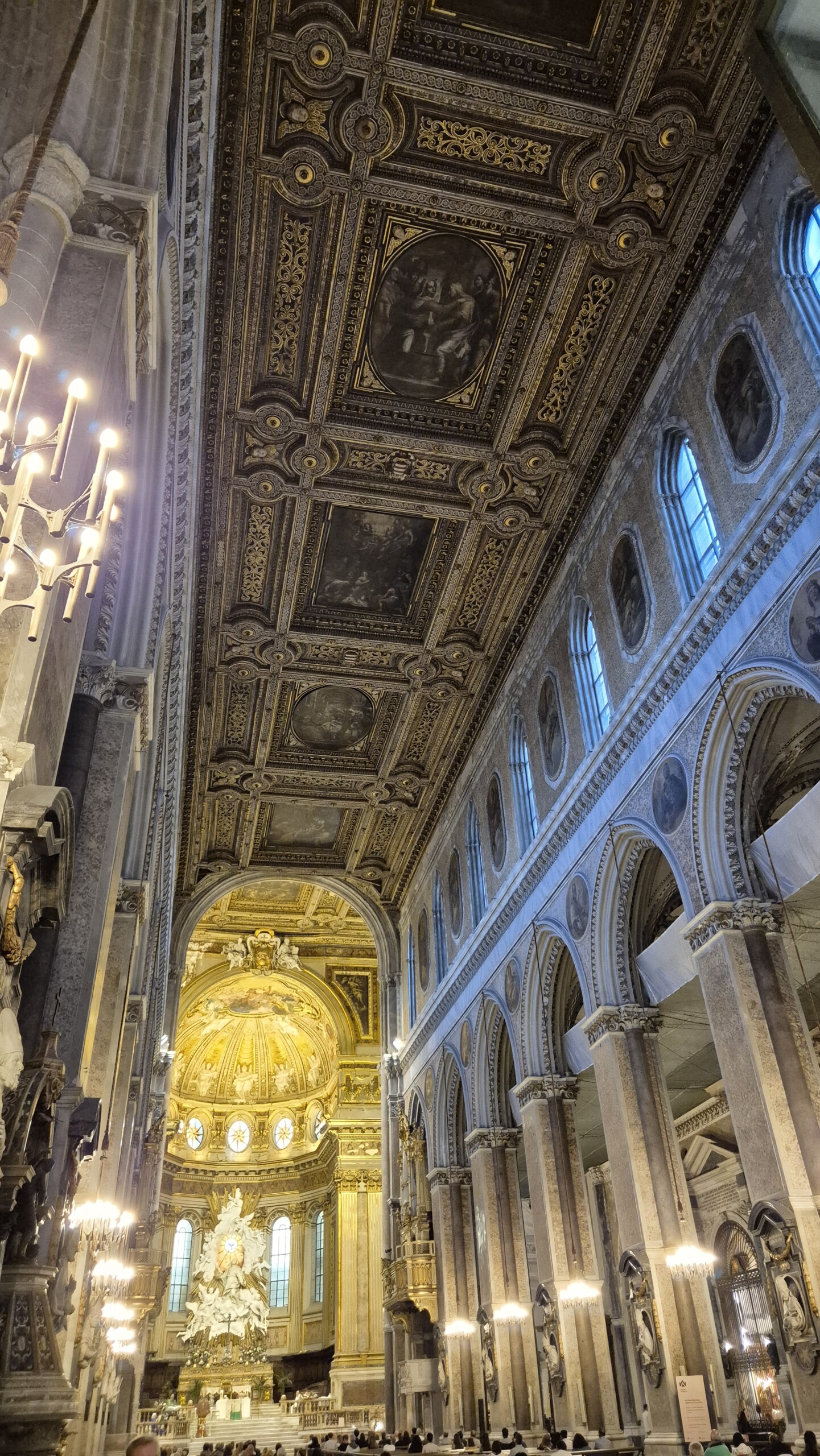
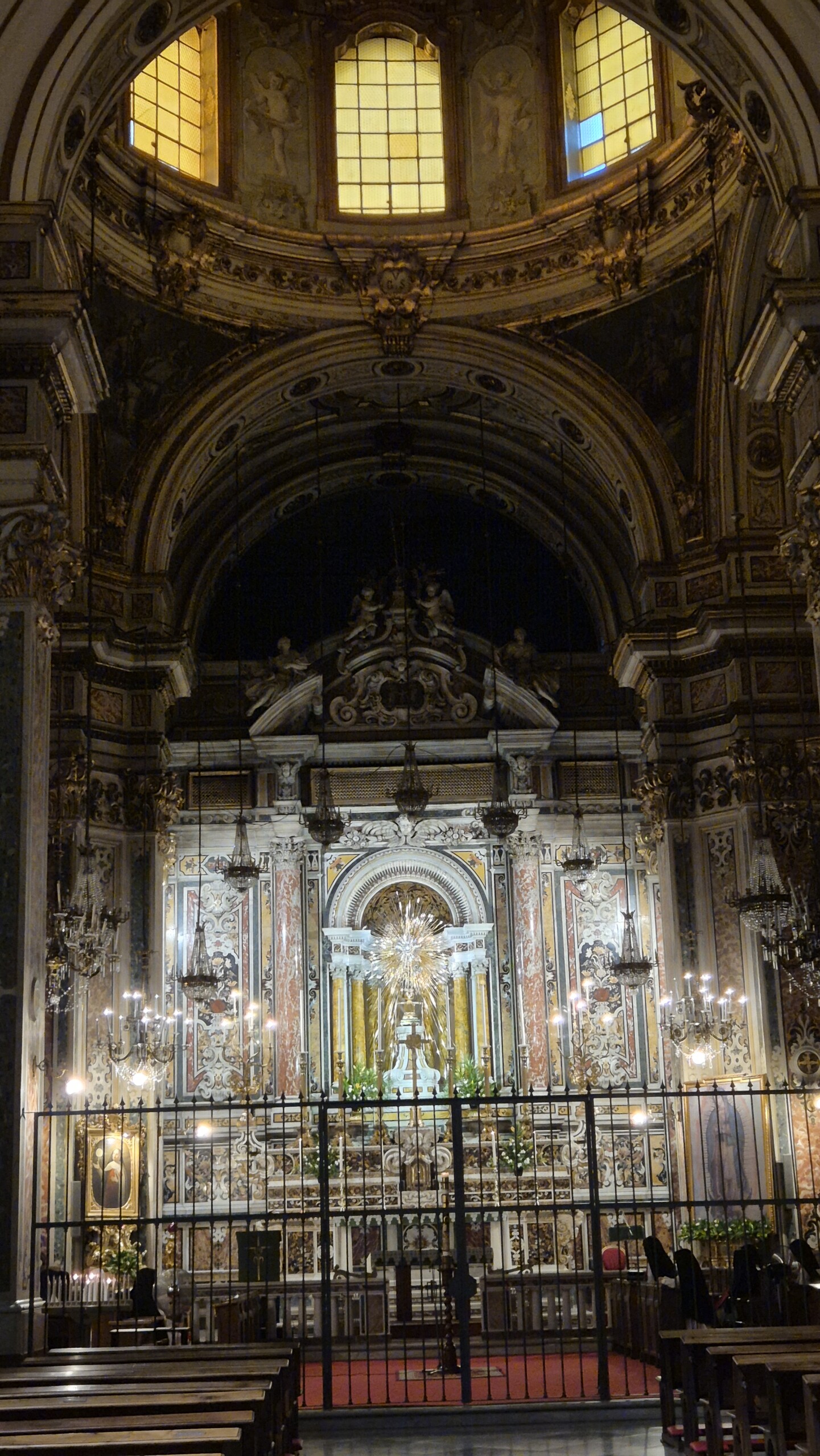
On the way back to the apartment we popped into two churches.
Leave A Comment