
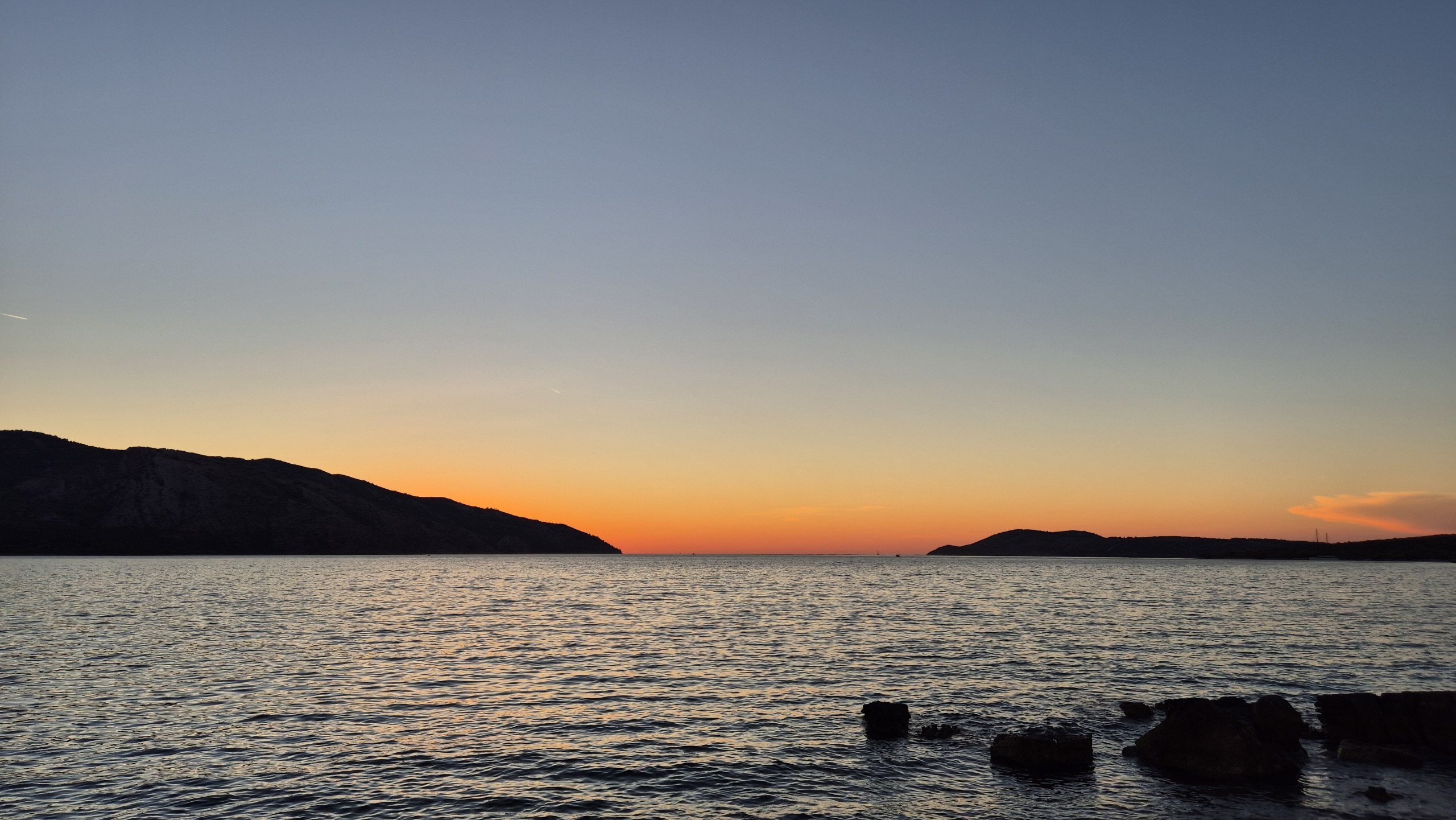
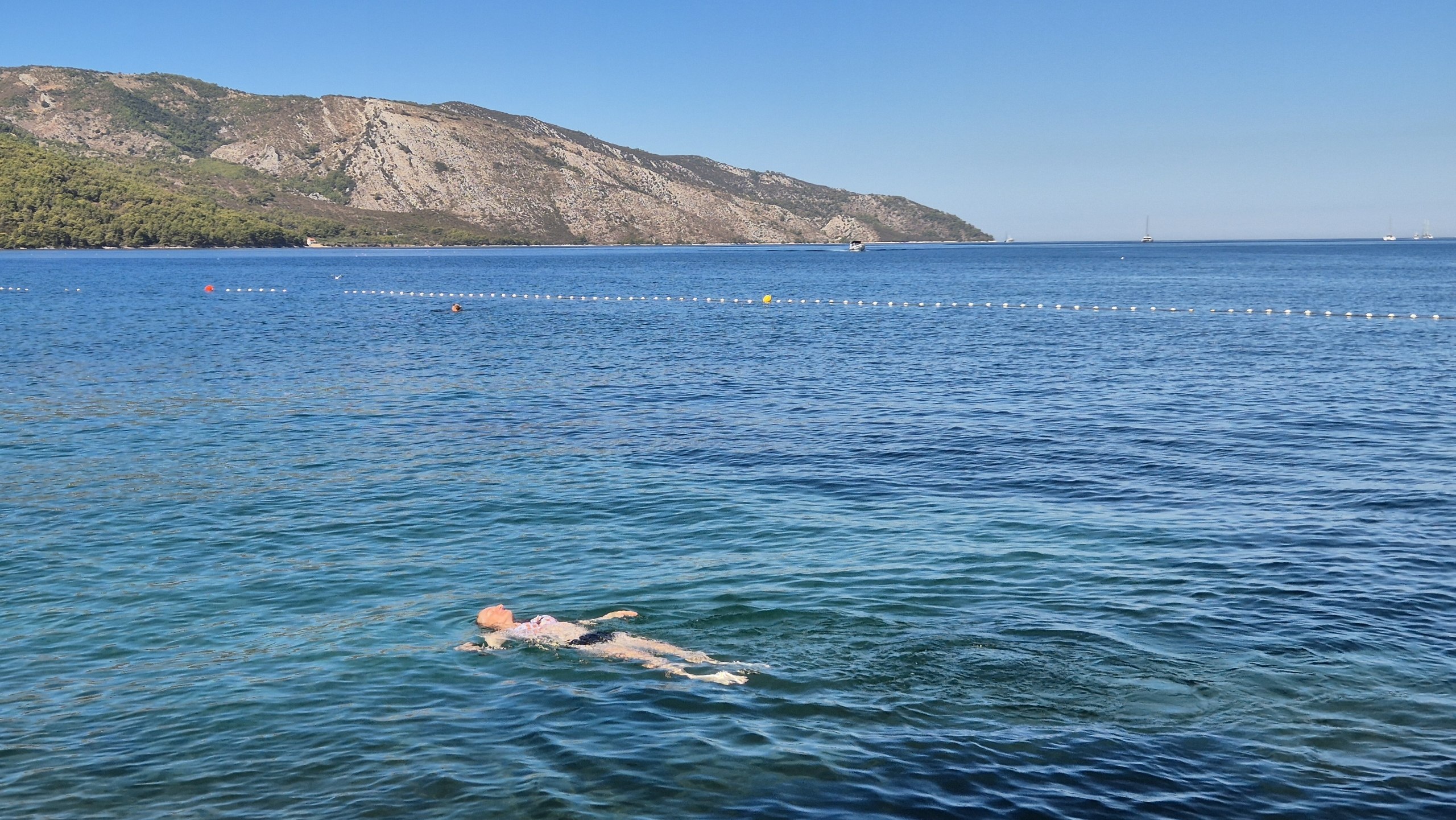
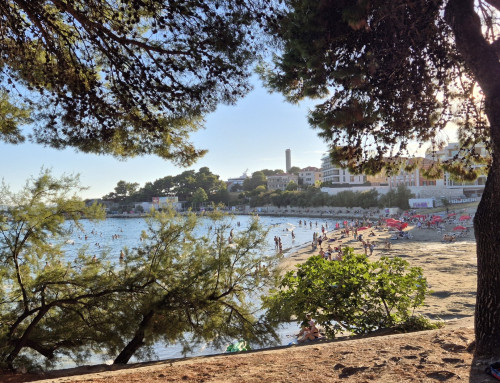
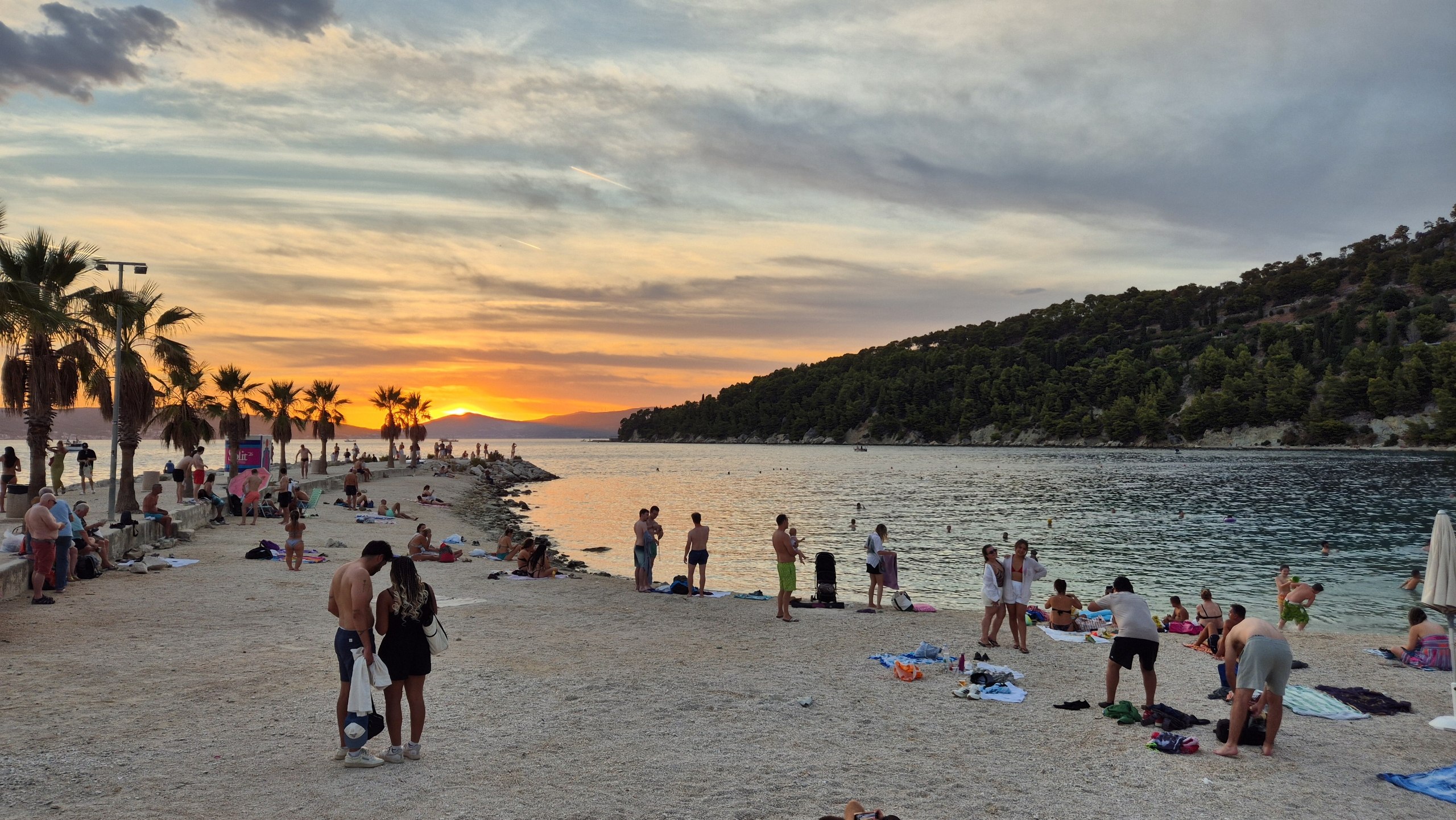
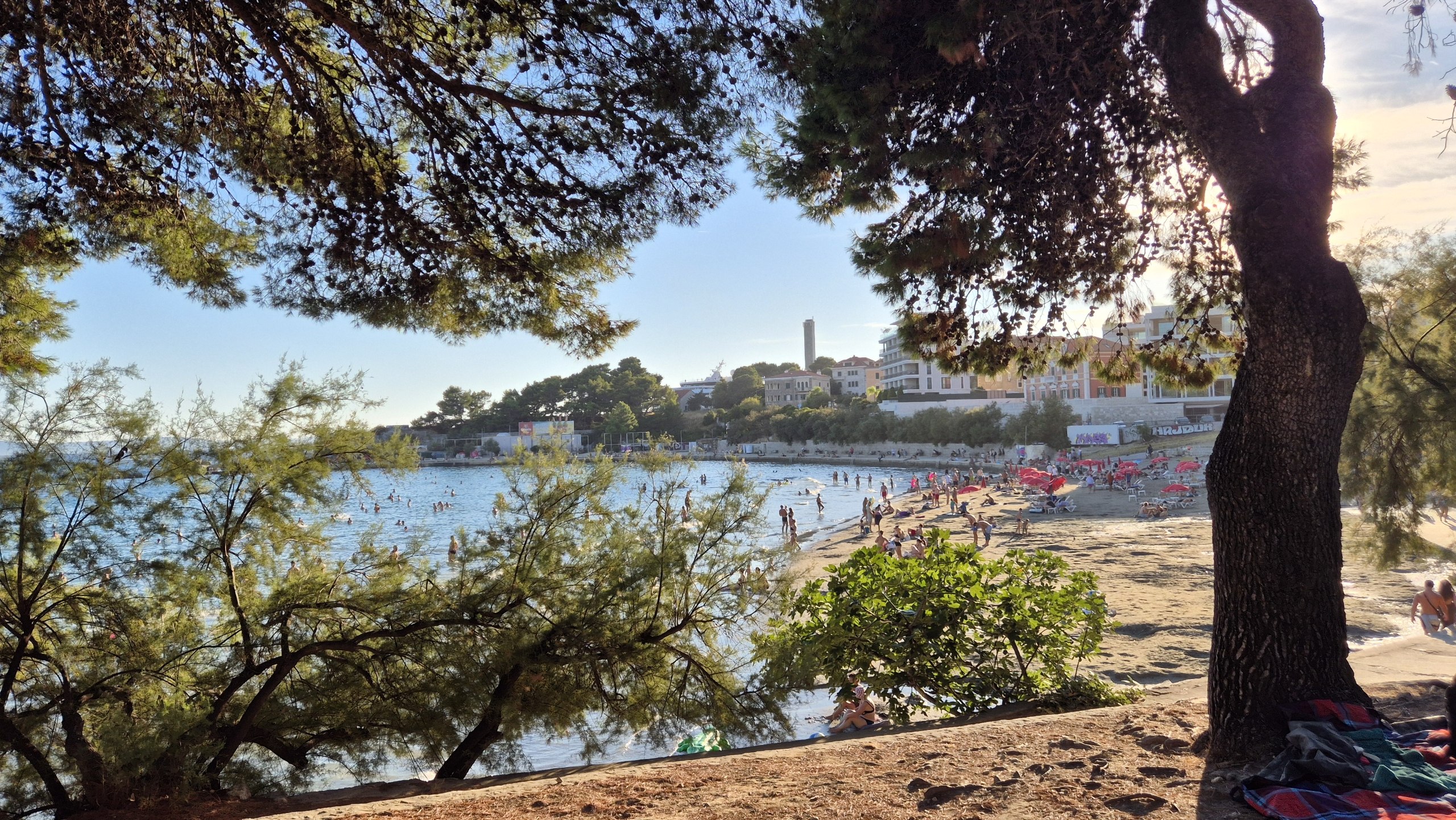
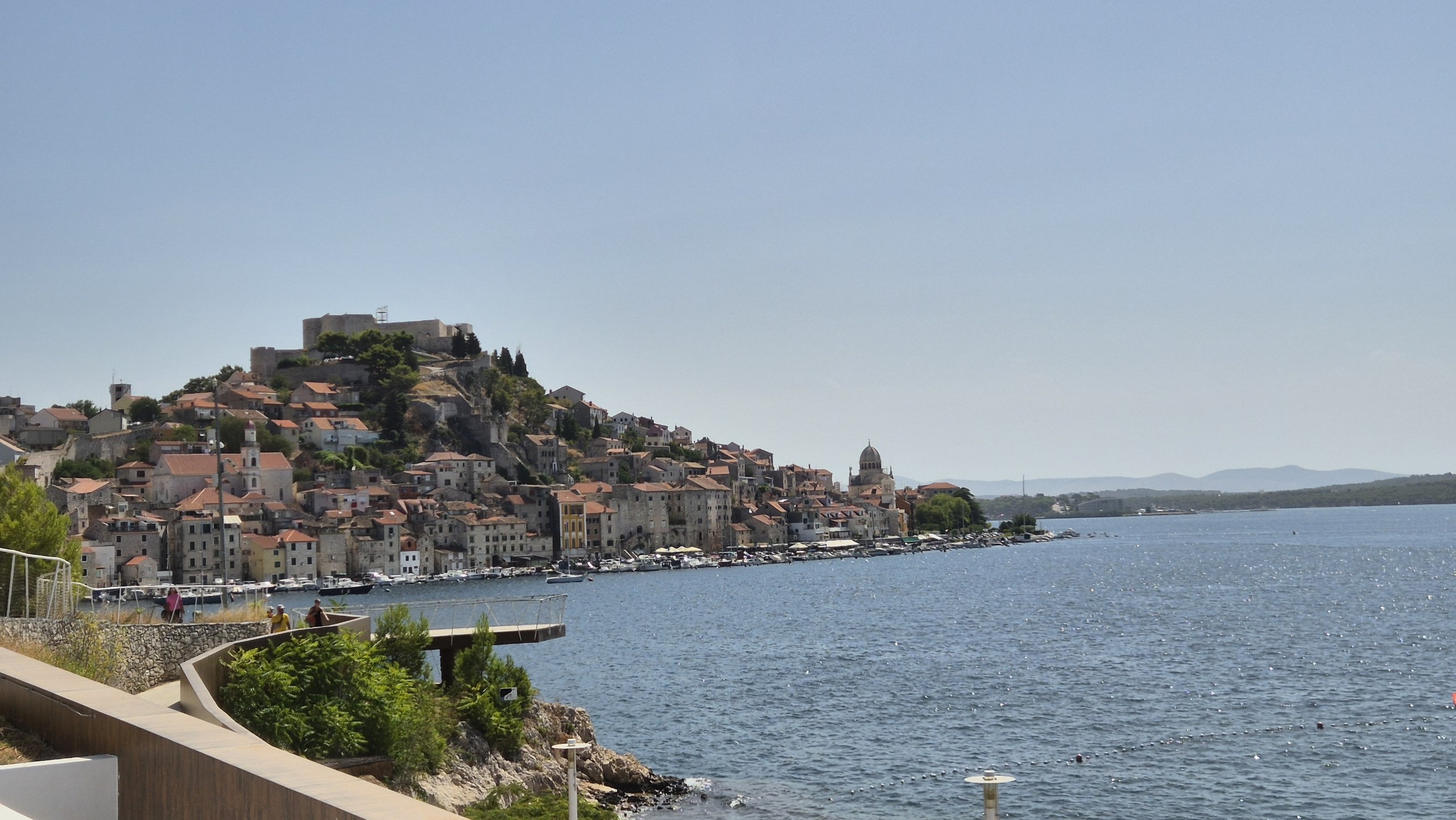
We started the day by walking around the harbour to Lanterna Beach, on the opposite side from where we were staying. We swam until the heat began to win, then made our way back through the houses and into the old town by streets we had not explored before.
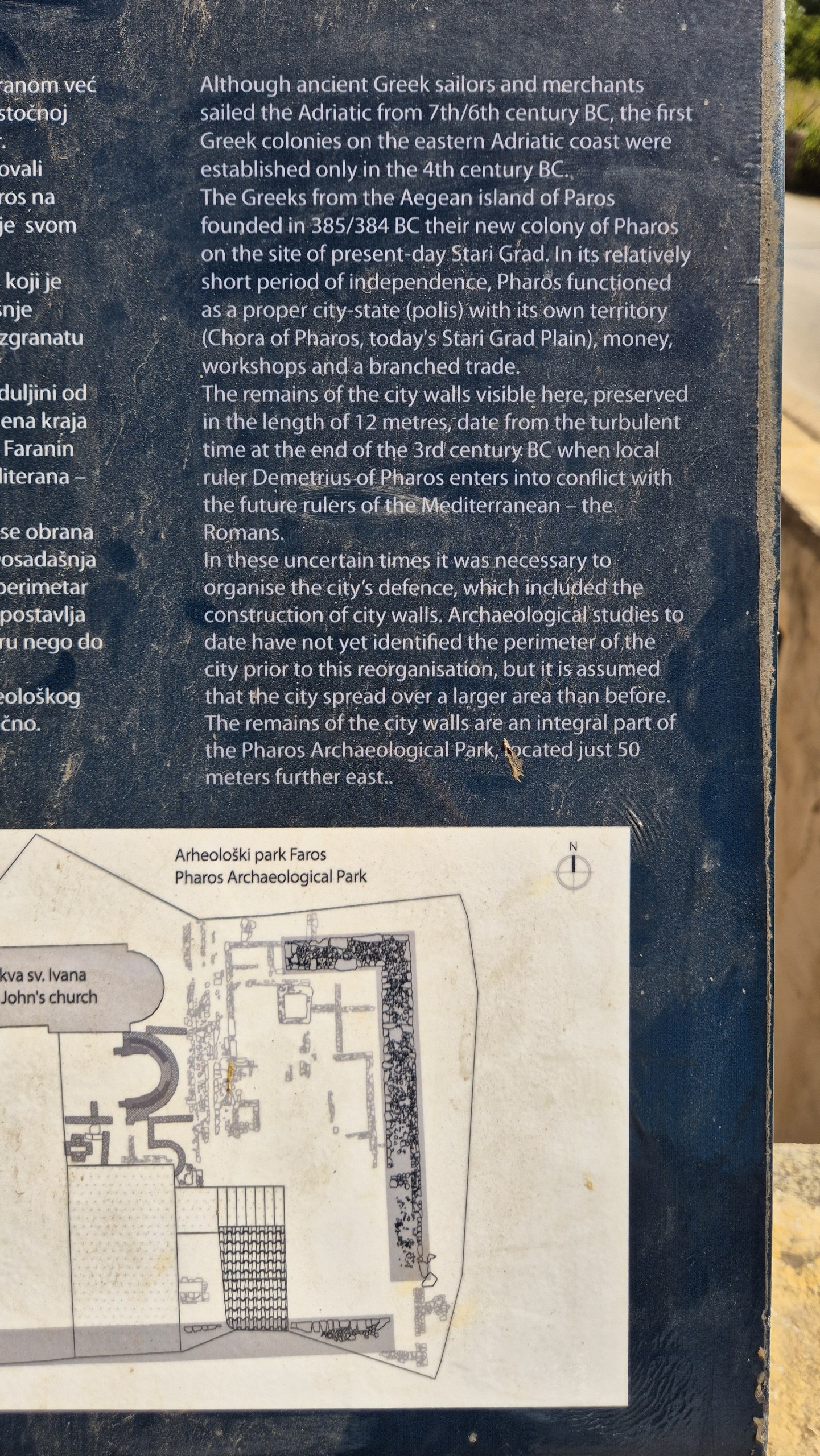
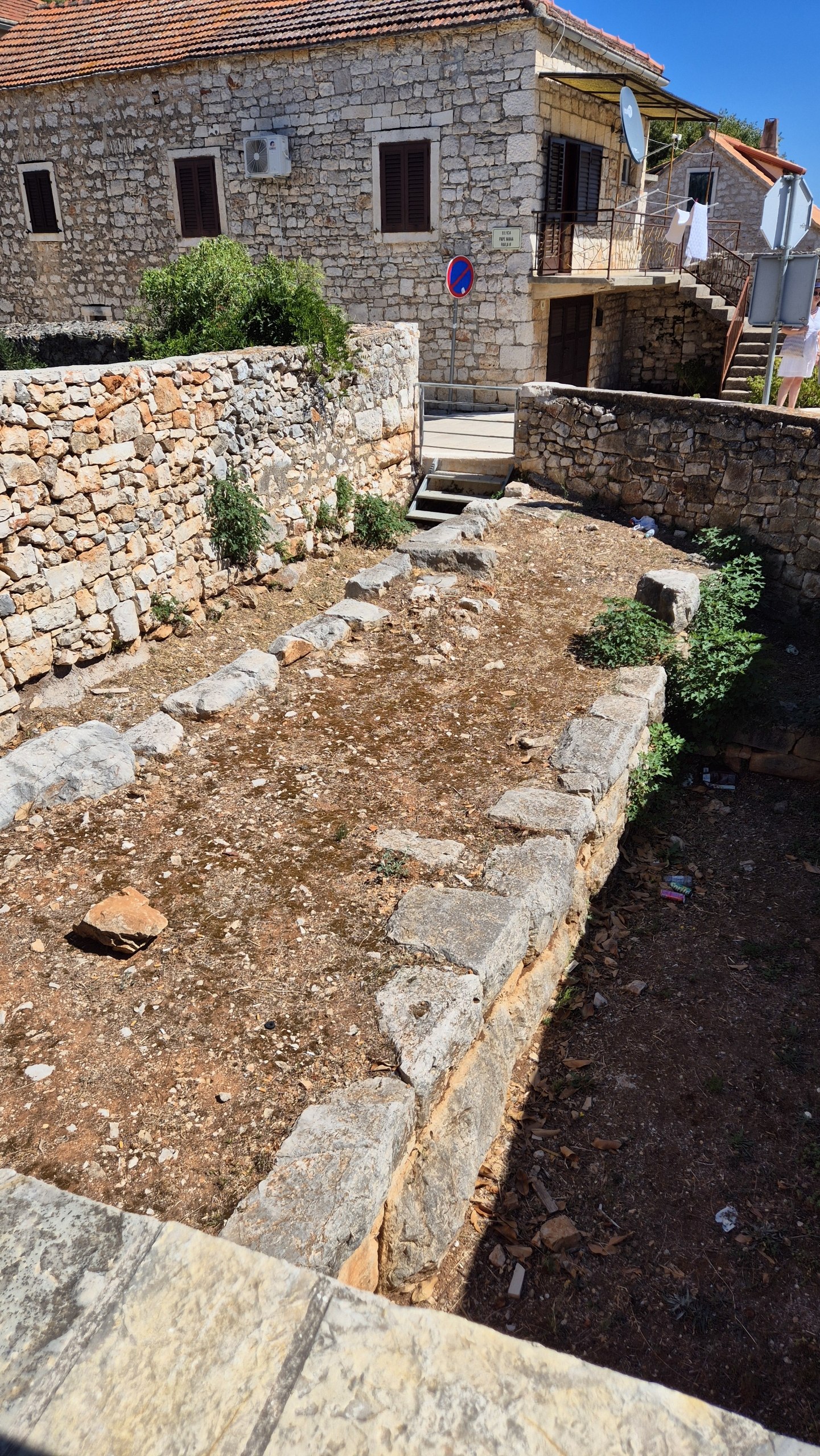
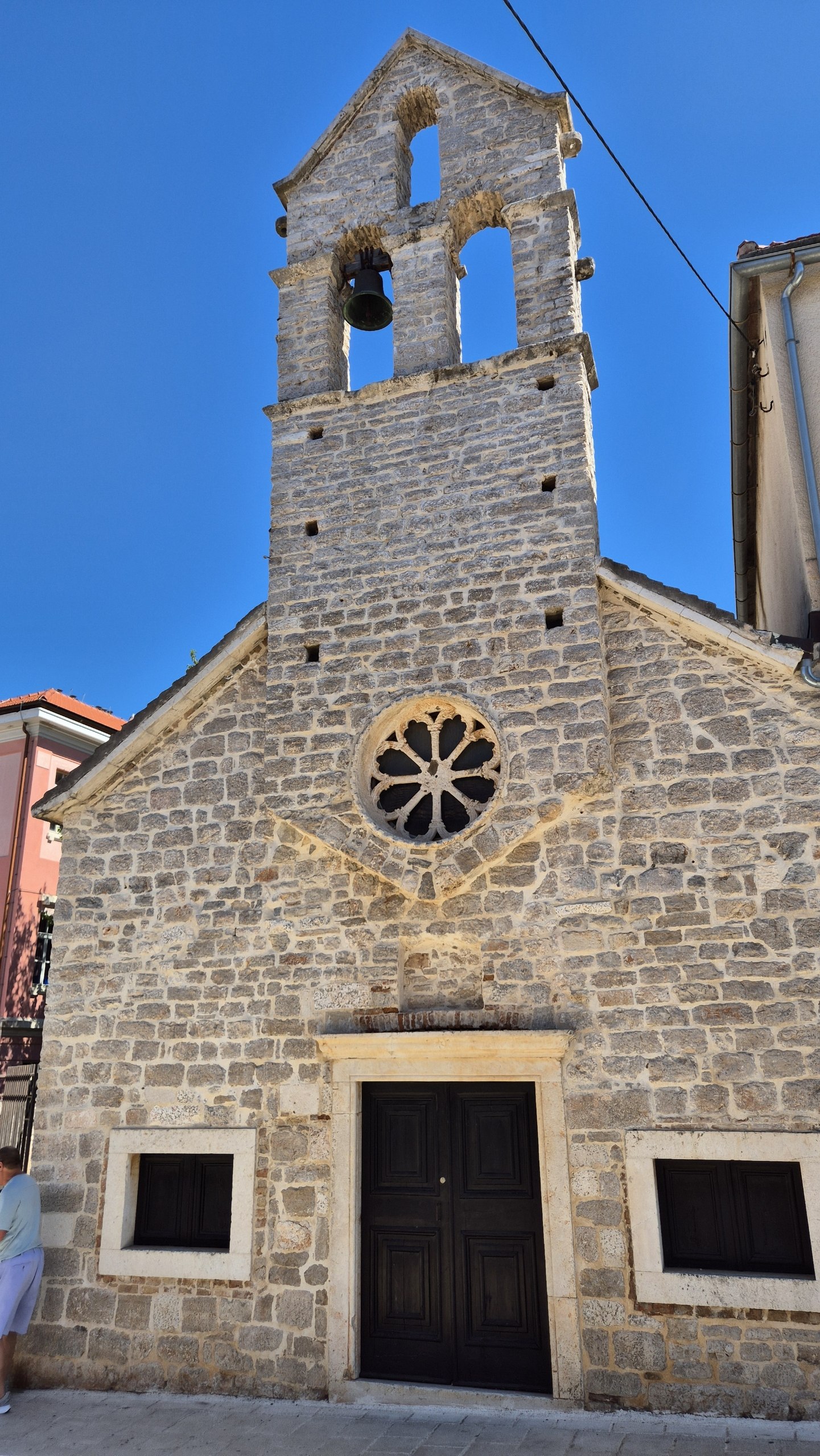
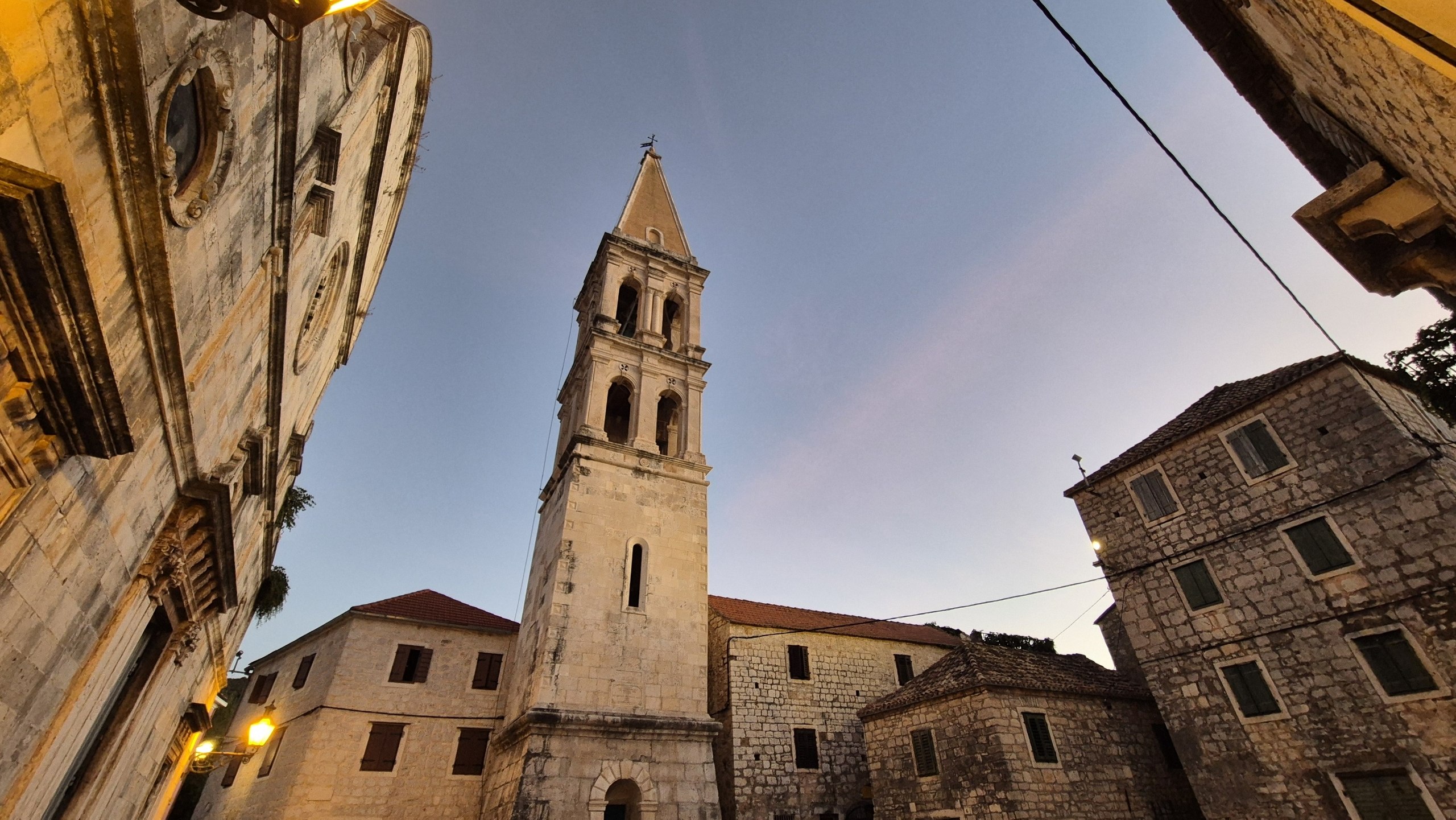
Near the eastern edge of the old centre we passed the remains of ancient Pharos. Greek colonists founded the town in the fourth century BC, and sections of its walls, streets and houses still survive beneath modern Stari Grad. At Remete Garden, the remains span several eras—from the Greek settlement through Roman Pharia and into late antiquity—before the old town gives way to the UNESCO-listed Stari Grad Plain.
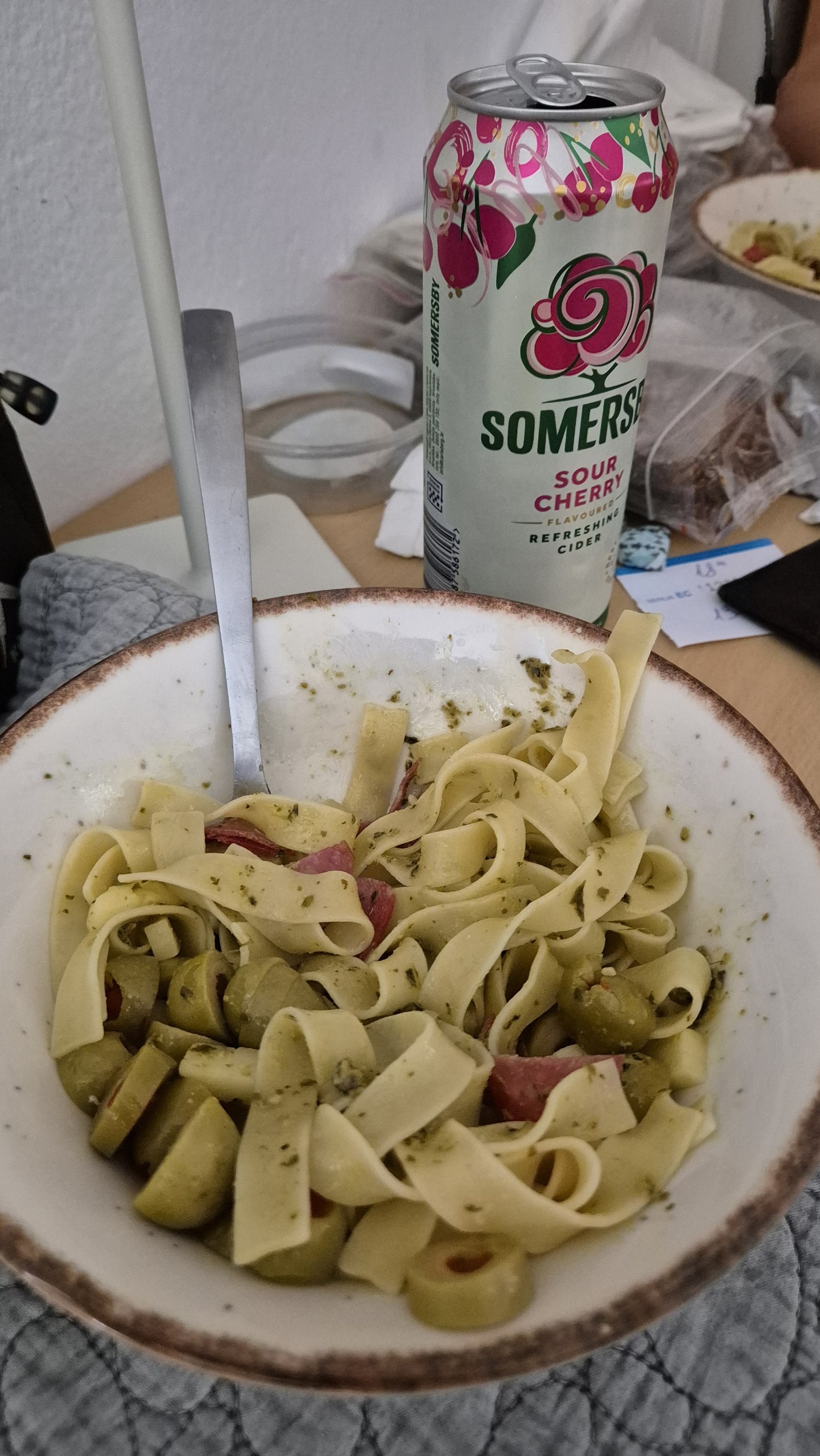
Back at the room, we made pasta with olives, salami, cheese and pesto for lunch. Then we took a break and enjoyed what was rapidly becoming one of our favourite Croatian attractions: the air conditioner.
At 16:00 we set out again, this time walking away from town in the other direction towards Uvala Zavala. The route followed a gravel road bordered on both sides by what looked like long piles of stone. In some places there were clearly cultivated plots between them, including olive groves; elsewhere the land had become overgrown.
We had noticed these stone formations in several parts of Croatia and had wondered what they were. They are suhozidi—dry-stone walls made by carefully stacking stones without mortar. On this rocky land, farmers first had to clear stone from the soil before they could plant anything. Instead of carrying it away, they used it to mark boundaries, terrace slopes, protect crops and create paths. Where there was more stone than the walls required, the boundaries became very broad heaps that doubled as storage for everything removed from the fields.
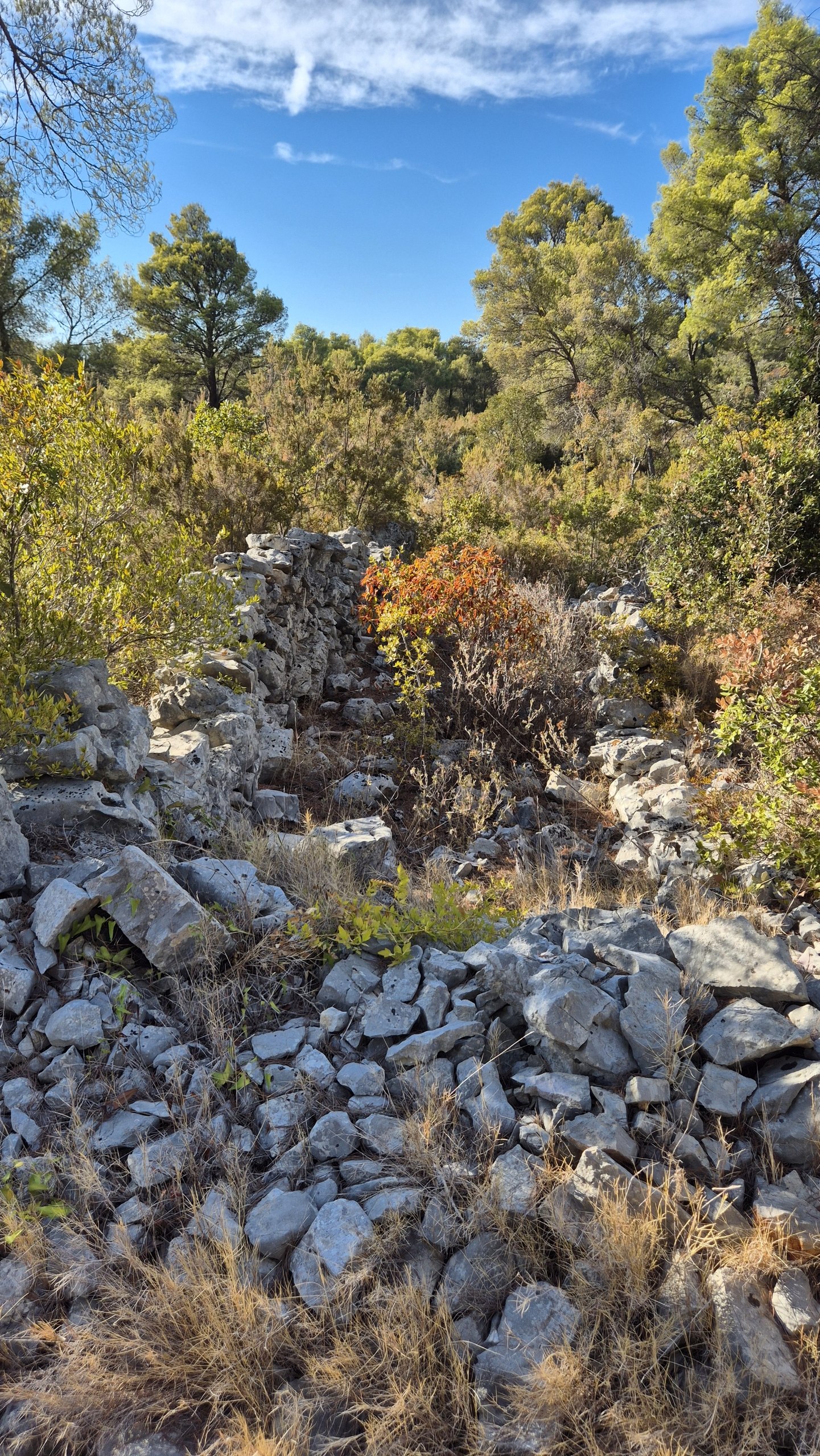
Around Stari Grad, those walls are more than an old farming trick. Greek colonists divided the plain into a geometric grid about 2,400 years ago, and later generations continued rebuilding the boundaries along the same lines. The fields are still used mainly for grapes and olives, making the landscape one of the best-preserved examples of ancient Greek agricultural land division in the Mediterranean.
From the gravel road, we followed a single-track path down to the beach.
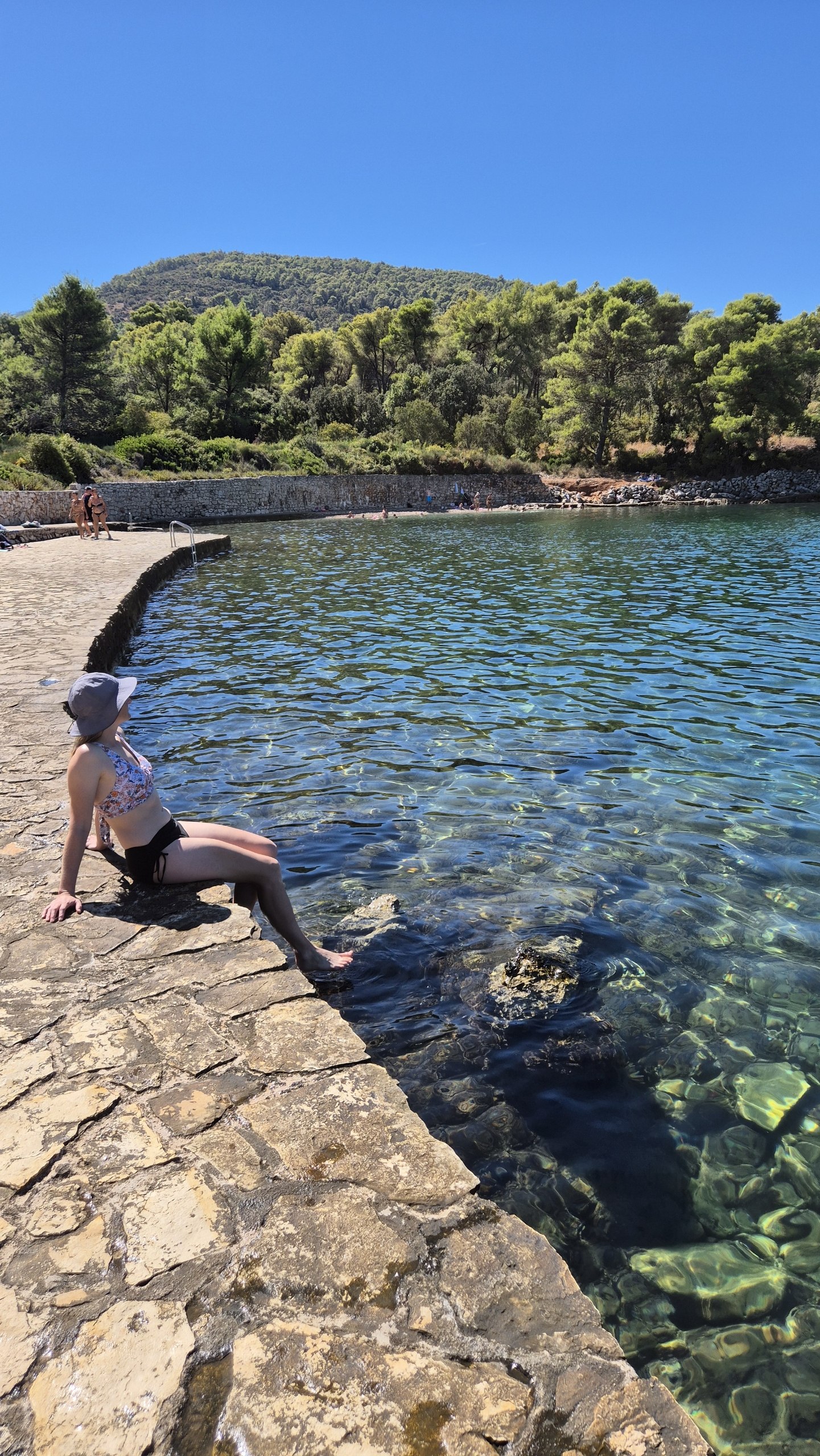
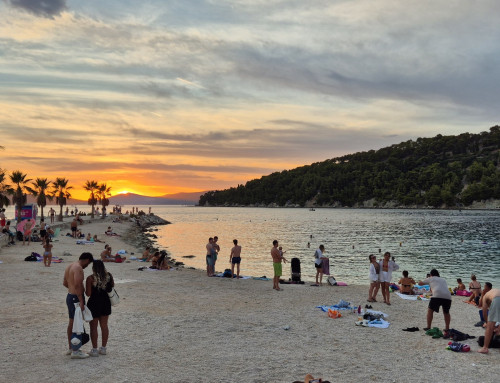
This was the first place we had swum where we could feel noticeably colder water washing into the bay from somewhere. Warm and cold currents shifted around us as we swam.
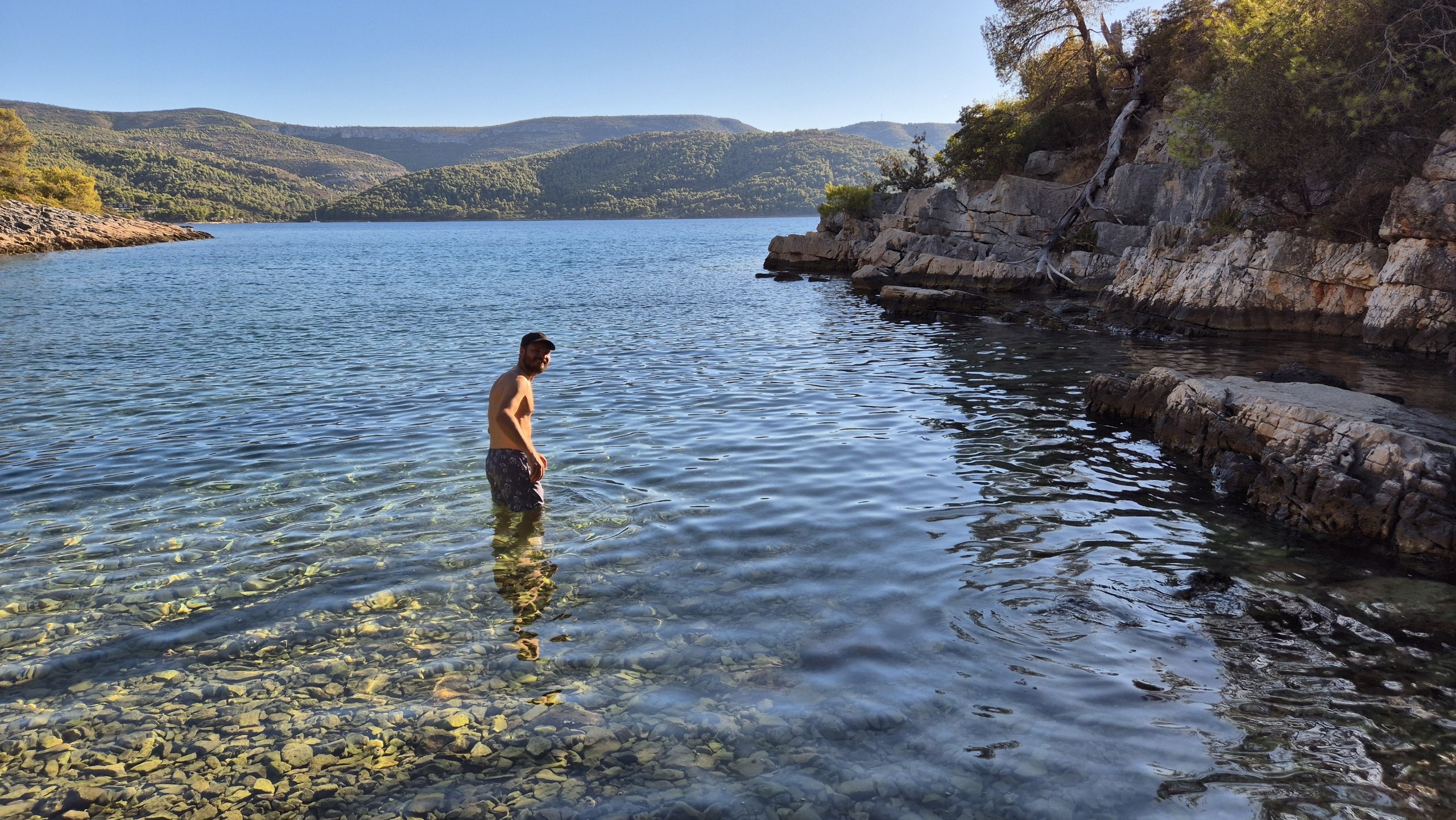
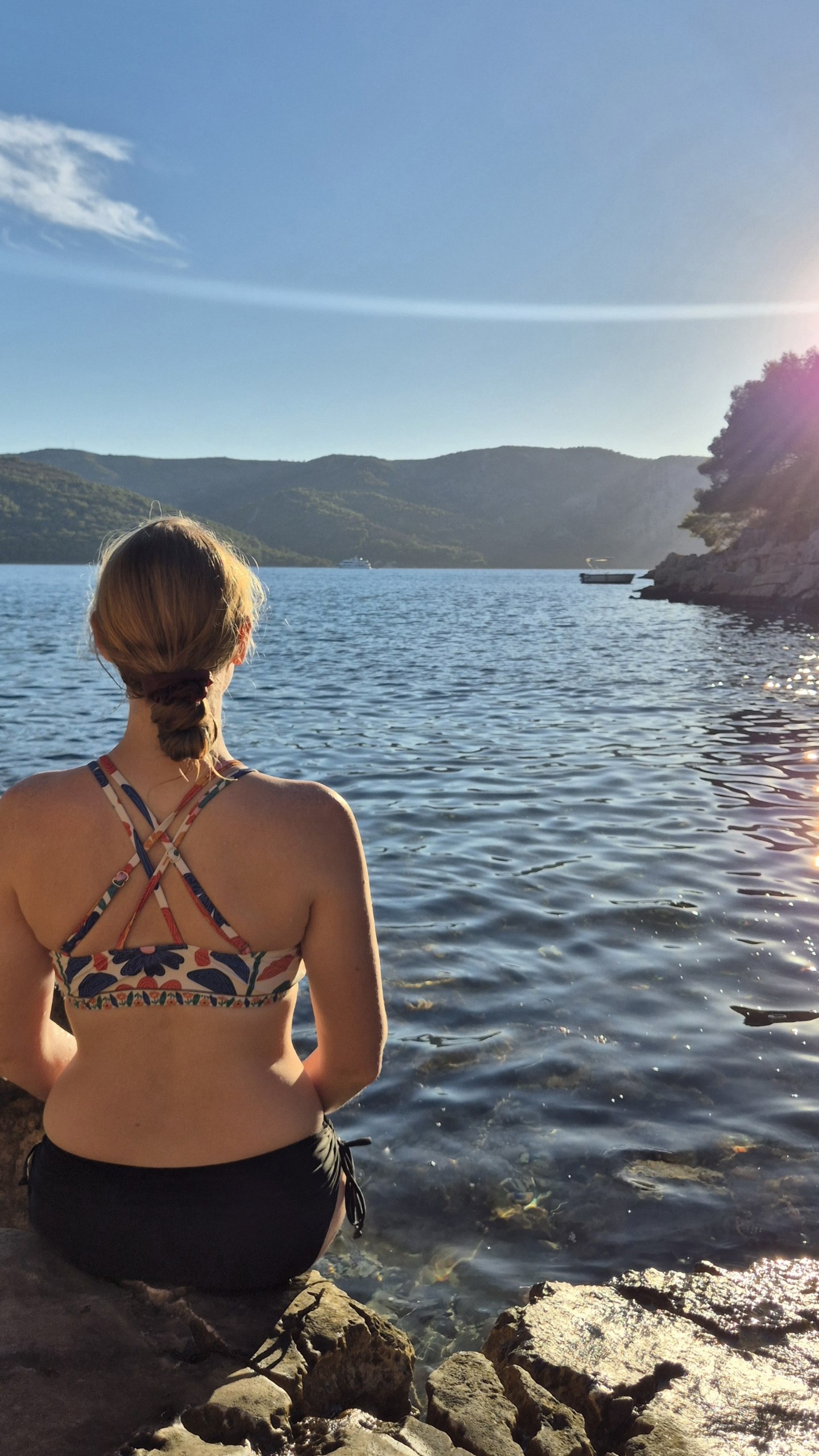
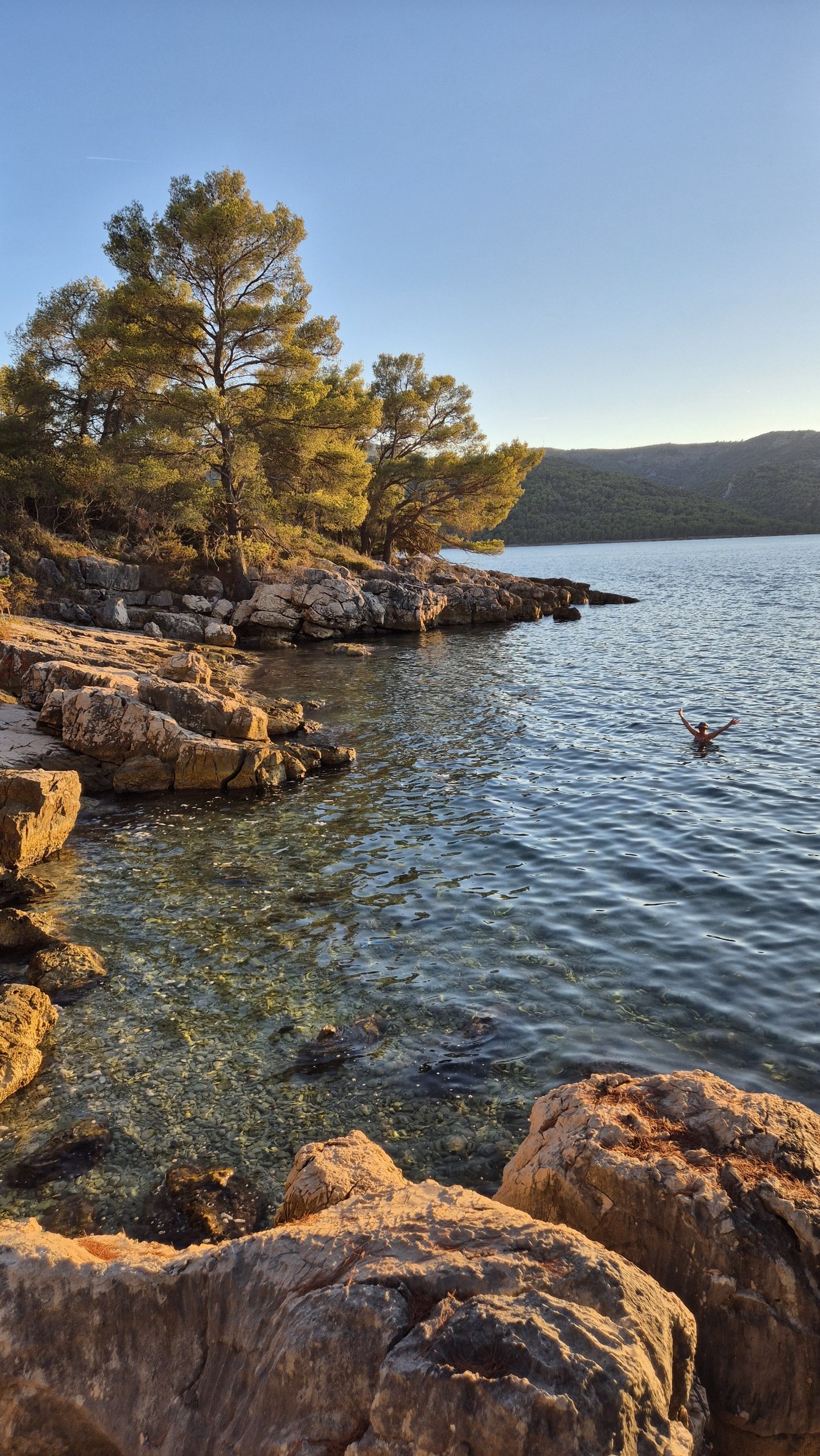
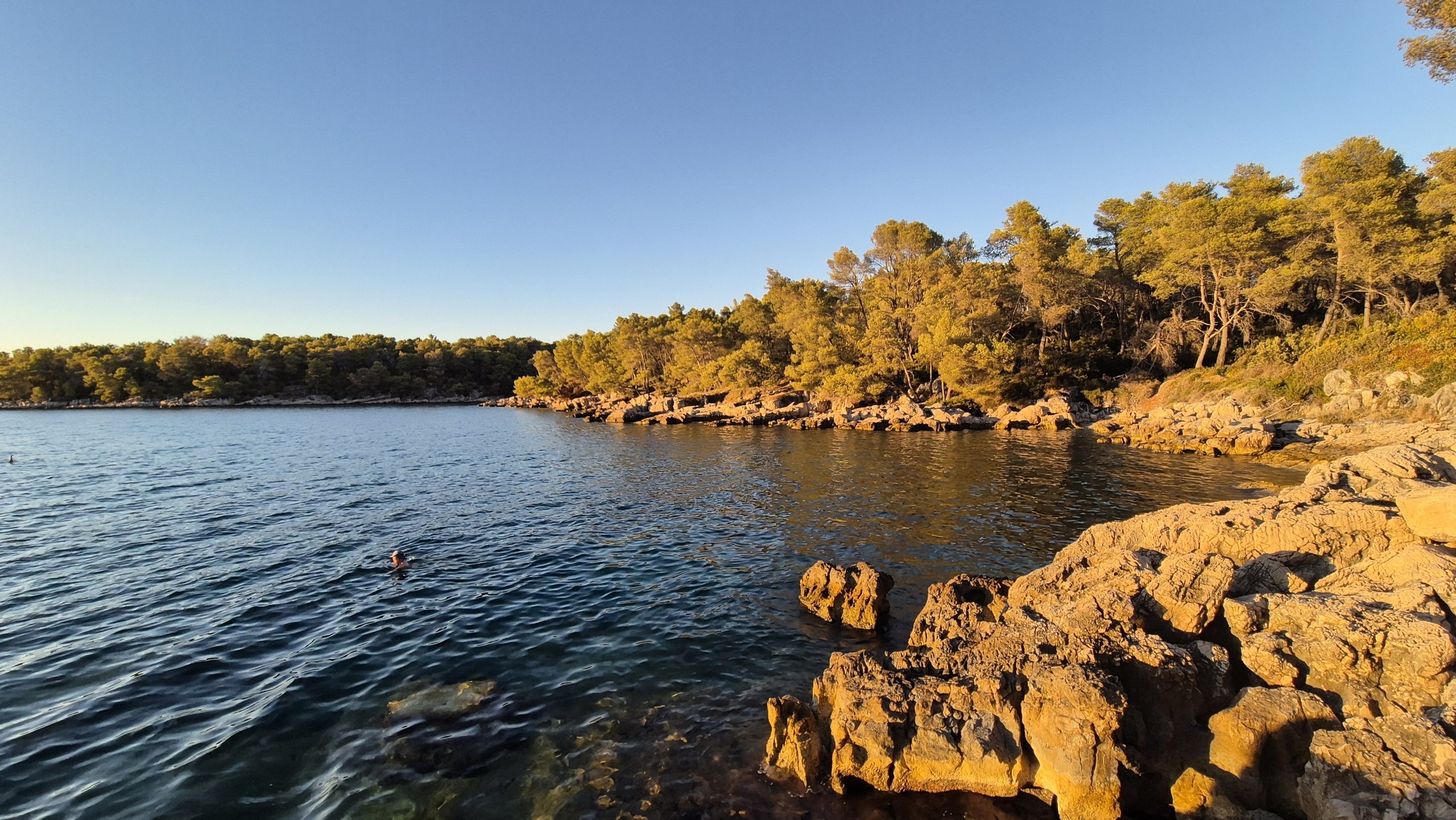
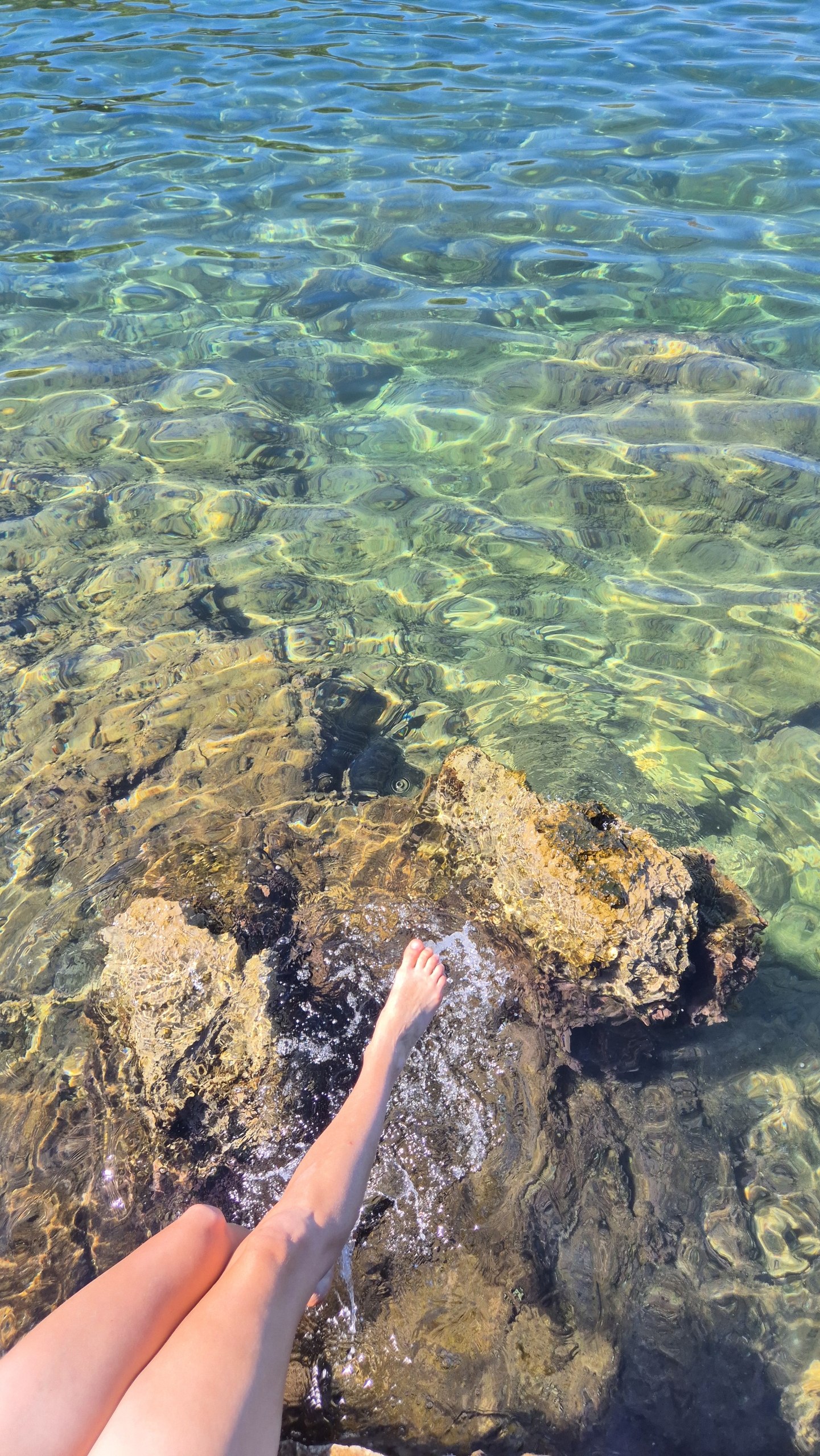
We sat on the rocks eating an apple and watching the little creatures moving through the shallows. A shrimp-like thing even began nibbling Caro’s toes.
Eventually we put our shoes on and decided to return to town by following the rocks along the shore. After clambering over them for a while, Caro decided swimming might be easier.
At one point another swimmer appeared from farther across the bay and passed close beside her. Only when he climbed out did Caro realise that he was completely naked.
We were at a nudist beach.
Hugo’s response was, “When in Rome…” Luckily, it was already late and by then we were the last people left.
We wanted to be back in town by 19:30 for the gala concert celebrating 150 years of the Stari Grad Brass Band. We power-walked back, but only reached town at about 20:00. Since the programme was scheduled to continue until 22:00, we first went home for a quick shower and another helping of the lunchtime pasta.
Unfortunately, that meant we missed the main brass-band performance. The band was founded in 1876 as the Banda Cittadina, Stari Grad’s first organised wind orchestra, and has remained part of the town’s civic, religious and cultural life ever since.
We did catch some of its members accompanying a group of male singers. Their dress made them look as though they might have had some connection to the harbour or navy, but with the entire event conducted in Croatian, we never worked out exactly who they were.
We finished the evening with mascarpone-and-fig ice cream. Yum.
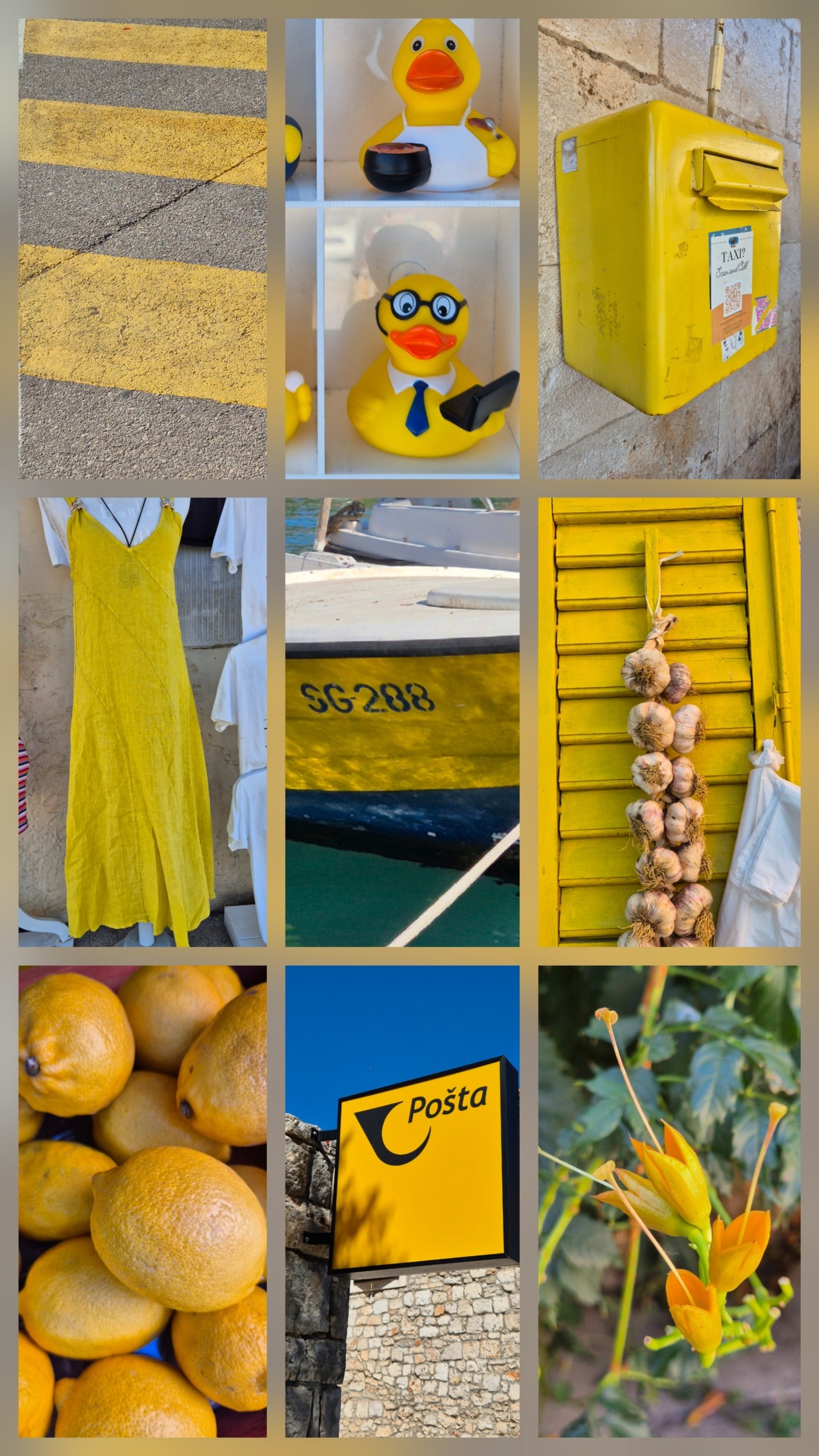
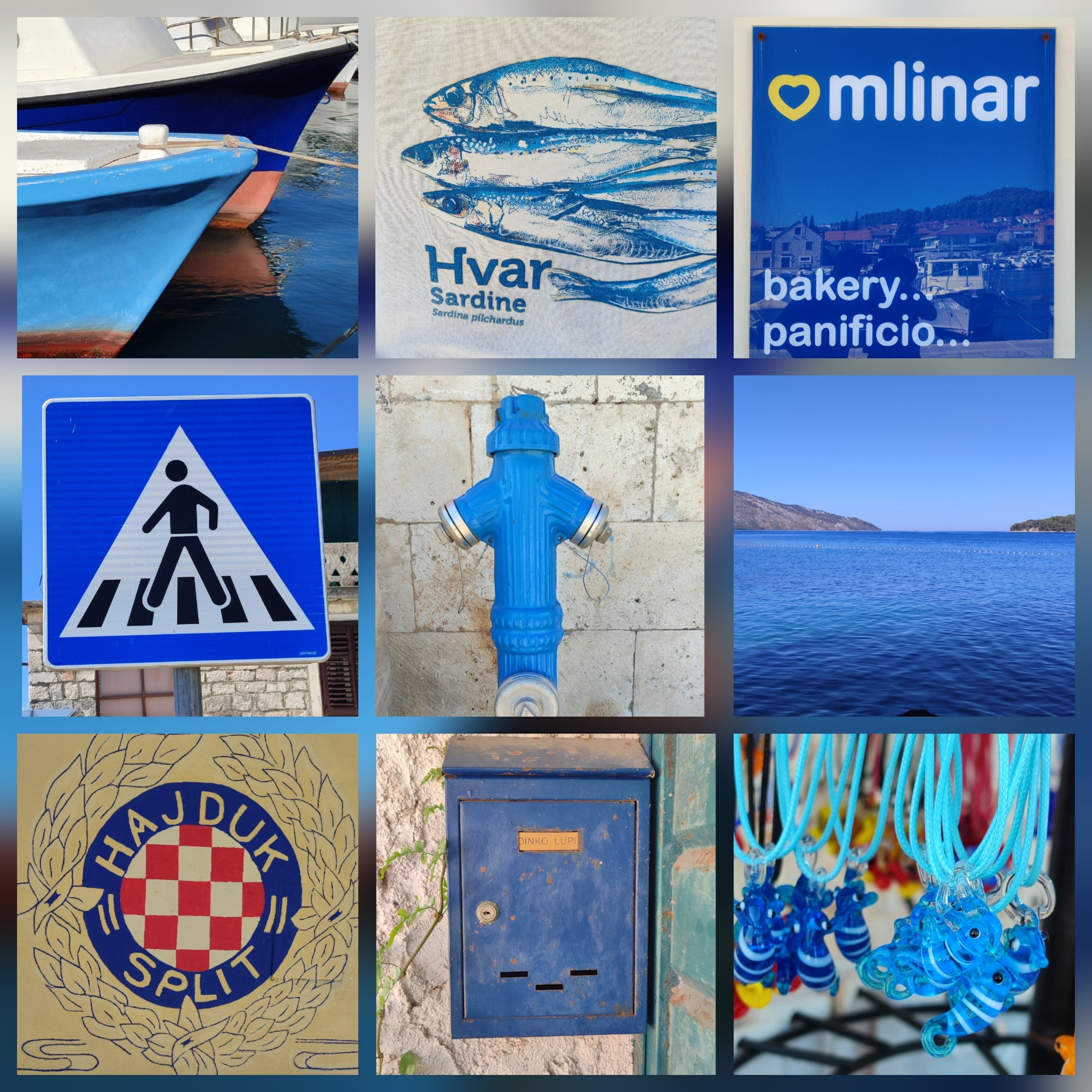
We had also set ourselves a small photo challenge during the day: each of us chose a colour and had to collect it around Stari Grad. Hugo chose yellow and Caro chose blue.
Then we headed to bed.
Leave A Comment