
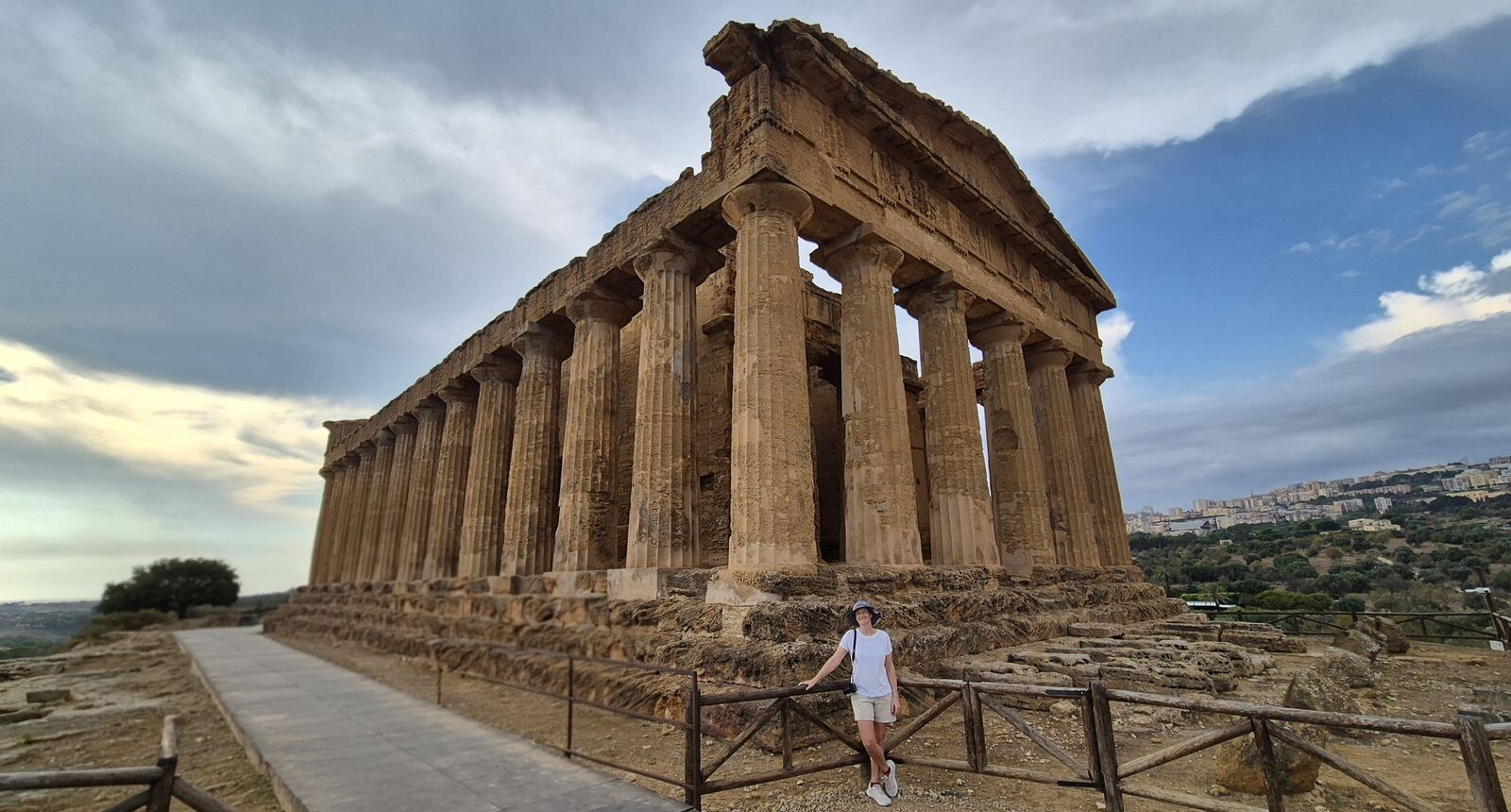
Monday started as a workday. Hugo had a meeting at about 09:15, while Caro washed some clothes. We ate the salami, cheeses and other things bought the previous evening for brunch, then had more of the same for lunch.
At about 15:30 we finally left the apartment and followed the upper road from the Duomo area to Agrigento’s main bus station. We had downloaded the local bus app and bought tickets for the Line 2 bus to the Valley of the Temples.
The trip only took about ten minutes.
When we tried scanning the tickets, nothing appeared to happen. The driver told us it was fine and waved us aboard. The app still showed both tickets as unvalidated, but we left that problem for later.
The Valley of the Temples was very quiet and there were no queues. Buying the entrance tickets online would not have saved us any time, so we simply bought them at the ticket window.
We started at the higher eastern end near the Temple of Juno. Most of the temples were built during the fifth century BC as part of the ancient Greek city of Akragas. Coming directly from modern Agrigento and suddenly standing beside columns and stone blocks that have been there for almost 2,500 years was quite something.
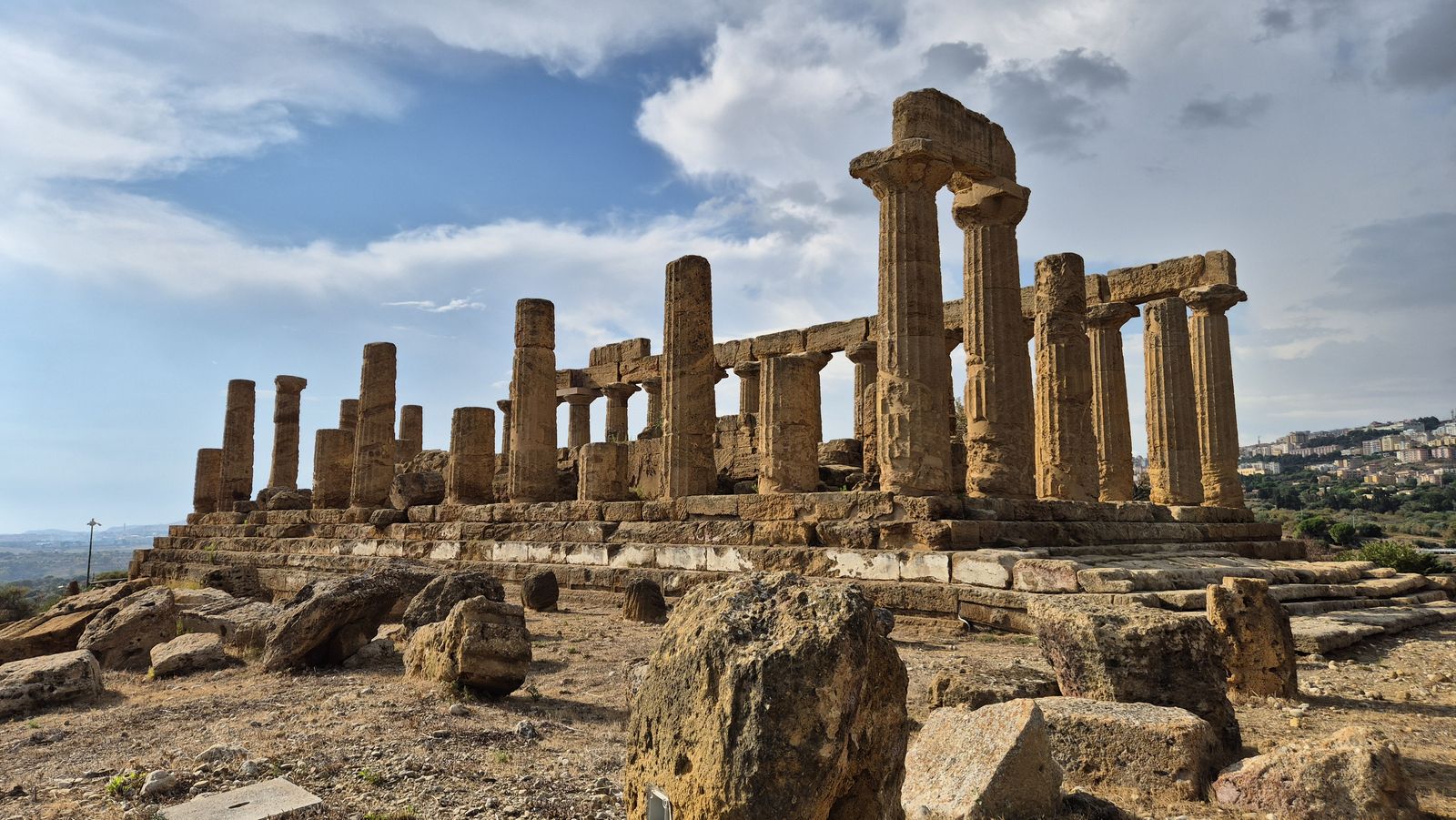
The blocks are enormous. We kept wondering how people had lifted them and put them into place that long ago.
We had heard that the site was especially good around sunset. Sunset was still roughly three hours away, so there was no need to rush. Hugo even joined another work meeting on his phone while we walked through the archaeological park.
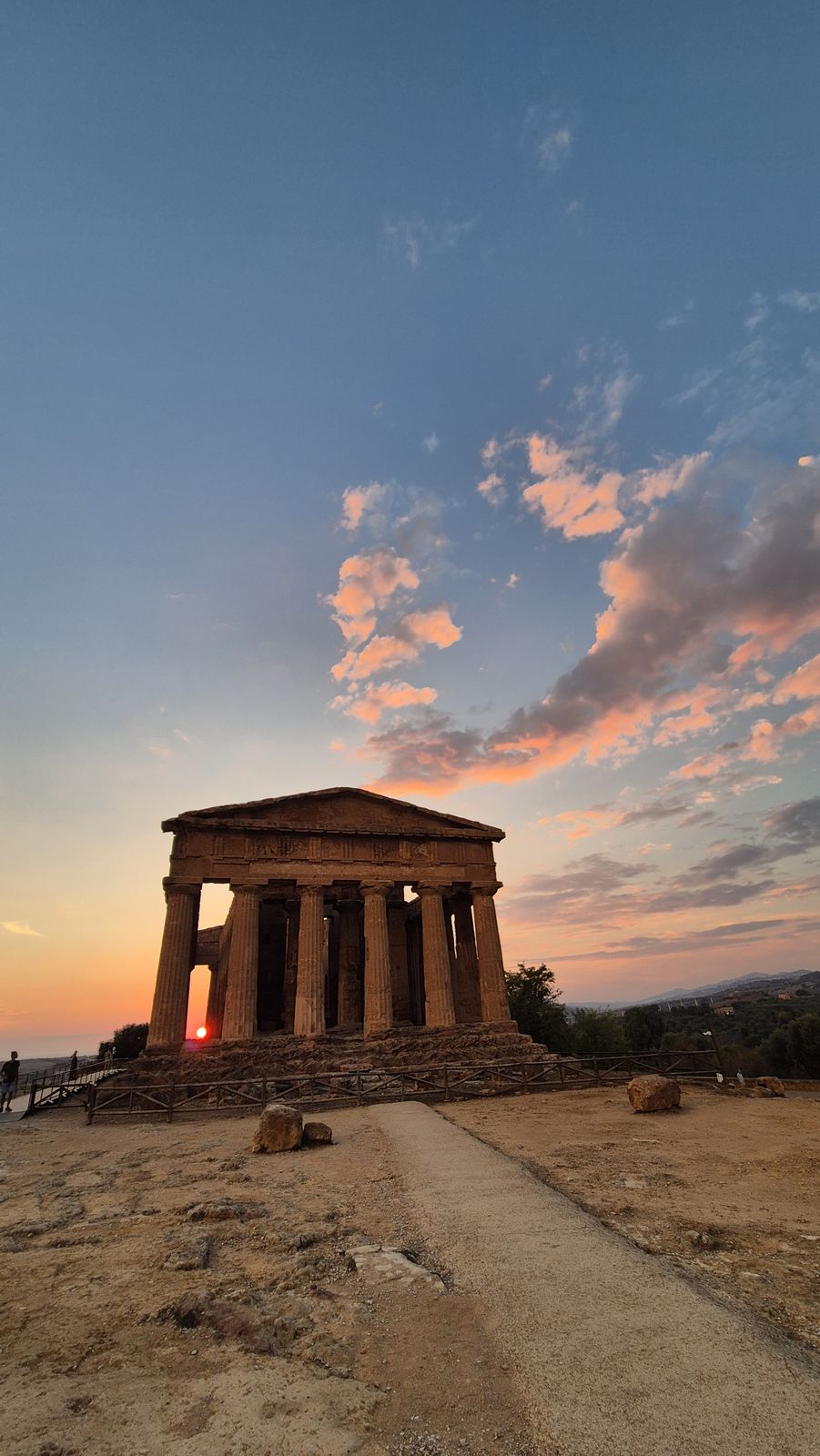
We eventually reached the Temple of Concordia and spent quite a while there. It is the best-preserved temple in the valley, with all 34 outer columns still standing. The modern bronze statue lying nearby is Igor Mitoraj’s Fallen Icarus, donated to the park in 2011.
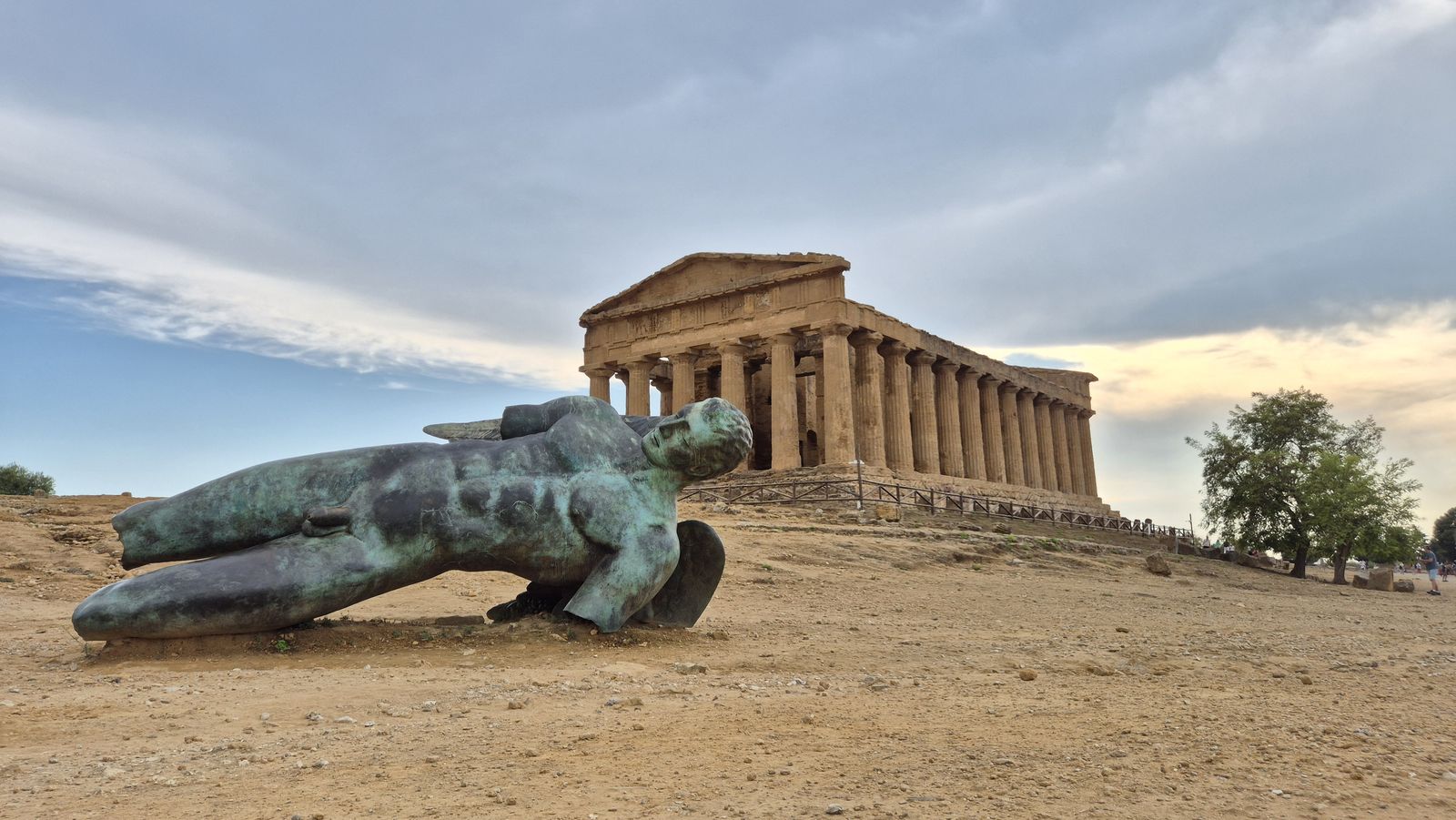
At first Concordia seemed like the obvious place to wait for sunset, but the map showed that there was still a large part of the site ahead of us.
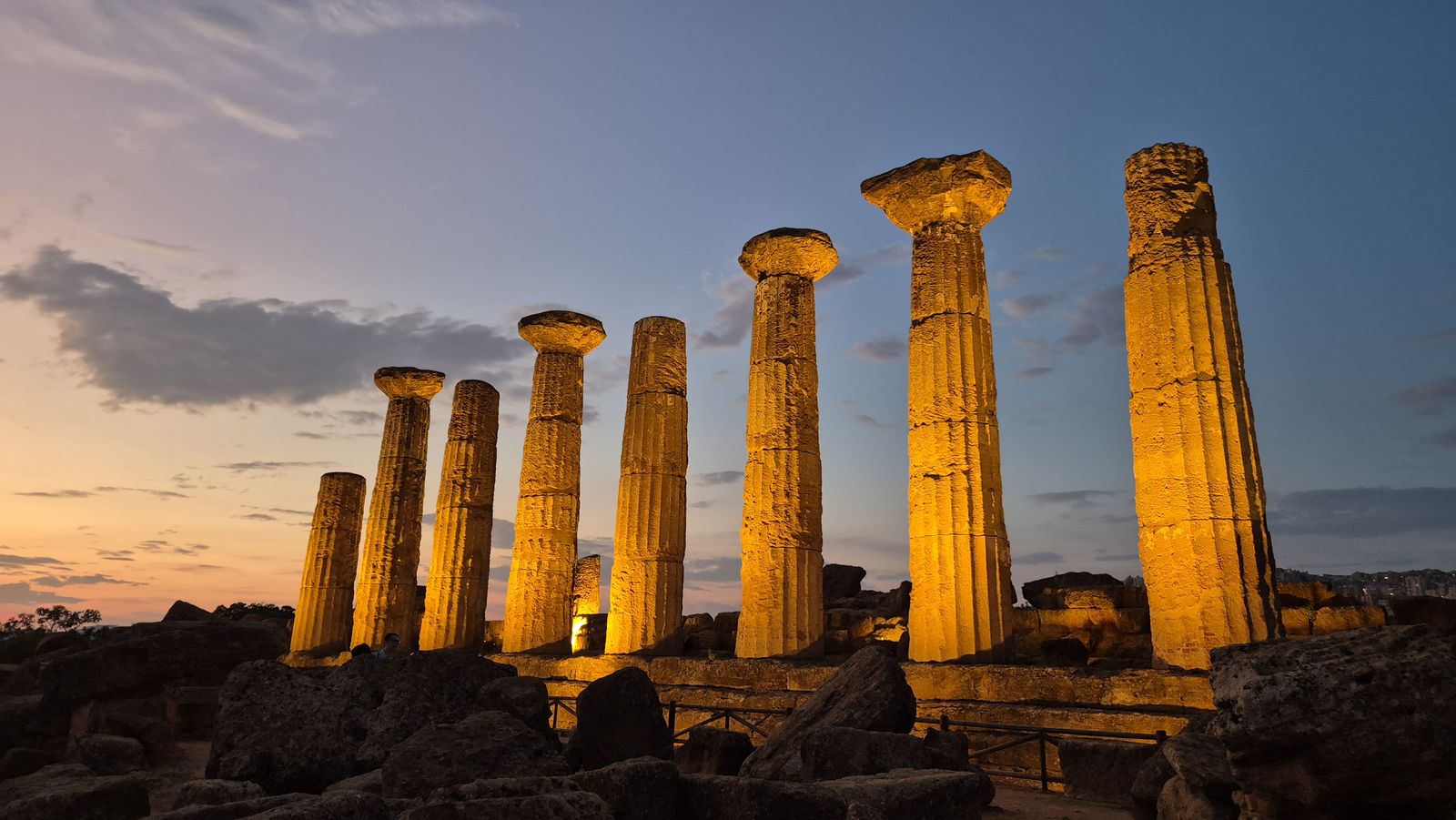
We continued past the Temple of Heracles, where only eight of the original 38 columns remain standing, and crossed the road into the western section.
At the Temple of Olympian Zeus we saw the reconstructed telamon. The original temple used enormous human figures, almost eight metres tall, as part of its structure and decoration.
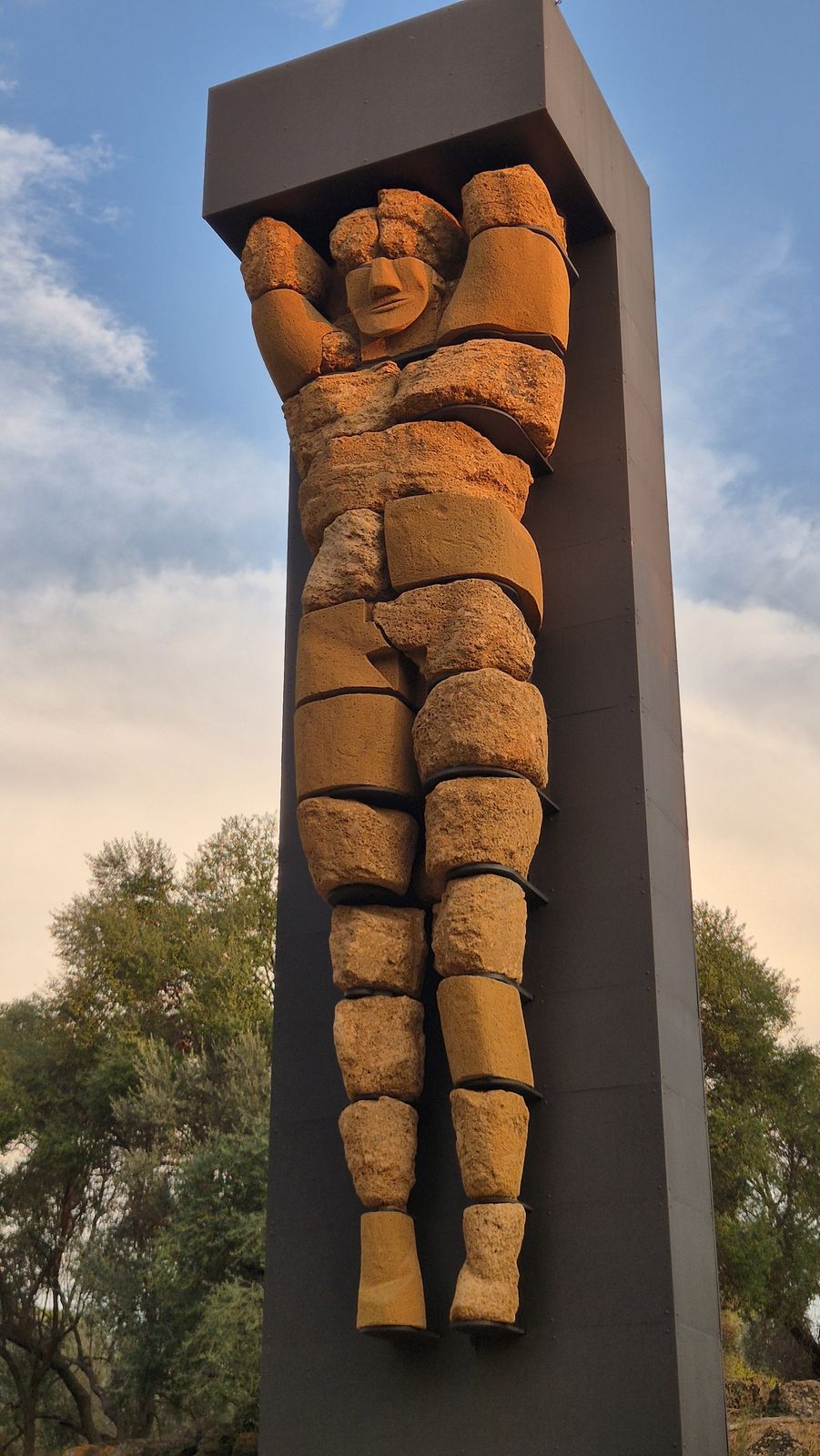
We continued all the way to the far end near the remains of the Hellenistic-Roman residential quarter. We also passed the four-column reconstruction of the Temple of Castor and Pollux, now one of the symbols of Agrigento.
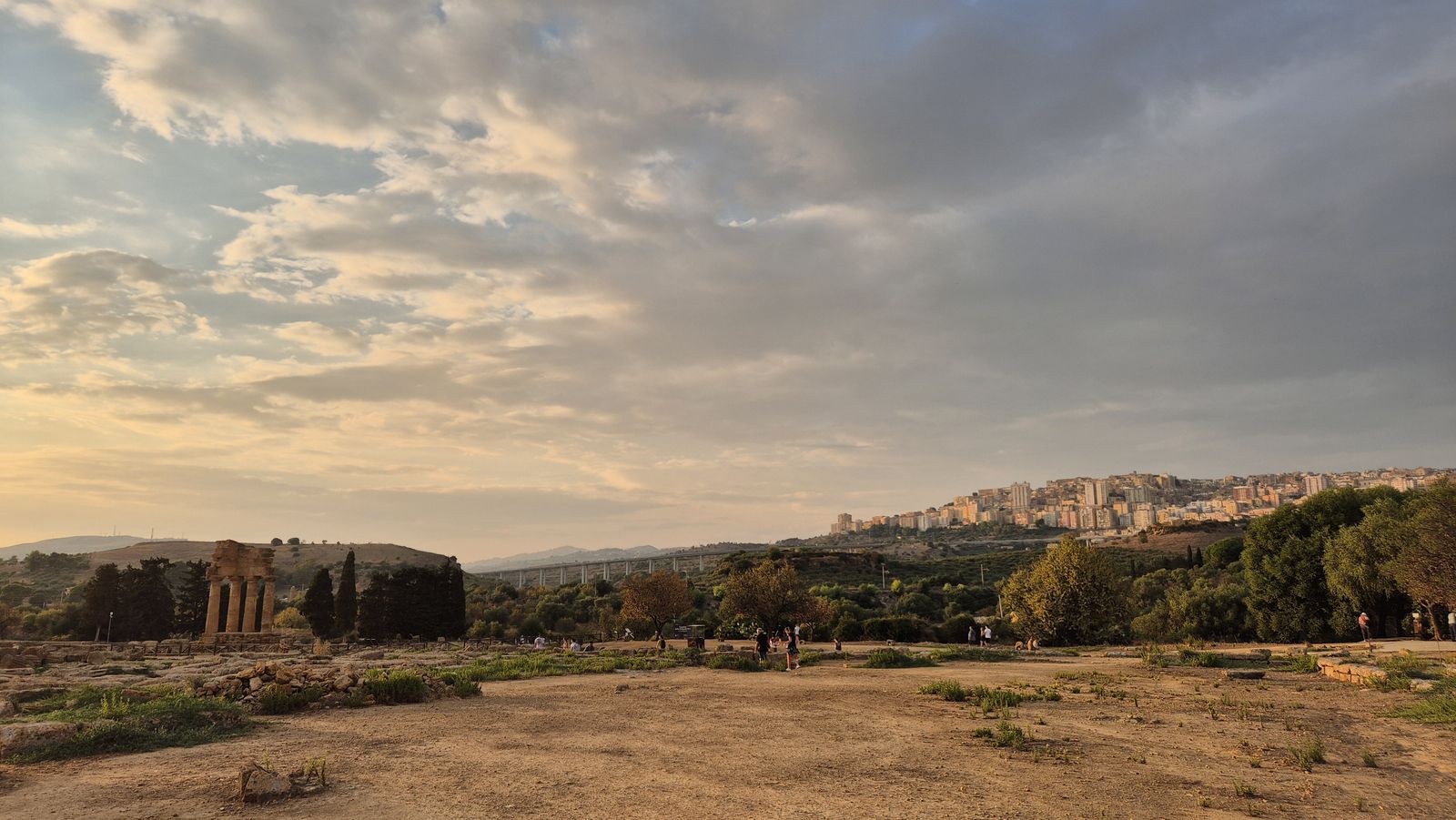
By then it was later in the afternoon and the low light had started changing the colour of the stone.
That was when we decided that we really did want to be back at Concordia for sunset.
So we speed-walked all the way back.
The sun was already close to the horizon and we were not sure whether we would make it. We briefly stopped at the Temple of Heracles for a couple of photos, then decided there was still a chance and walked even faster.
At Concordia, Caro went around one side and Hugo went around the other. We arrived just in time to get photos with the sun shining through the columns.
Afterwards we sat for a while and watched the clouds and sky change colour.
Eventually we checked the bus times and decided to start walking back down towards the stop. Halfway there, Hugo remembered that one of the reasons for staying late had been to see the temples after the lights came on.
By then we were already tired from walking down the full length of the site, rushing back to Concordia and then walking down again. There was some debate about whether turning around yet again was worth it.
Then the lights came on.
The Temple of Heracles was suddenly glowing against the darkening sky. That immediately made us think Concordia would probably look even better, so we turned around and walked uphill again.
We did not go all the way back to Concordia. We had understood that our bus would leave at about 21:47, and our earlier research suggested that the special late-night opening until 23:00 had ended the previous day, 20 September. Since this was now the 21st, we assumed the site would close at about 20:00.
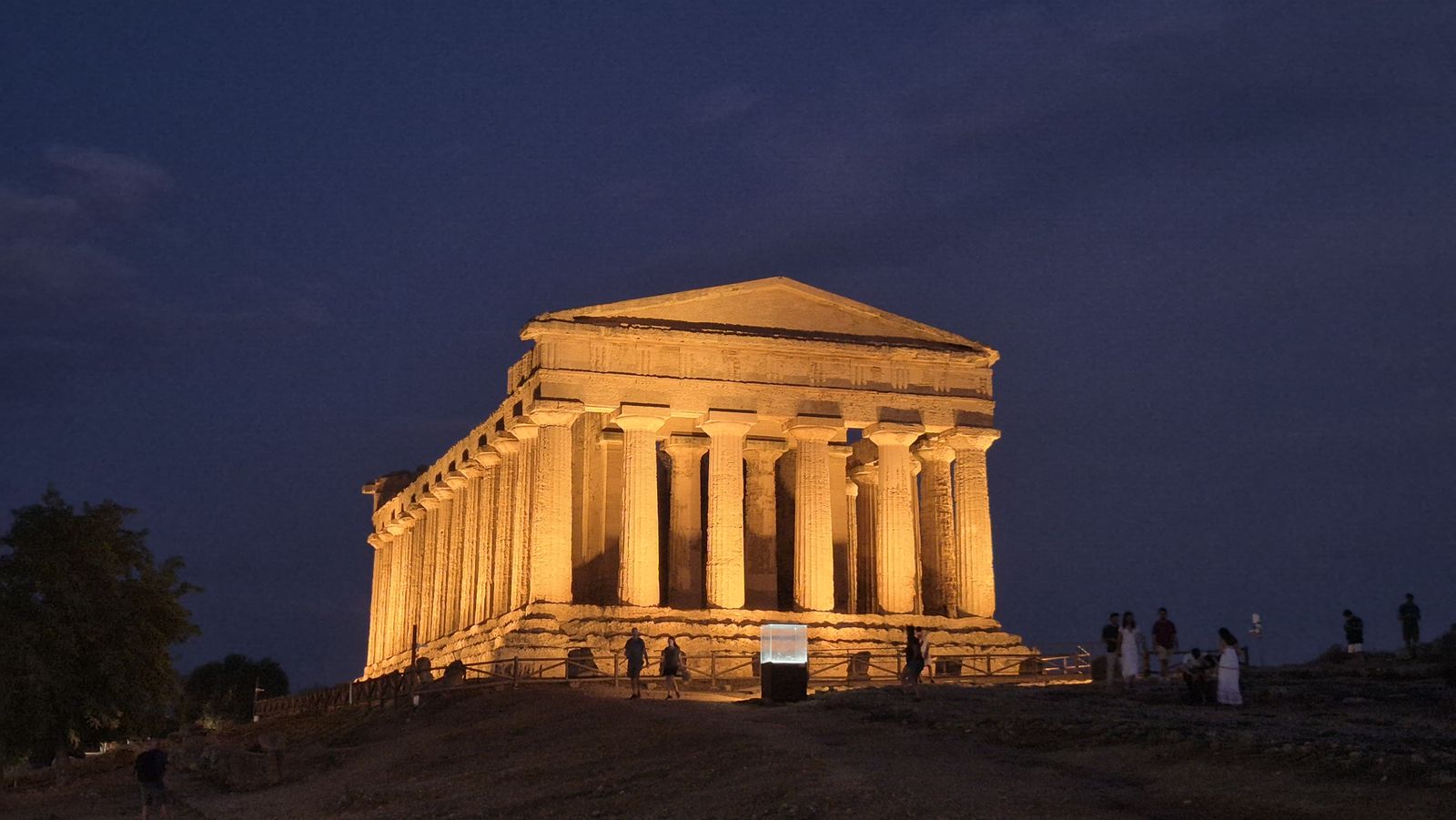
We took a few photos of Concordia illuminated in the distance, then walked back down yet again.
When we finally reached the bus stop, the live information showed that the bus was still about 40 minutes away.
We probably could have spent more time inside after all.
There were also still quite a few people walking around, including some who appeared to be heading farther into the site, so we never worked out exactly which closing time applied that evening.
We sat at the bus stop with the illuminated Temple of Concordia visible in the distance until the bus eventually arrived.
On the return trip we tried using the same tickets again because the app still showed them as unused. The scanner once again did not appear to work, and the driver once again waved us aboard before we had even properly attempted the second ticket.
We had paid for two tickets, travelled both ways, and according to the app had never used either of them.
The bus dropped us near the far end of Via Atenea.
A small restaurant called Manhattan sat a few steps above the street, with only about six tables squeezed onto the staircase landings. The prices looked reasonable, so we stopped there.
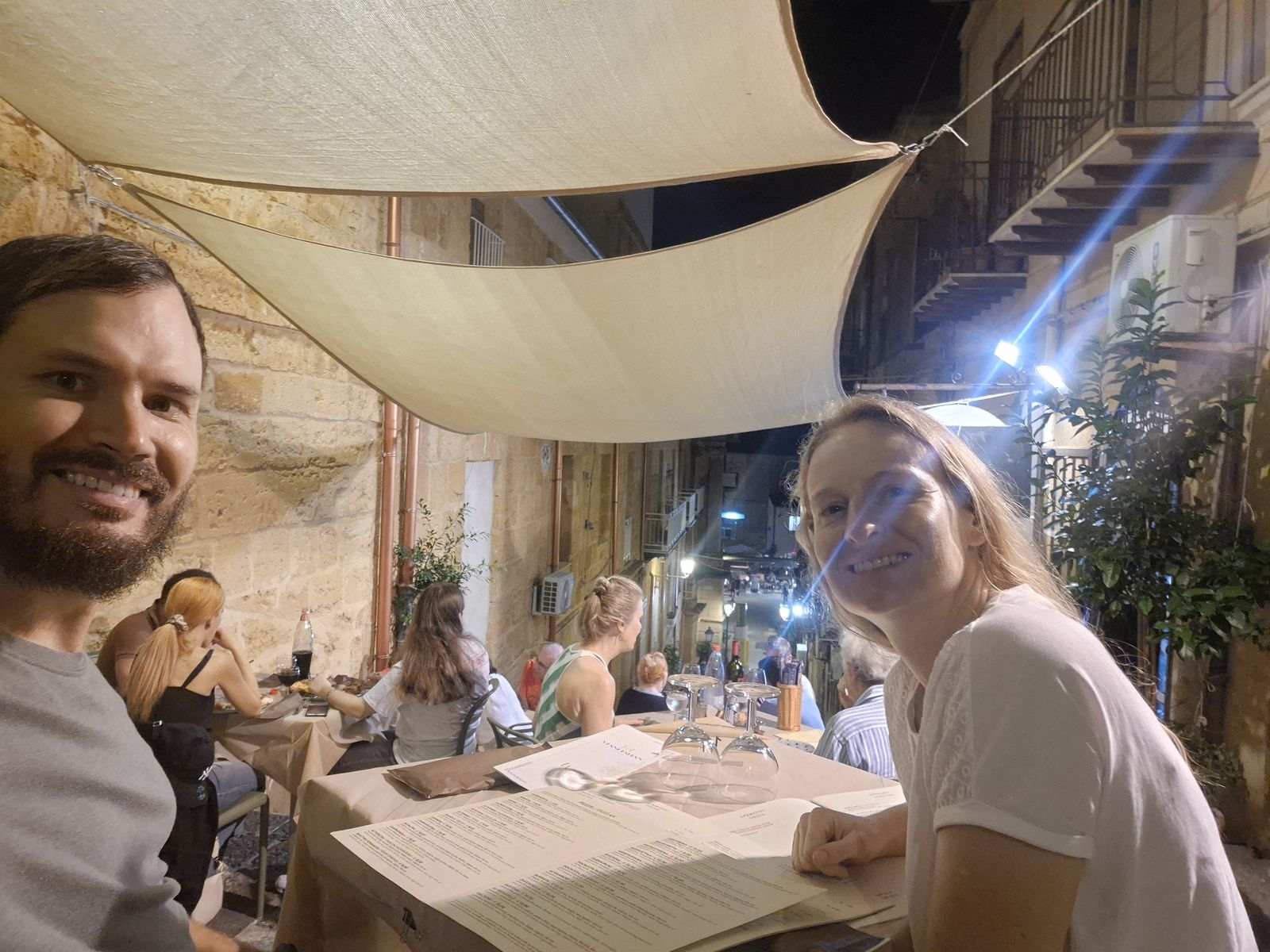
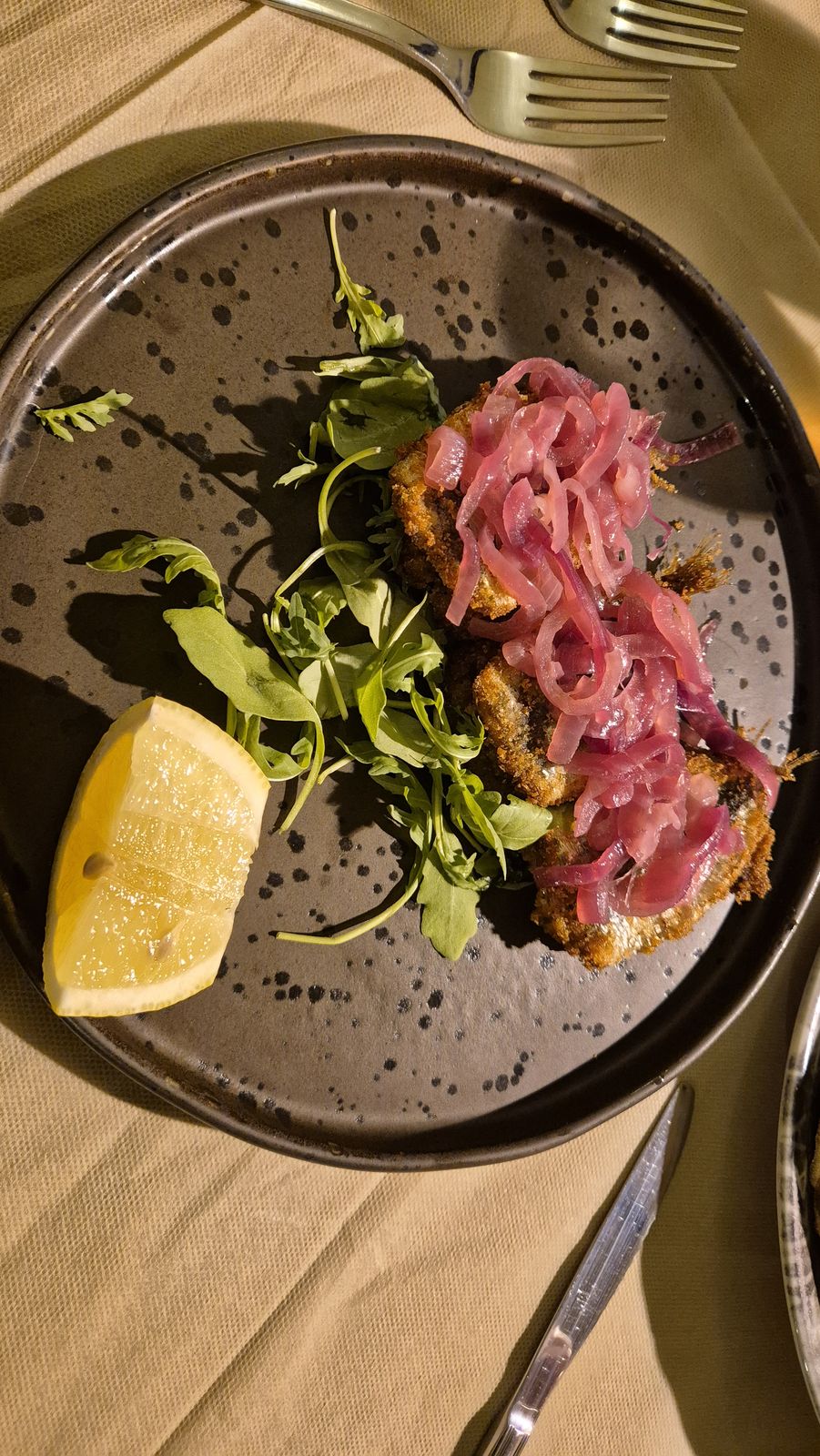
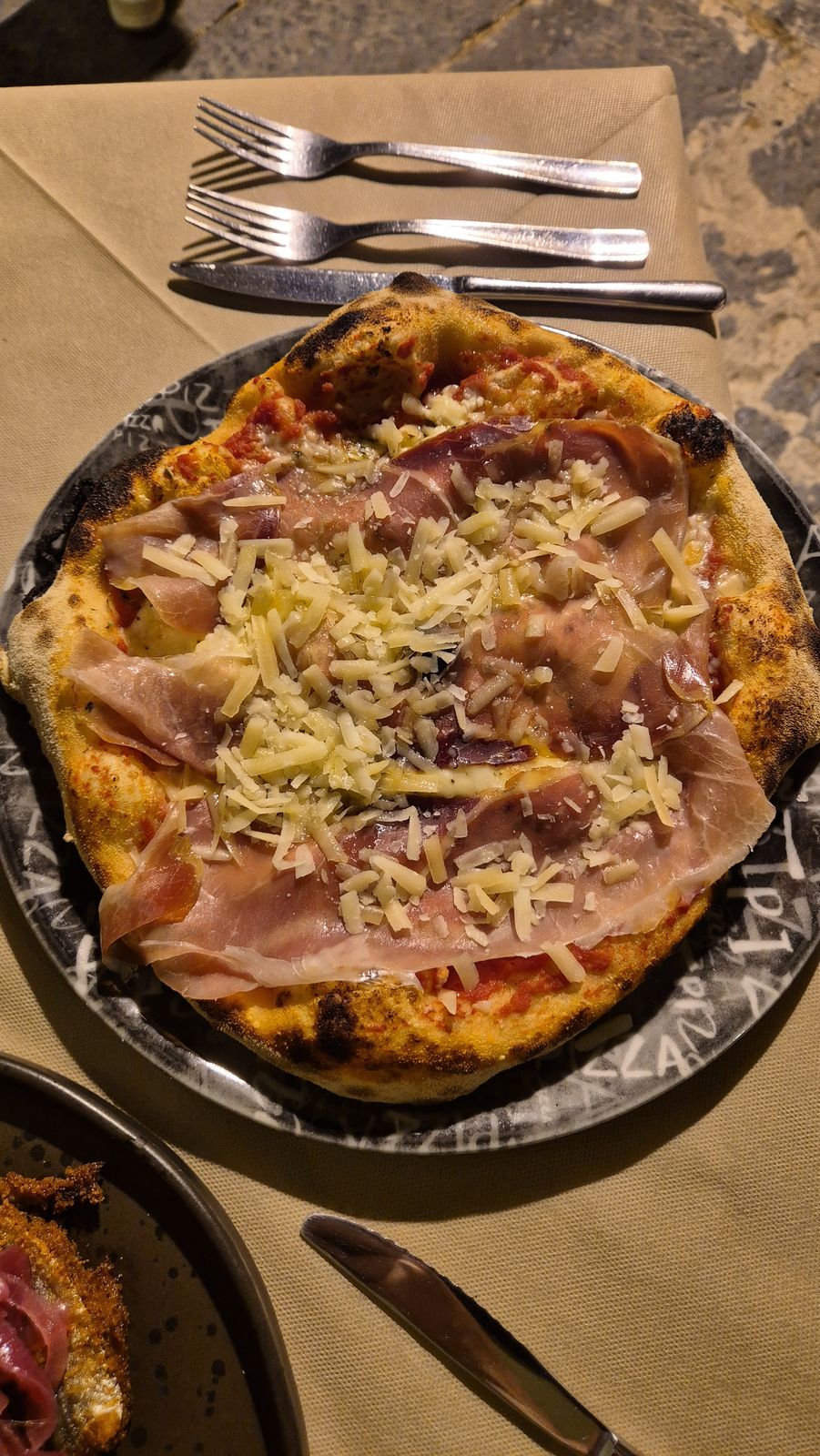
We shared a pizza and a plate of crumbed sardines with sweet-and-sour onions, along with a one-litre Coke.
Then we walked all the way back up to the apartment.
Tuesday was almost entirely a workday. We did not leave the apartment until dinner.
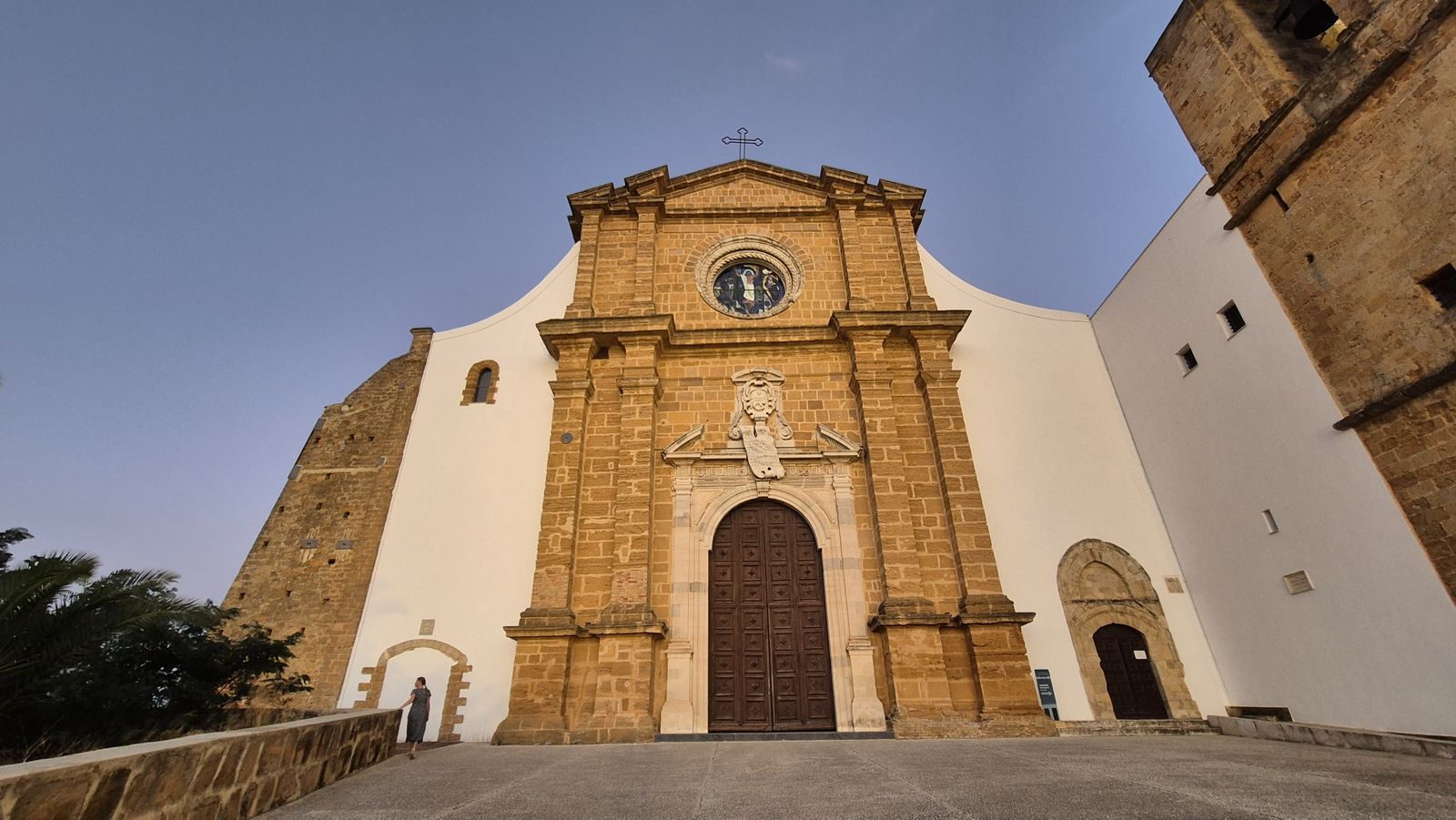
That evening we first tried the same restaurant near the Duomo that had been closed on Sunday. This time it was open, but once inside we were told that they were not serving pizza.
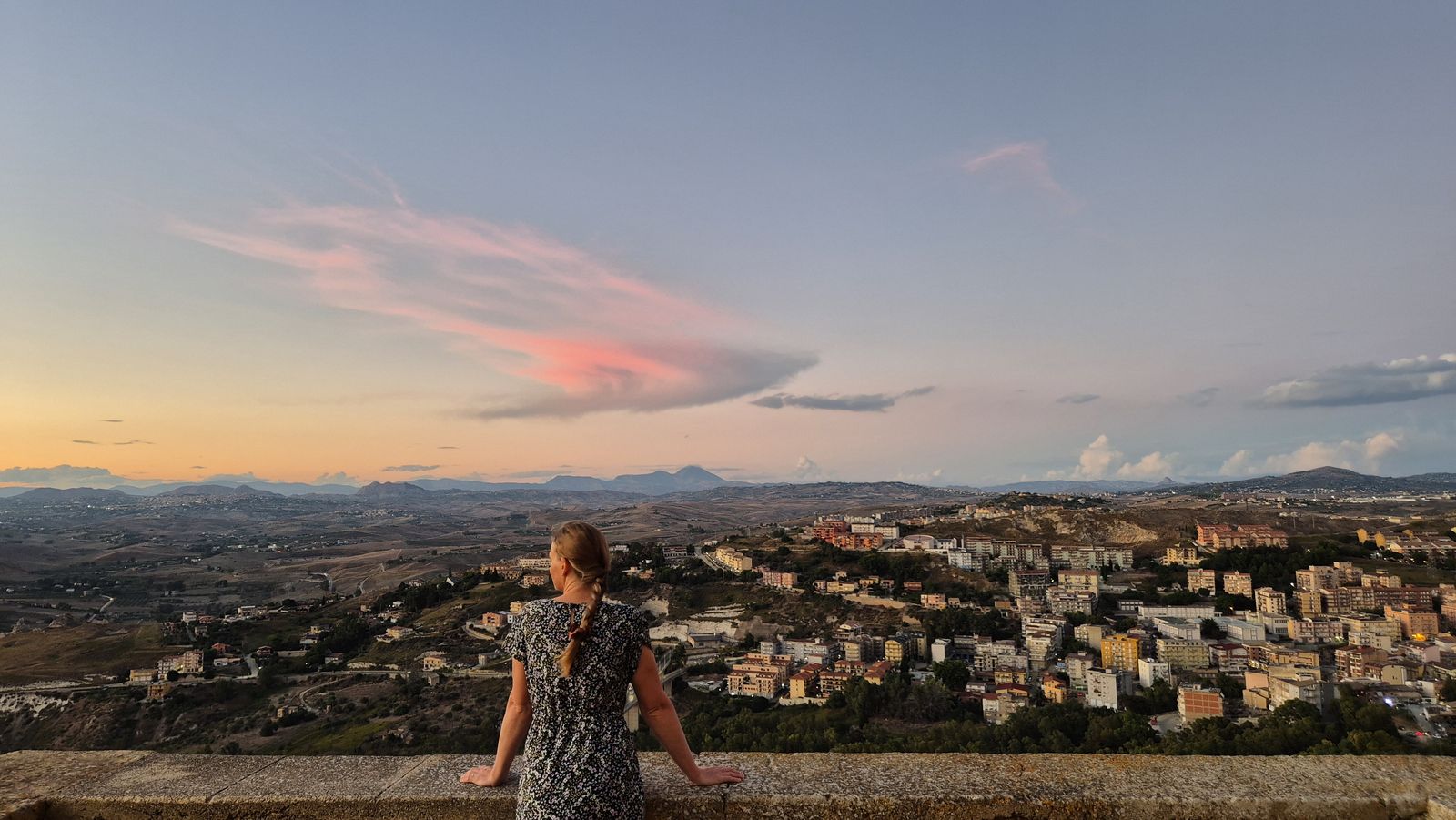
We walked all the way down again and went to the Opera restaurant instead.
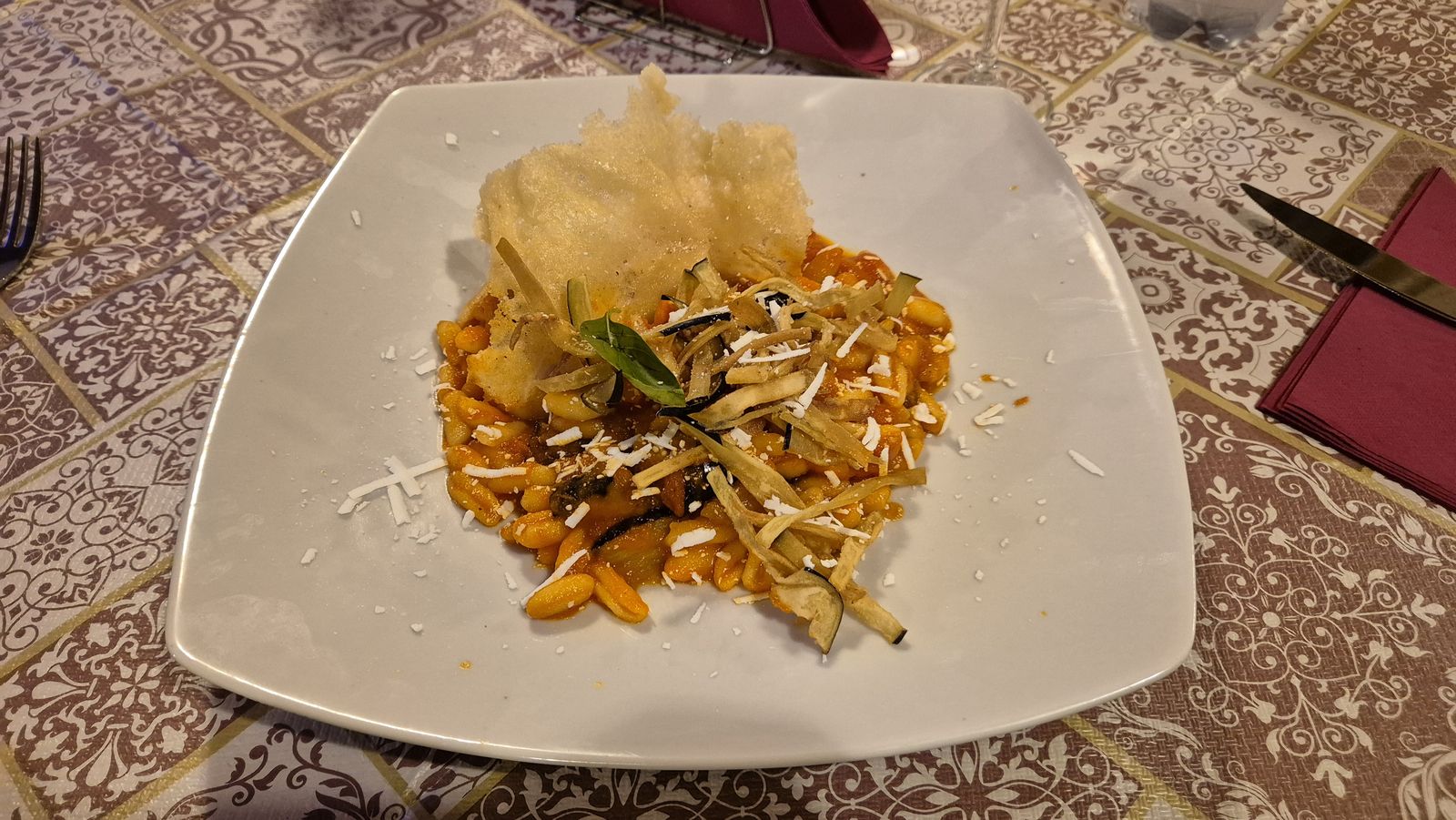
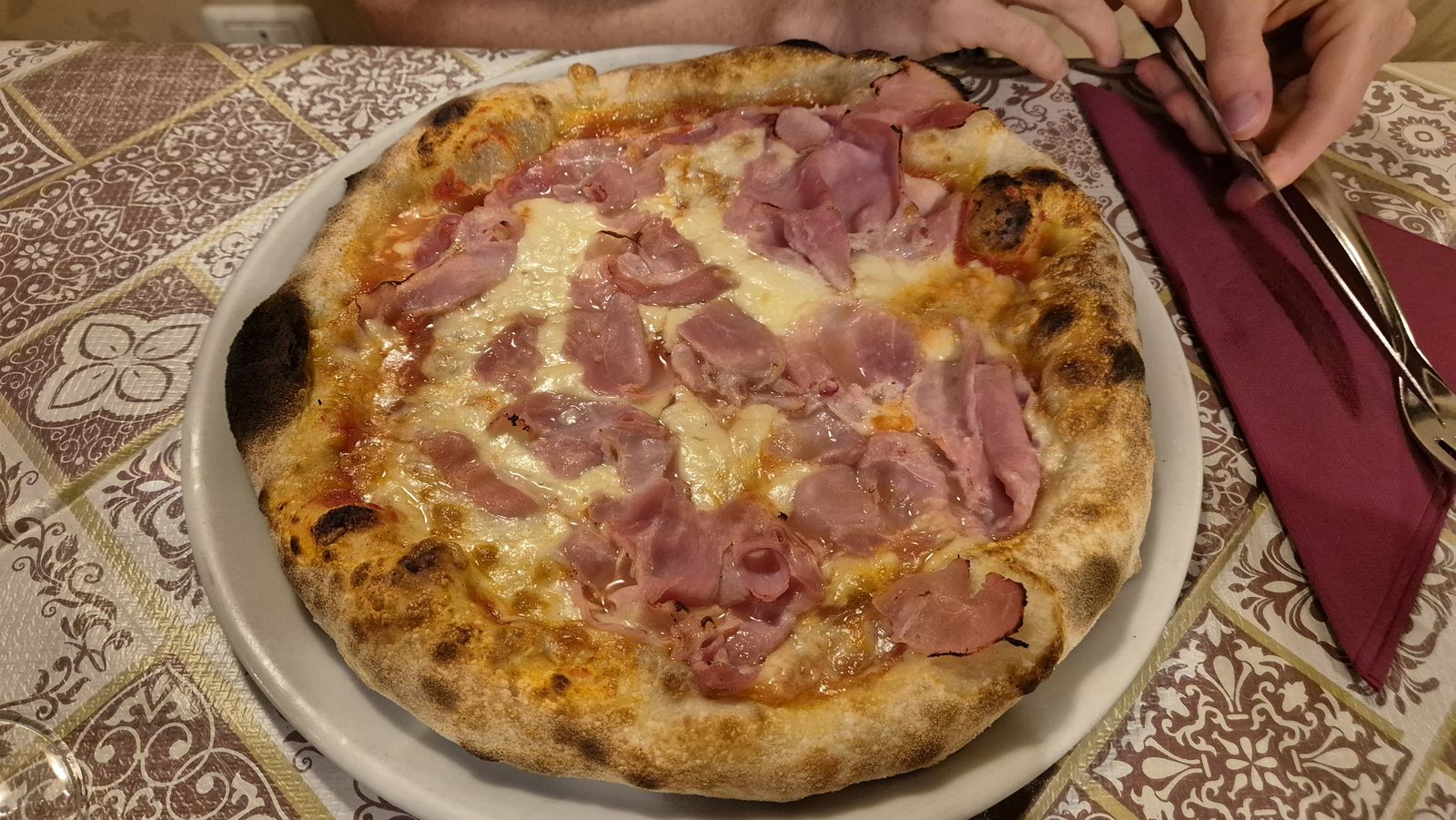
There we ordered another pizza and their version of pasta alla Norma. It used a different type of pasta and was not the fully traditional version, but still had the tomato, aubergine and ricotta elements.
After dinner we walked back up to the apartment.
Leave A Comment