
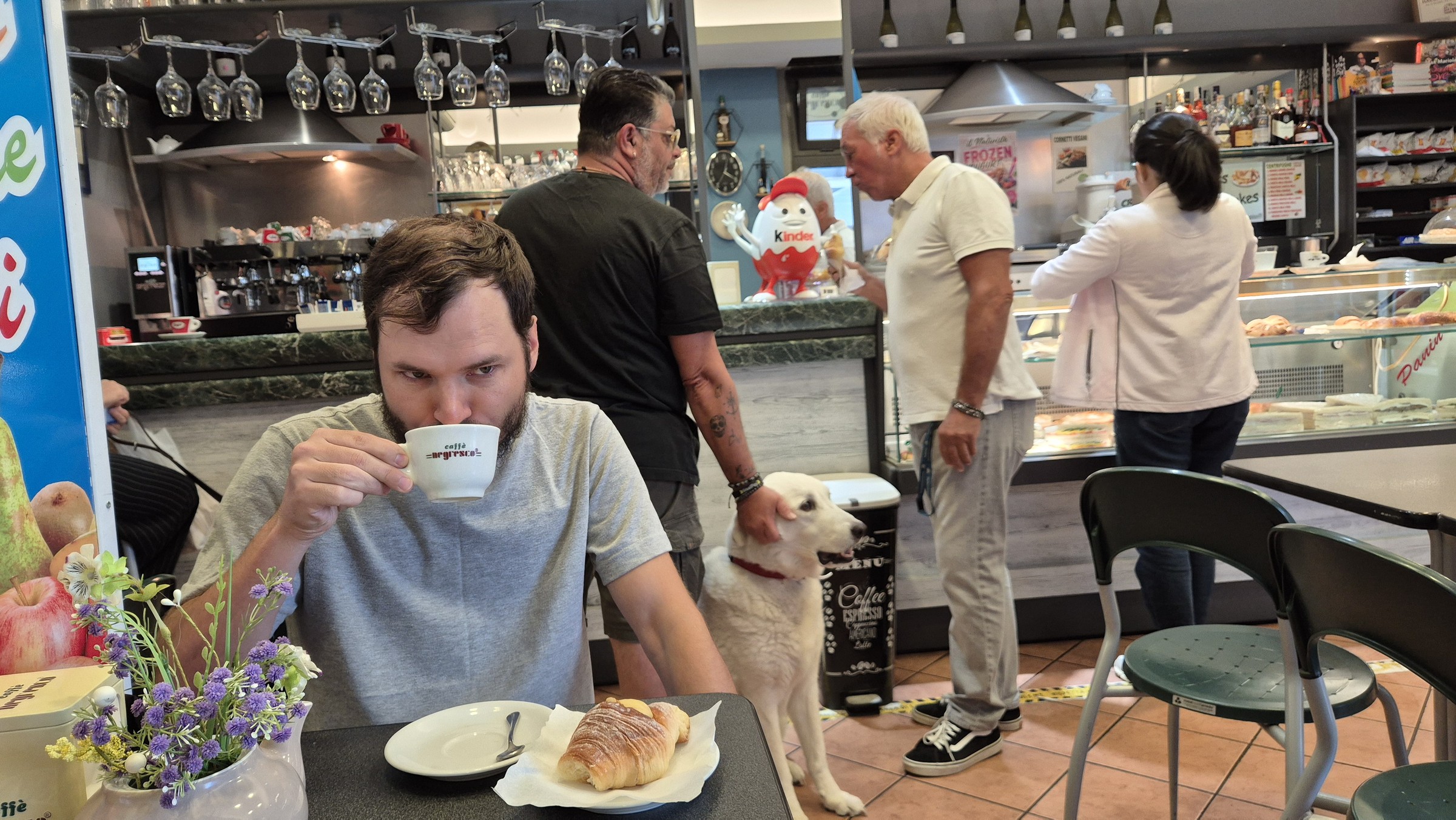
We got up, got dressed and headed in the direction of the station. On the way we stopped at a local coffee shop for a quick breakfast: two cappuccinos at €2 each and two cream cornetti at €1.20 each.
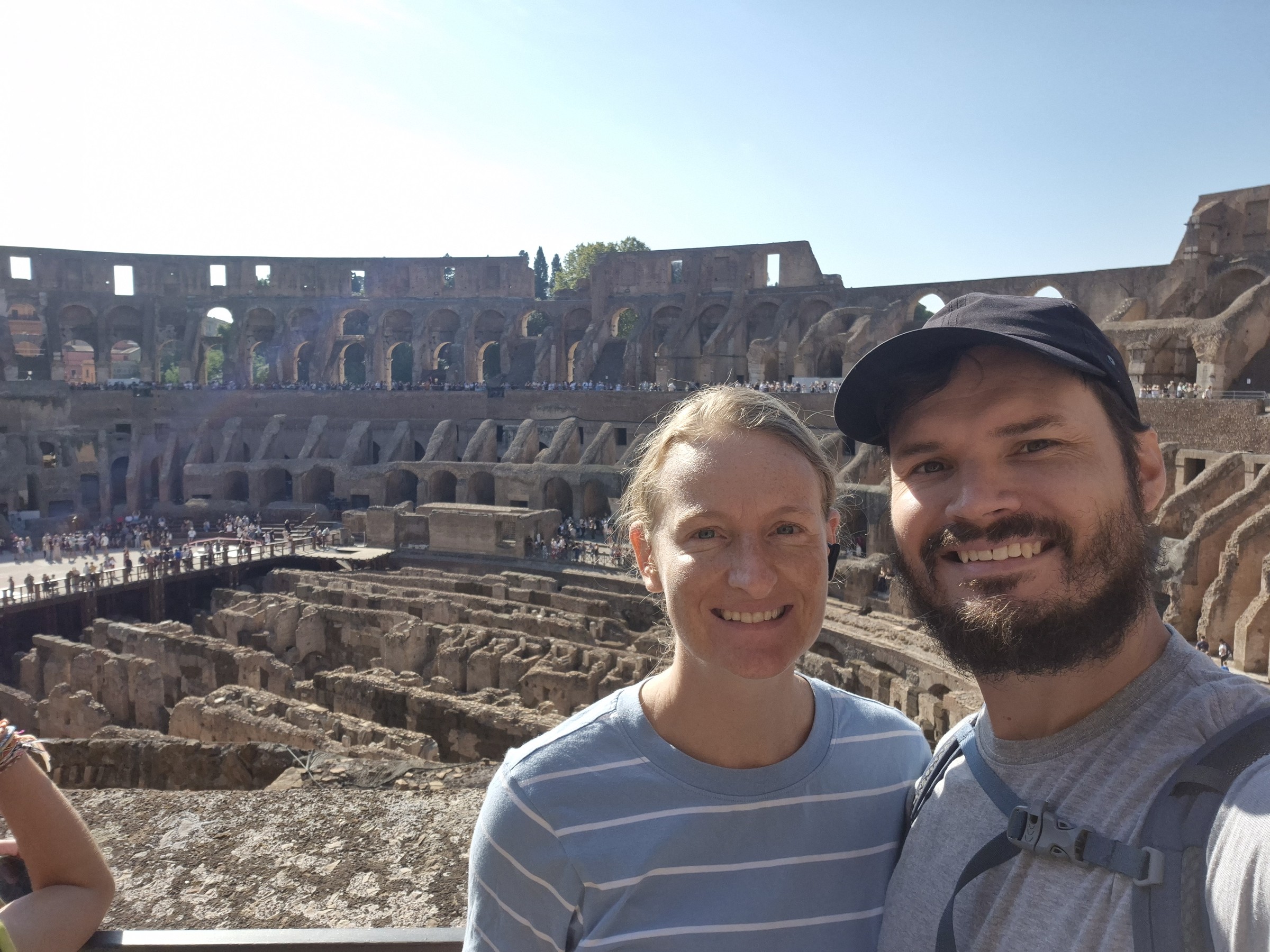
We took a metro full of people heading to work to Termini, then changed lines for the Colosseum. We arrived 20 minutes early for our 09:45 time slot and were told to wait.
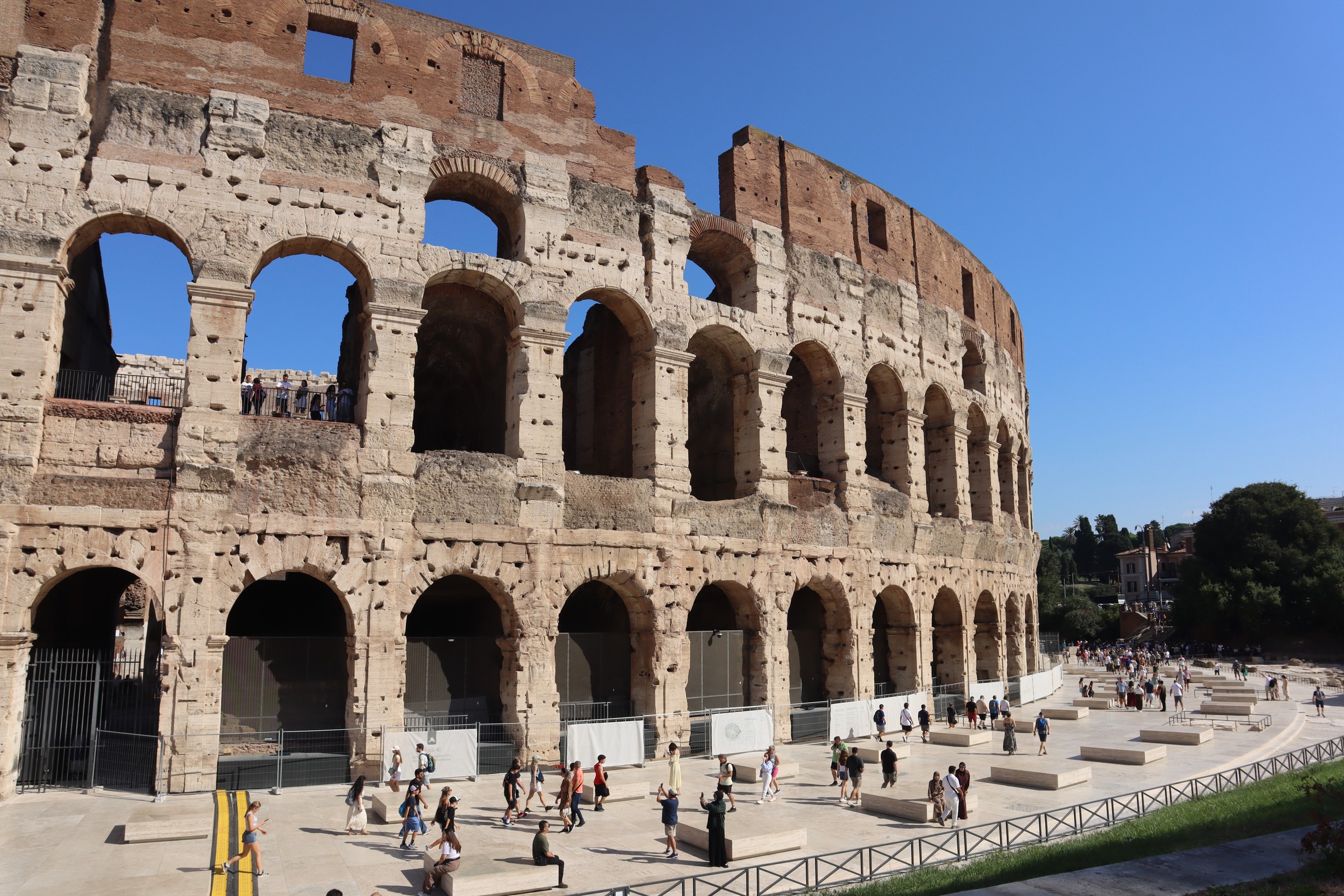
There were already a lot of people. The Colosseum was built under the Flavian emperors in the first century AD and opened in AD 80. It held tens of thousands of spectators for gladiator fights, animal hunts and other public spectacles.
Its size is obviously impressive, but what happened there was grotesque. It is crazy to think that the Romans were such advanced and architecturally competent people, yet also so barbaric and brutal.
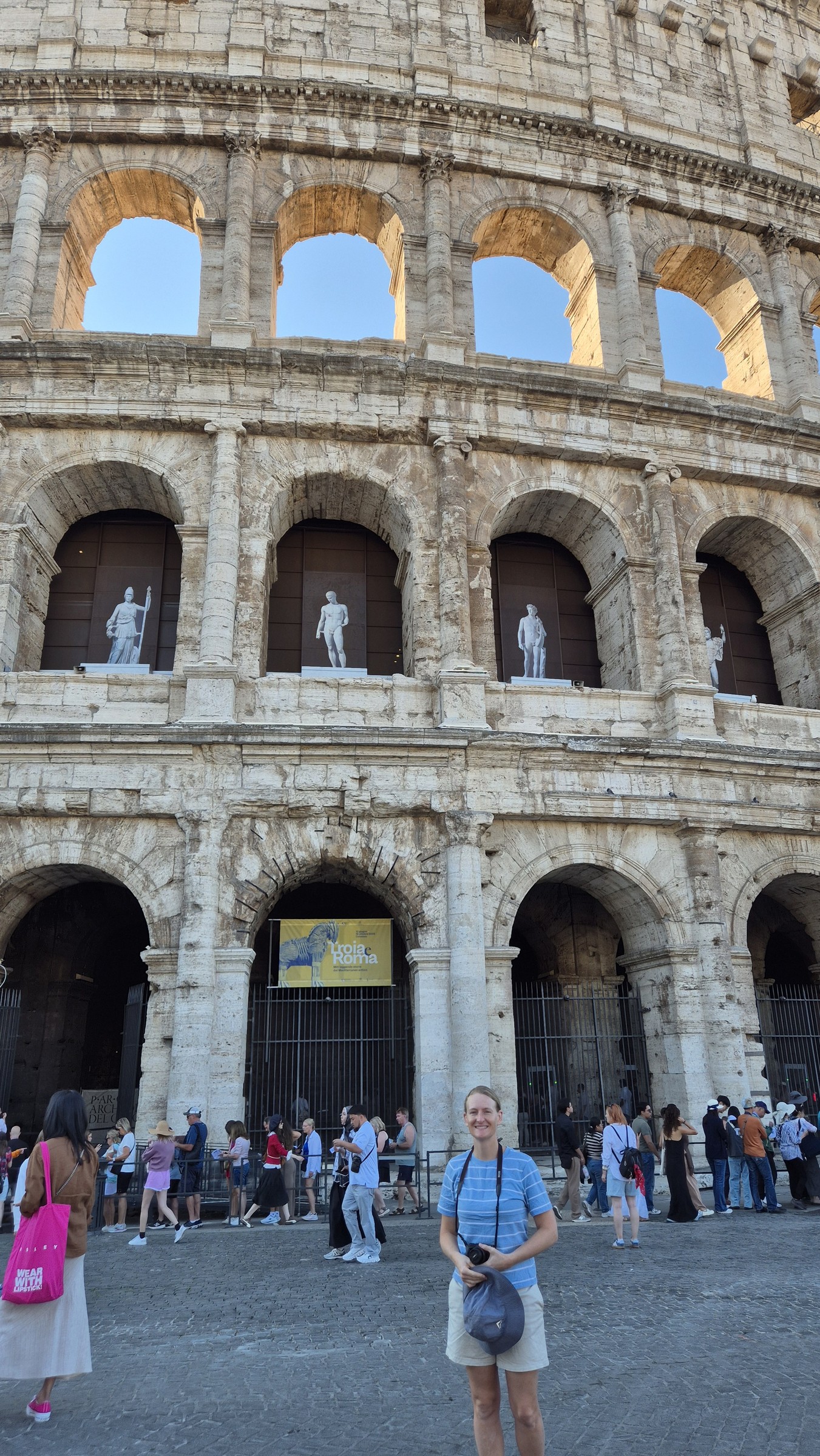
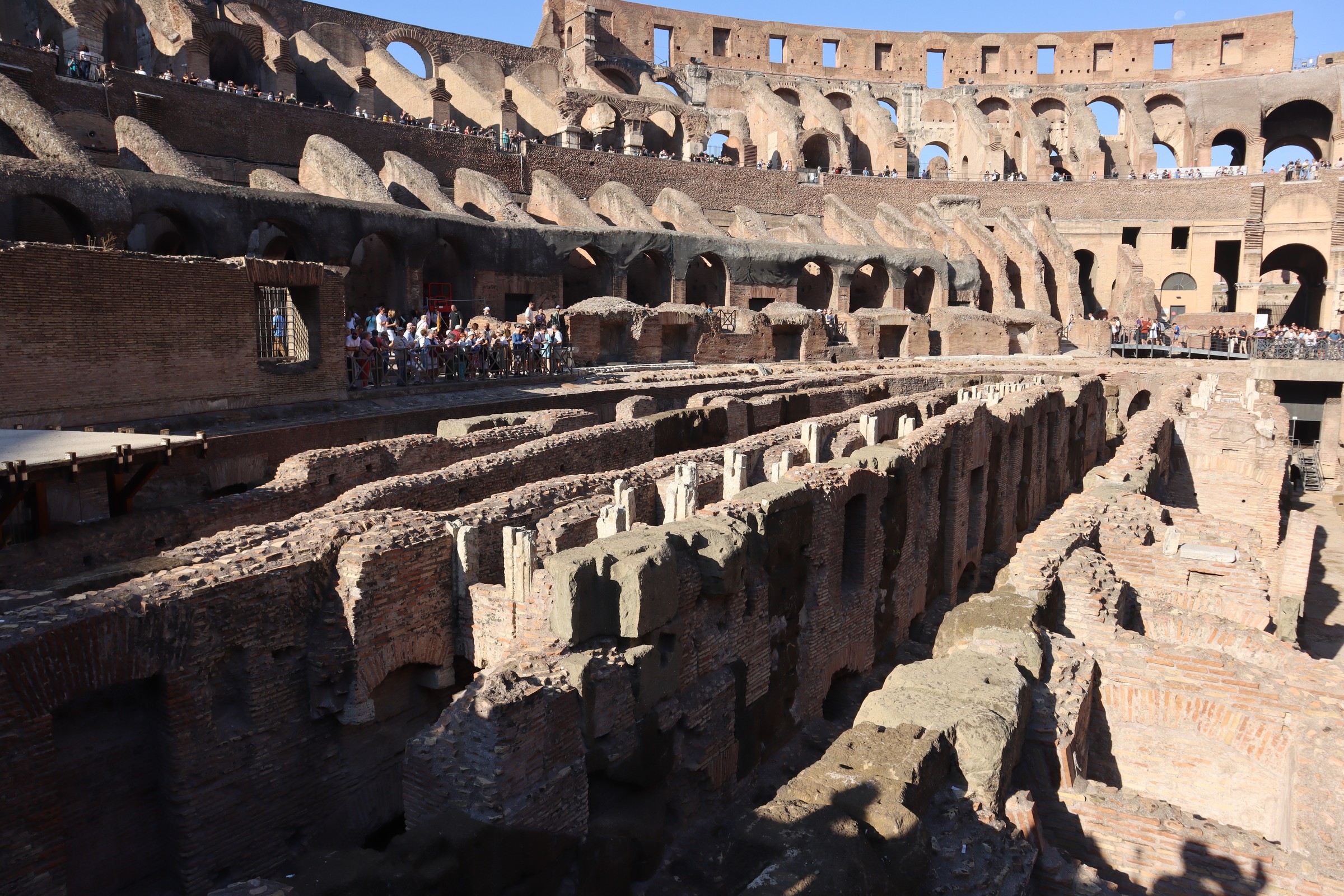
We finally confirmed something else we had been wondering about throughout Rome: the Romans really did build with those small clay bricks. We had assumed that whenever we saw old stone followed by brick, the brick must have been added during a much later restoration. Instead, the Romans used heavy stone lower down, then brick faces around a core of rock and mortar. They even used stucco containing marble powder to make some surfaces look like solid marble. Cost-cutting tricks already existed 2,000 years ago.
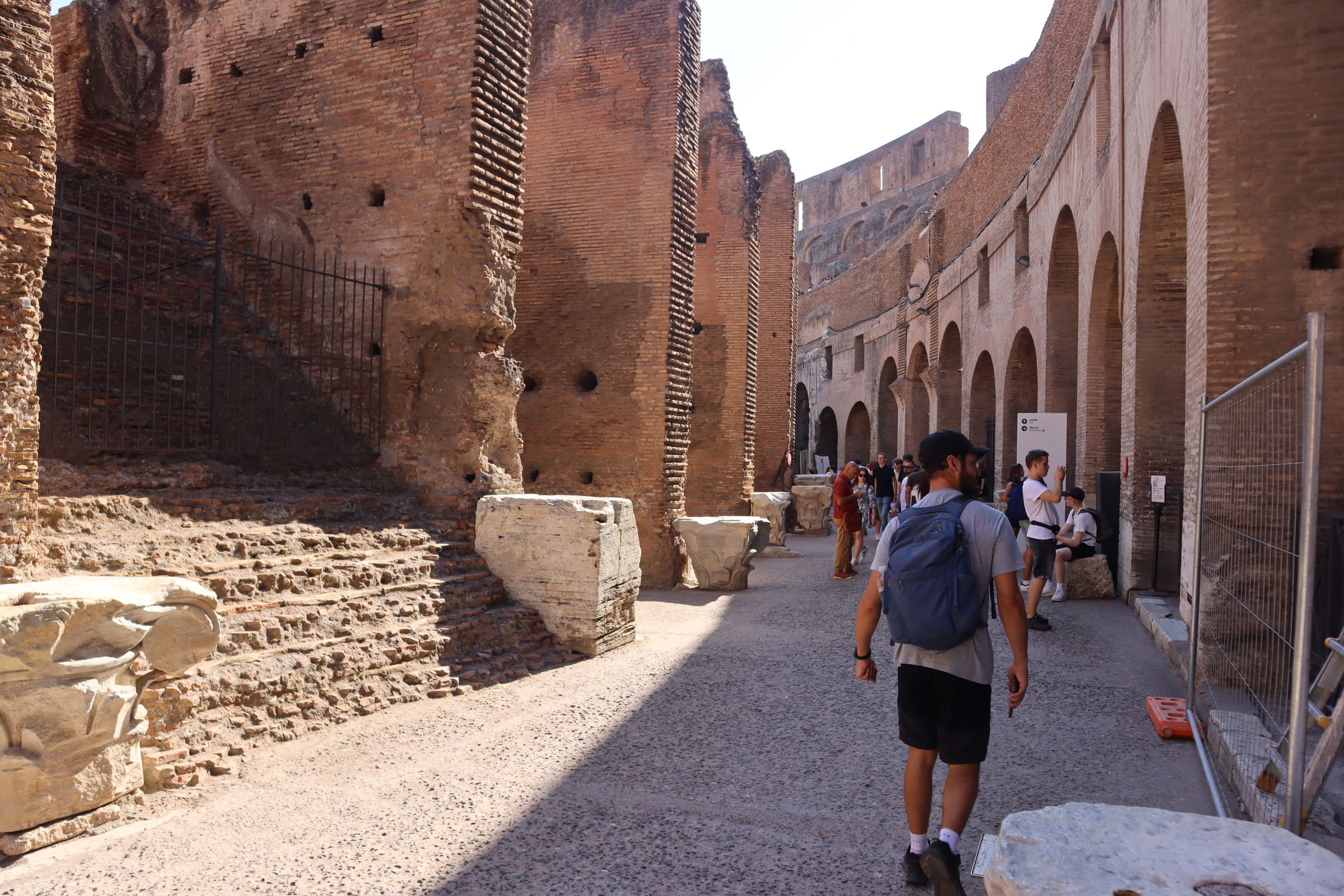
At the third ticket scan we were funnelled into a stream of people that felt as if it propelled us along until we eventually reached the exit. We had downloaded the official audio guide, but it was not clear when we were supposed to listen to which section. Not a great experience.
Personally, we do not like having a guide in person. As Caro explained: “I feel as if I have to acknowledge everything they say and respond, even when I don’t want to. Then I get over the whole outing much sooner.”
We do appreciate a good audio guide. We can pause it and just be for as long as we want to.
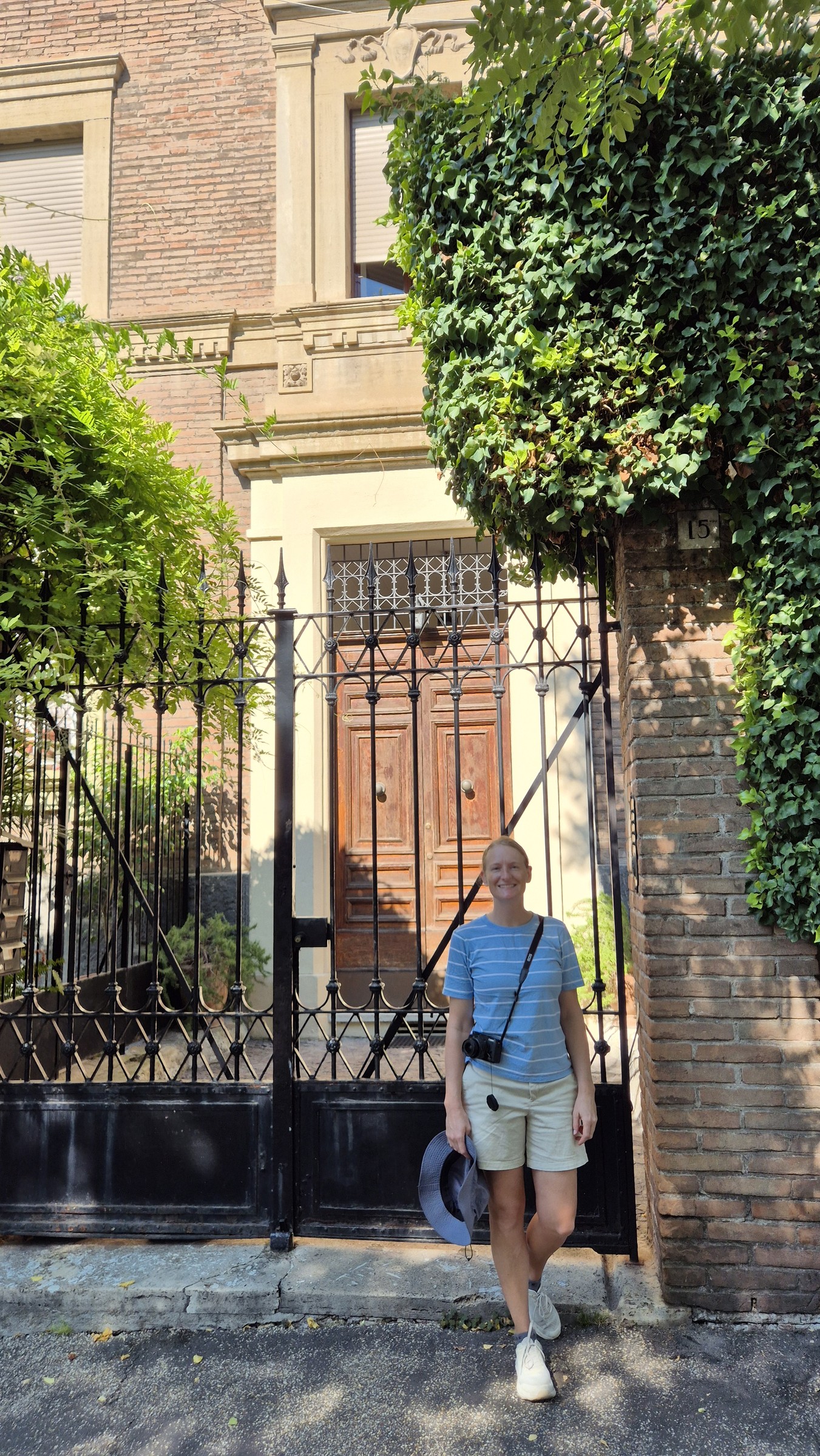
When we were done, we caught a bus to Ripa. We passed the FAO headquarters, the UN building where Caro’s grandfather worked for two years, then walked up the Aventine Hill to look for the house where Caro’s grandparents had stayed. We found it, and it still looked the way it had been described to Caro.
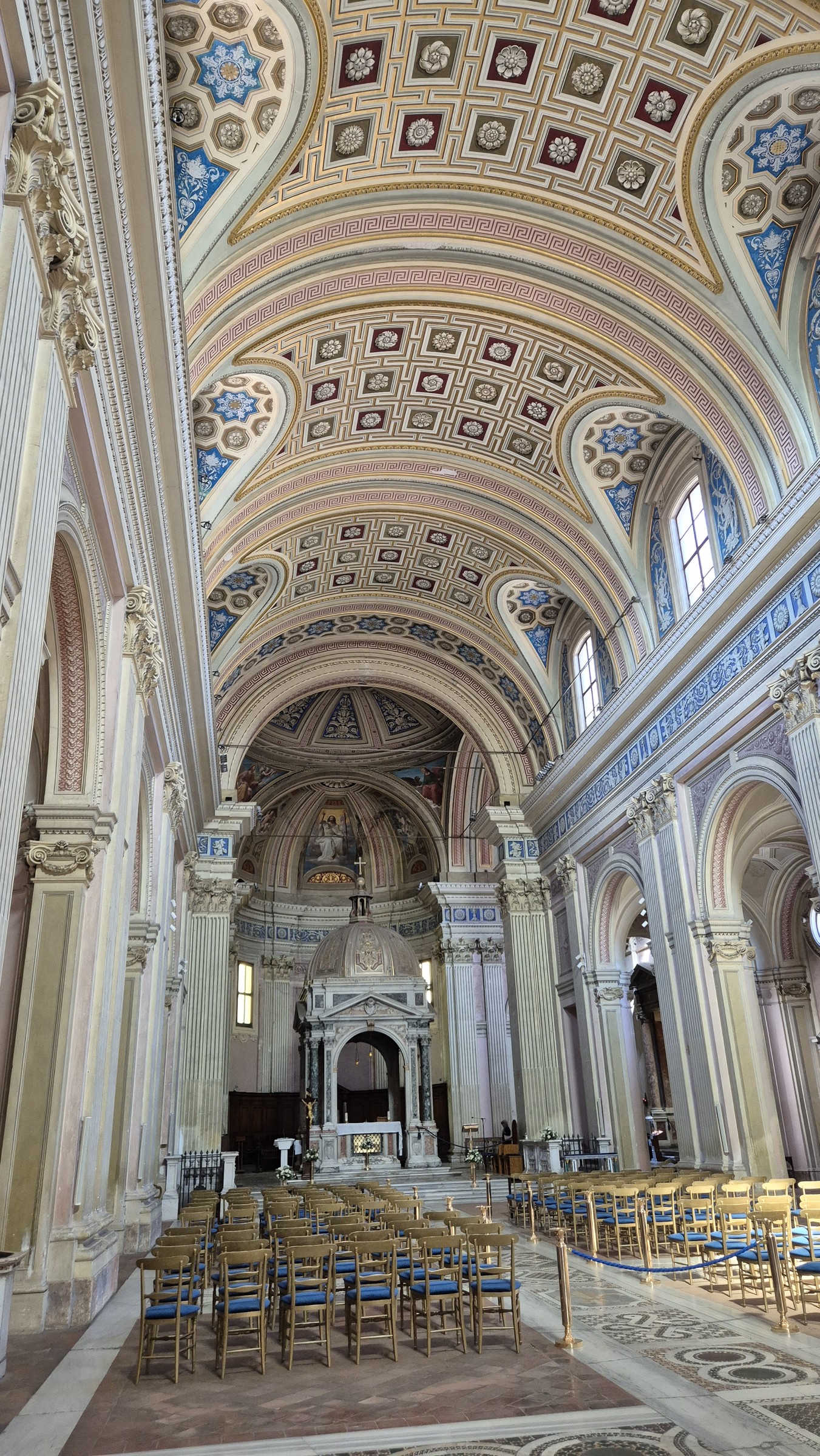
We passed the famous keyhole in the gate of the Knights of Malta, which frames the dome of St Peter’s at the end of a tree-lined avenue. The view through it has existed since the gate and square were redesigned in 1765, but we wondered whether people were already lining up to look through it when Caro’s grandparents lived here 72 years ago.
We continued past the old Basilica of Santa Sabina to the Orange Garden and looked out over Rome.
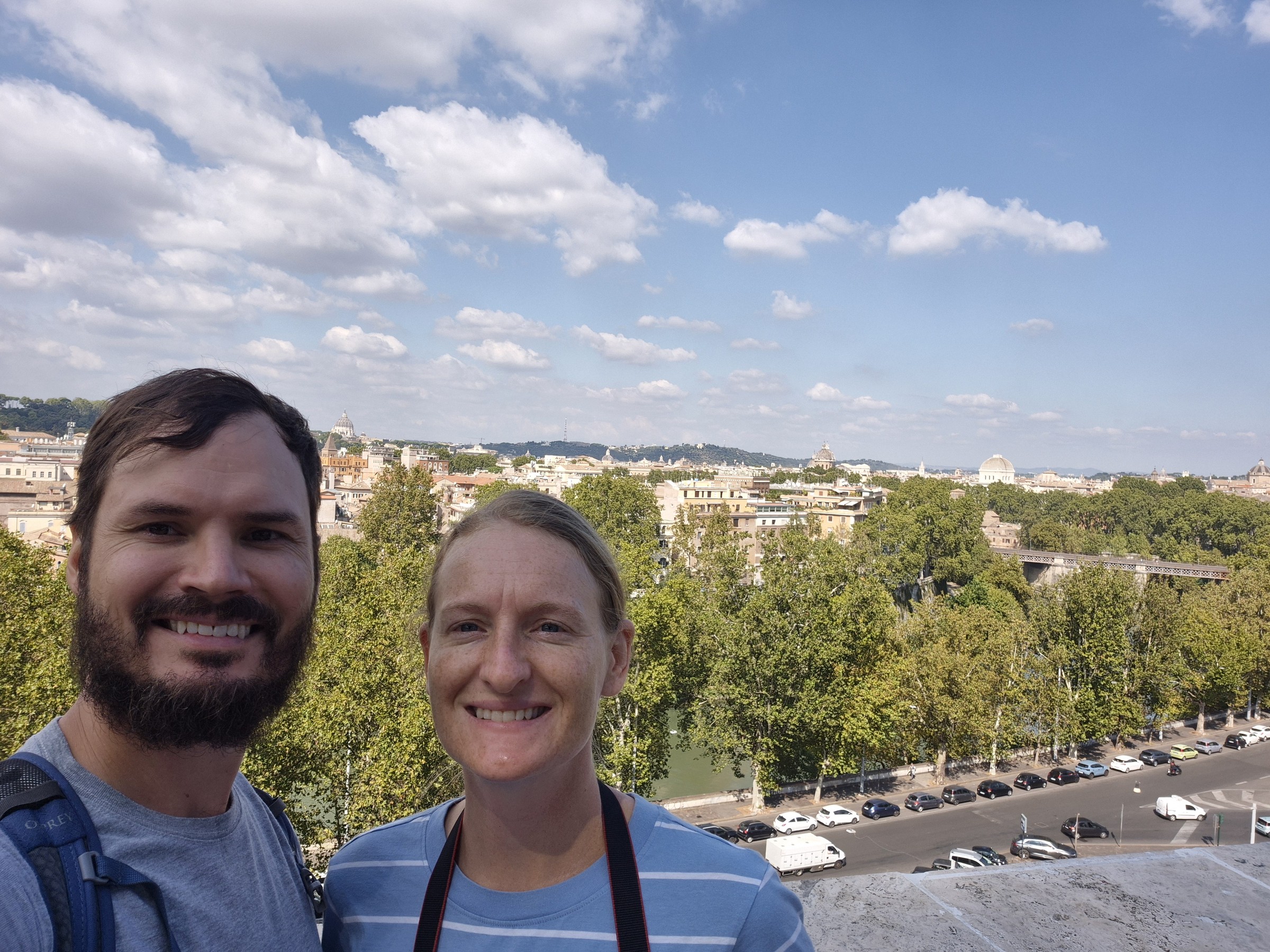
We took the metro back to our accommodation and stopped for lunch at the same coffee shop we had visited that morning. Because it looked local and therefore affordable, we ordered without asking the prices.
We had tramezzini made with ordinary white sandwich bread that was barely toasted, followed by what looked like homemade pasta scooped from an aluminium tray. The pasta was very bitter—perhaps from some particular vegetable—and the pasta alone cost about €9. That was technically in line with other restaurants, but getting a scoop from a tray that looked as if it belonged in a supermarket somehow felt as if it should cost less.
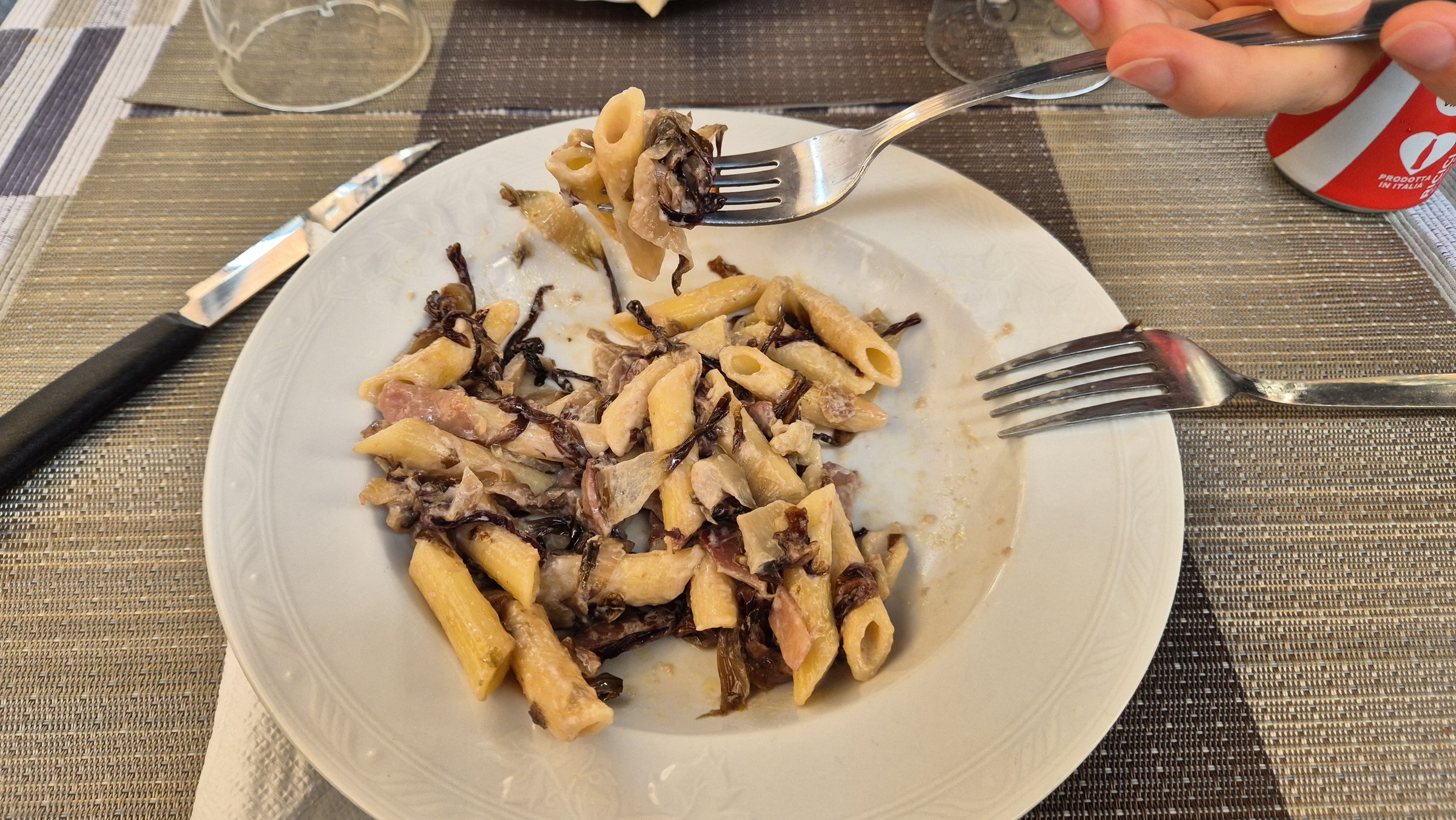
We almost always ask the price first. The one time we decided to be trusting, order like locals and not act like stingy tourists, it bit us.
There is a mall close to where we are staying. While Hugo caught up on work, Caro went there to buy milk and returned with a bag of things.
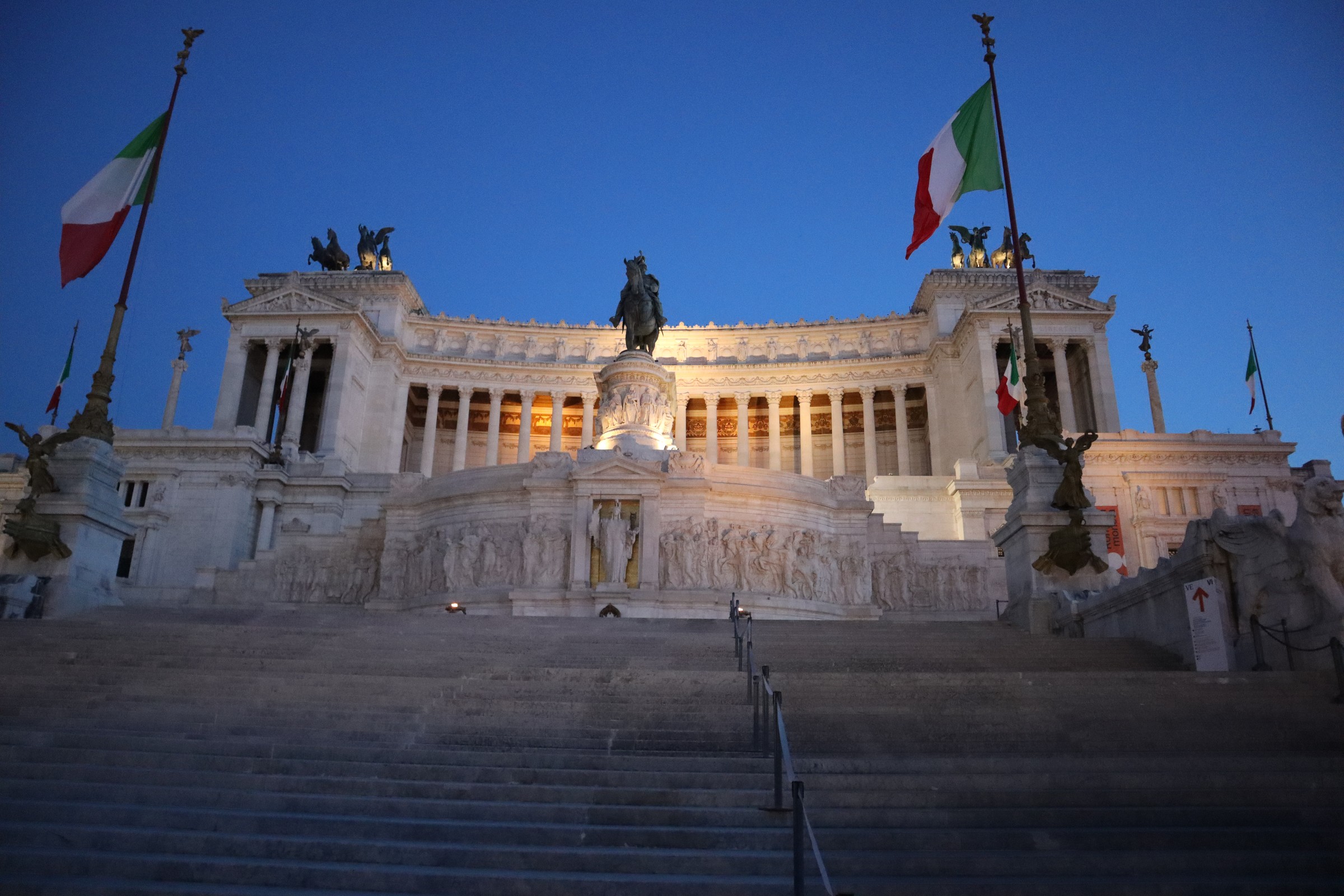
We did laundry, then at 18:00 caught a bus that dropped us in front of the Monument to Victor Emmanuel II. Also called the Vittoriano or Altare della Patria, it was built to honour the first king of a unified Italy and inaugurated in 1911. It also contains Italy’s Tomb of the Unknown Soldier.
We walked to the Trevi Fountain. The present Baroque fountain was begun in 1732, designed by Nicola Salvi and completed in 1762. It marks the end point of the ancient Aqua Virgo aqueduct.
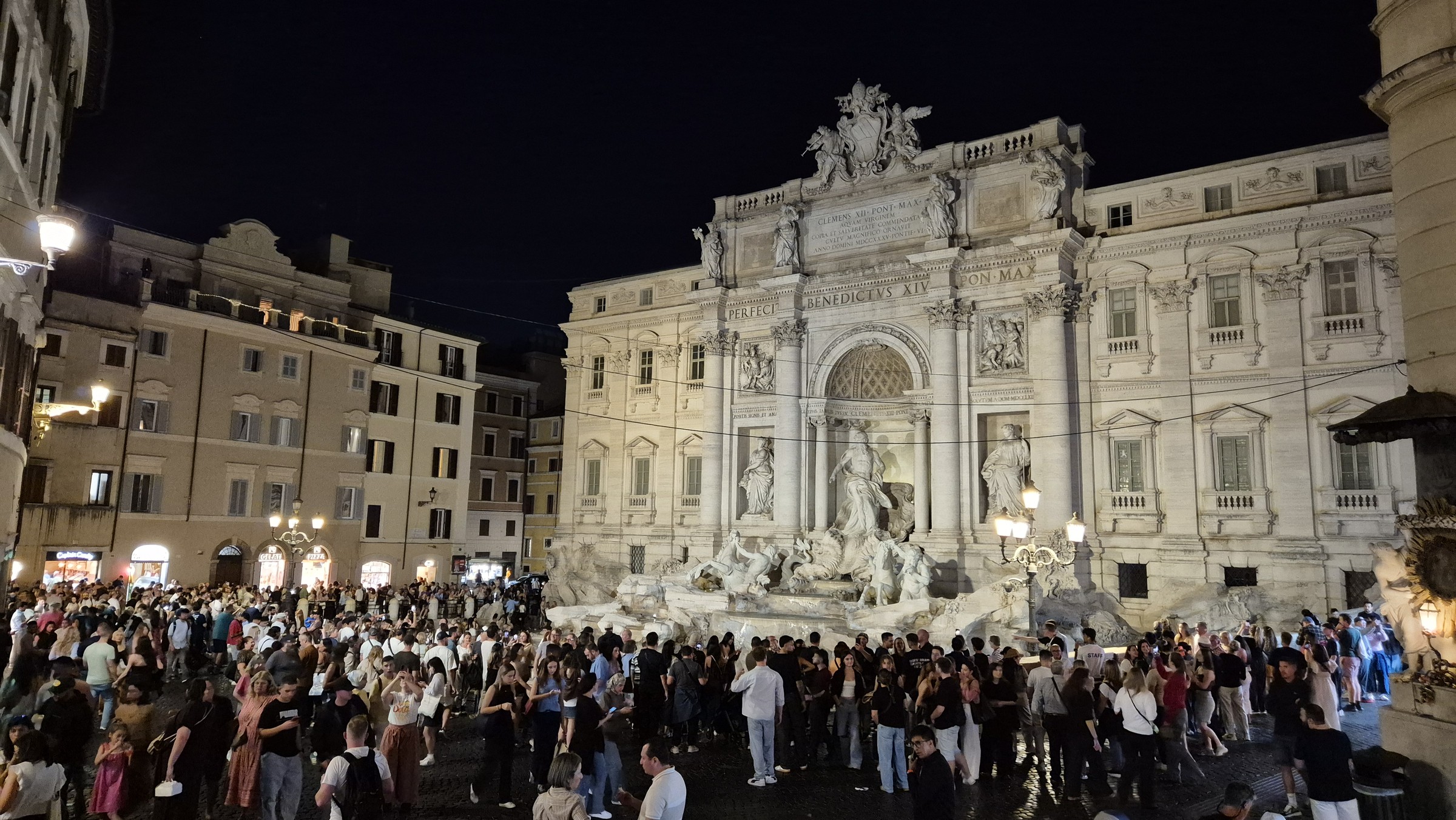
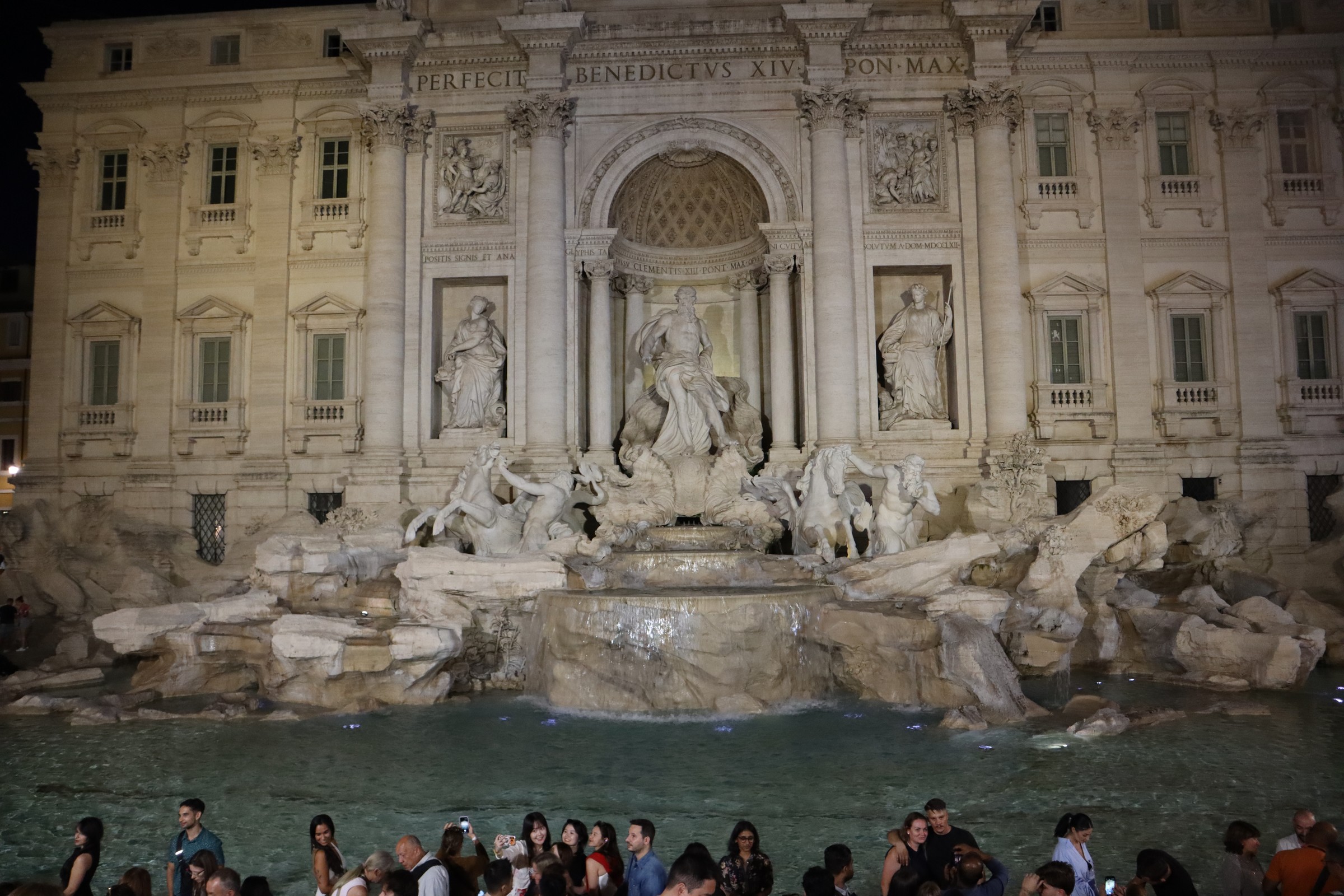
You now have to pay €2 to stand in the area right next to the fountain. A guard kept blowing a whistle and signalling at people to stop doing something, although we could not work out what they were not allowed to do. To say there were a lot of people would be an understatement.
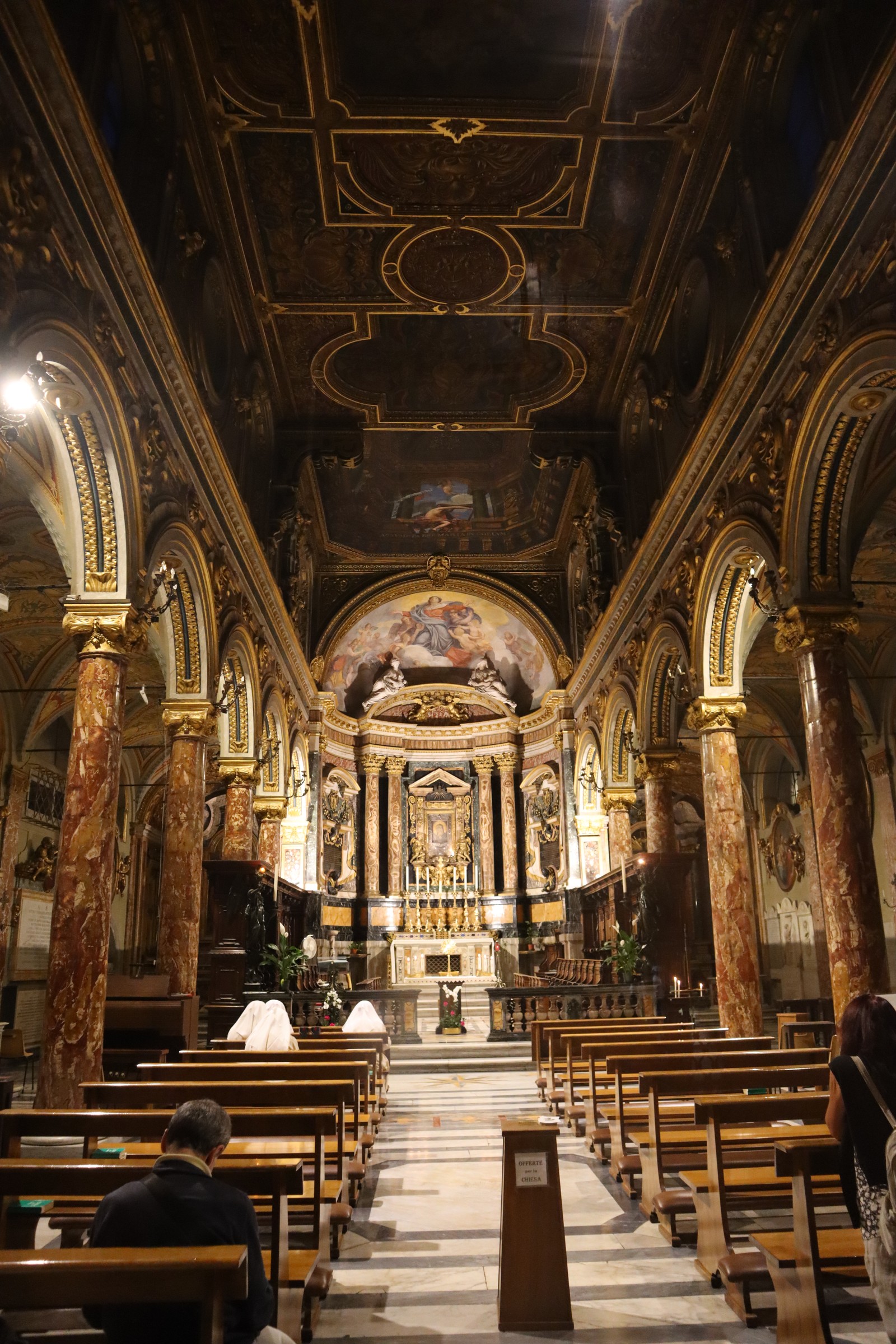
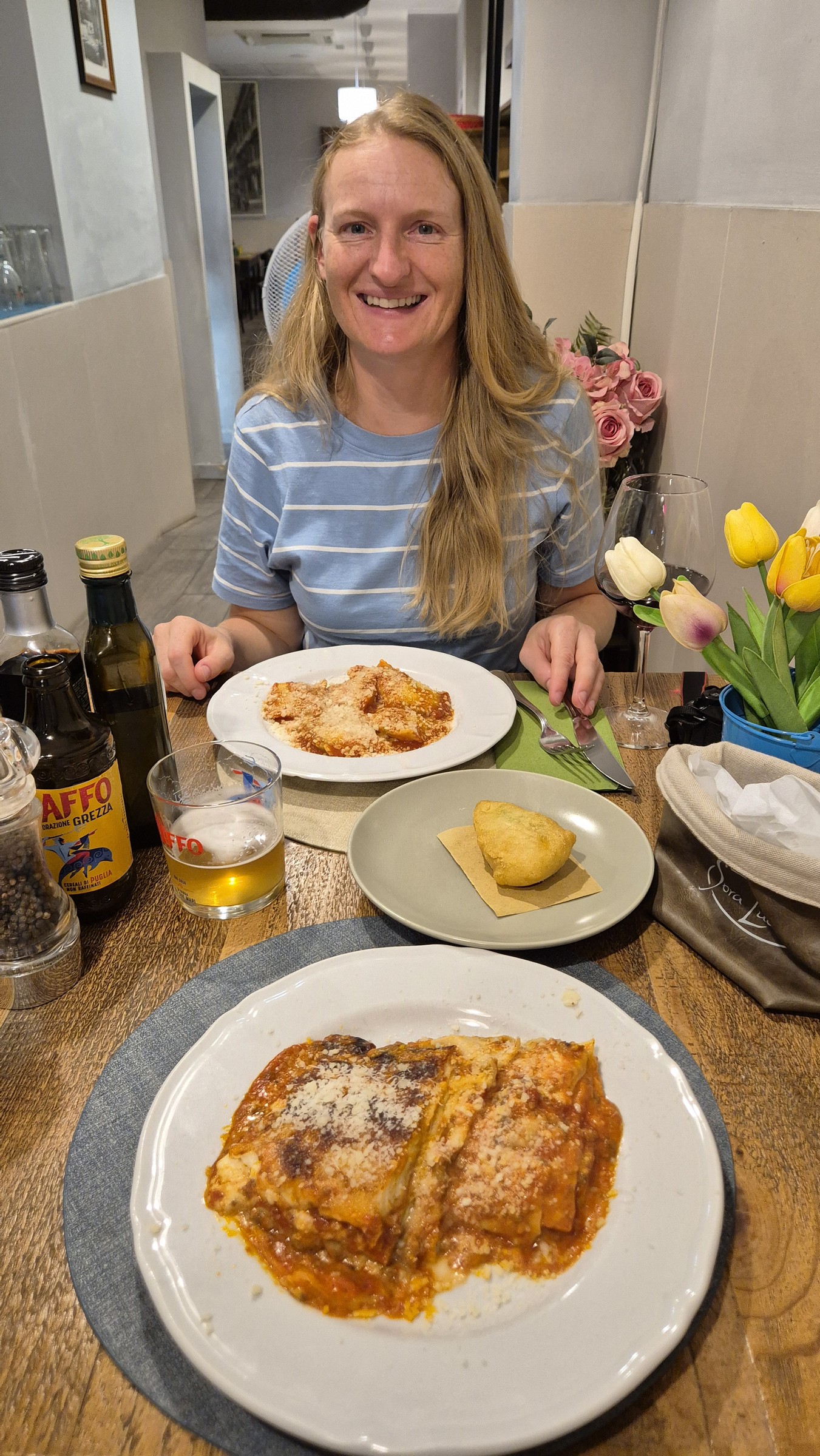
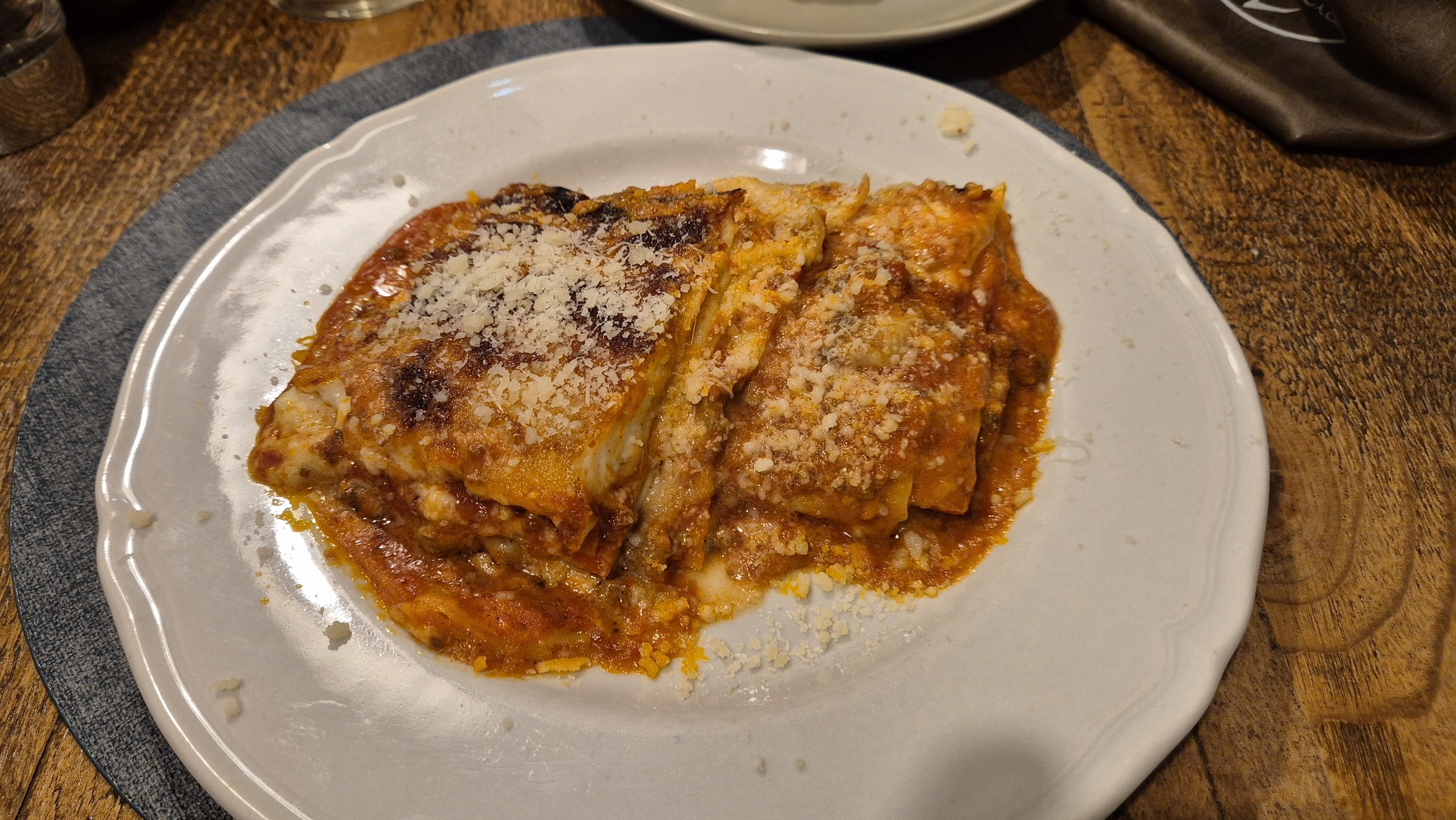
We looked inside the Church of Saints Vincent and Anastasius opposite the fountain, then headed to dinner. We had lasagne and spinach-and-ricotta ravioli.
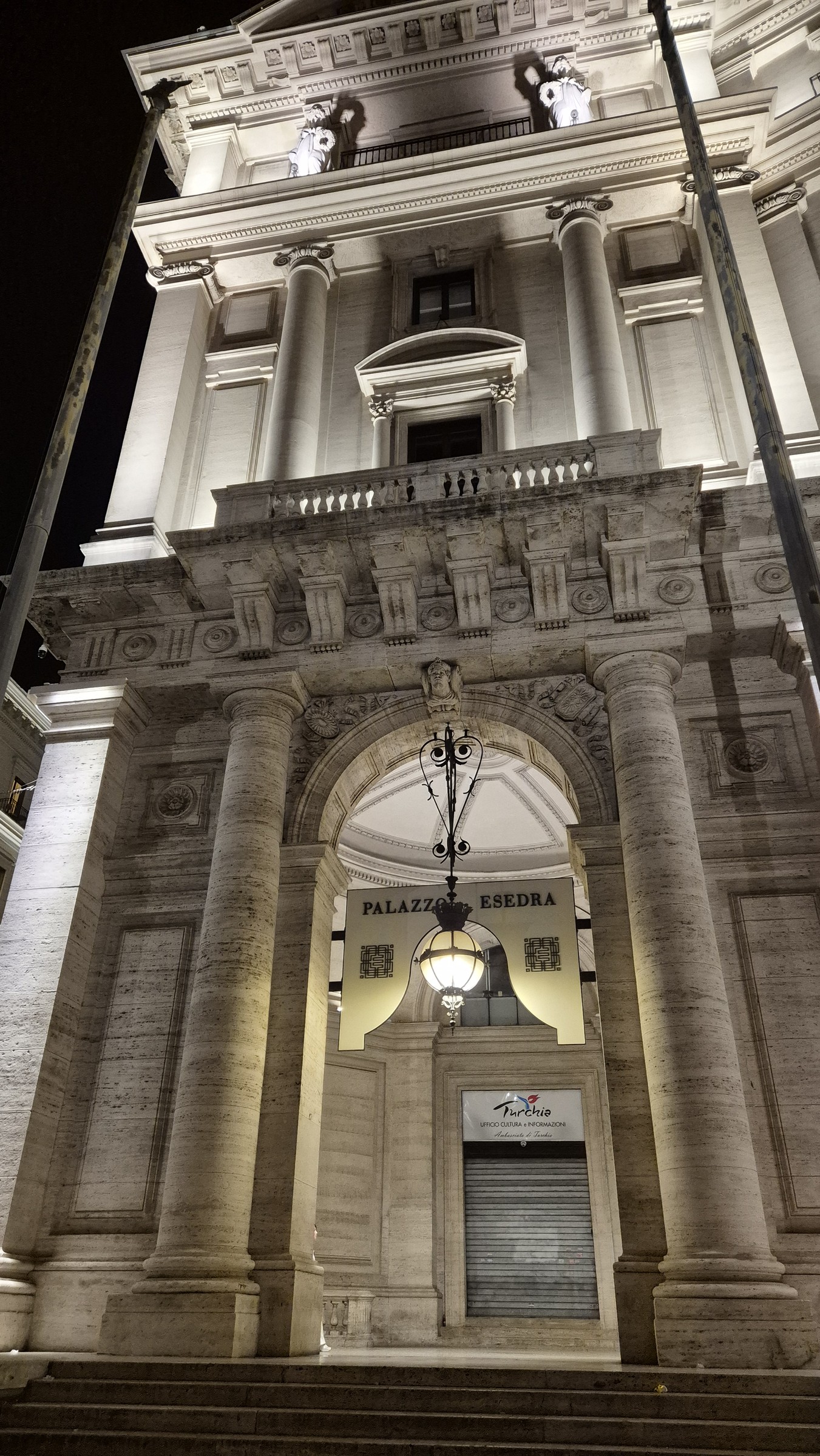
After dinner we went to Piazza della Repubblica. Unfortunately, both the water and the lights illuminating the Fountain of the Naiads were off.
We headed home.
Leave A Comment