
We had planned to take the train from Castellammare del Golfo to Palermo. We generally prefer travelling by train, even if getting to the train is sometimes more complicated than the actual journey.
On Monday we checked the schedule and saw that there was a train at around 09:00 and then nothing again until 14:00. Our original plan was to make our own way to the station, take the early train and then find somewhere in Palermo to wait until we could check in.
Our host messaged to ask whether we had organised the bus or train and offered to take us to the station. Unfortunately, she first had to serve breakfast to her other guests and could not take us in time for the 09:00 train.
We also checked the buses and found departures at 11:30 and 12:30. Since the next guests were only arriving that evening, our host suggested that we stay in the apartment until 11:30. She would then collect us and take us to the bus station for the 12:30 bus.
This worked out well because Hugo could attend his morning meeting and do some work instead of rushing to leave early. We had the leftover pizza from the previous evening for breakfast and slowly packed everything.
Hugo was still working when our host arrived. Caro was ready, but Hugo had to close his laptop, put on his shoes and grab the last of his things before heading out.
She dropped us at the bus station, where we realised that we still needed to buy tickets. There was no ticket office, so Hugo checked online and discovered that the 12:30 bus was sold out.
We stood next to the road with our backpacks, trying to decide what to do, when a man noticed us and pointed towards somewhere that apparently sold tickets. With a combination of Italian, English and hand gestures, he told us to walk three streets and turn right.
We eventually found a small shop that seemed to be a combination of tobacconist, printer and ticket office. The woman checked her system and confirmed that the 12:30 bus was full. The next available bus was only at about 16:30.
We asked whether she could sell train tickets. She opened a different system and, before we had entirely worked out what she was doing, told us that she could give us two tickets for the 14:00 train.
The tickets cost €22. The bus would only have cost about €11 or €12 for both of us, but at least we now had a way to Palermo.
The problem was that Castellammare del Golfo station is far outside town. It was about a 40-minute walk from where we were standing, mostly along a busy road without proper pavements. Walking there with our backpacks in the midday heat did not seem like a very good idea.
We still had almost two hours before the train, so we sat at a café across the road while trying to organise a lift.
Caro went inside while Hugo stayed at one of the outside tables and continued working on his phone. She was already near the counter, but waited for someone to make eye contact or indicate that it was her turn. Nobody did.
An older woman who arrived after her noticed what was happening and pointed out that Caro had been there first. When Caro explained that she only spoke English, the woman made it clear that waiting politely was not going to work. She needed to move forward and start speaking, otherwise people would simply continue ordering around her.
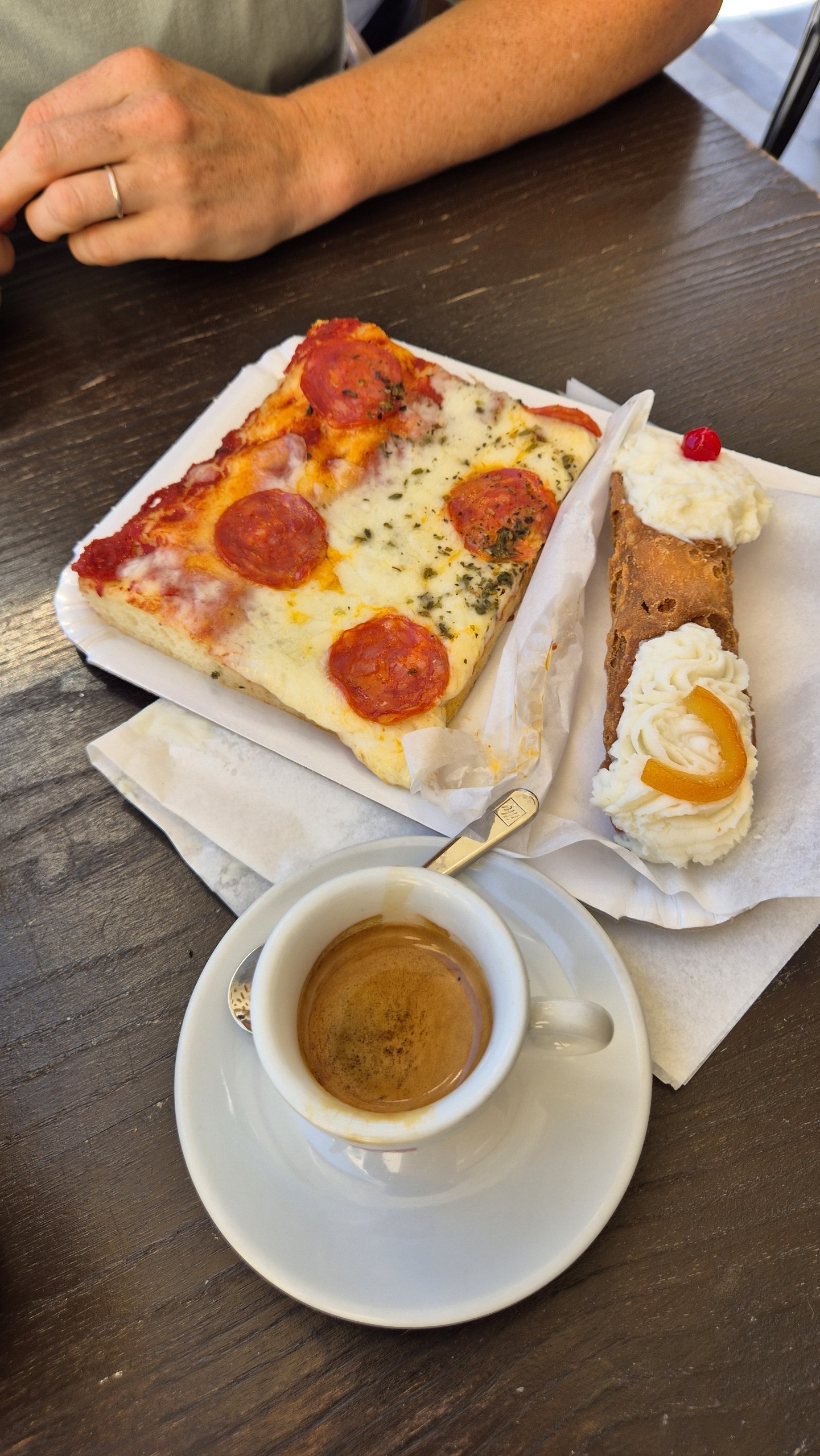
Caro then managed to order a ricotta cannolo and a trancio di pizza Margherita, a thick tray-baked slice with tomato and mozzarella.
She also asked for coffee with milk, meaning a black coffee with milk added. They did not understand what she wanted. Only afterwards did she realise that asking for a cappuccino—an actual Italian word—would probably have been much easier.
Uber showed a taxi to the station for between €10 and €13. We requested it, but nobody accepted the trip and Uber eventually cancelled it. We then tried a more expensive option for about €24, but the same thing happened.
At about 12:38 we walked back to the bus station. The 12:30 bus was still there, so we thought it might be worth asking whether they could perhaps fit us in. We already had train tickets, but taking the bus would save us from having to find a taxi.
The bus was completely full and the driver made it very clear that nobody else was getting on.
There was a taxi sign nearby but no taxis. Hugo found a local number and started messaging them on WhatsApp with the help of Google Translate. Instead of simply saying whether they could take us, they wanted to know whether we were going to the airport afterwards, how many people there were and various other details. It felt as though they were first trying to establish whether the trip might turn into a more valuable fare.
While Hugo was still messaging the taxi company, the man who had earlier directed us to the ticket shop appeared again in an ordinary, unmarked car. He stopped and asked where we wanted to go.
“Train station.”
He said he could take us for €20. We offered €10. He said no. We offered €15. He again said no and walked away.
We eventually called him back and accepted the €20. The back of the car was full of groceries and other things, and there was nothing to indicate that he was an official taxi driver. He did, however, take us directly to the station, where we paid him €20 cash.
Our €22 train trip had now become a €42 train trip.
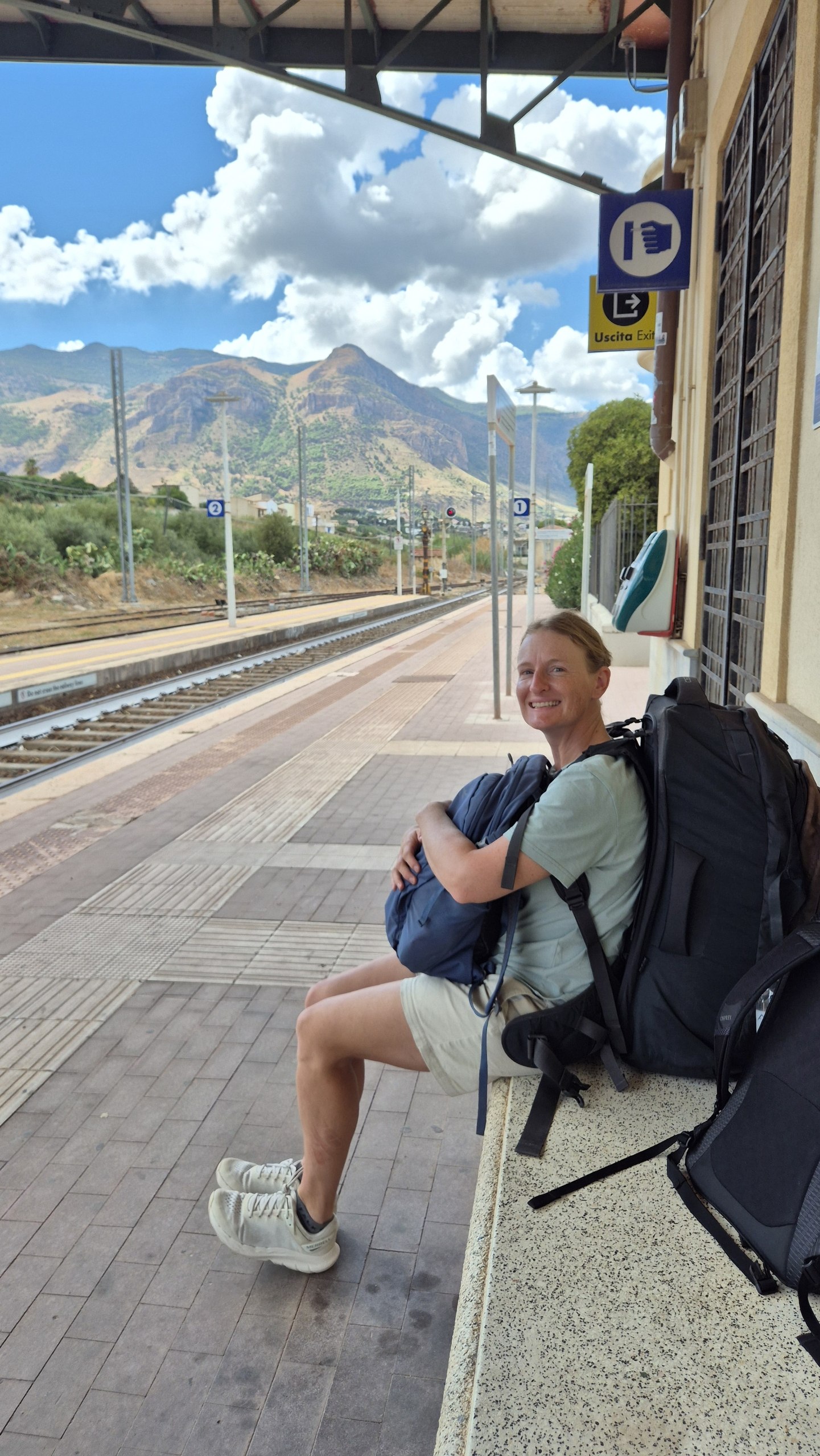
We arrived at Castellammare del Golfo station at about 13:05. It was a tiny station with a locked building and a ticket machine with its smashed screen covered in tape. Apart from us, there were only two other people waiting. Their presence was at least some indication that trains still stopped there.
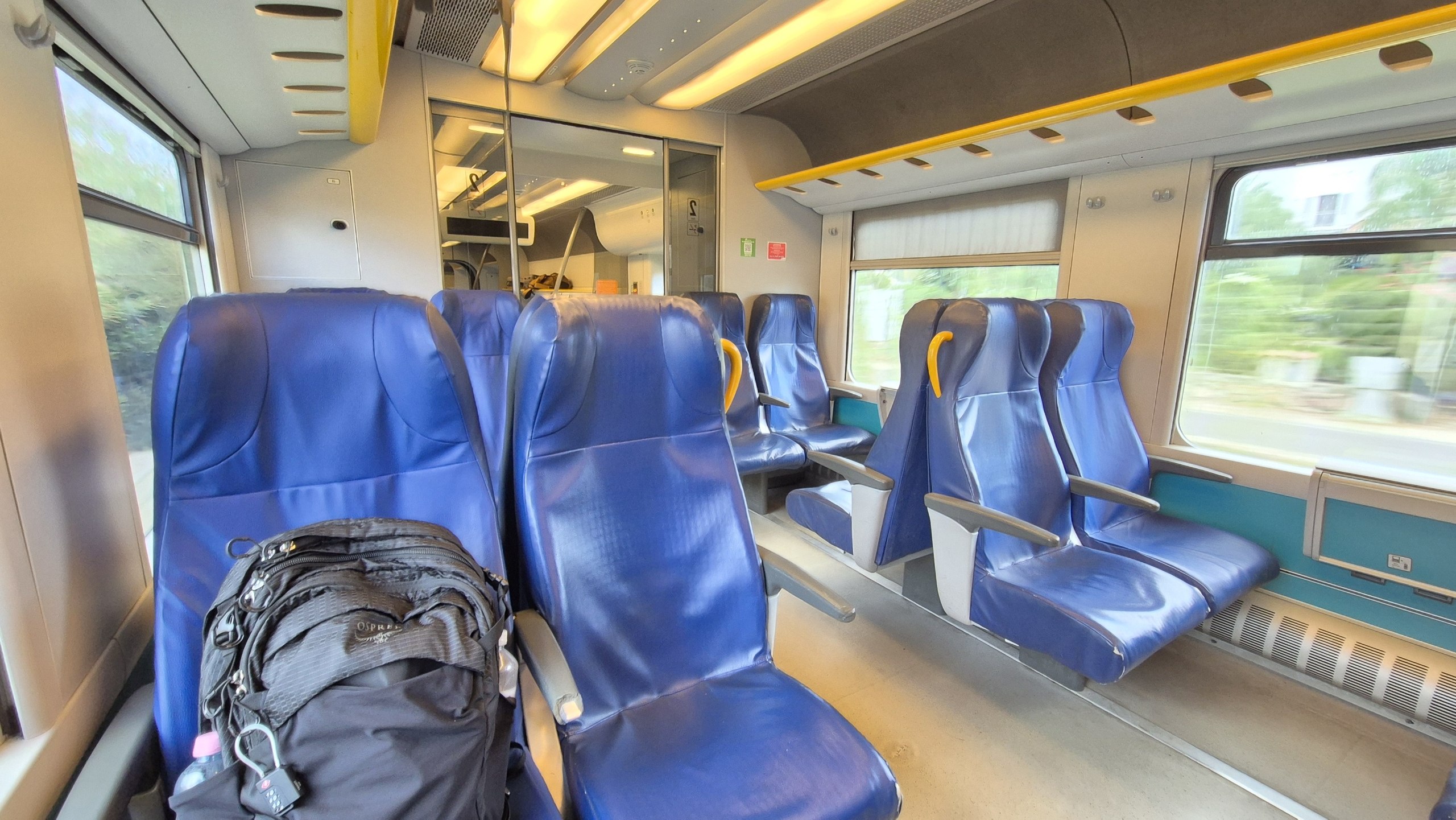
The train arrived a little late, but our carriage was almost empty. We had comfortable seats and Hugo had a fold-out tray for his laptop, so he could continue working. After all the effort required to reach the station, the train itself was exactly why we preferred travelling this way.
We had to change trains at Piraineto, where we waited another 45 or 50 minutes for the train coming from the airport.
The second train was much busier. There were already plenty of airport passengers aboard, and more people got on as we approached Palermo until all the seats were occupied and people were standing in the aisles.
Our tickets were for Palermo Centrale, but Google Maps showed that our accommodation was much closer to Palermo Lolli. We confirmed that the train stopped there and decided to get off early.
Because the train only stopped briefly at the smaller stations, we collected our bags at the previous stop and stood waiting at the doors. Lolli turned out to be an underground station, and we climbed back up to street level for our first look at Palermo.
Our guesthouse was about 900 metres away, so we walked.
The neighbourhood was quieter and more neglected than expected. There was graffiti, litter, piles of leaves and an unpleasant smell in places. We also passed someone lying on the ground who appeared to be unconscious. Another person approached and kicked his feet, apparently checking whether he was responsive.
We knew nothing about Palermo yet and could not tell whether we had arrived in a particularly rough neighbourhood or whether this was normal for parts of the city. It was not the best first impression.
There were at least several bakeries with very good-looking pastries in their windows, and the prices appeared more reasonable than in some of the smaller tourist towns.
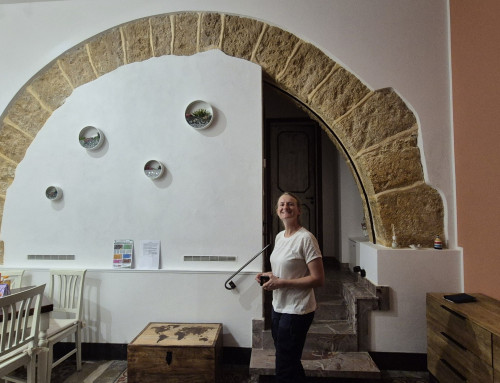
The guesthouse owner had sent detailed self-check-in instructions with photographs, and everything worked as described. Our room was on the sixth floor and there was thankfully a lift, although it was barely large enough for the two of us and our backpacks. Once inside, we could not turn around and just had to stand pressed together until the doors opened again.
The room was clean and comfortable. We put down our bags and lay on the bed for a while. It was somewhere between 15:30 and 16:00, and Hugo still needed to work for another hour or two before we could go out.
Caro had saved a few possible restaurants for dinner, but before leaving we asked George for a quick introduction to Palermo and what we could see during an evening walk. He suggested Via Maqueda, a long pedestrian street through the historic centre with several of the main sights nearby.
We decided to walk along it and choose somewhere to eat along the way. If we did not find anything suitable, we could still go to one of the restaurants Caro had saved.
As soon as we reached the pedestrian section, Palermo changed completely. The streets near our accommodation had been quiet, but Via Maqueda was packed with thousands of people. There were tourists, locals, musicians, street performers, restaurants and food stalls. We had no idea where everyone had suddenly come from.
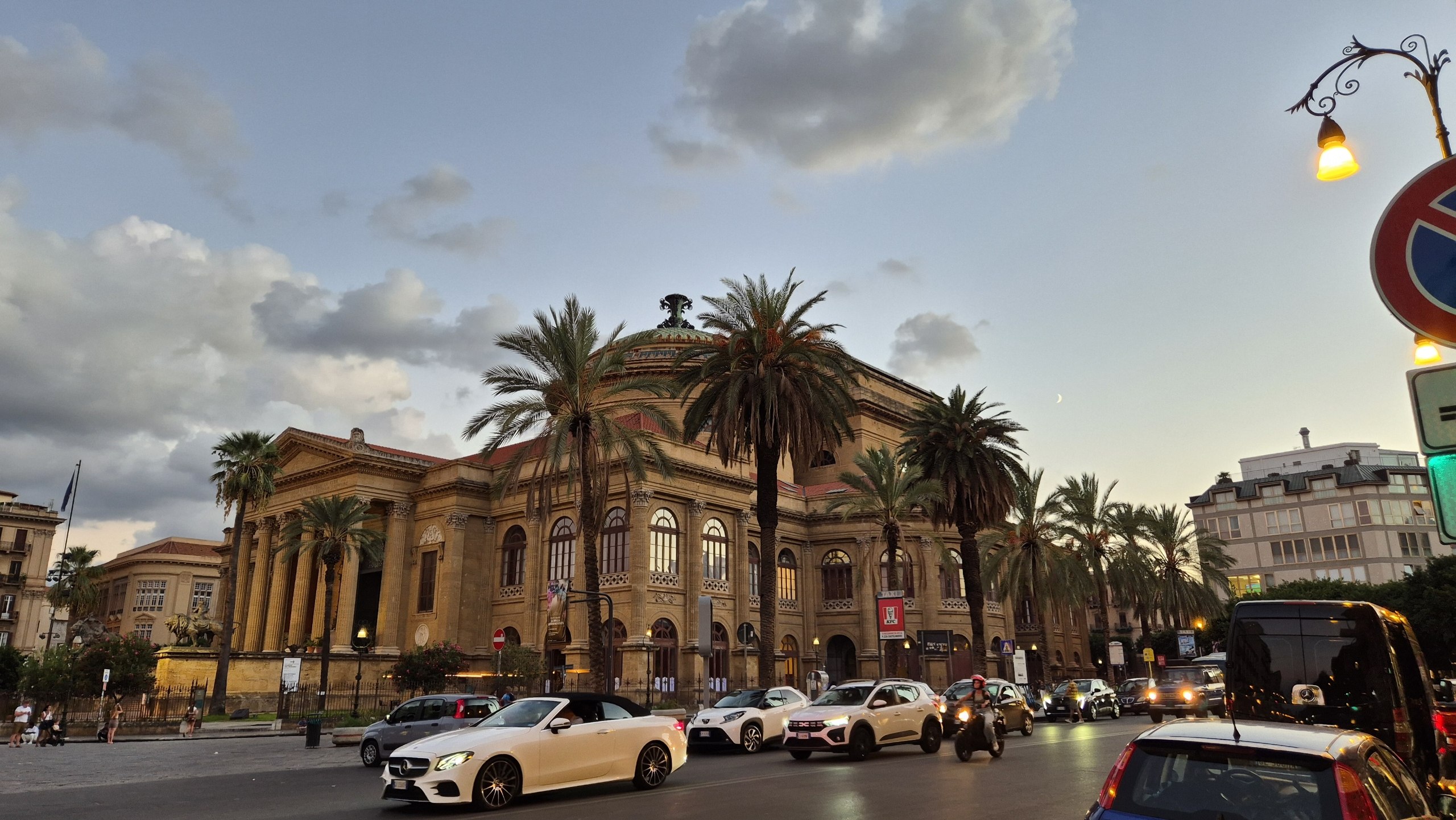
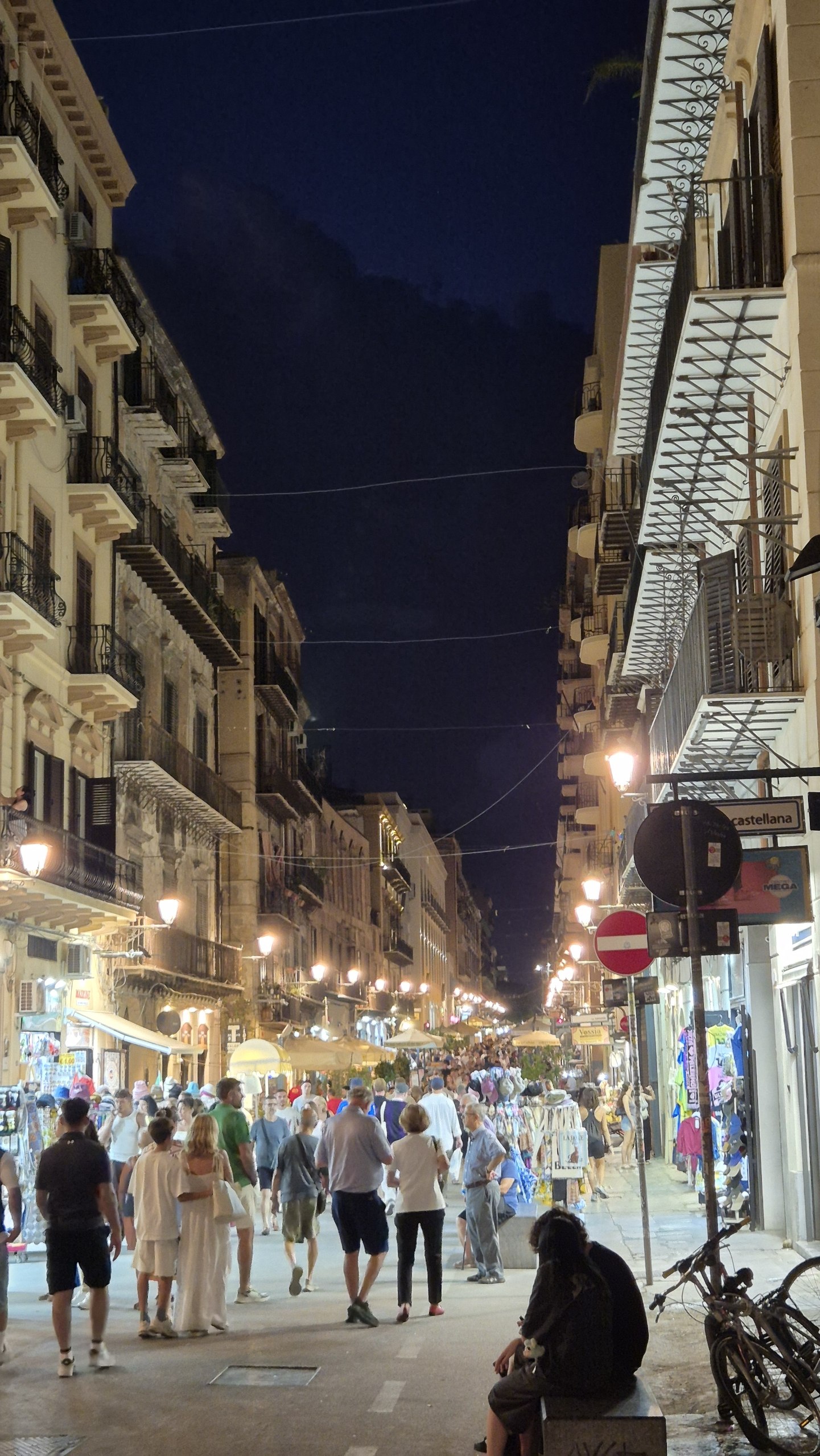
We started with coffee-flavoured gelato. It was not the best gelato of the trip, but it was good enough for our first evening in Palermo.
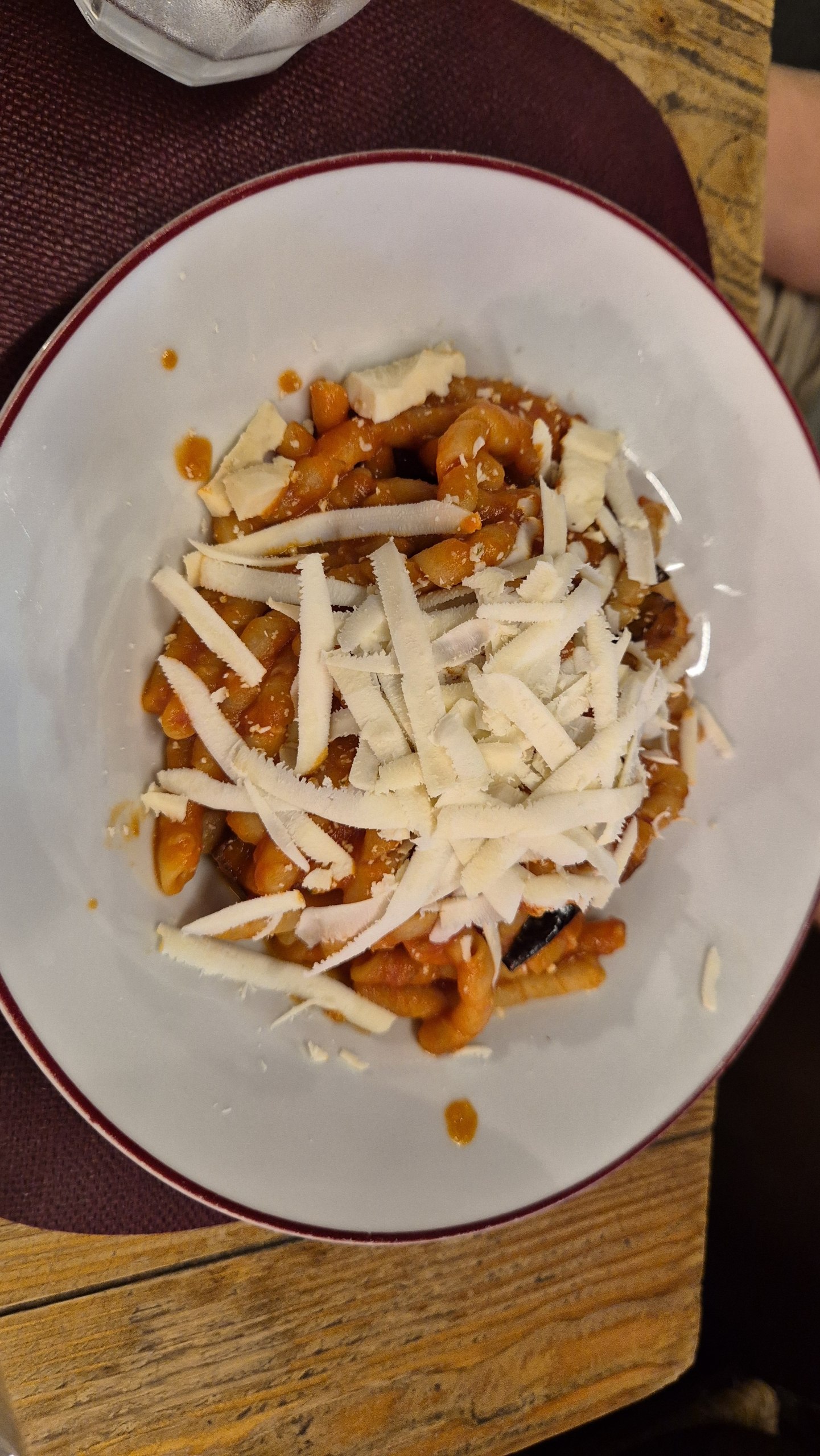
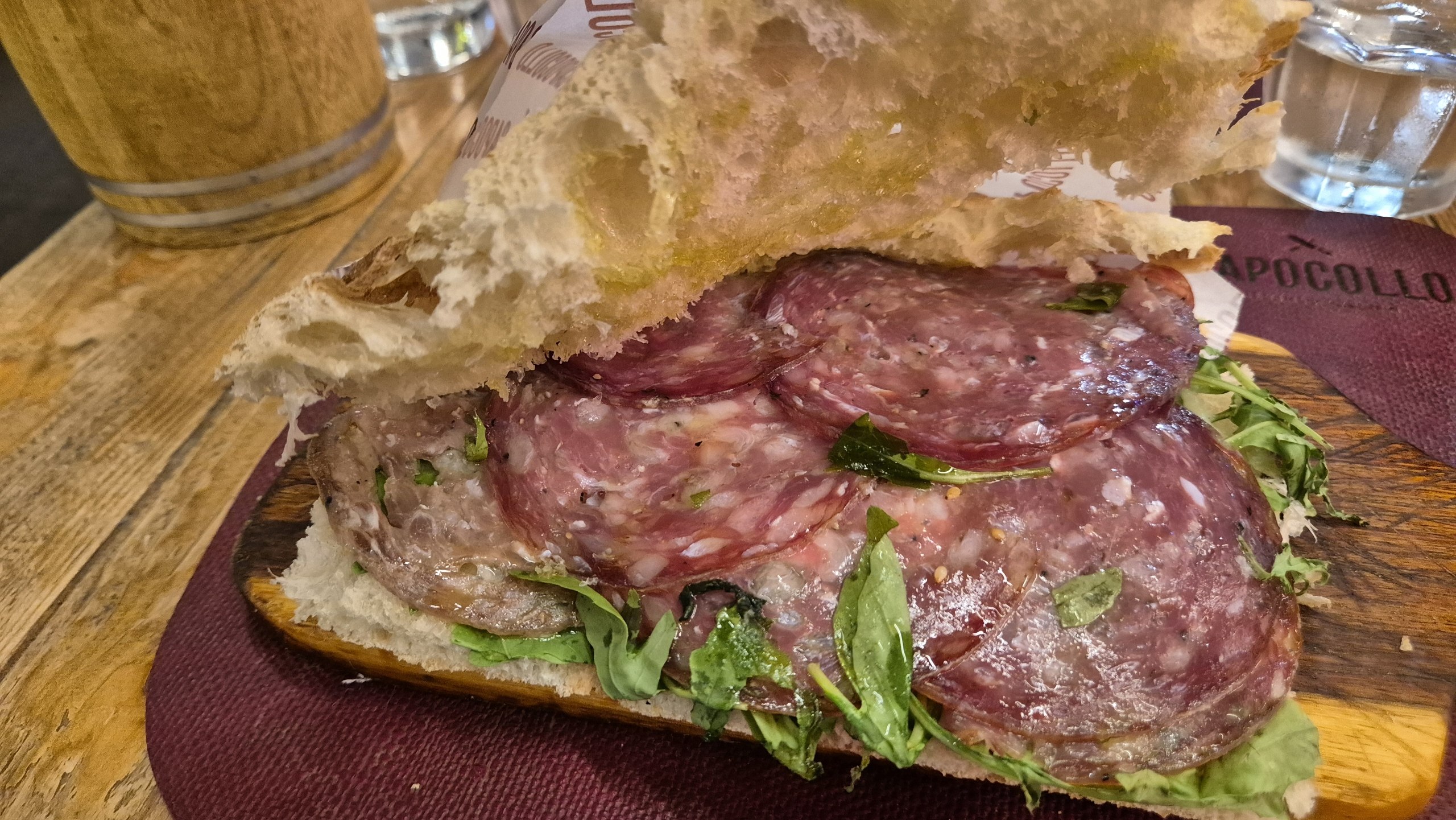
After walking for a while, we became hungry and chose one of the restaurants beside the street. Caro ordered busiate alla Norma, a spiral-shaped Sicilian pasta with tomato and aubergine. Hugo had a panino with Sicilian black-pig salami.
The sandwich was quite good, especially the salami, but Caro’s pasta was disappointing. A restaurant in the middle of one of Palermo’s busiest tourist streets was probably not the best place to expect exceptional homemade pasta.
The people-watching made up for it. There was a continuous stream of people passing our table while buskers and other performers competed for attention along the street.
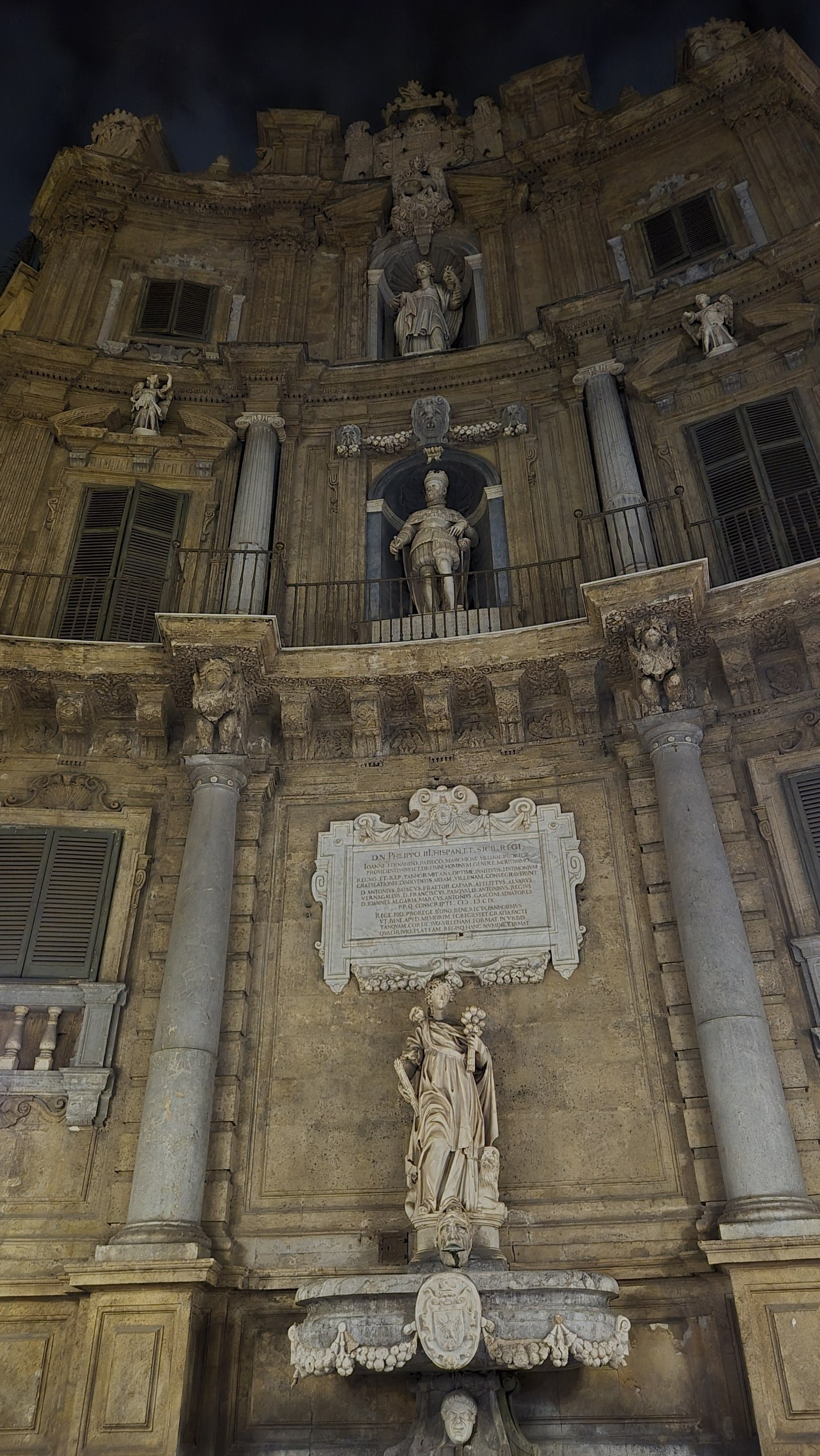
After dinner we continued to Quattro Canti, where Via Maqueda crosses Via Vittorio Emanuele. The four curved façades were built in the early 1600s and mark the four historic quarters of Palermo. Each one is decorated with a fountain and statues representing the seasons, Spanish kings and patron saints.
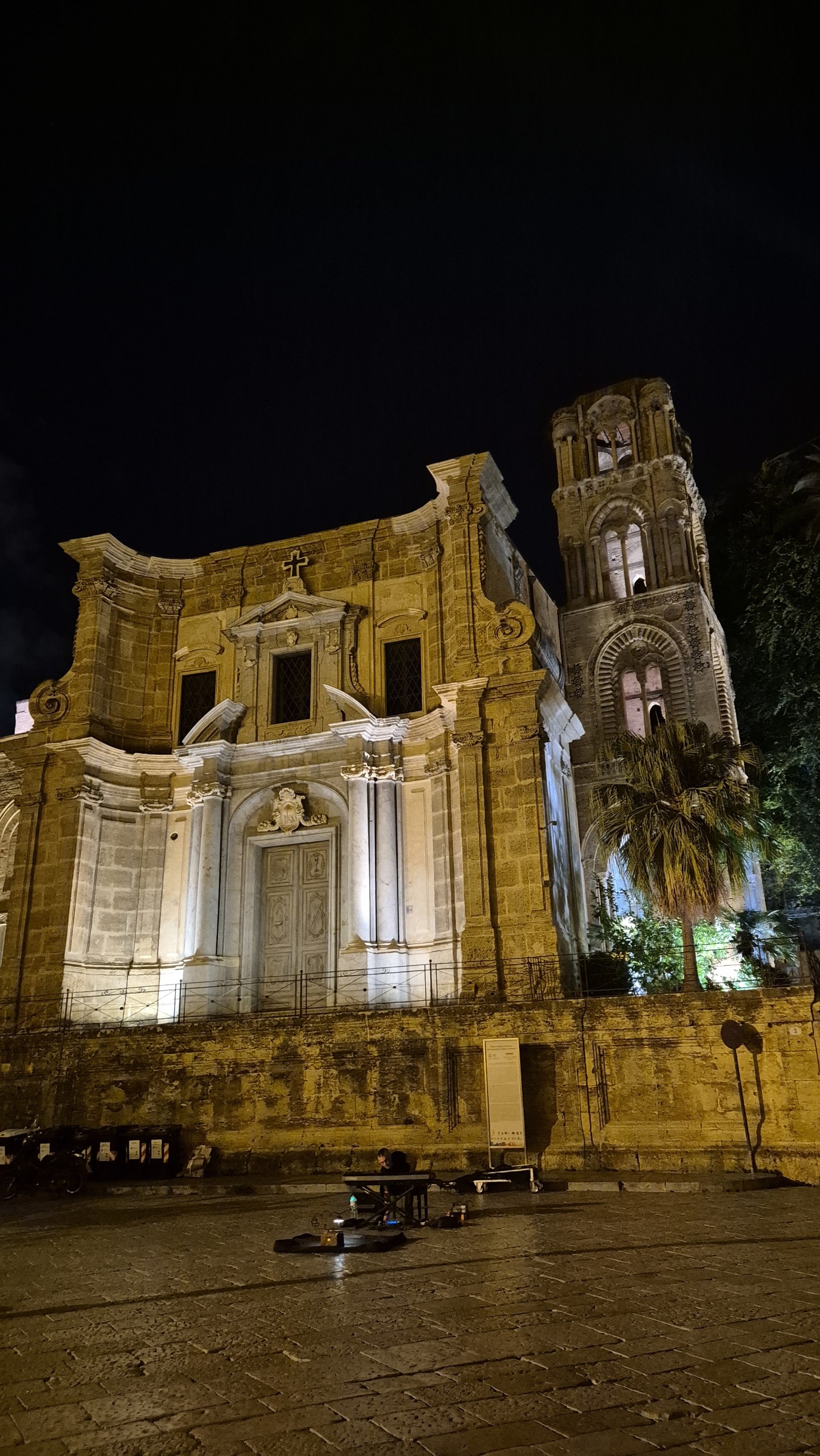
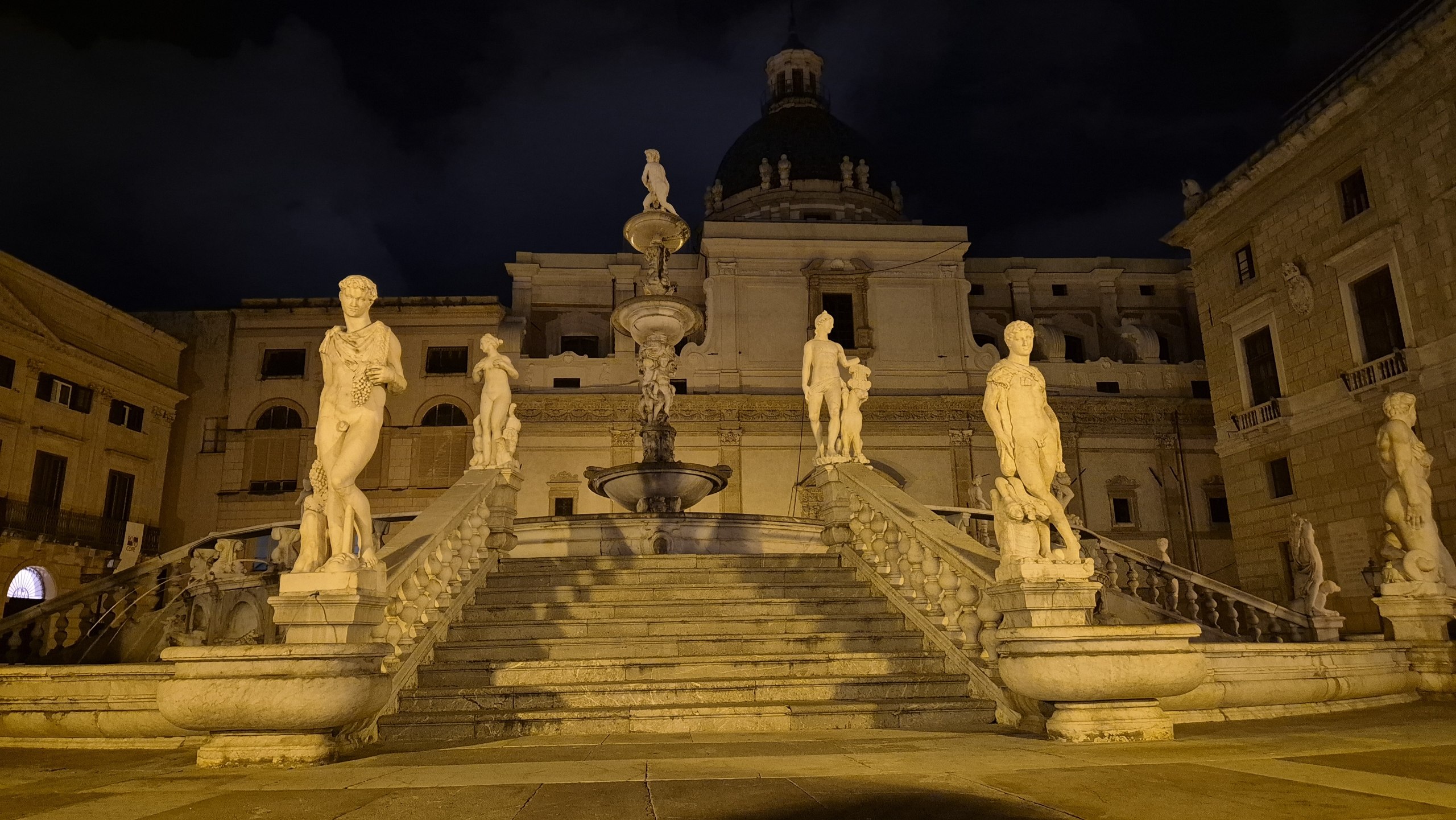
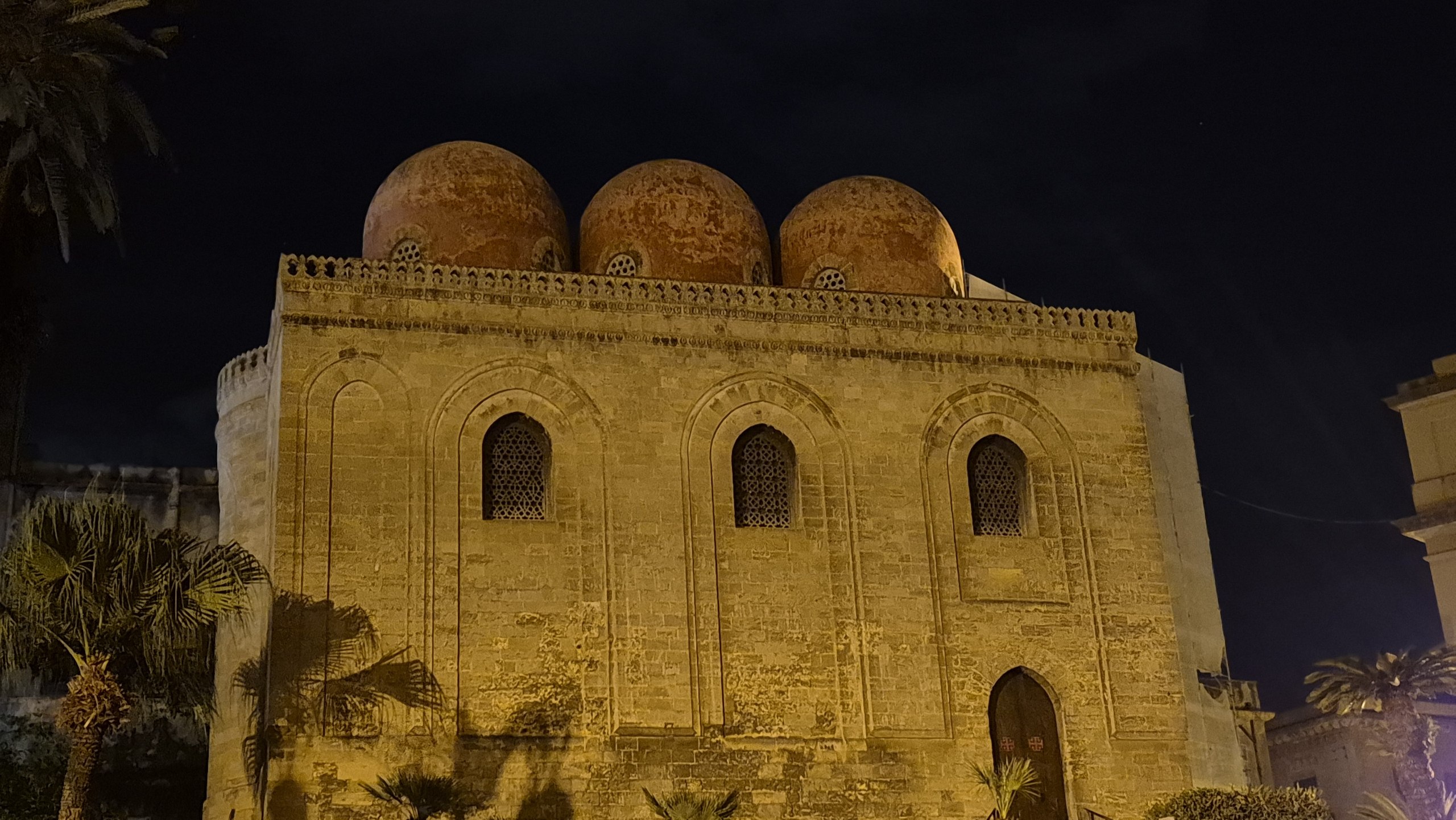
From there we walked to Piazza Pretoria and its large fountain, and then towards Piazza Bellini. We saw the churches of San Cataldo and Santa Maria dell’Ammiraglio, better known as La Martorana, from outside. They form part of Palermo’s UNESCO-listed Arab-Norman monuments. The churches were already closed, but someone was playing the piano outside in the square.
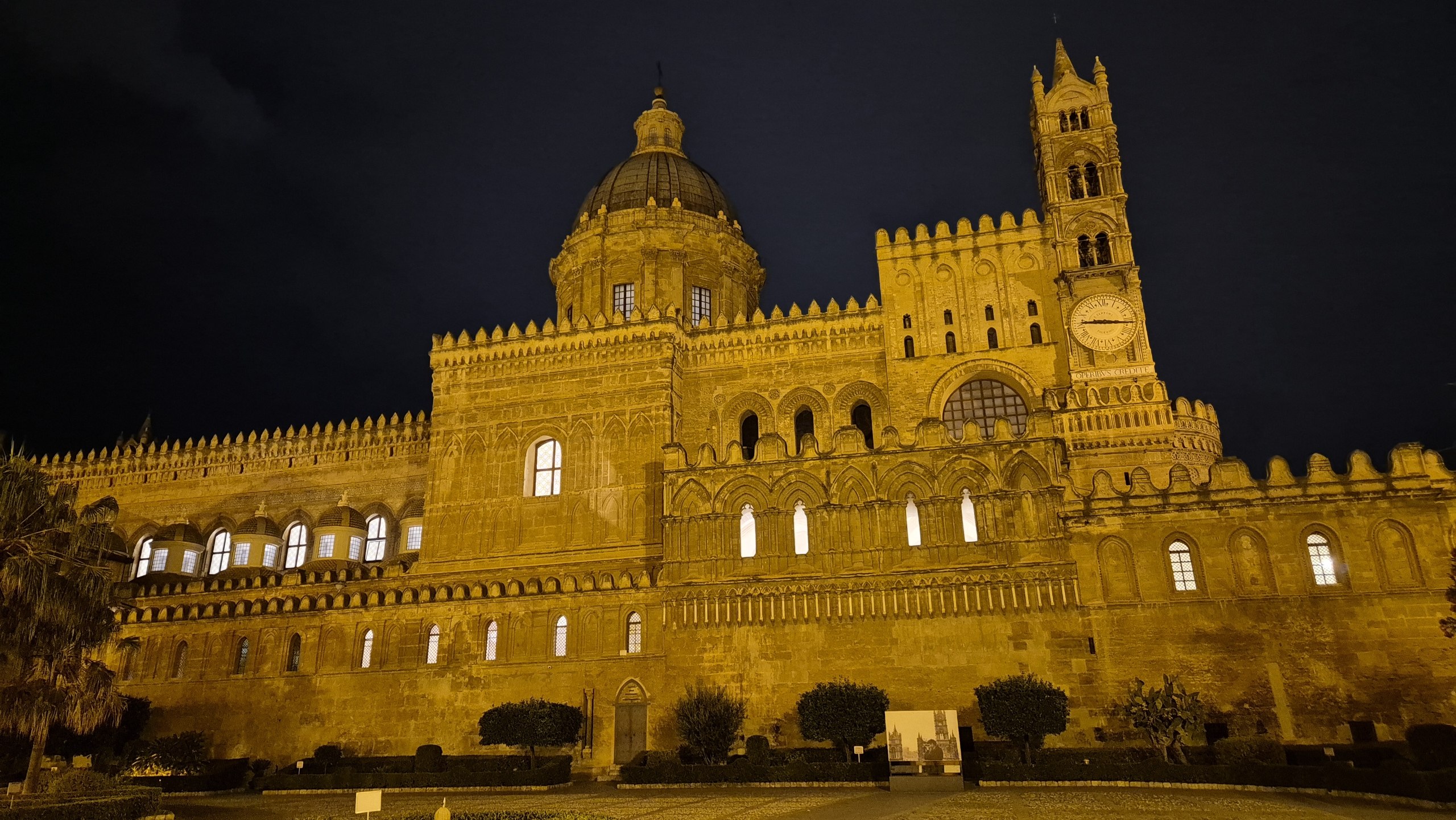
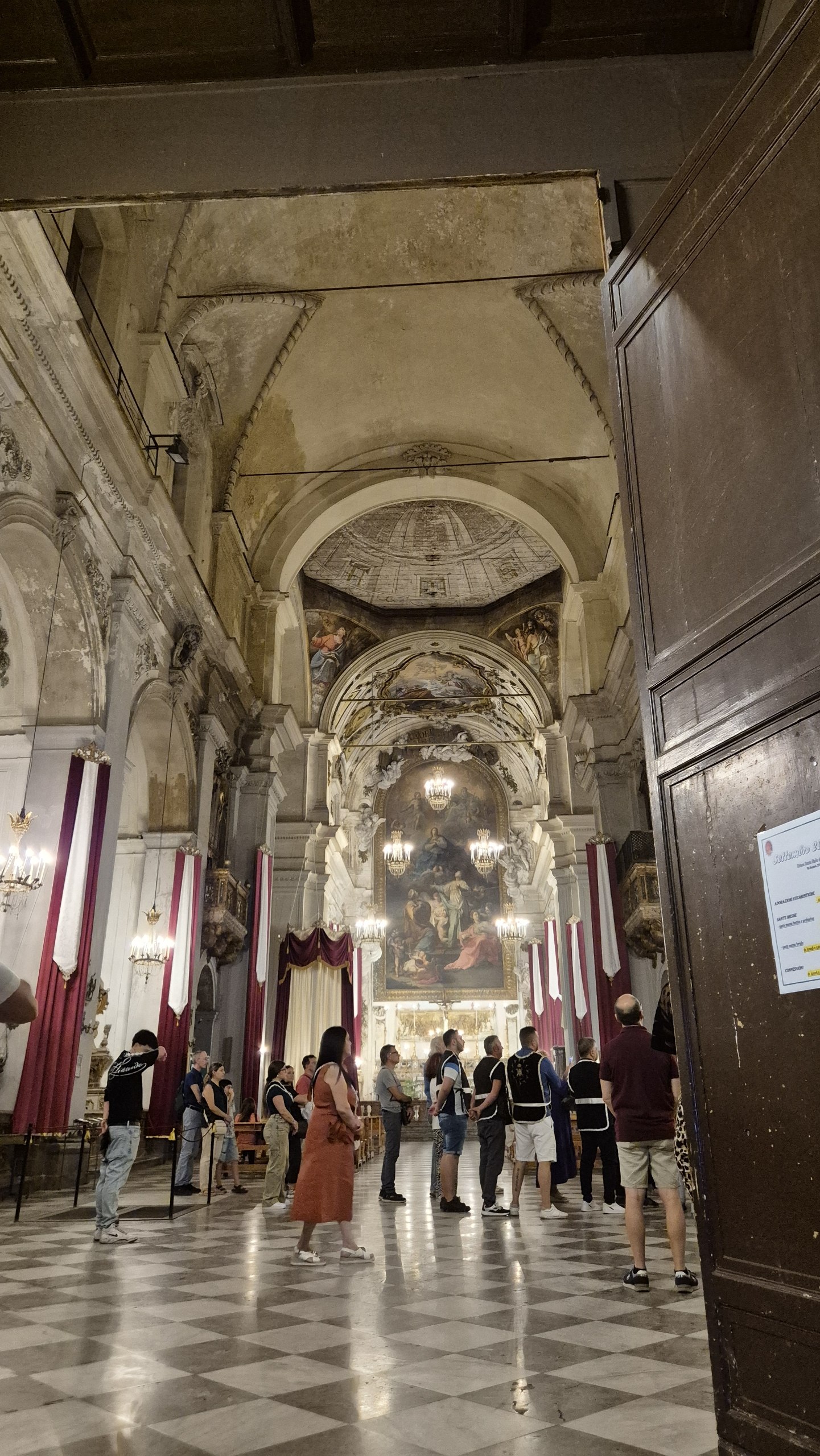
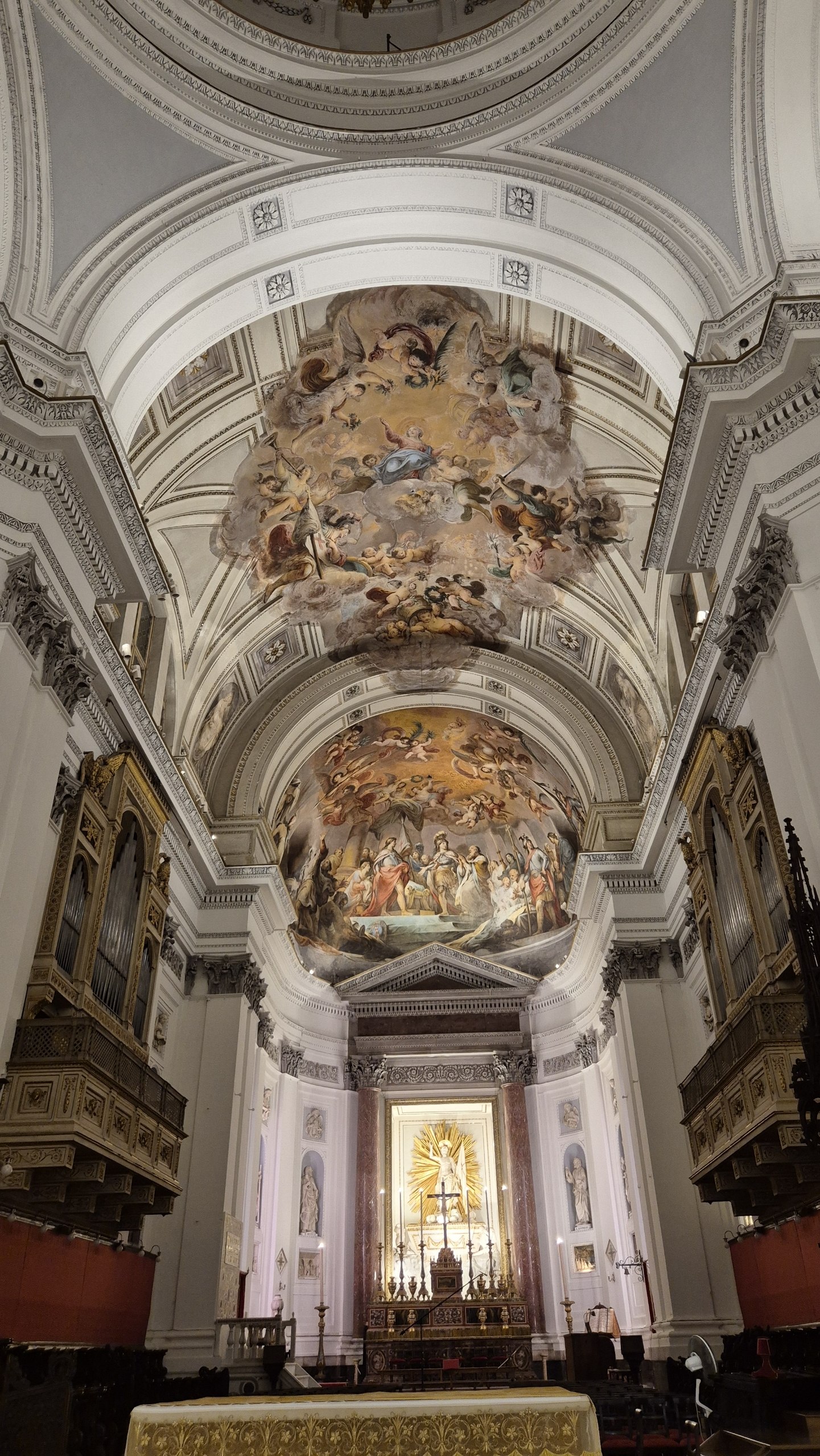
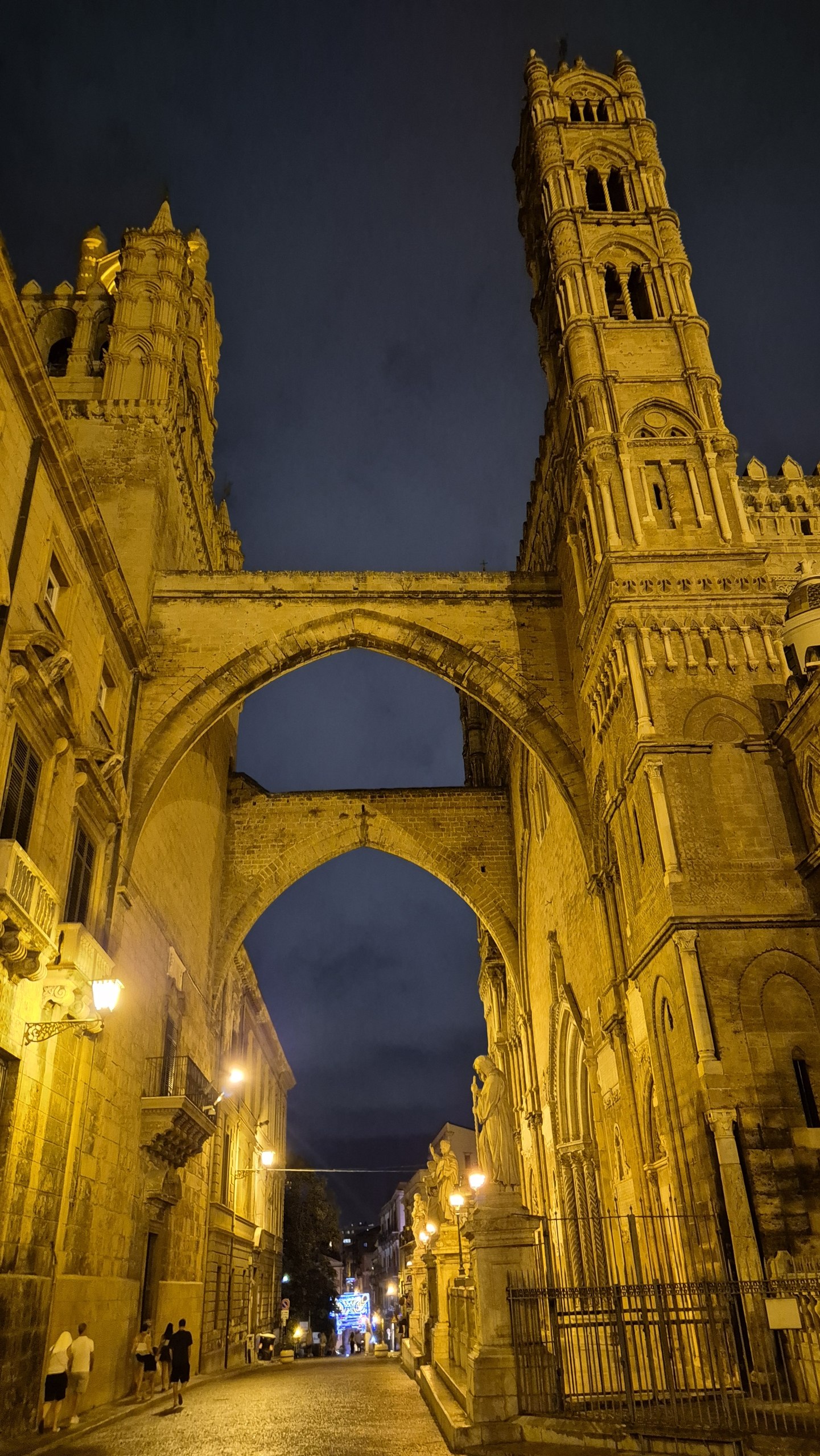
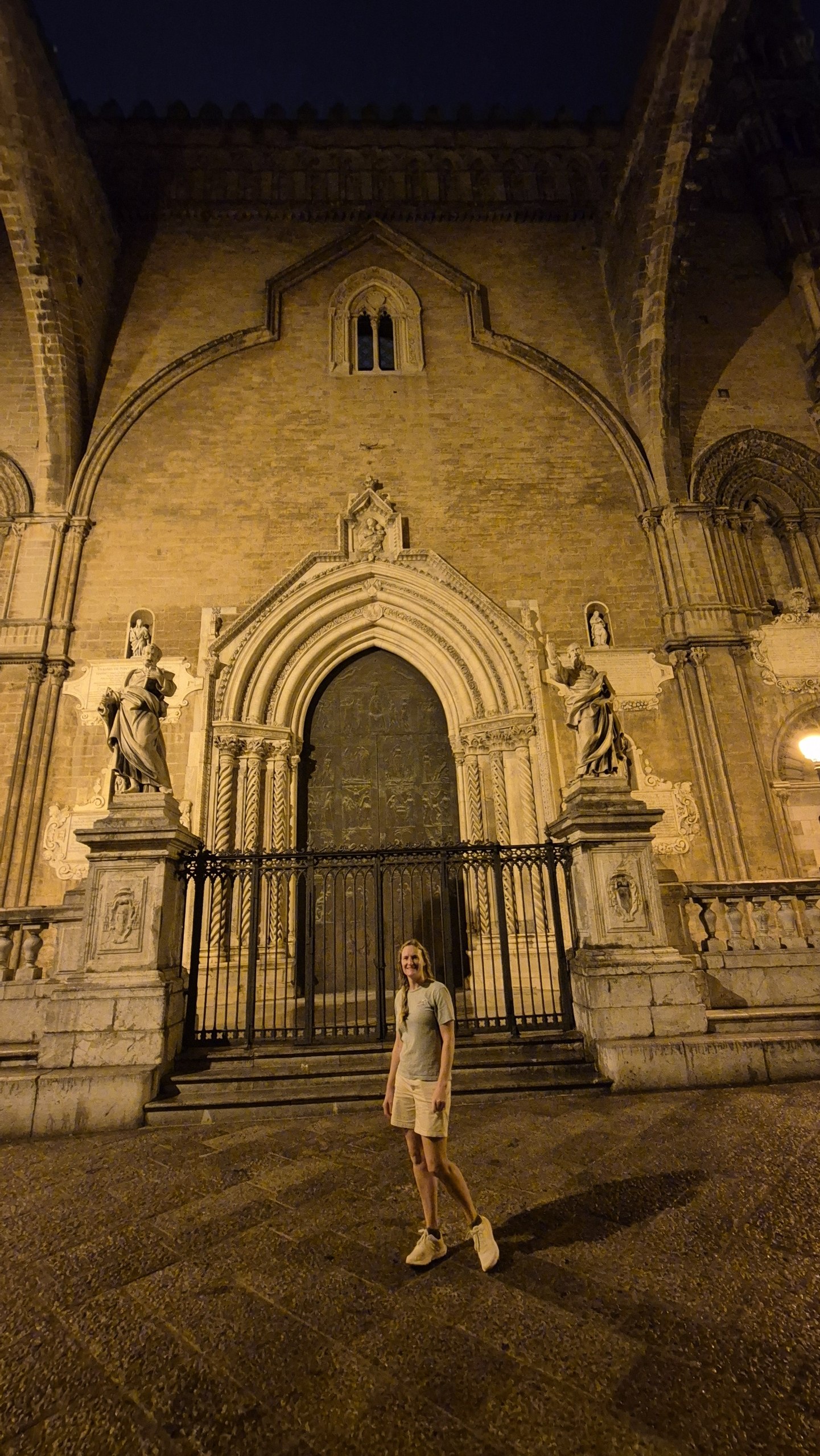
We continued through the smaller streets and eventually arrived at Palermo Cathedral. The cathedral was first built in 1184, but was changed and enlarged so many times that it now contains a mixture of Norman, Gothic, Baroque and neoclassical elements.
It should already have been closed, but some sort of function was taking place and a few other tourists were still going inside. We followed them and managed to have a quick look before the lights started switching off. We took this as our sign to leave before someone locked the doors.
By then we had walked about as far from the guesthouse as we wanted to go and still had 1.7 kilometres to get back.
It started drizzling shortly after we turned around. At first it was light enough to ignore, but within a few blocks it became much heavier.
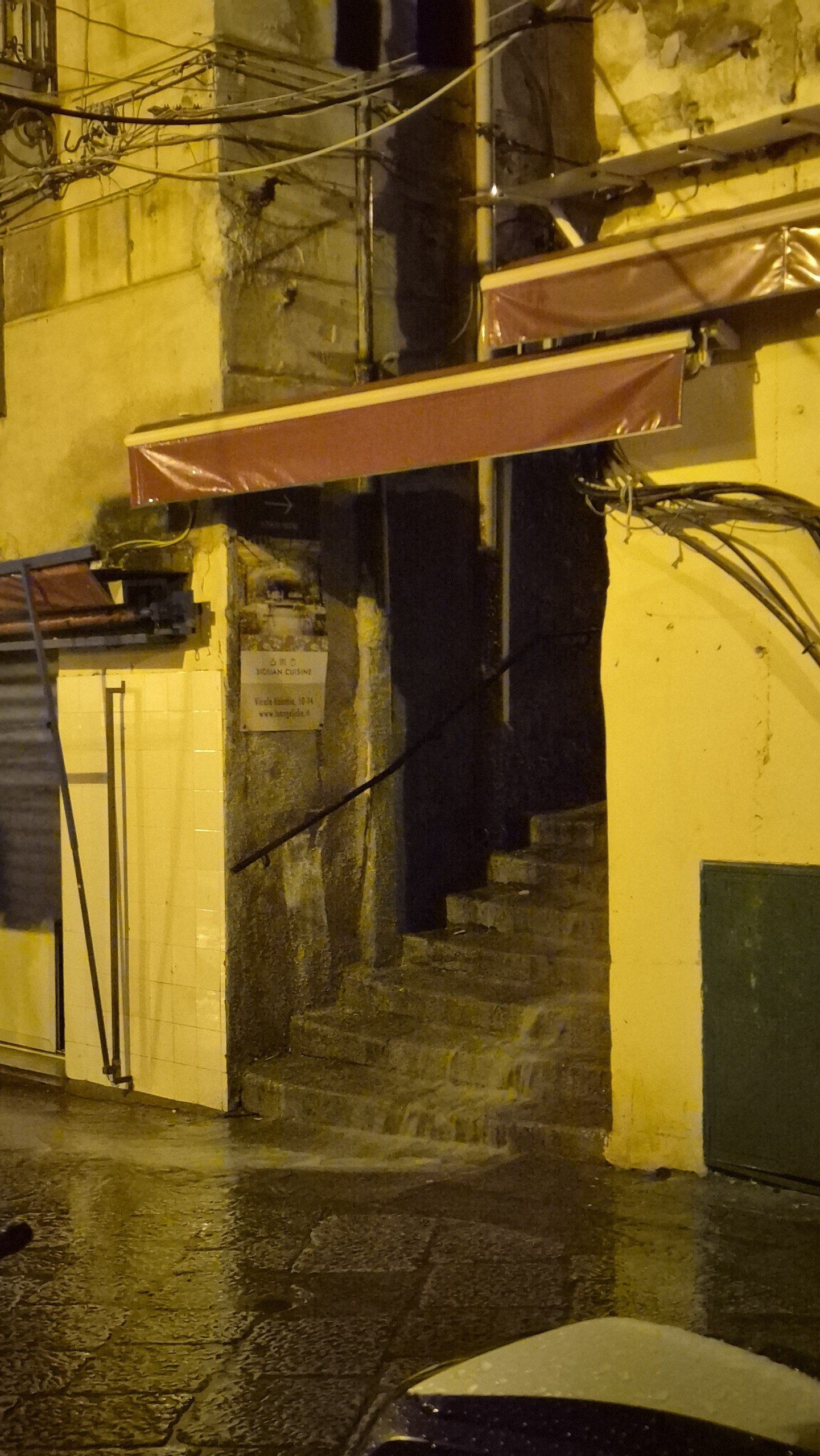
We followed the small cobbled streets back towards the guesthouse. They sloped downhill and the rainwater soon began running along them in streams. Our shoes were quickly soaked in dirty street water.
When the rain became too heavy, we stood in a small alley for about 15 minutes. We were still roughly 650 metres from the guesthouse, but there was no point trying to continue through the downpour.
The rain eventually eased enough for us to walk again. We went as quickly as possible and arrived back with completely soaked shoes.
Caro told Hugo to leave his shoes at the door and go directly into the shower. She then stood at the basin washing her shoes because she did not want to put them on again the following morning while they were still full of dirty street water.
Leave A Comment