
Monday began with coffee and some of the little filled croissants our host had left for us. Almost immediately afterwards, a message arrived saying that our boat trip had been cancelled.
They offered to move us to the following day, which was not especially useful since we would be checking out. We never found out whether the weather was genuinely the problem or whether they simply had not sold enough places to justify taking only the two of us.
Either way, it was back to the drawing board.
Hugo found another operator on WhatsApp. They initially said that only an afternoon trip was available. Technically that could have worked, but mentally we had already committed ourselves to a morning boat trip.
While walking around the harbour, Hugo found the same operator’s office and asked again in person. Apparently there was space on the morning trip after all.
He booked it immediately and paid the €80. Then he rushed back to the apartment so that we could throw together what we needed and reach the pickup point by 09:45.
The new trip cost €5 more per person than the original one, but Hugo managed to recover our €20 deposit from the first company, so no real damage was done.
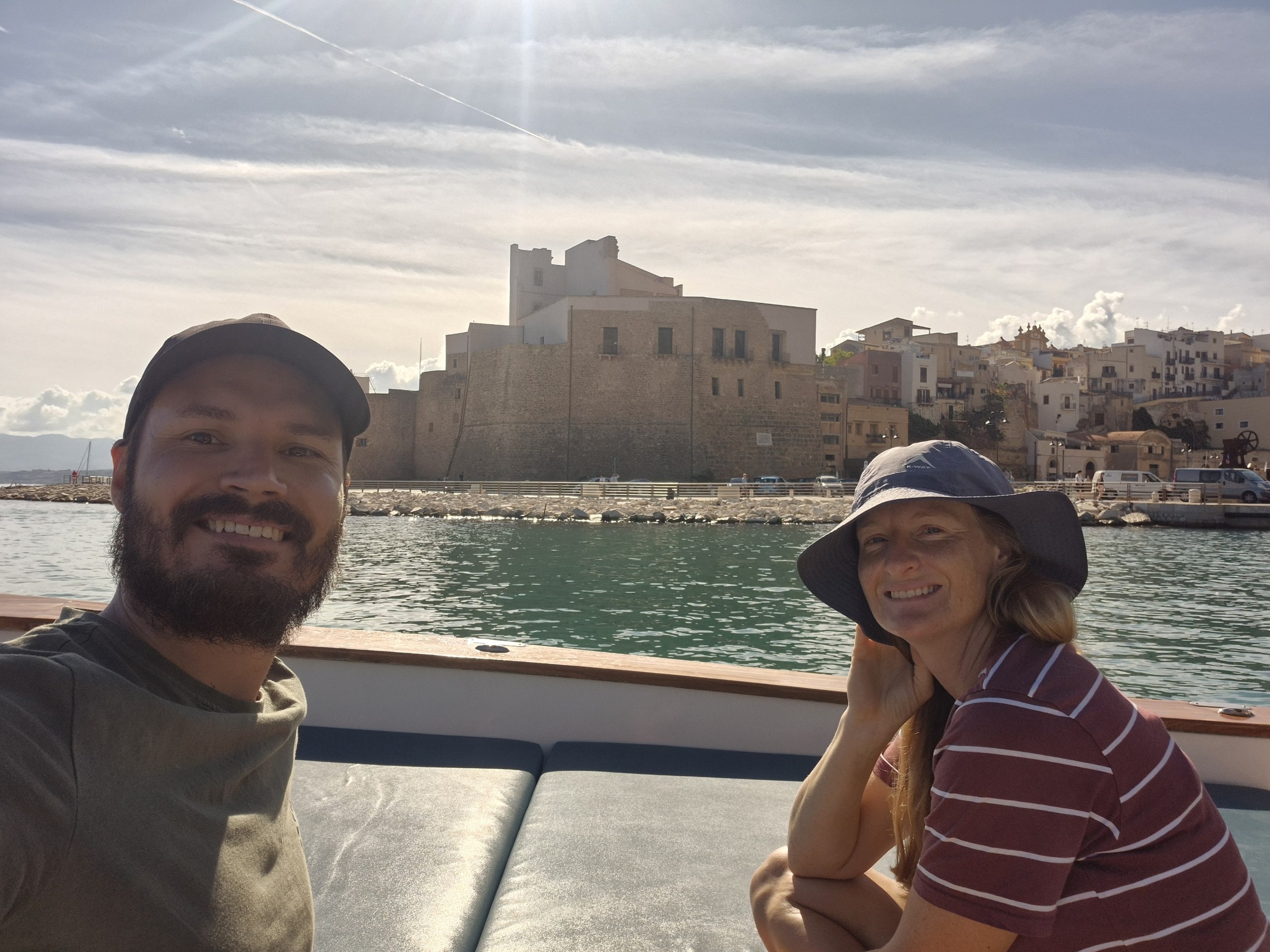
The boat was a small traditional wooden motorboat—the kind generally known as a gozzo—with perhaps 12 to 16 passengers aboard. There were only a couple of benches at the back; most people sat along the sides or stretched out on the large padded area covering the bow.
It was also very hot.
We followed the coast north from Castellammare del Golfo towards the Zingaro Nature Reserve. Along the way the skipper nosed the boat partly into several caves, then reversed out again.
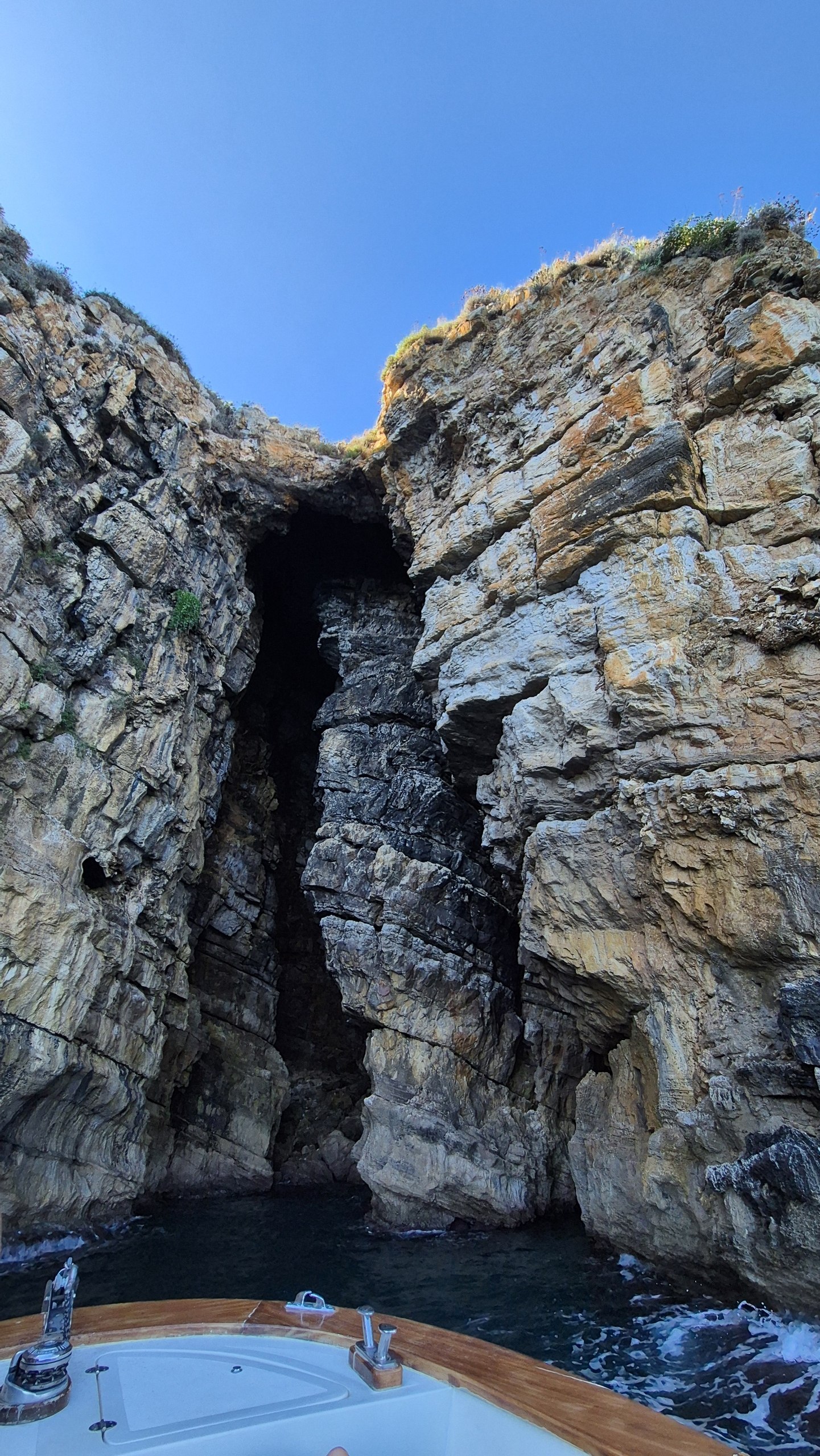
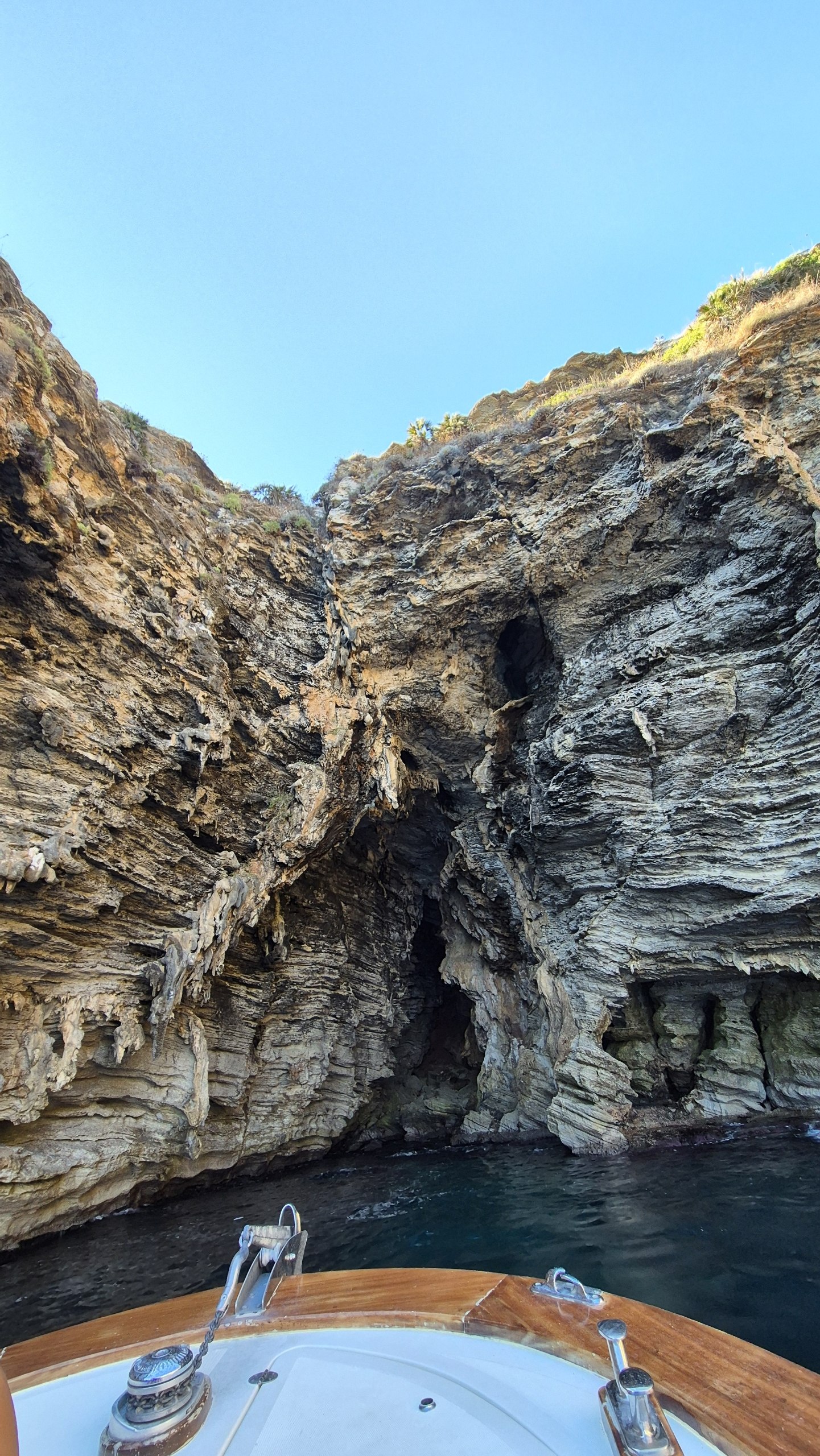
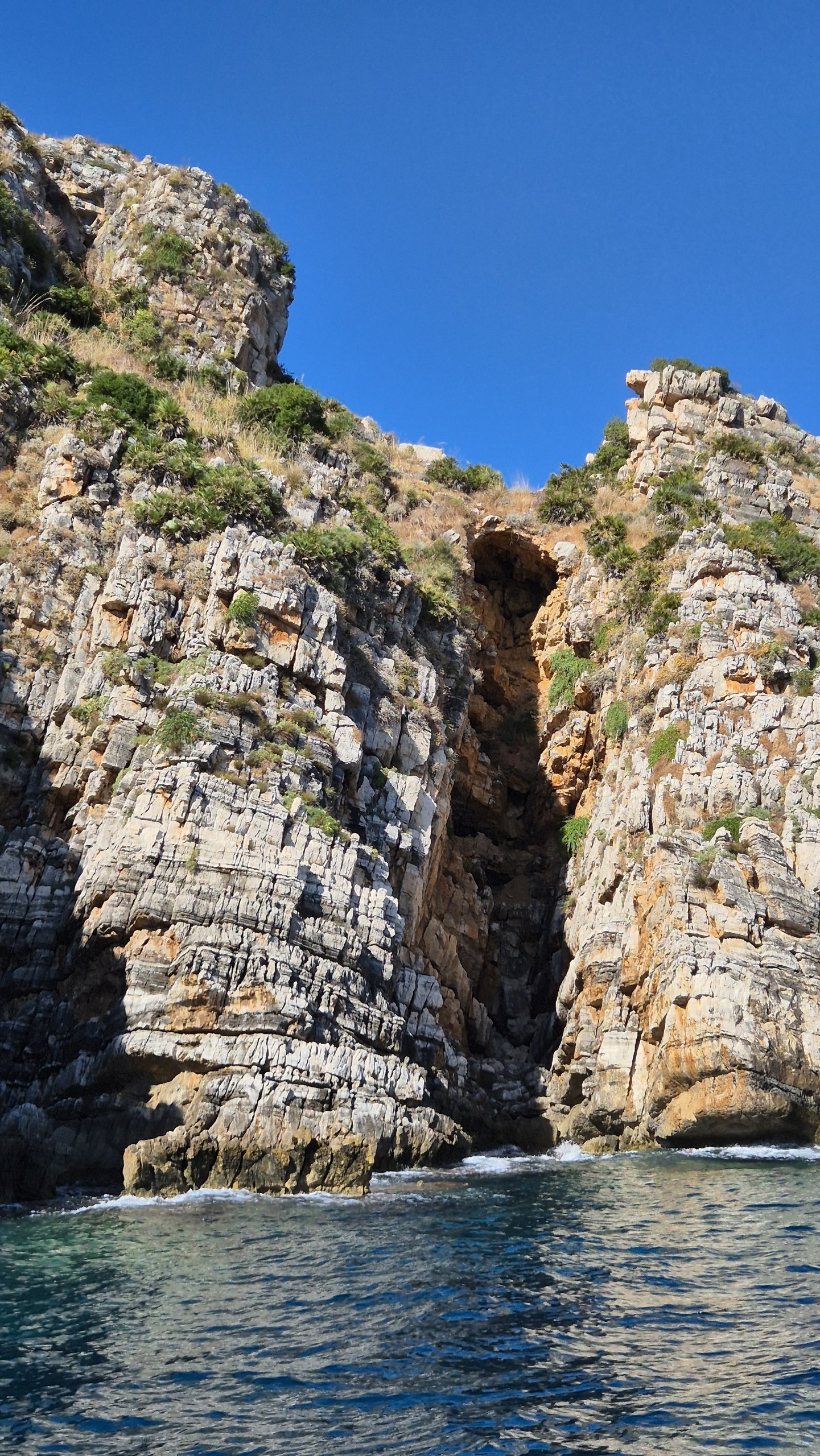
Zingaro protects about seven kilometres of coast between Scopello and San Vito Lo Capo. It was Sicily’s first nature reserve, created in 1981 after a public campaign stopped a proposed coastal road from being built. That is why its little pebble coves and steep limestone cliffs remain accessible only on foot or from the sea.
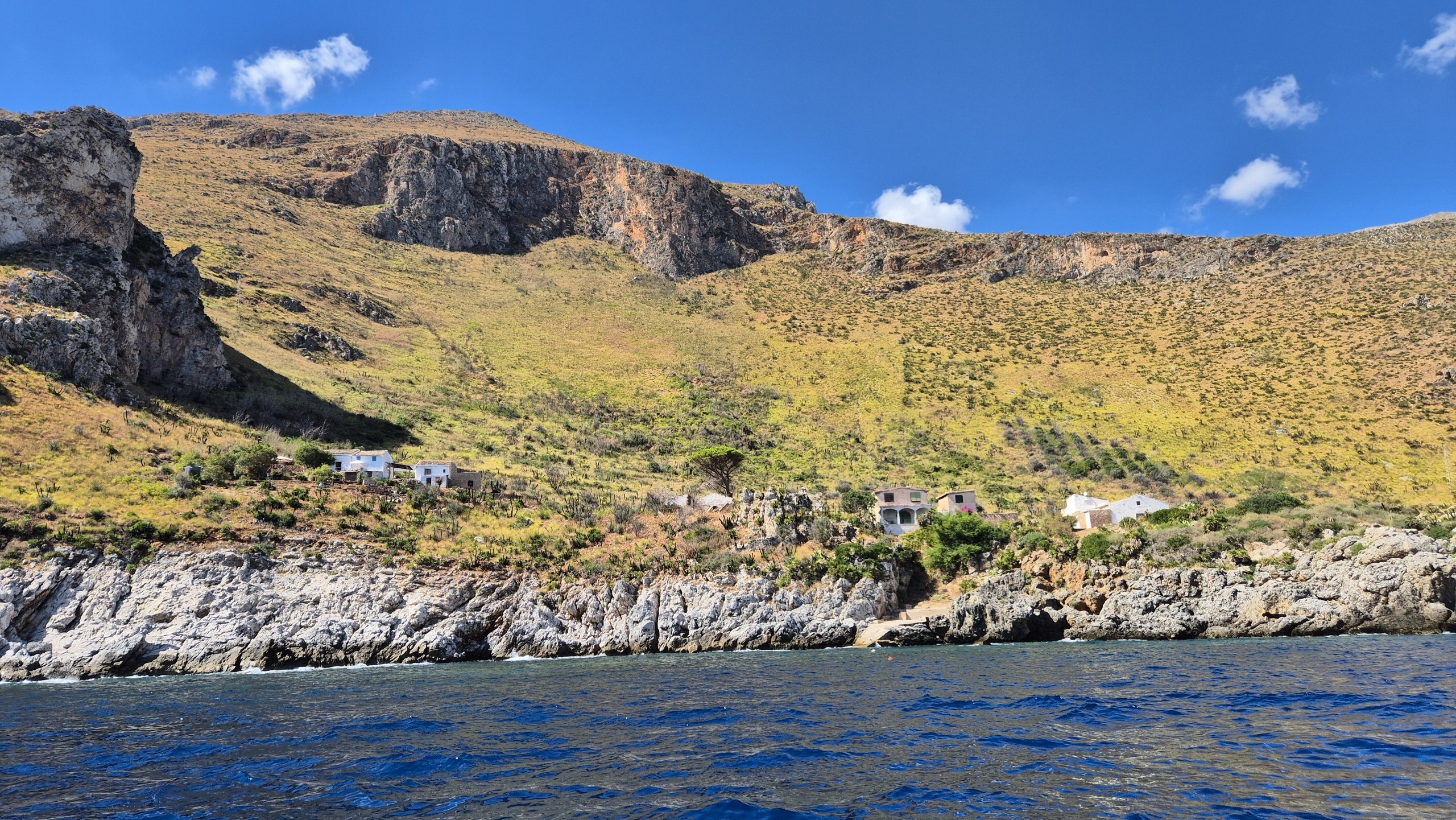
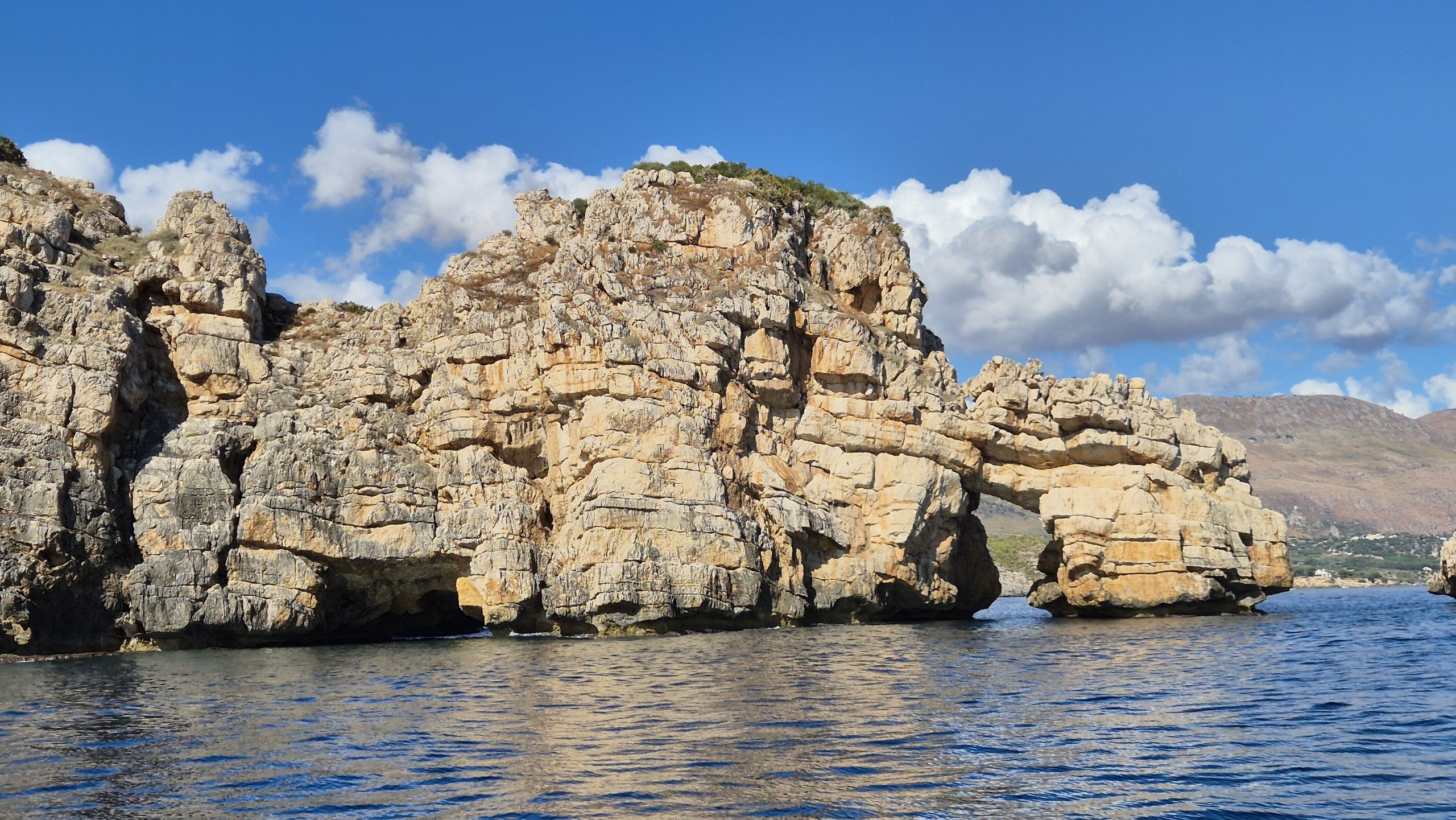
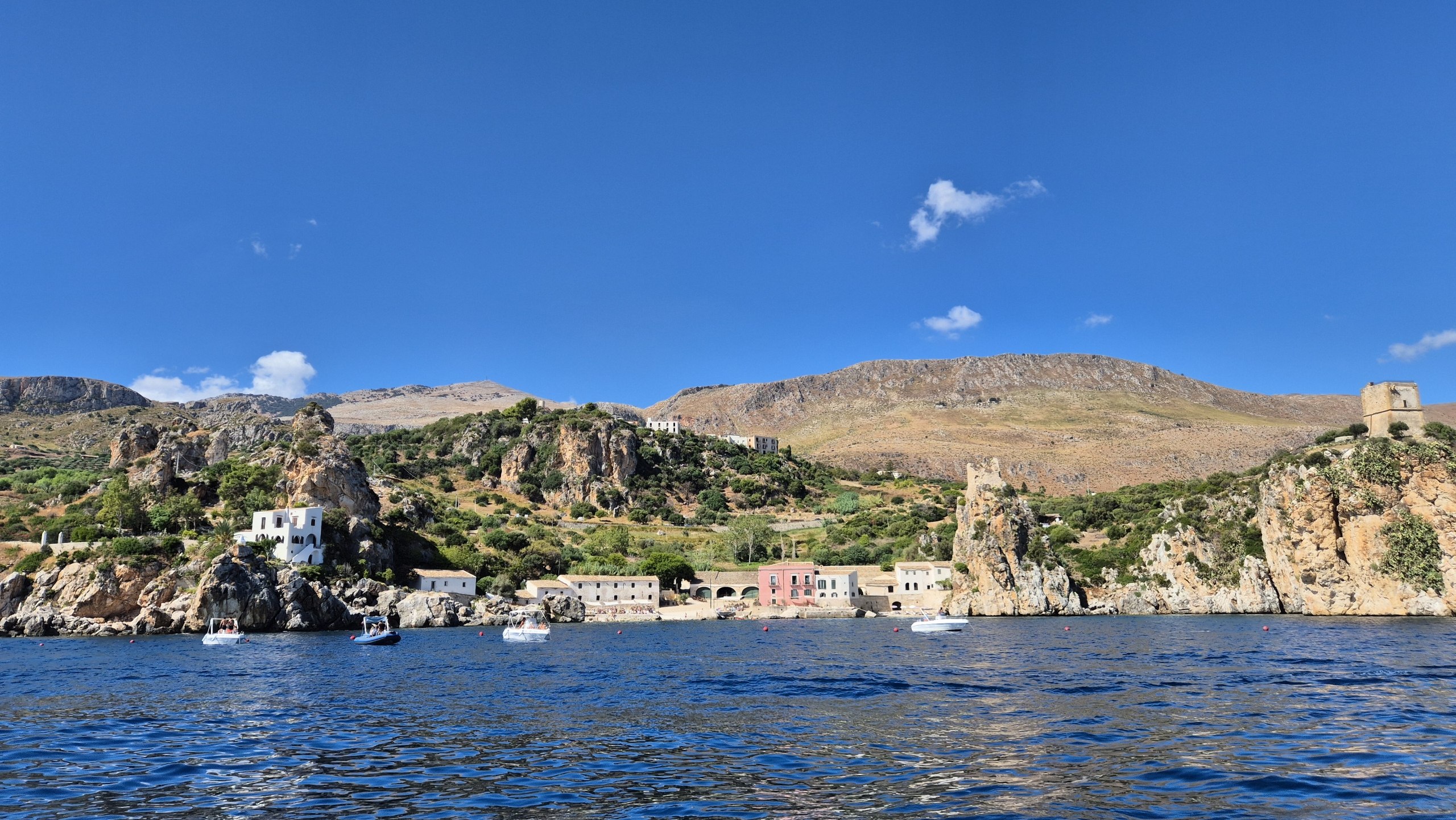
We had three swimming stops. The first was beneath an enormous rocky overhang dropping straight into the sea. The skipper said there was no road access; it could only be reached by boat or on foot, which made it feel a little more special.
From there we continued past Scopello and along the reserve, with huge limestone slopes plunging into the water, small coves tucked between them and the coastline fading into the distance.
The scenery was definitely the best part of the trip.
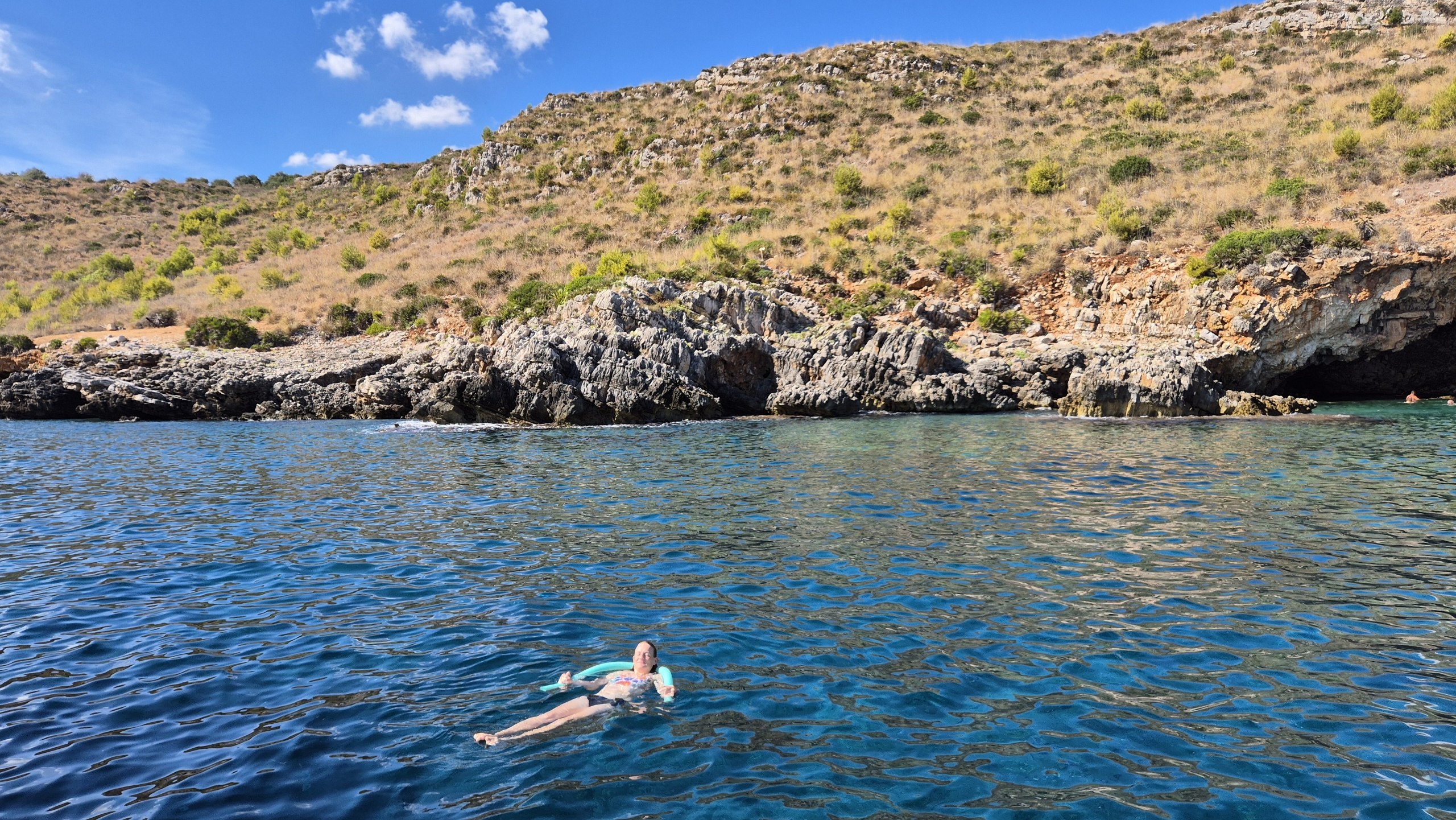
The water was still beautifully warm and remarkably clear. While swimming, we could see so far below us that the bottom sometimes seemed close to 30 metres away.
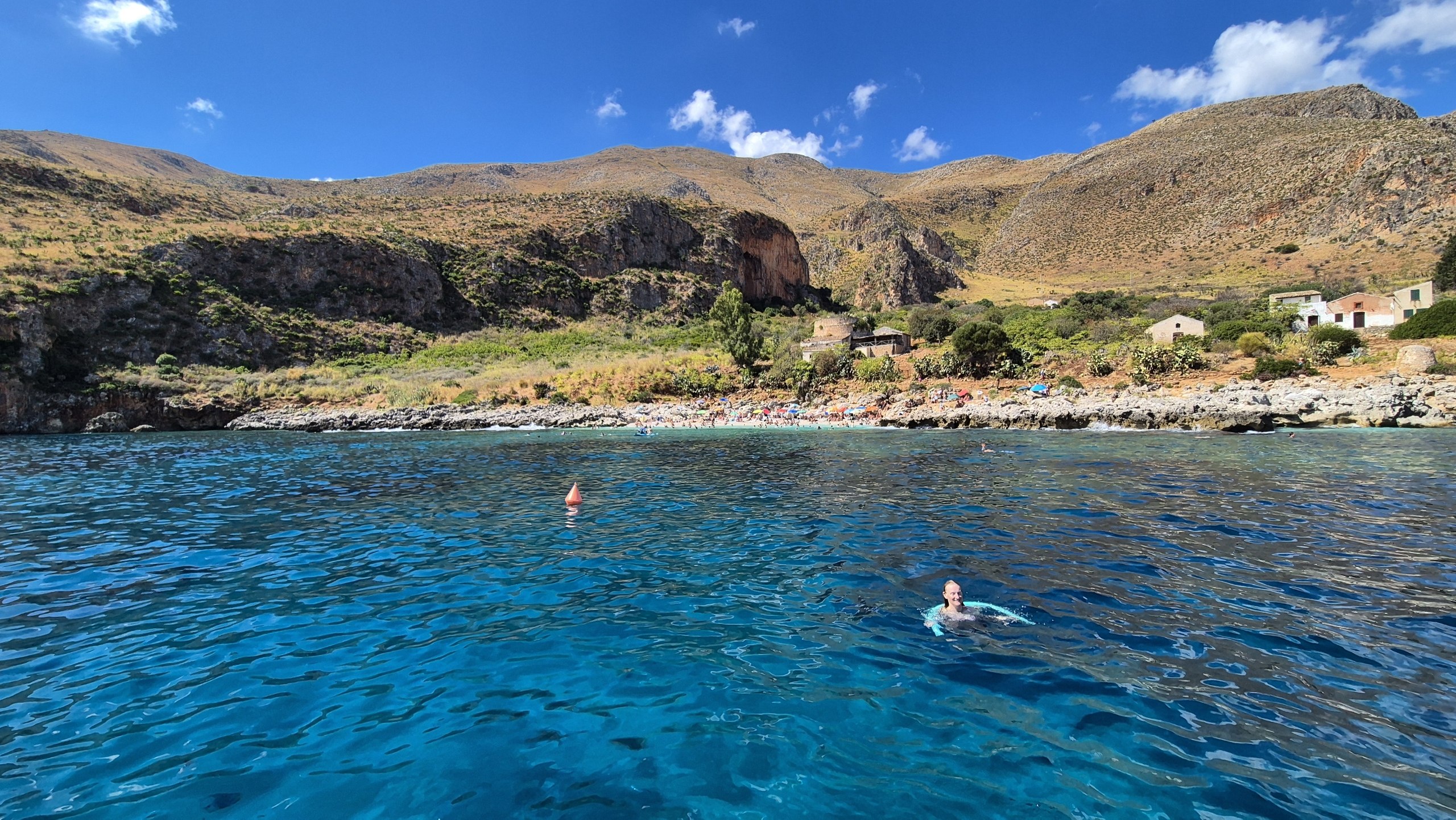
Somewhere along the route, the crew handed out slices of yellow Canary melon. Neither of us had tried it before, and it was very good.
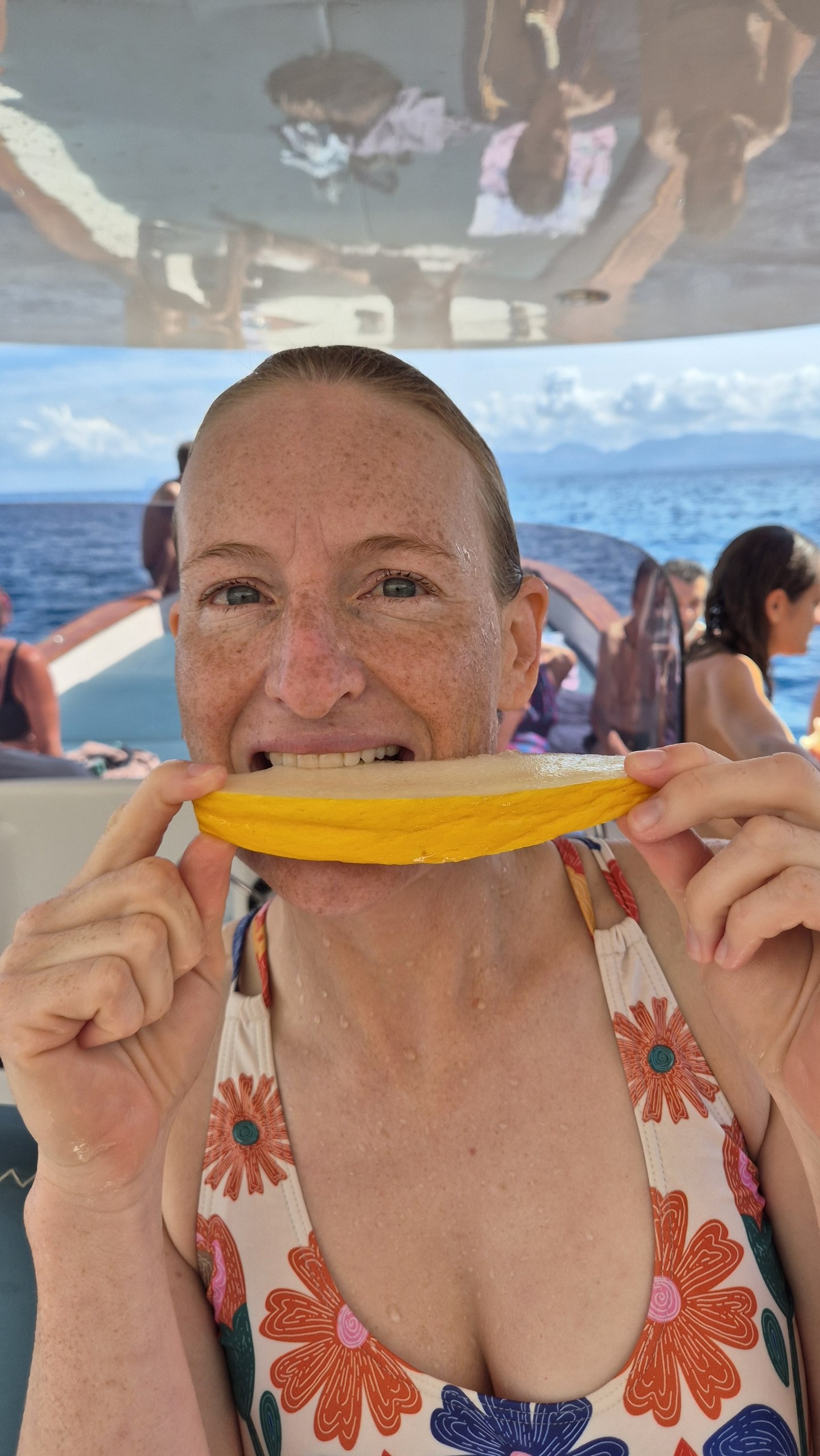
They also served white wine.
That was less successful.
It tasted vaguely like acid, and we were not alone in reaching that conclusion. Several other passengers simply poured theirs overboard.
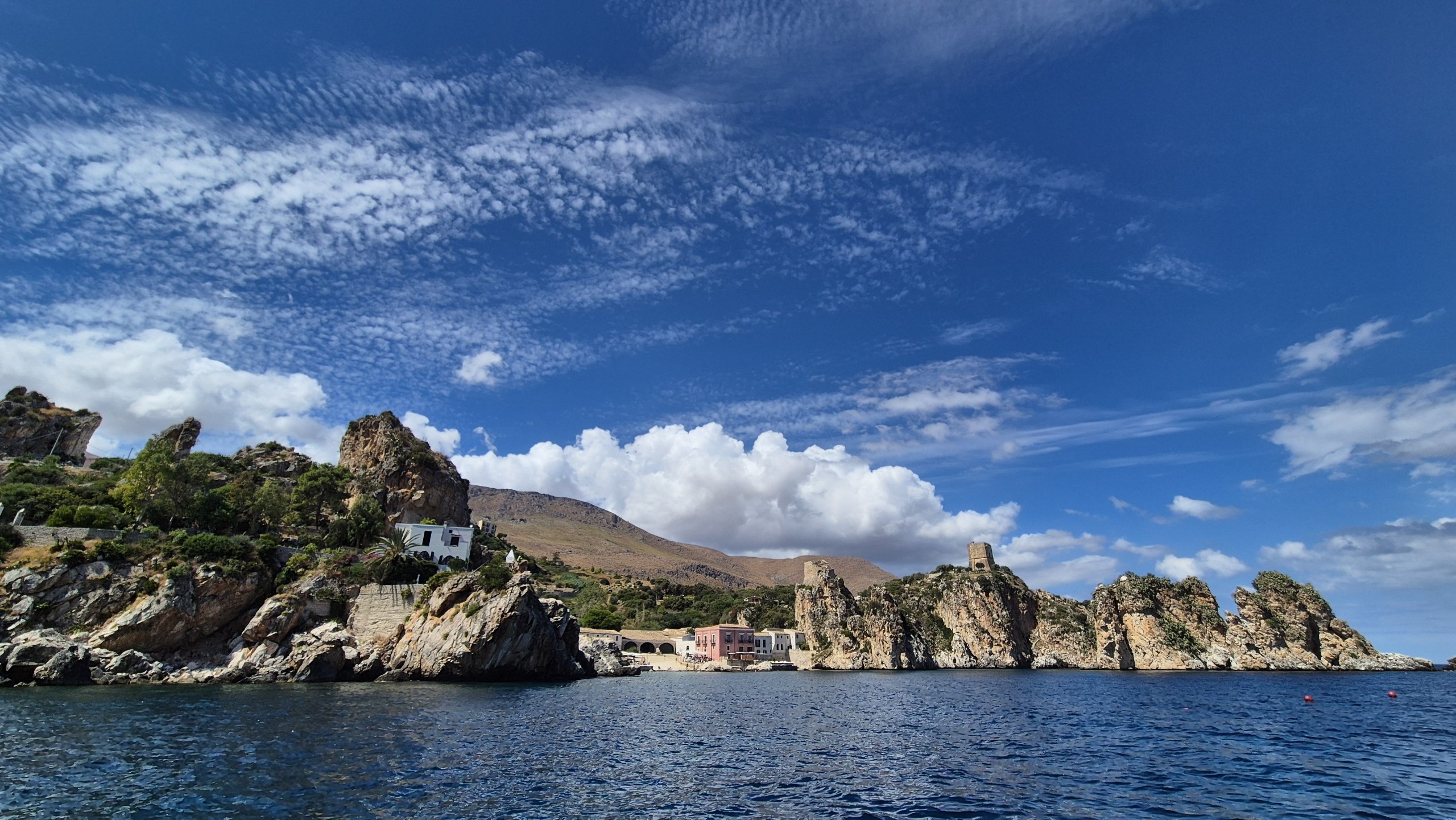
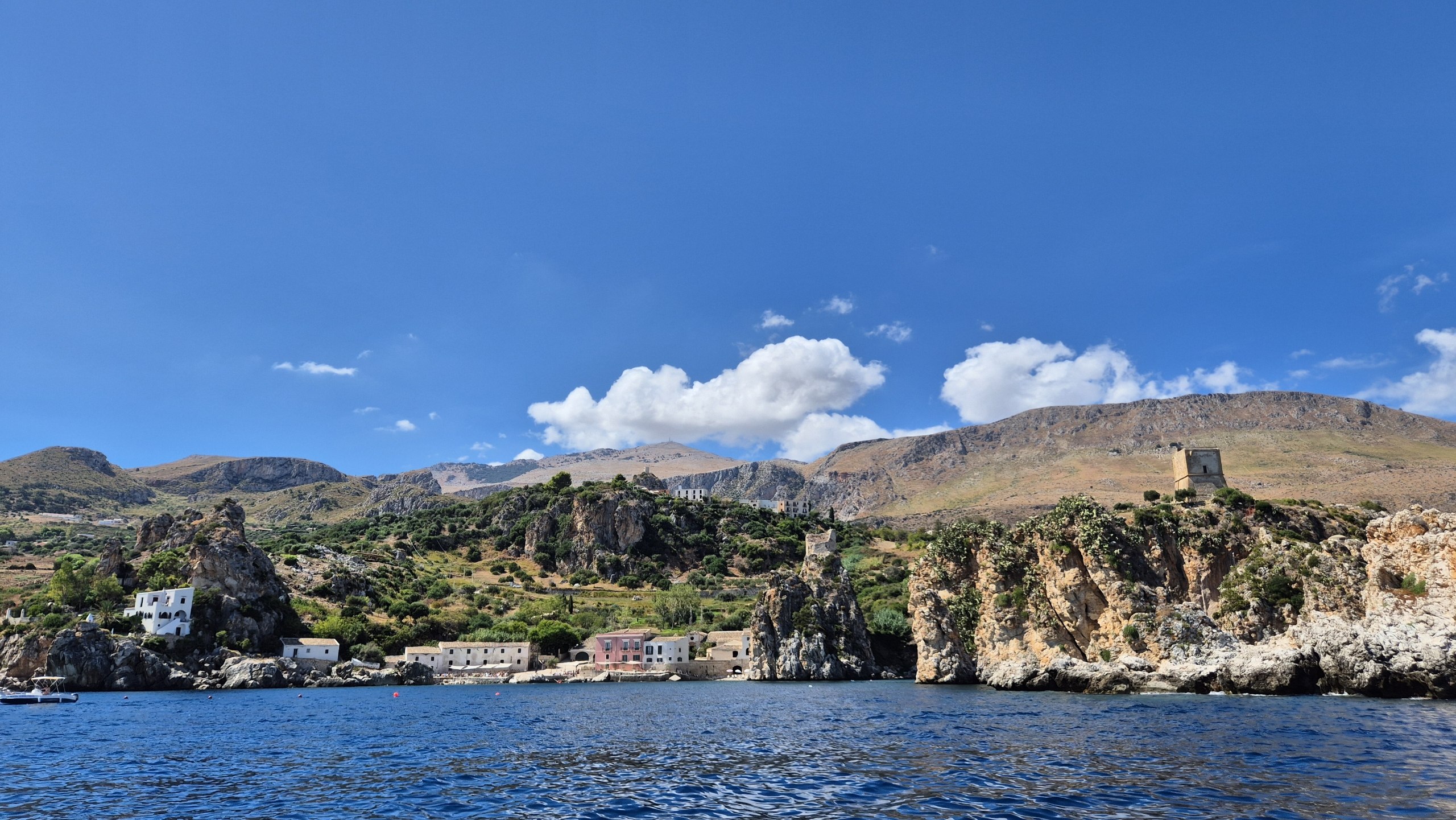
On the return journey we stopped offshore at Scopello, in front of its famous faraglioni—the tall rock stacks rising from the bay—and the old tonnara tucked against the cliffs. Tuna fishing took place there from at least the 13th century, and the complex was expanded over the centuries with storerooms, working buildings and defensive towers. It remained active until the 1980s.
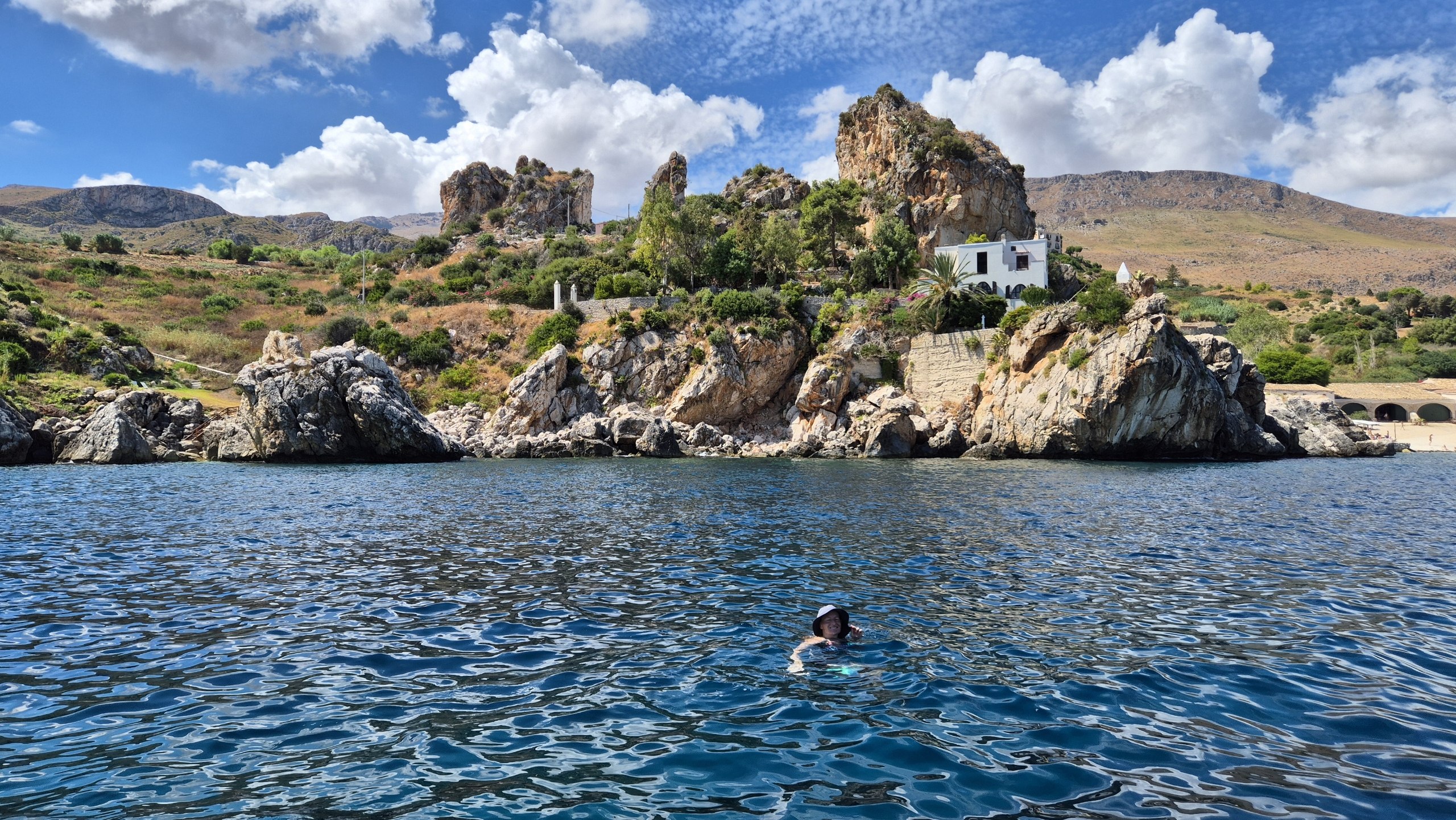
The sea was noticeably rougher than the water we had become used to in Croatia. By the return leg, Caro was beginning to feel seasick and eventually lay down while the boat—and apparently the rest of the world—continued moving around her.
Even after we stepped back onto dry land, the swaying feeling refused to disappear.
The trip was good rather than life-changing. It was not the most spectacular boat trip we had ever done, but it was a lovely way to see the coast around Castellammare, Scopello and Zingaro without spending the whole day hiking in the heat.
The clouds on the way back almost became a show of their own: enormous white shapes piled above the cliffs.
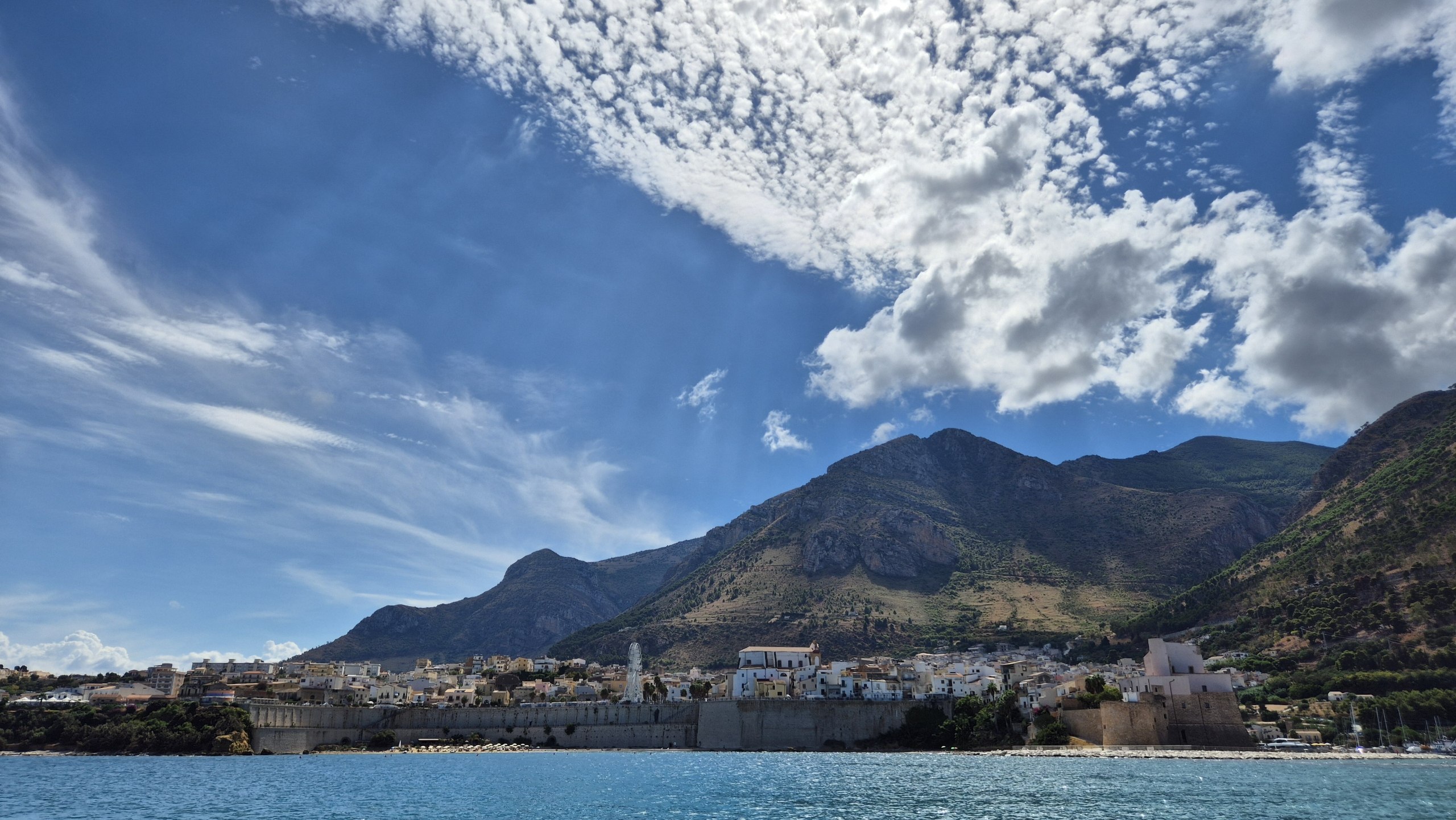
We reached the harbour at about 14:00 and were immediately starving.
Luckily, on our first night we had noticed a little place selling arancini. We walked there directly from the harbour and bought two, along with a ricotta cannolo.
One arancina was ragù and the other ham and cheese. They were quite different from the pistachio and mozzarella one we had at Palermo Airport. Instead of the filling being mixed through the rice, these were more like a proper shell of rice with the filling concentrated in the middle.
Unfortunately, neither was especially exciting. The ham and cheese was really more like ham and white sauce, with very little obvious cheese, and the ragù one wasn’t much better. So, somewhat unexpectedly, the overpriced airport arancina was still winning.
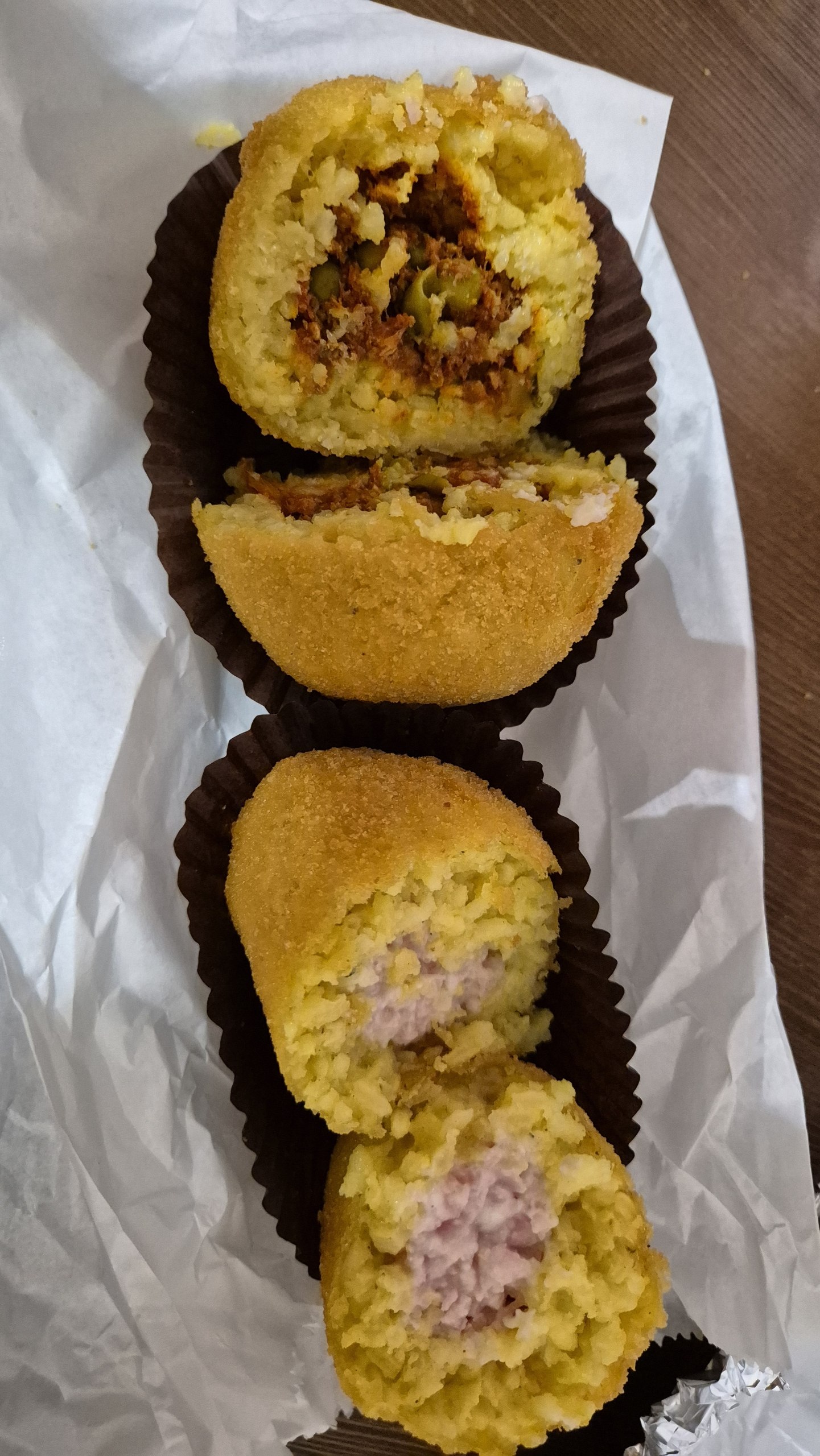
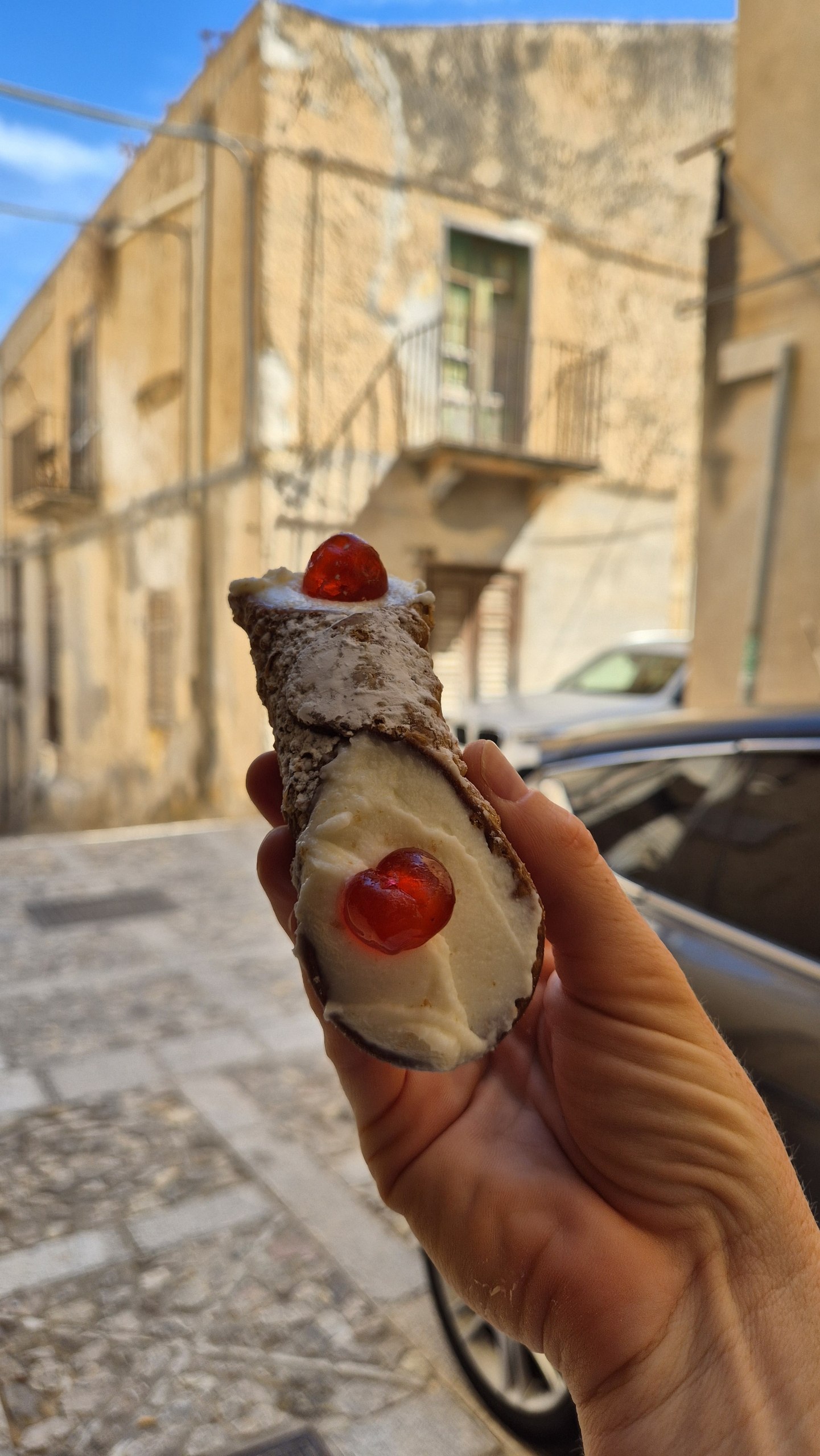
We took everything back to the apartment and ate there.
After that, Monday turned into a proper workday for Hugo. Caro lay down for a while because the seasickness had followed her off the boat and she still felt as though everything was moving.
By dinner time she had spent a fair amount of time looking through all the local options before concluding that pizza was once again the best answer. There was also some logic to it: if we ordered two pizzas, we could keep the leftovers for breakfast or a snack the next morning.
Hugo found a restaurant and had already decided online what he wanted before we even got there, which meant Caro barely had time to inspect the actual menu before he was ready to order.
We ended up with one traditional Trapani-style pizza and another with prosciutto, mushrooms and truffle oil.
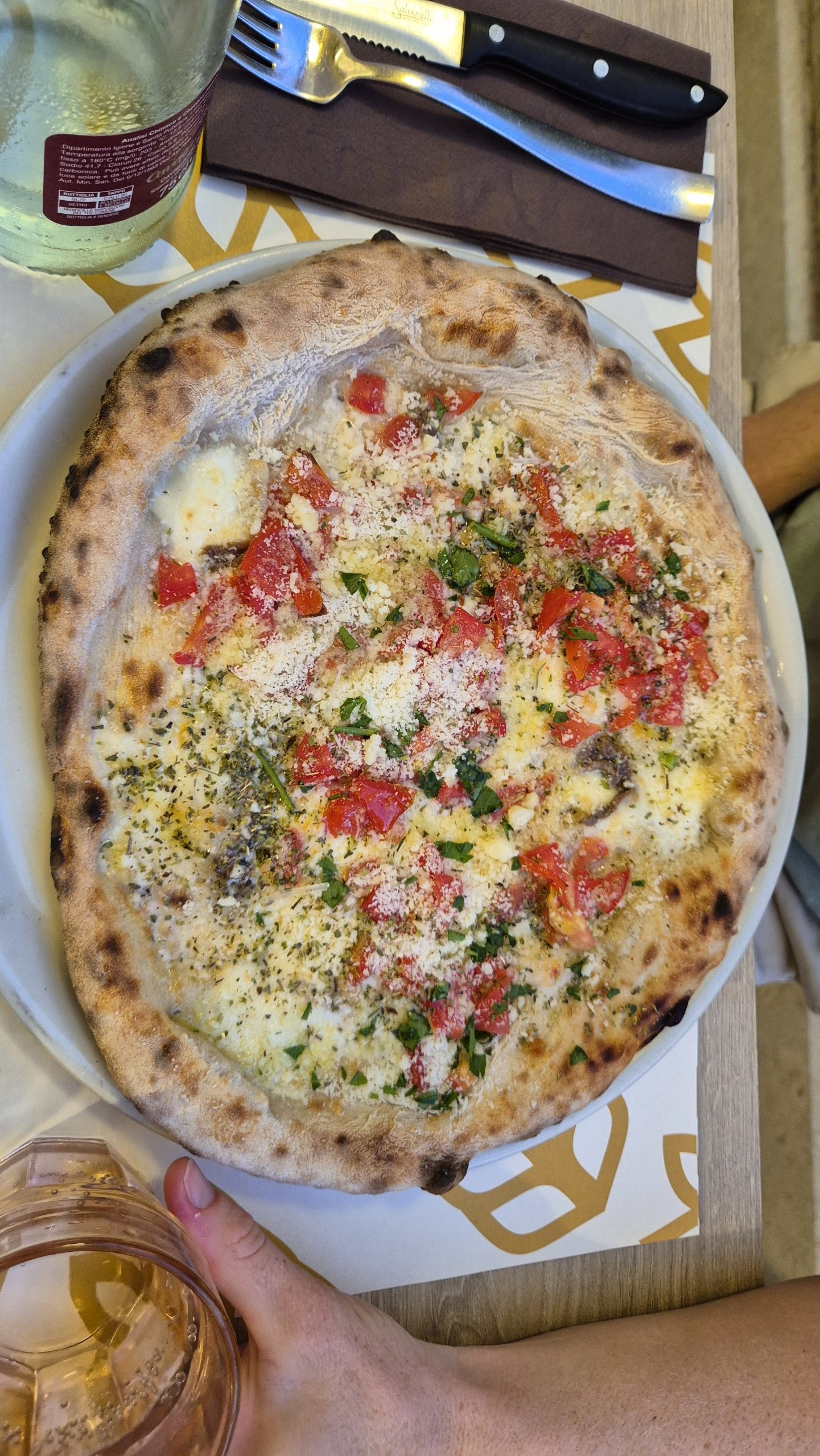
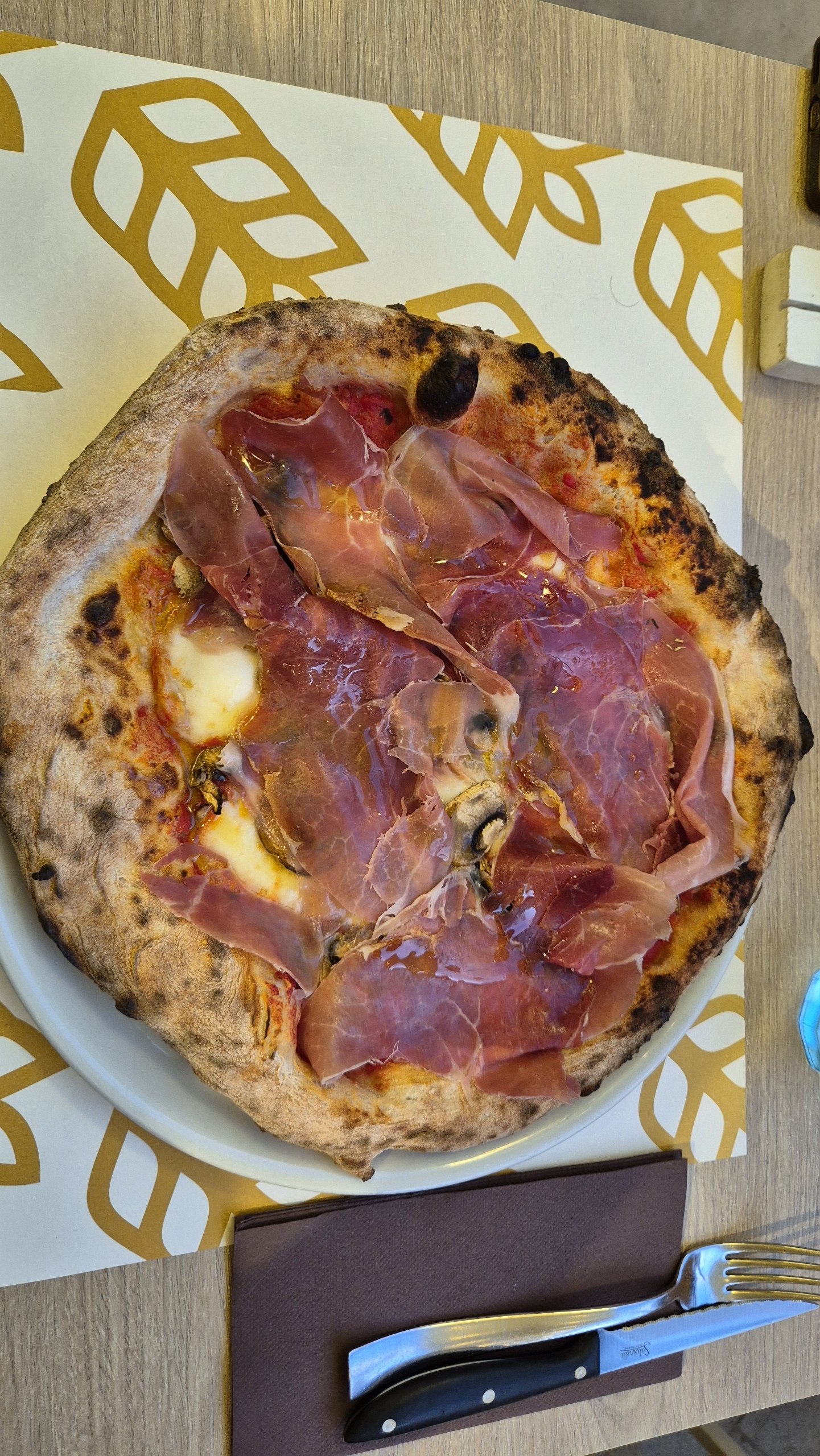
They were still very good pizzas by South African standards. By Italian standards, though, the first night’s pizzas were definitely better.
After that there wasn’t much adventure left in us. We headed back to the apartment and went to bed, bringing our unexpectedly salvaged boat day to a fairly quiet end.
Leave A Comment