
We had a quick coffee in our room and then headed into Split’s old town. The plan was to explore for a while before Hugo’s workday began, but the early start had another advantage: we had many of the little cobbled alleyways almost entirely to ourselves.
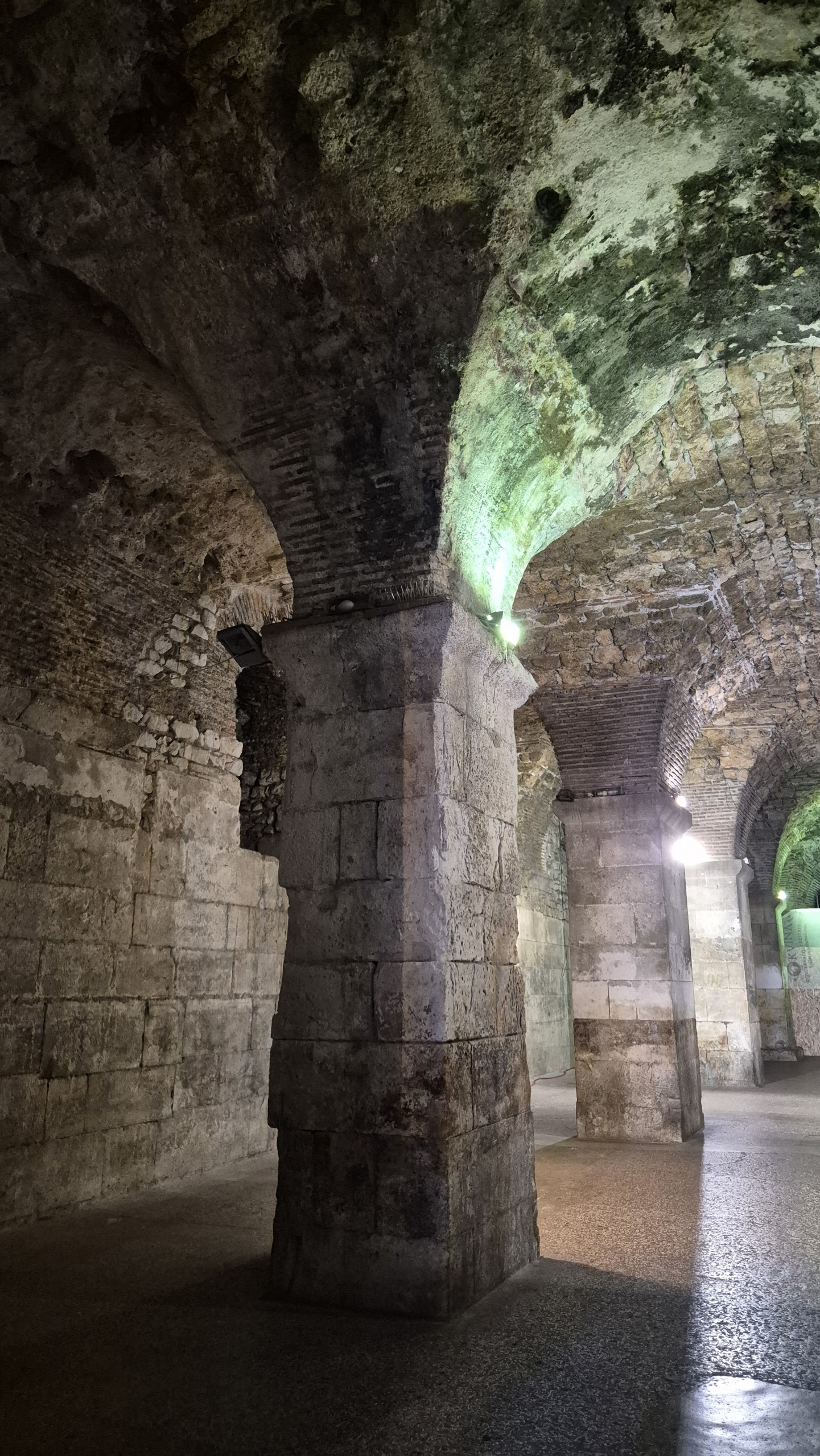
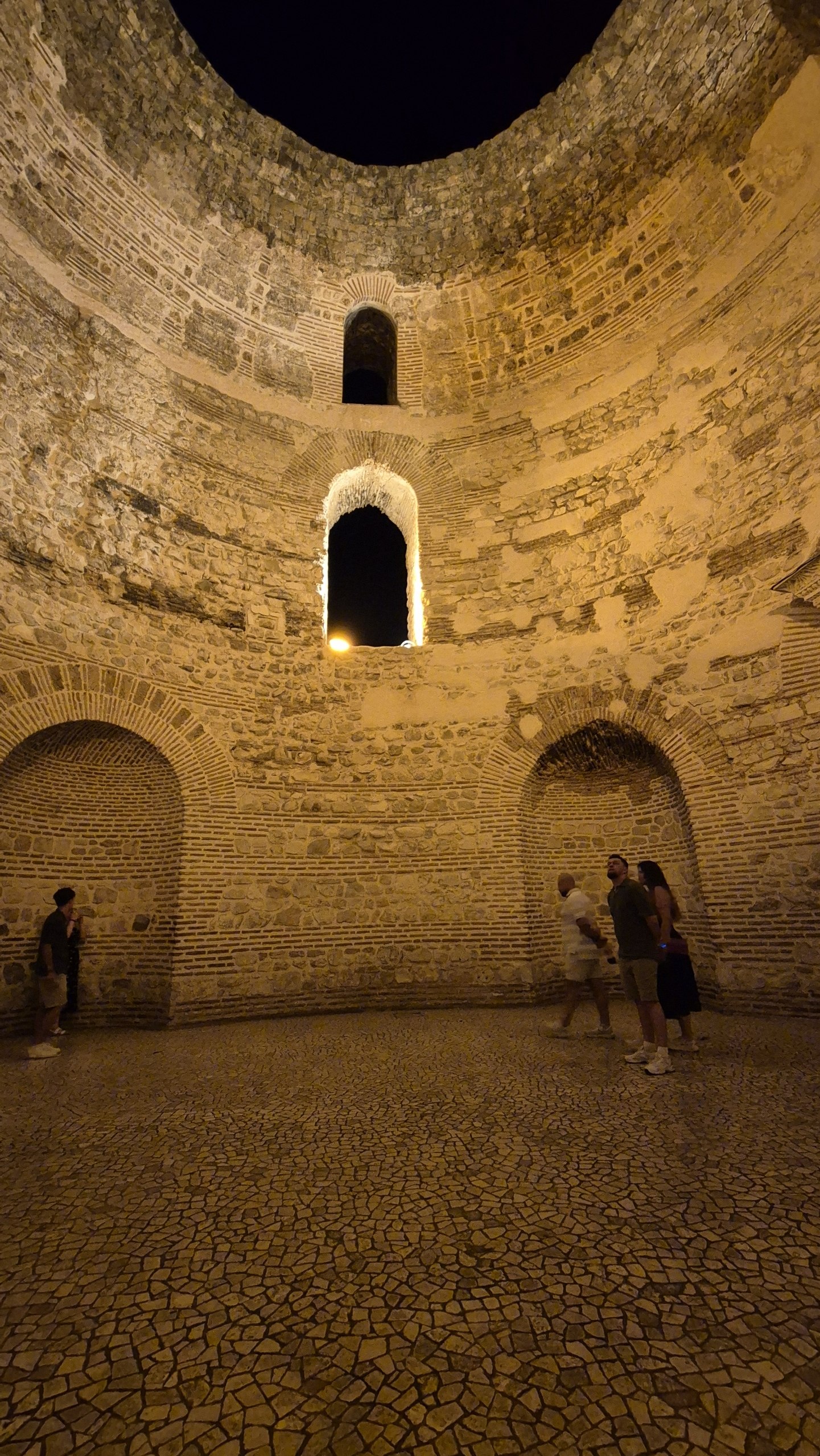
From the harbour, we walked through the vaulted stone passage beneath Diocletian’s Palace and emerged near the Peristyle. It was a strangely dramatic entrance to the old town, especially at an hour when it was still quiet.
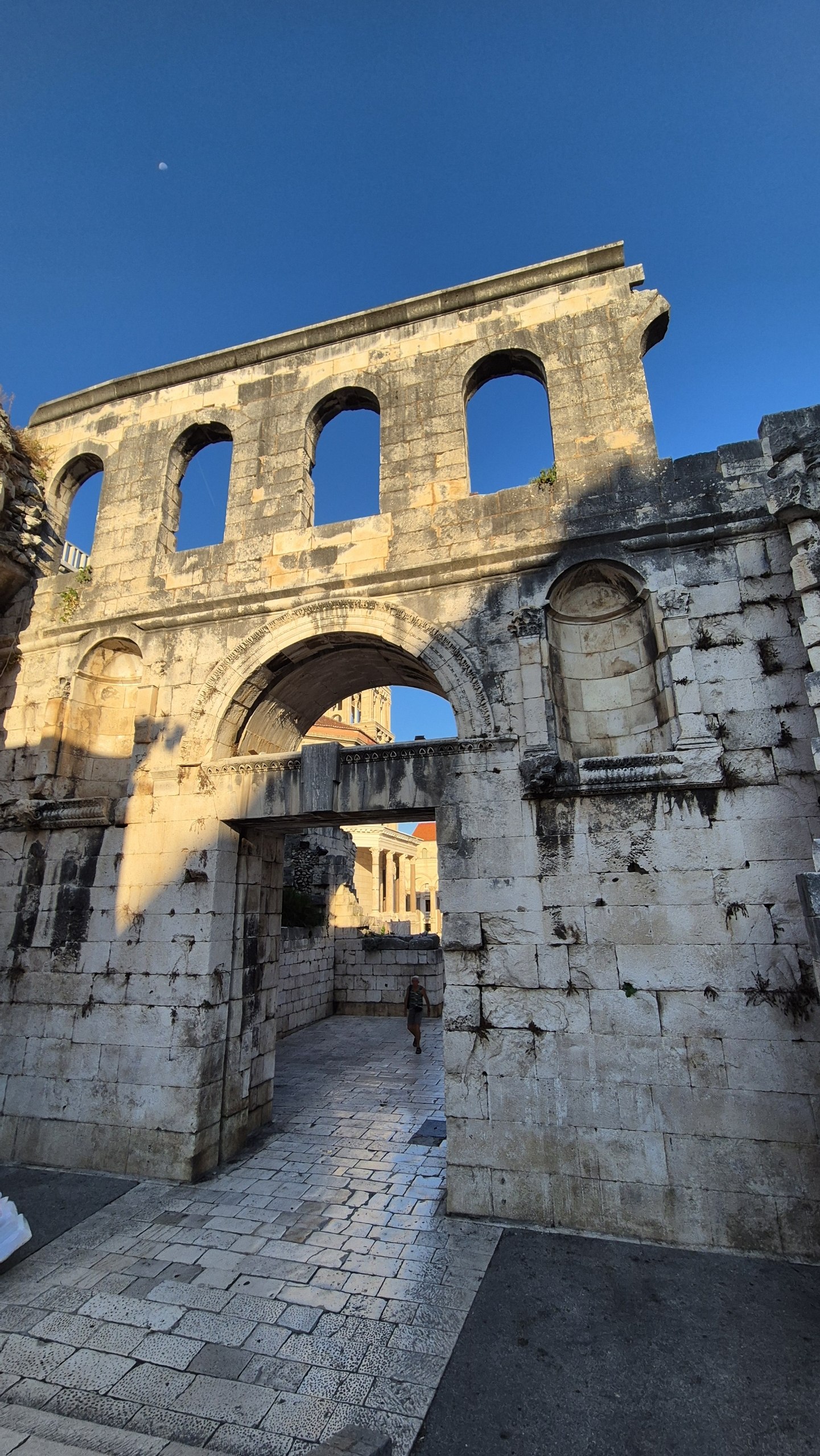
Emperor Diocletian had the enormous fortified complex built around the turn of the fourth century as his retirement residence. Over the centuries it stopped being a palace in the usual sense. Homes, shops, churches and narrow streets grew inside and around its Roman walls, turning it into the living centre of Split rather than a ruin sealed off from the city.
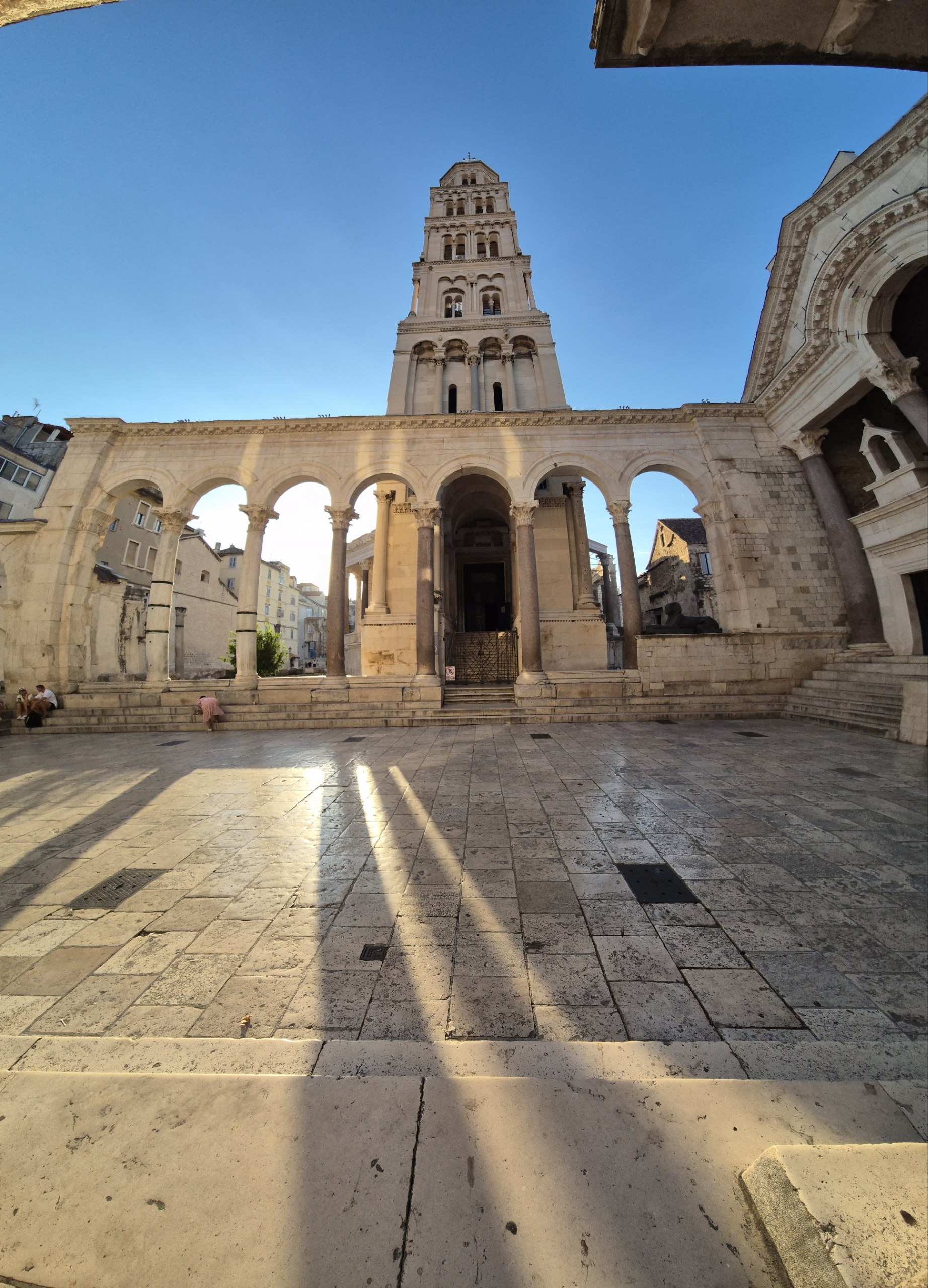
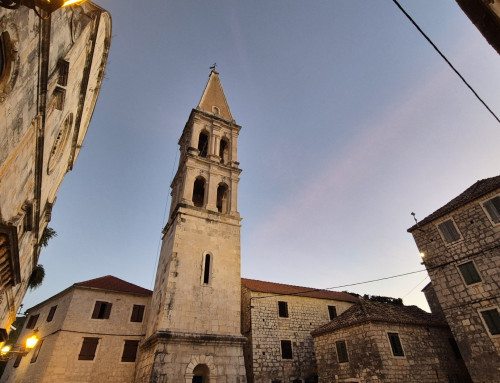
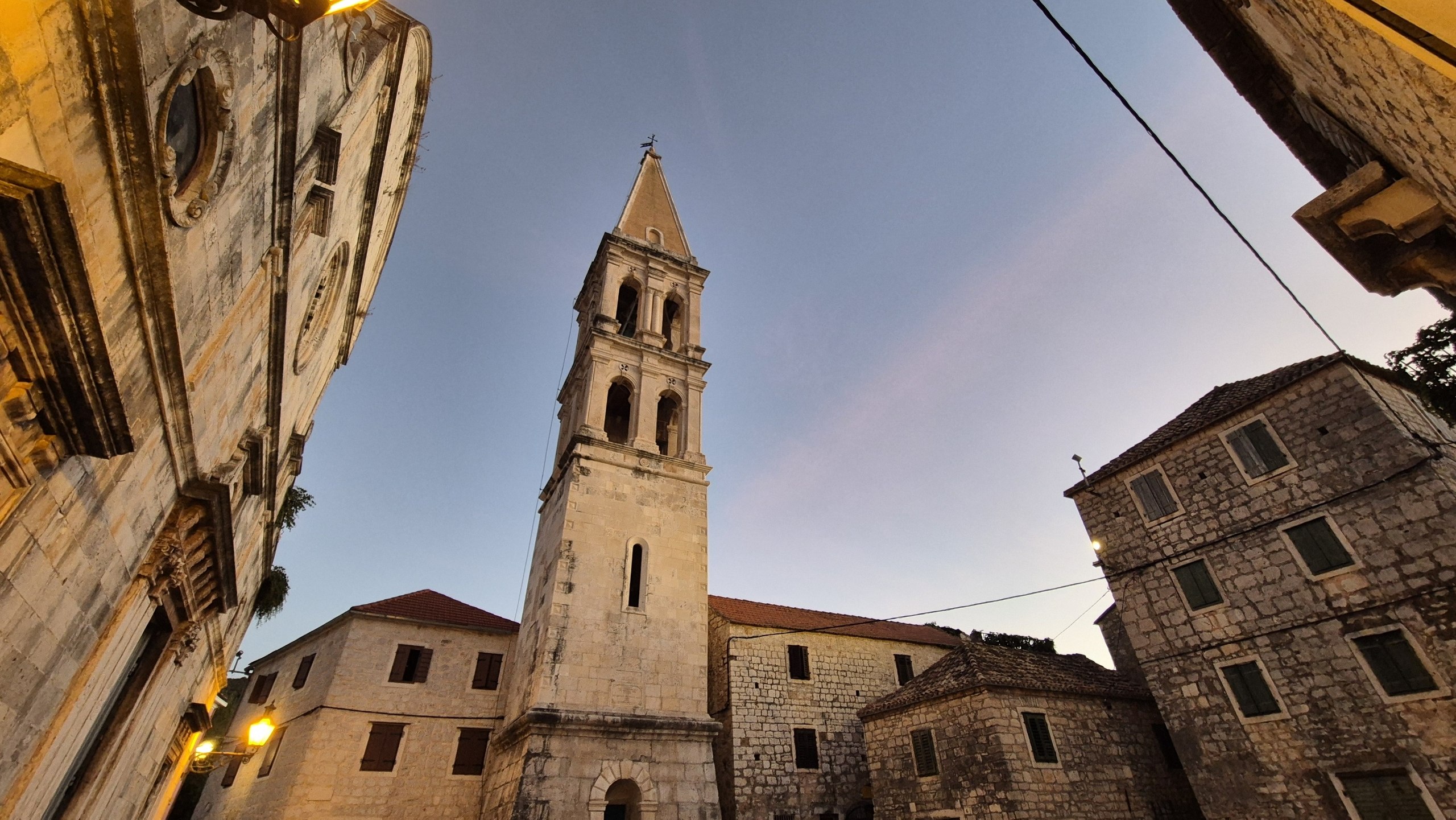
The Peristyle had once been the ceremonial heart of the palace. Diocletian’s mausoleum stood beside it; in one of history’s more pointed reversals, the tomb of an emperor remembered for persecuting Christians was later converted into the Cathedral of Saint Domnius. Its tall bell tower now dominates the square.
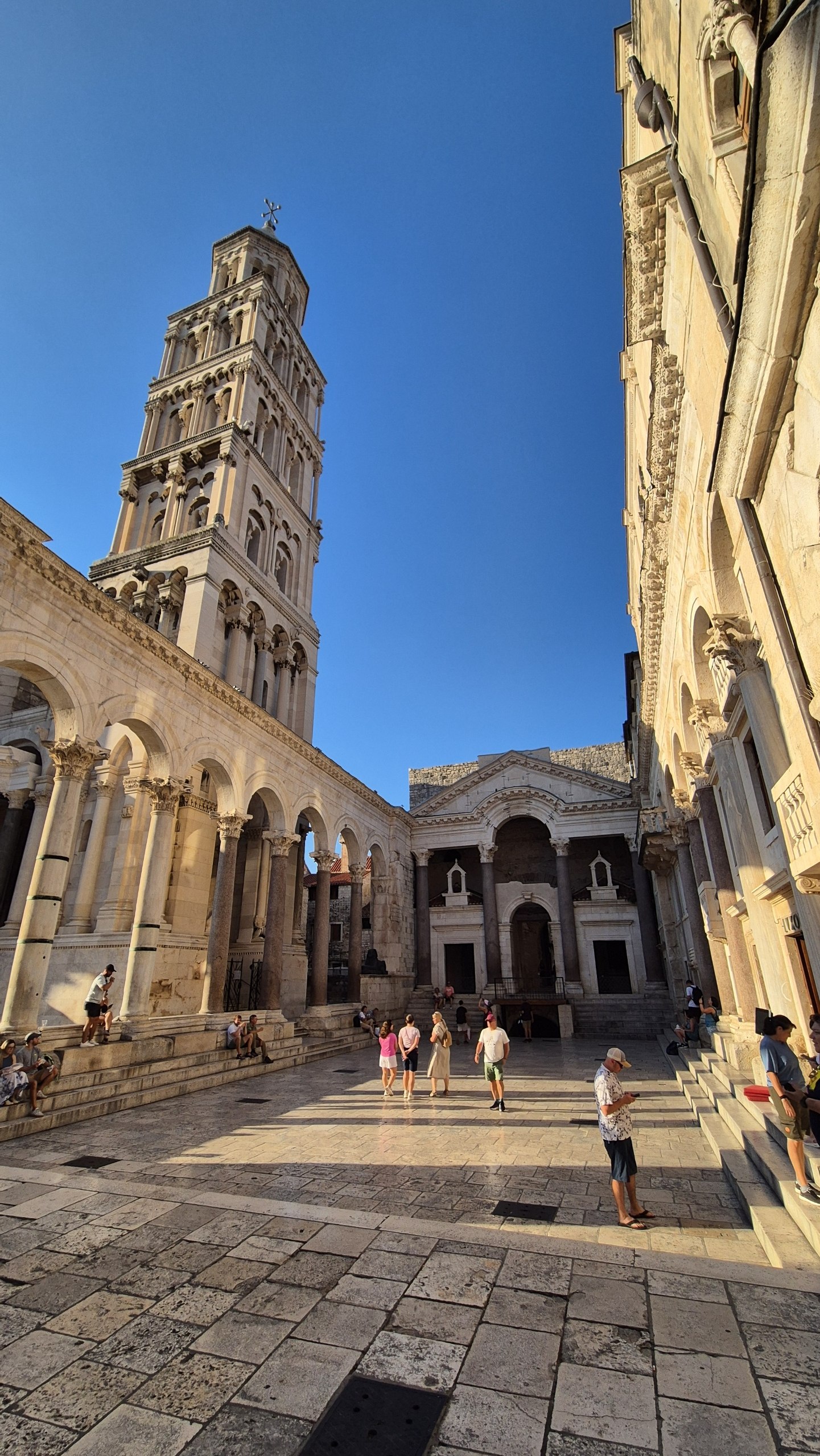
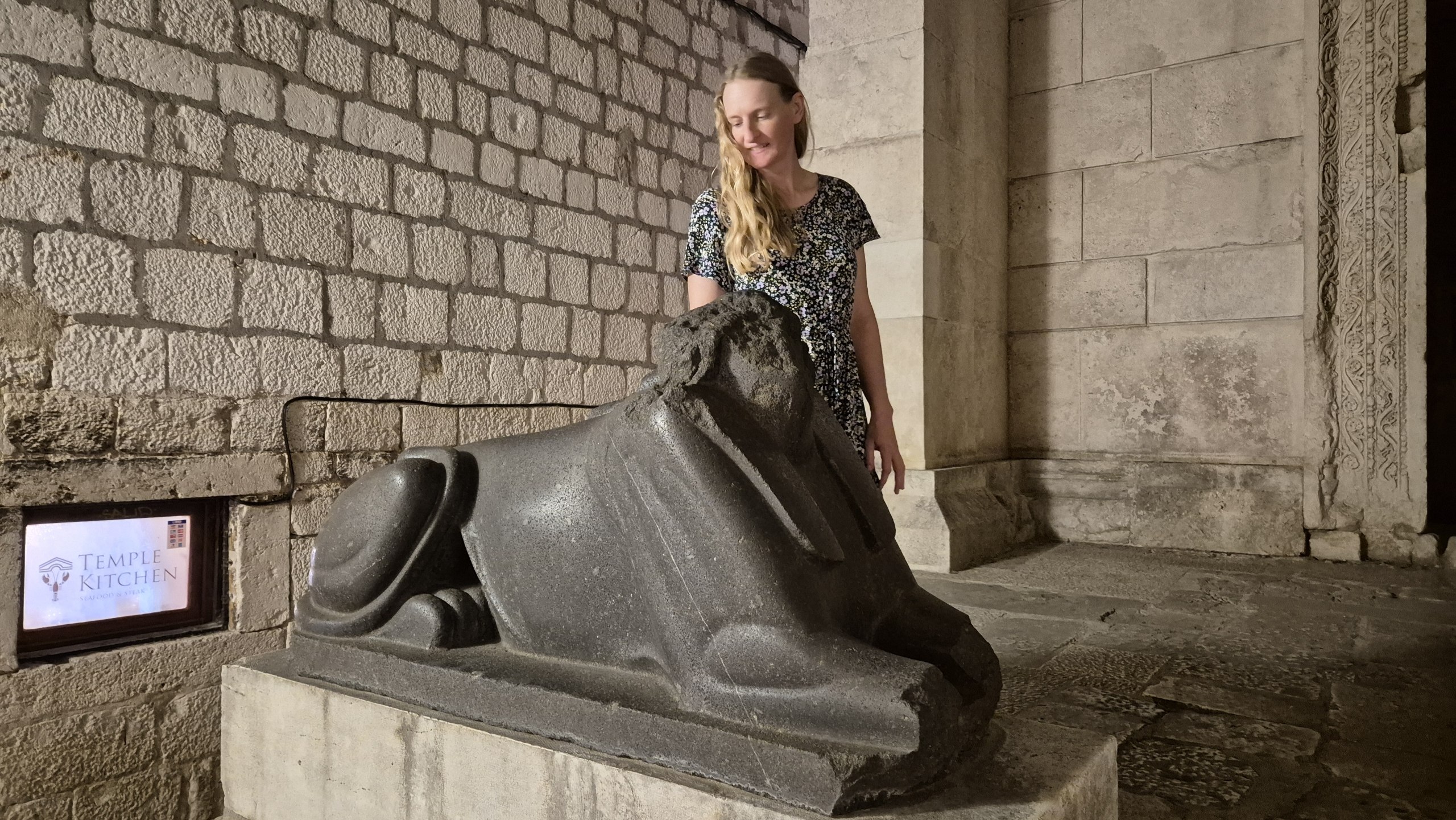
Diocletian also brought a collection of Egyptian sphinxes to decorate his palace. Evidence suggests there were at least twelve or thirteen, but many were later deliberately damaged as Christianity replaced the old religion. The small black sphinx outside the former Temple of Jupiter had lost its head and was only rediscovered in a nearby street in the 1930s.
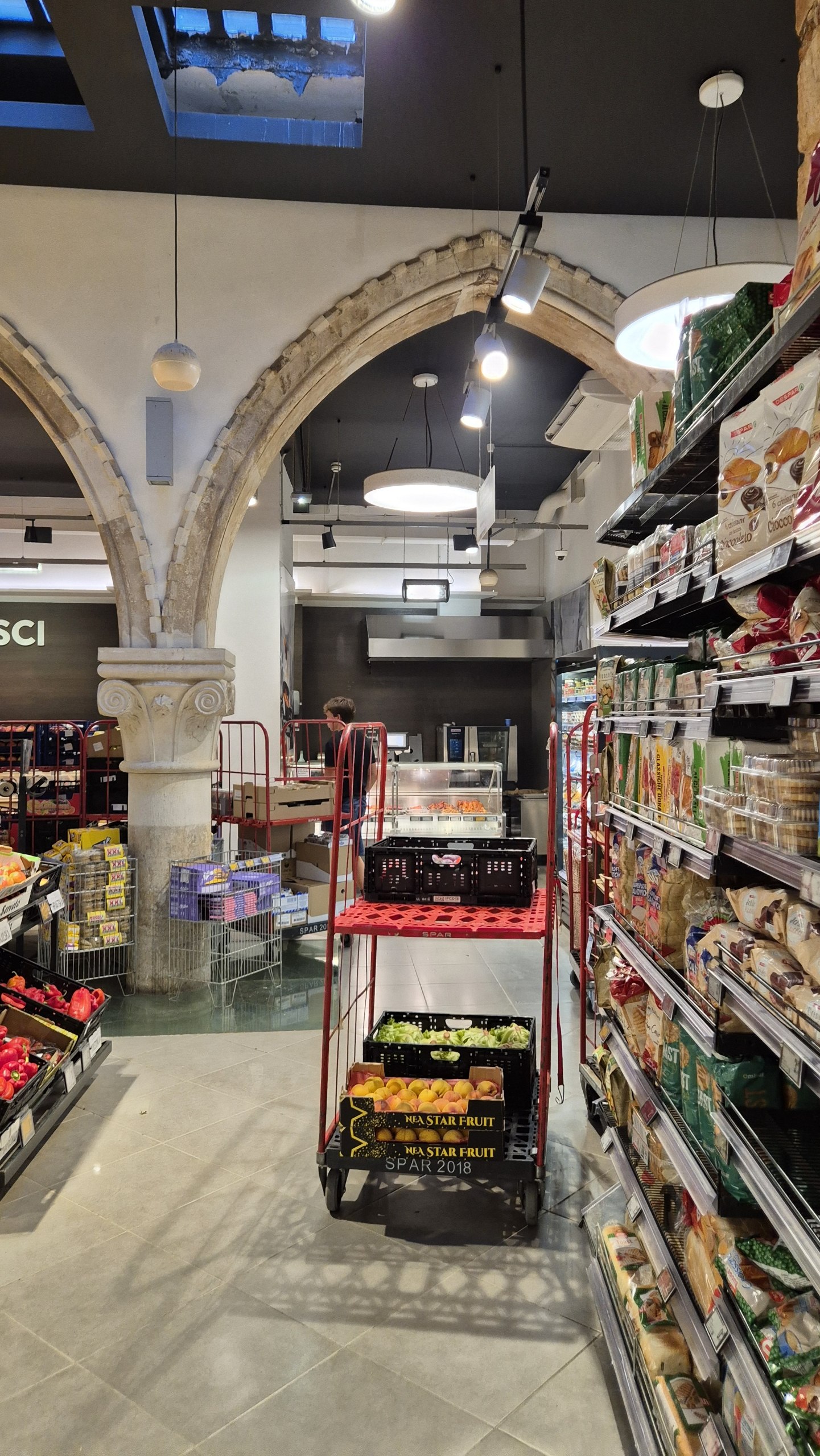
For breakfast we bought a spinach burek and an apple pastry of some kind. We also wandered into a local SPAR and found that even an ordinary grocery shop had been fitted around old vaulted arches and stone columns. Split is the sort of place where a Roman palace can become part cathedral, part neighbourhood and part supermarket without anyone finding it especially unusual.
We returned to the room before the old town became too busy. Caro painted while Hugo settled in for work.
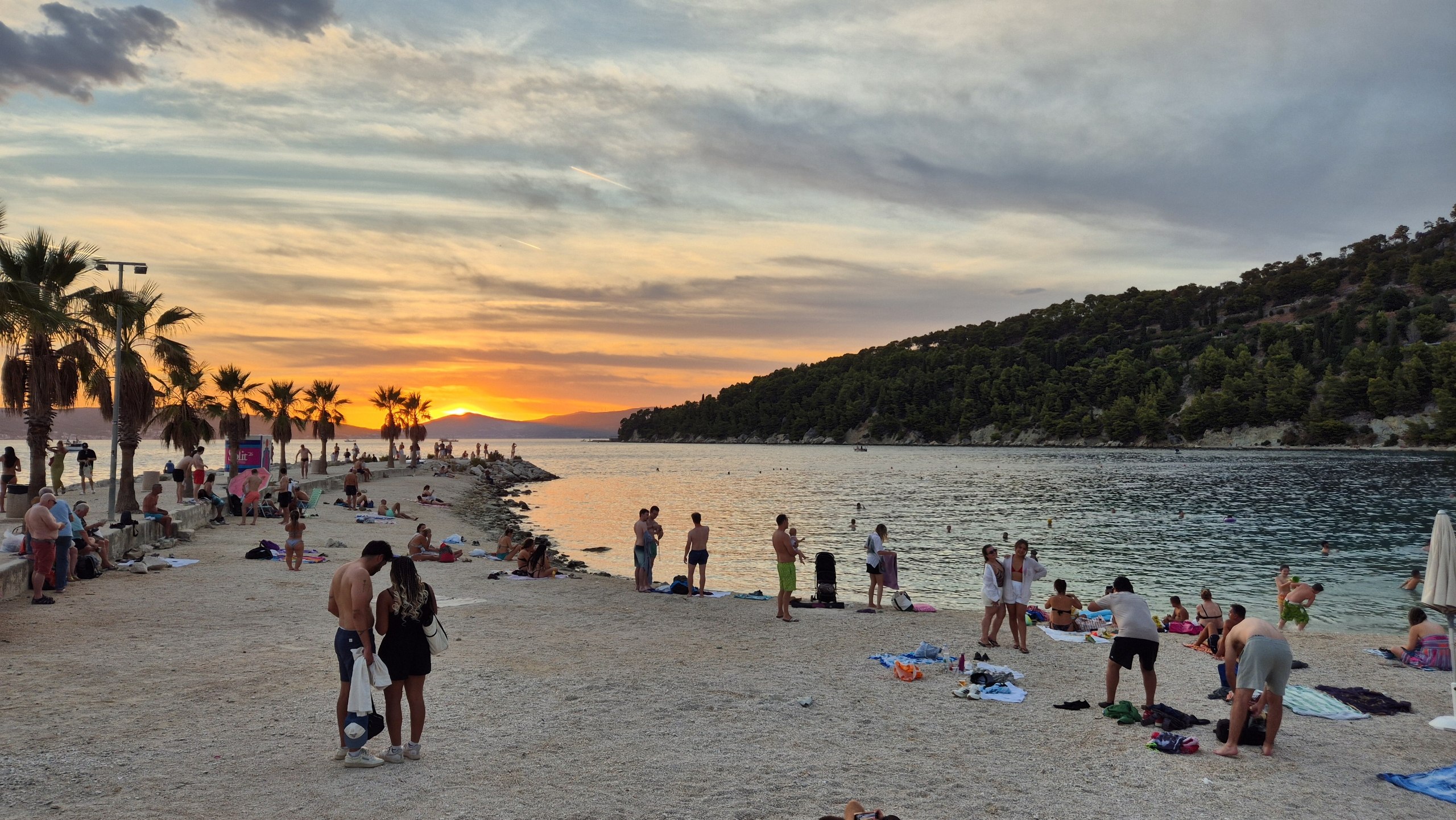
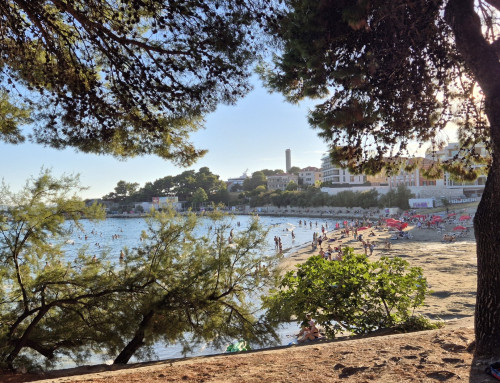
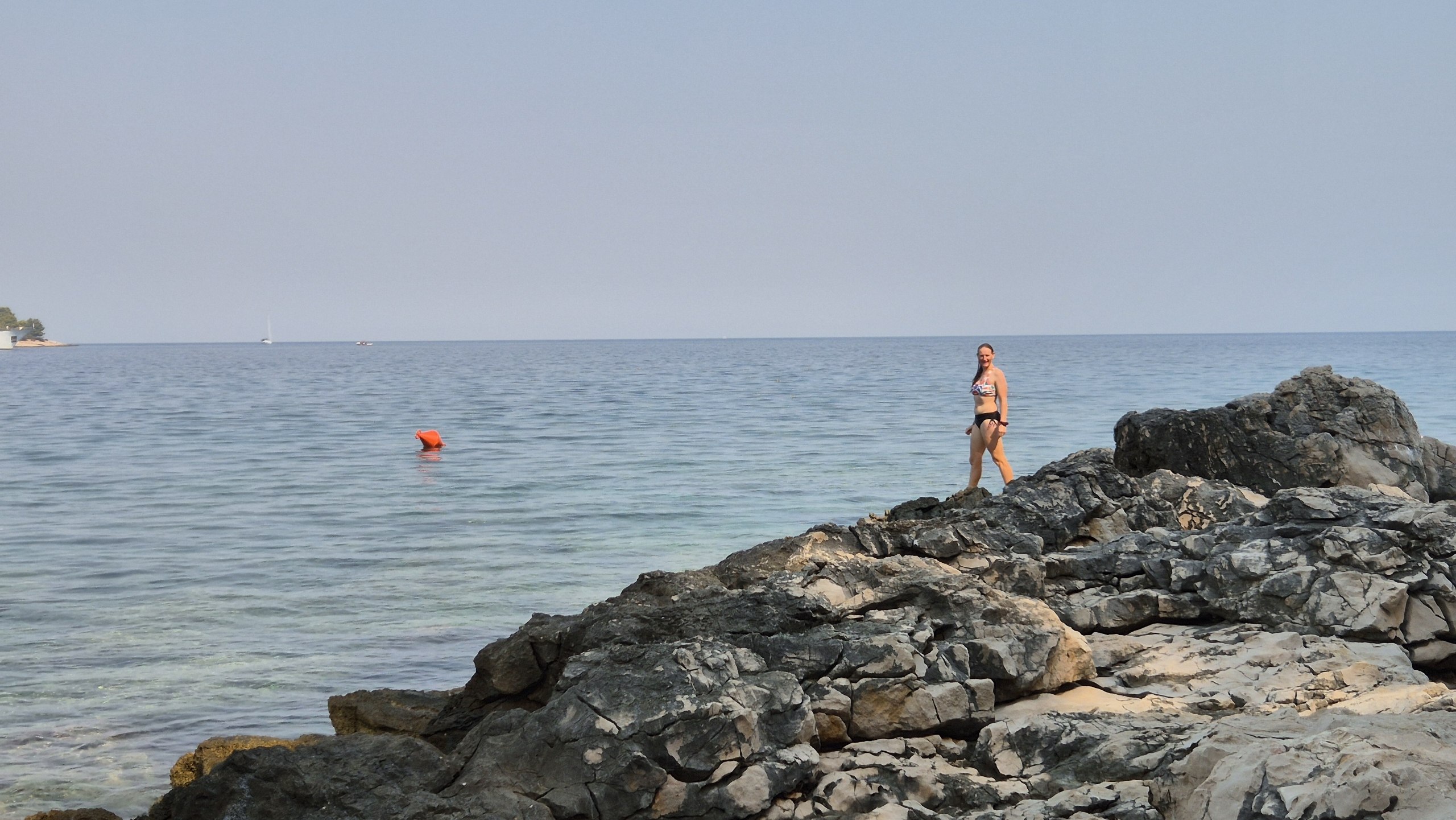
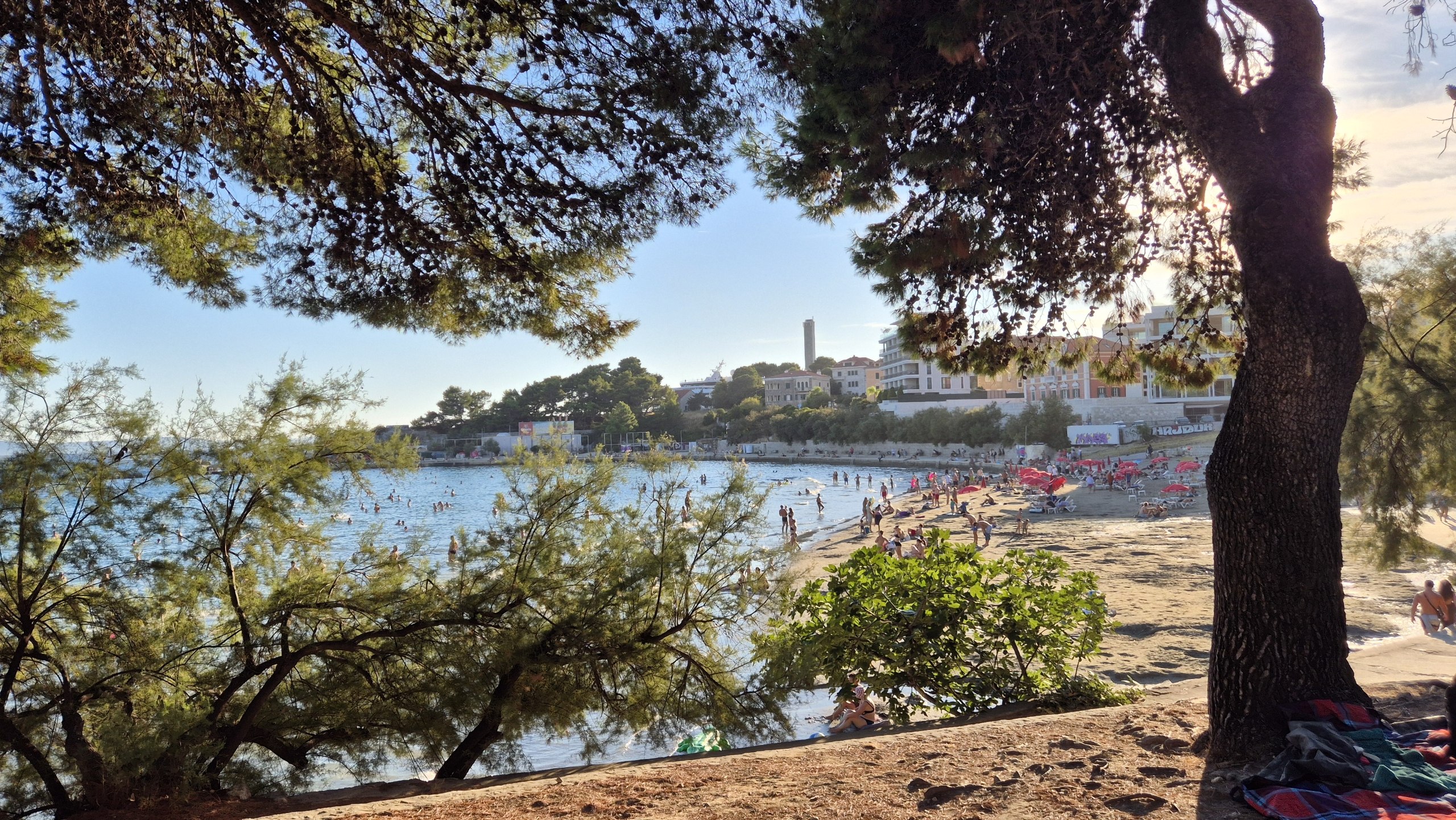
Late in the afternoon we took a bus to Kašjuni Beach, tucked beneath the green slopes of Marjan. We had a long swim as the day began to cool, staying in the water until the sun was dropping towards the horizon.
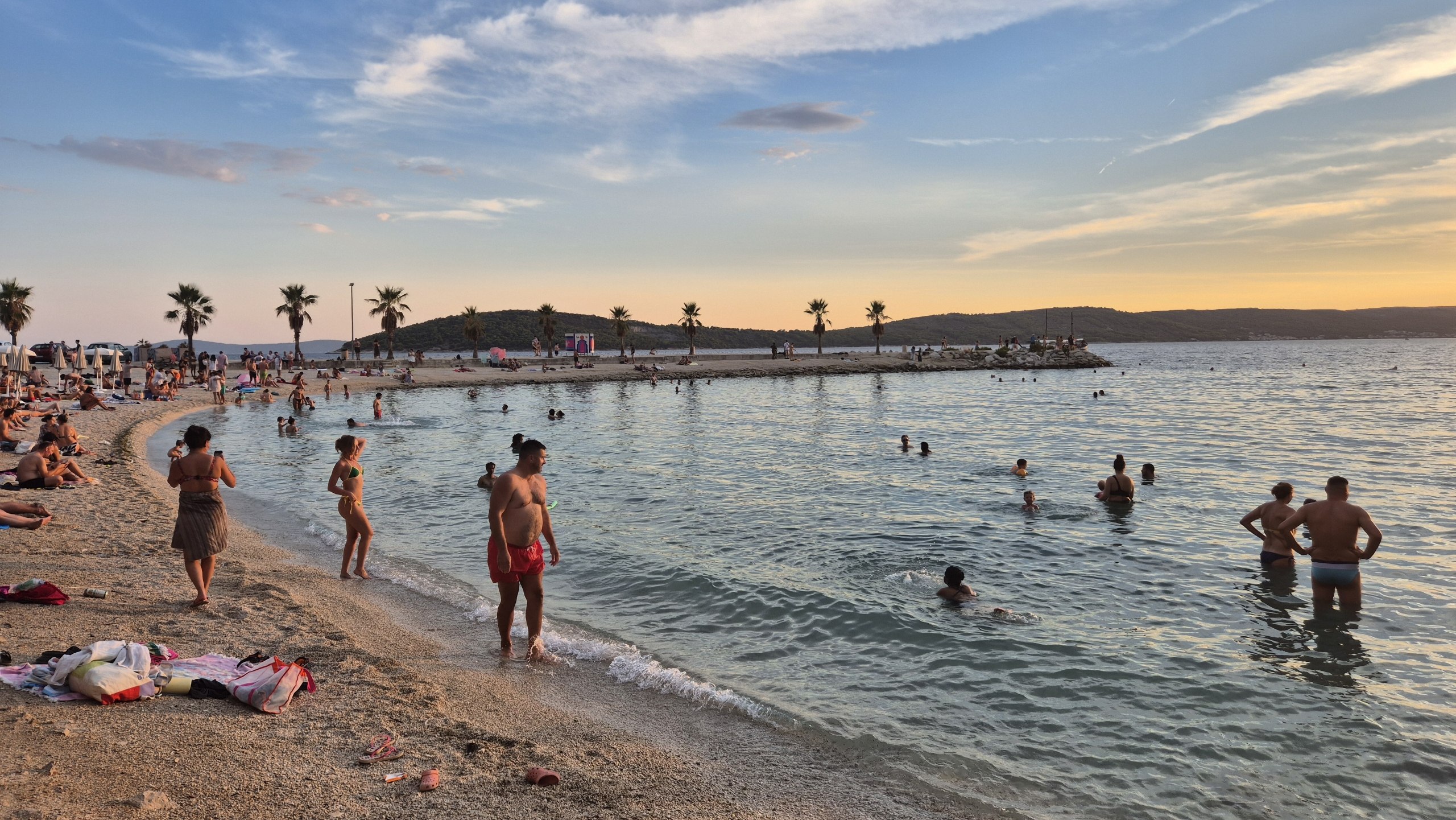
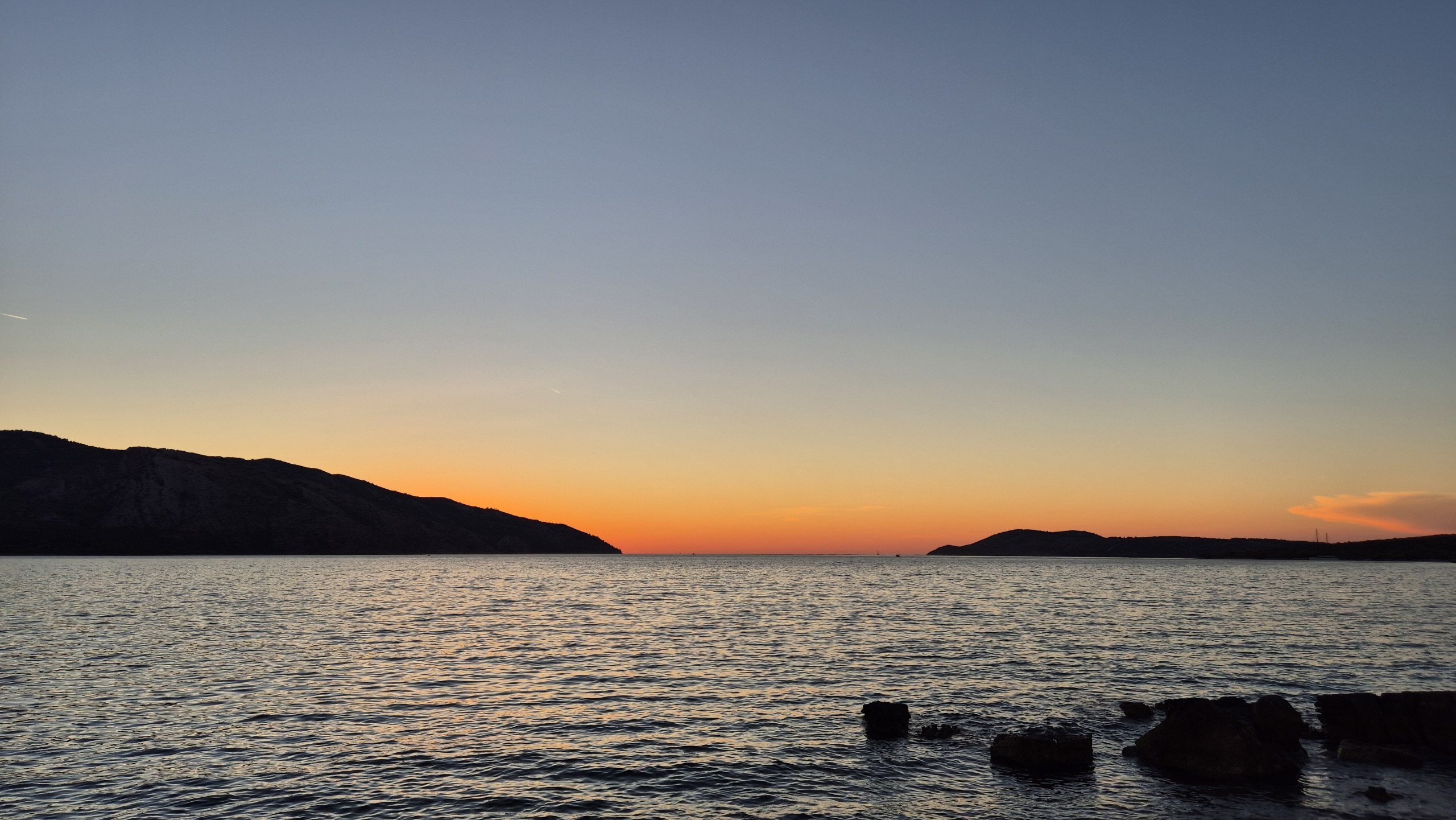
As sunset approached, we packed up and headed back to catch the bus into town.
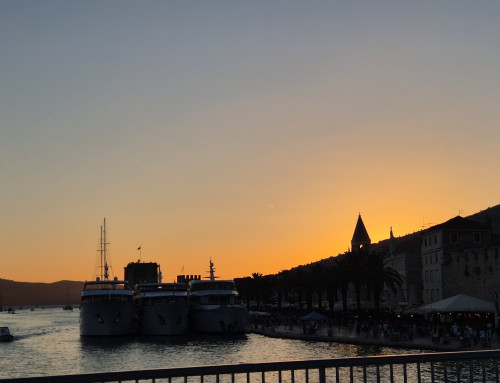
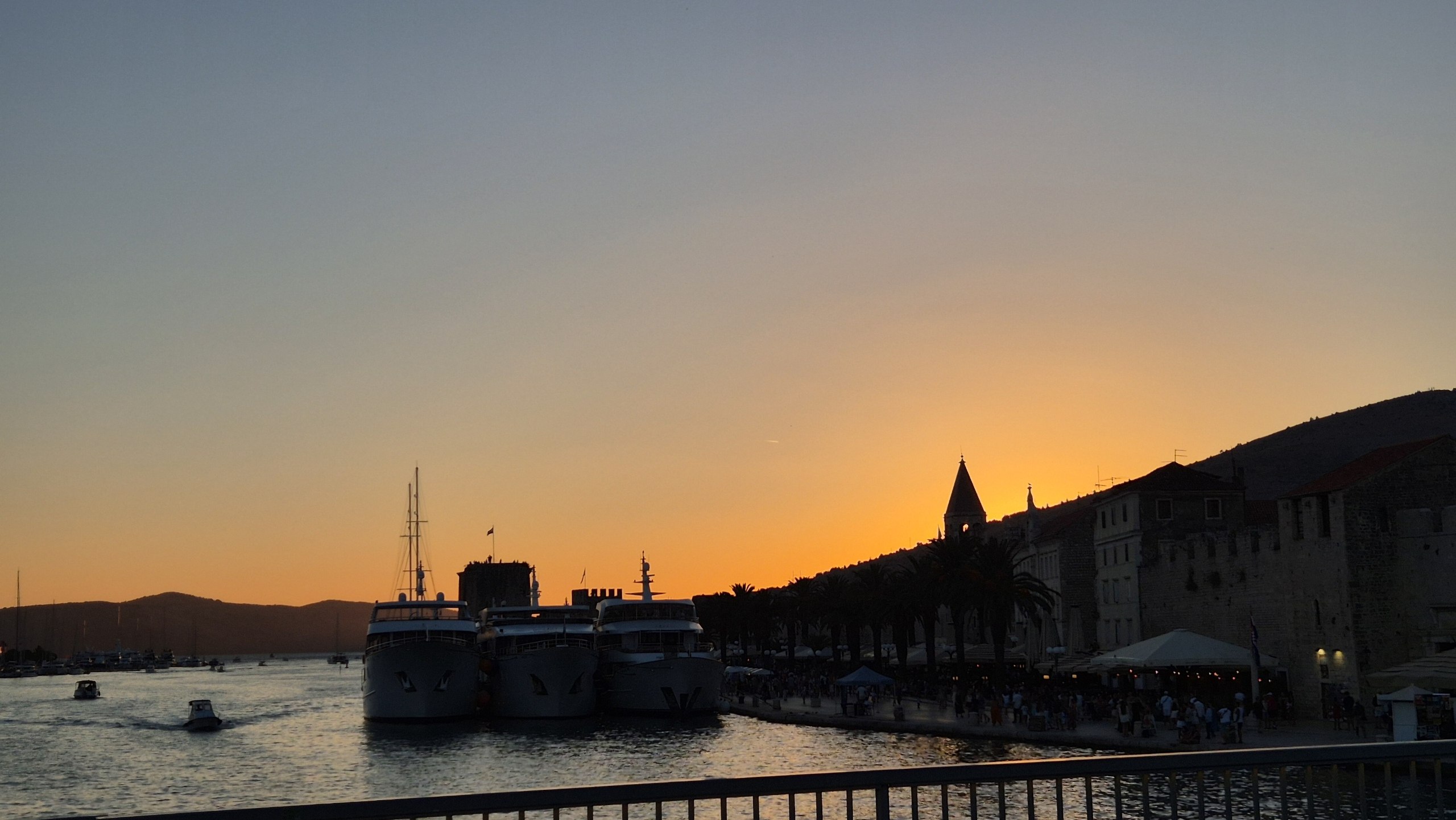
We bought takeaway burgers and sat beside the harbour, eating while Split’s nightlife began to stir around us.
Then we walked through the palace again. The quiet lanes we had enjoyed that morning were now packed with people, and the ancient courtyards felt completely different after dark.
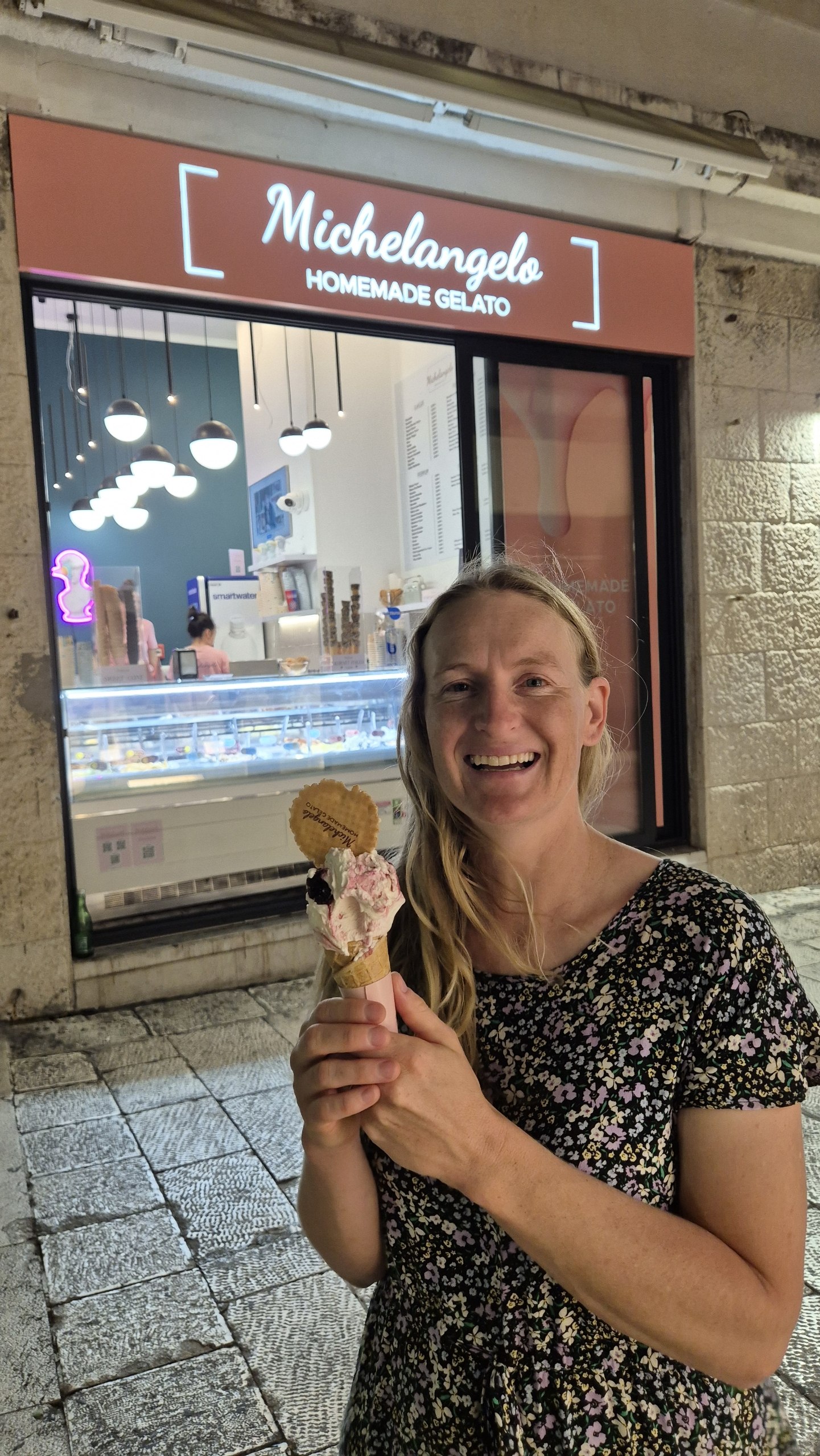
We ended the day with a delicious cherry and cream frozen yoghurt—sweet, cold and exactly what was needed after one final walk through the crowds.
Leave A Comment